DbcultAccessing Vault...
Cult Review
Senior Film Conservator
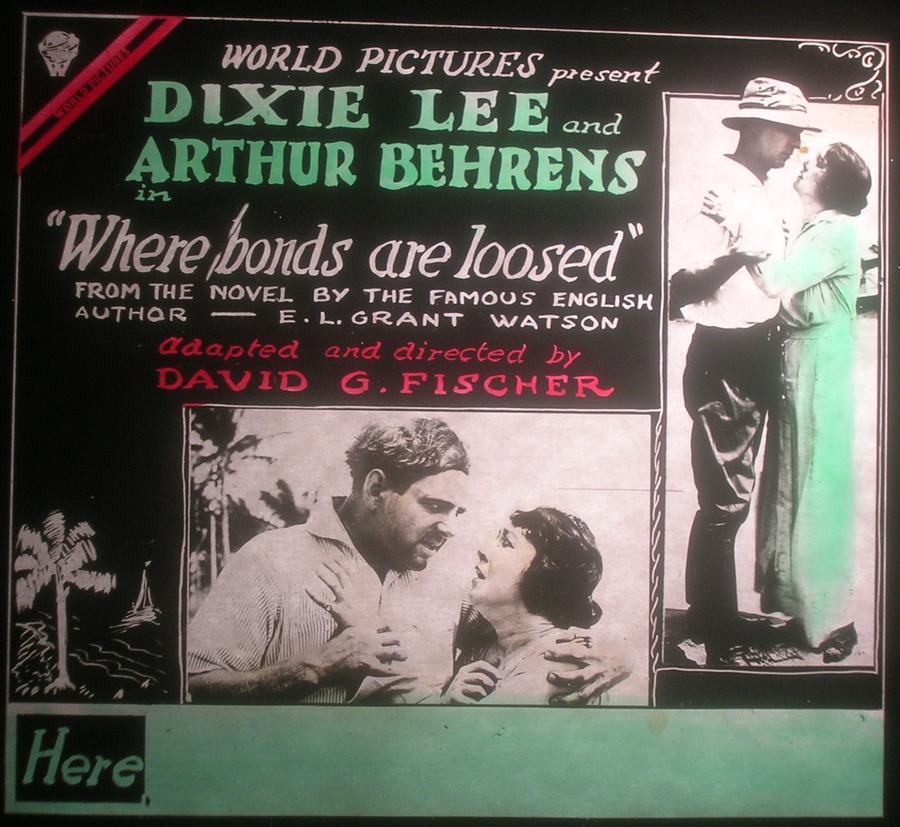
There are films that merely tell a story, and then there are those that plunge you headfirst into a maelstrom of human frailty, ambition, and the untamed wilderness, both external and internal. "Where Bonds Are Loosed" is unequivocally the latter. Set against the stark, sun-baked canvas of two remote Australian islands, this cinematic endeavor transcends a simple narrative of colonial administration to become a visceral exploration of how isolation, professional zeal, and burgeoning carnal appetites can unravel the very fabric of civilized decorum. It’s a film that, despite its era, speaks volumes about the enduring struggles between intellectual pursuit and elemental passion, a theme as resonant today as it was upon its release. The initial premise, seemingly innocuous – the British government's attempt to provide medical care for indigenous populations on segregated islands – quickly devolves into a gripping drama, a testament to the potent brew of human nature when stripped bare of societal constraints.
At the heart of this unfolding drama is young Dr. Hicksey, portrayed by David G. Fischer with a nuanced blend of intellectual fervor and naive idealism. His arrival on these distant shores is predicated on a mission of rectification: to inject competence into a system plagued by administrative lassitude and medical inadequacy. Yet, Hicksey's true impetus lies not in altruism alone, but in the boundless opportunities these remote outposts offer for his cherished research. He is the archetypal driven professional, a man whose mind is a labyrinth of scientific inquiry, leaving little room for the messy complexities of human emotion, particularly those of the romantic variety. This single-minded devotion, while admirable in a clinical sense, proves to be his tragic flaw, a vulnerability that will be expertly exploited and ultimately shatter his carefully constructed world. The isolation of the islands, initially a boon for his research, soon becomes a crucible for his personal life, forcing him to confront desires he had perhaps long suppressed or simply deemed secondary to his intellectual pursuits.
Enter Alice Desmond, the capable nurse whose arrival is a direct consequence of Hicksey's efforts to elevate the standard of care. Dixie Lee imbues Alice with a palpable blend of professional competence and an almost primal sensuality, a woman whose presence is both a balm and a challenge. From the outset, Alice recognizes the inherent magnetism between them, and her overtures towards Hicksey are not merely flirtations but expressions of a deep, perhaps instinctual, desire for connection in a desolate landscape. She is the embodiment of the life force, a stark contrast to Hicksey’s cerebral detachment. Her initial resistance is met with Hicksey’s intellectual armor, a barrier that seems impregnable until nature itself conspires to break it down. The raw power of a hurricane, a metaphor for the escalating emotional storm, strips away their defenses, leaving them vulnerable, exhausted, and ultimately, intertwined. It is in this moment of shared extremity that Hicksey succumbs, transforming their professional alliance into a passionate, albeit precarious, love affair. This shift is pivotal, setting the stage for the dramatic unraveling that follows, as the demands of the heart clash irrevocably with the demands of the mind.
The initial glow of their illicit romance, however, proves fleeting. As Hicksey, invigorated by the return of some semblance of order, plunges back into his research, Alice finds herself increasingly neglected. Her complaints are not mere petulance; they are the cries of a woman whose emotional needs are being systematically overlooked, whose passion is being supplanted by a man's professional obsession. The film masterfully portrays this gradual erosion of intimacy, showing how two people, initially drawn together by circumstance and desire, can drift apart when their fundamental priorities diverge. This conflict culminates in a furious quarrel, a raw, unvarnished depiction of a relationship reaching its breaking point. It’s a moment that resonates with anyone who has experienced the painful realization that love alone cannot sustain a partnership in the face of divergent life paths. The insular world of the islands amplifies this tension, making escape impossible and confrontation inevitable.
Into this volatile emotional landscape steps John Sherwin, the burly overseer of the men's island, brought to life by Arthur Behrens with a menacing physicality. Sherwin is the antithesis of Hicksey: less intellect, more instinct; less refinement, more brute force. He is a man who operates on a purely primal level, and he sees Alice's vulnerability, her recent quarrel with Hicksey, not as a sign of distress but as an open invitation. His "caveman advances" are a shocking reminder of the thin veneer of civilization in such remote settings, and Alice's resistance, while fierce, only seems to fuel his predatory resolve. Sherwin represents the untamed, dangerous aspect of human nature, a force that the intellectual Hicksey is ill-equipped to combat on its own terms. His presence transforms the romantic drama into a tense, psychological thriller, where the stakes are not just love, but survival itself. The film subtly draws parallels to other narratives of remote outpost struggles, such as elements found in God's Country and the Woman, where the harsh environment often brings out the rawest human instincts.
Alice’s desperate revelation of Sherwin’s advances to Hicksey ignites a fuse, propelling the two men into a deadly, nocturnal cat-and-mouse game through the unforgiving jungle. This sequence is a masterclass in suspense, relying less on overt violence and more on the psychological tension of the stalk, the unseen threats, and the primal fear of the unknown. It’s a battle not just for Alice, but for dominance, for a perceived right to possess. When Sherwin emerges from the dense foliage, alone and bearing the chilling report of Hicksey's demise, the audience is left reeling. The immediacy of Alice's reaction, her declaration of hatred for Hicksey and her swift agreement to marry Sherwin, is perhaps the film's most shocking twist. It shatters any romantic notions we might have held about her, revealing a pragmatic, perhaps even ruthless, streak born of disillusionment and a desire for stability, however brutally obtained. This moment echoes the moral ambiguities explored in films like Thou Shalt Not Covet, where human desires often transgress established moral boundaries, leading to unforeseen and often tragic consequences.
Yet, "Where Bonds Are Loosed" refuses to offer a neat, conclusive ending. The revelation that Hicksey is merely wounded, nursed back to health by a compassionate native, adds another layer of complexity. His quiet departure from the islands is not a triumphant escape but an act of profound resignation. He leaves behind not just Alice and Sherwin, but the shattered remnants of his idealism, his ambition, and perhaps, his very sense of self. The islands, once a sanctuary for his research, have become a graveyard for his soul. This ending is profoundly unsettling, denying the audience the satisfaction of clear-cut justice or romantic resolution. Instead, it offers a stark, realistic portrayal of survival at a cost, of the indelible marks left by betrayal and the relentless pursuit of self-preservation. It speaks to a deeper, more existential drift, where the protagonist, having faced the brutal truth of human nature, chooses to simply disappear, carrying his wounds both physical and psychological into an uncertain future.
Beyond the immediate drama of the love triangle, "Where Bonds Are Loosed" is rich with thematic depth. It subtly critiques the colonial project, hinting at the inherent incompetence and disinterest of distant administrations in the welfare of native populations, using the "incompetent staff" as a microcosm of a larger failure. The islands themselves serve as a potent metaphor for isolation, both geographical and emotional, where human beings are stripped of their societal veneers and forced to confront their most basic instincts. The film explores the destructive power of ambition when it overshadows human connection, the perilous allure of raw passion, and the brutal realities of survival in a world where moral codes are fluid and often dictated by circumstance. It’s a study in human psychology, examining how extreme environments can warp perceptions and drive individuals to actions they might never consider in more civilized settings. The portrayal of the native population, while perhaps limited by the era's sensibilities, still manages to convey a sense of their quiet resilience and perhaps, their wisdom, particularly in the figure of the native who tends to Hicksey's wounds, offering a stark contrast to the destructive passions of the colonial figures.
The performances, even in the absence of extensive biographical detail for the actors, can be inferred to be crucial in conveying the raw emotionality of the narrative. David G. Fischer as Hicksey must project a transformation from intellectual aloofness to desperate vulnerability. Dixie Lee's Alice requires a range from assertive desire to pragmatic ruthlessness. Arthur Behrens' Sherwin demands a physicality that embodies menace and primal force. The success of the film hinges on these portrayals, making the audience believe in the escalating stakes and the profound changes wrought upon these characters by their environment and their entangled desires.
"Where Bonds Are Loosed" stands as a compelling, if unsettling, piece of cinema. It’s a film that doesn't shy away from the darker aspects of human nature, presenting a world where desires can lead to destruction, and where even the most noble intentions can be corrupted by isolation and passion. Its enduring power lies in its unflinching portrayal of characters pushed to their limits, forced to make choices that defy conventional morality. This film is a stark reminder that beneath the veneer of civilization, primal instincts lie dormant, waiting for the right conditions to emerge and wreak havoc. It’s a fascinating study of human resilience and depravity, a narrative that continues to provoke thought and discussion long after the credits roll. For those seeking a drama that delves deep into the psychological underpinnings of human behavior in extreme circumstances, this film offers a rich, albeit disturbing, experience. It’s a testament to the fact that some stories, no matter how old, continue to resonate with universal truths about the human condition, making it a valuable entry in the annals of dramatic cinema. The stark beauty of the island setting, juxtaposed with the ugly truths of human conflict, creates a powerful visual and emotional landscape that lingers in the mind. The very title, "Where Bonds Are Loosed," serves as a potent metaphor for the shedding of societal constraints and the unleashing of raw, unfiltered human emotion. It’s a film that demands to be seen and considered for its bold thematic explorations and its uncompromising vision of love, betrayal, and survival.
The narrative’s cyclical nature, with Hicksey returning to a state of solitary existence, albeit wiser and scarred, reinforces the idea that some bonds, once broken, can never be fully mended, and some lessons, once learned, are etched into the soul forever. The film doesn't offer easy answers or happy endings; instead, it presents a mirror to the darker, more complex facets of human interaction when placed under immense pressure. The final image of Hicksey disappearing into the unknown, leaving behind the tempestuous drama he inadvertently ignited, is a powerful statement on the impermanence of human connections and the relentless, onward march of individual destiny. It’s a narrative that truly explores the limits of human endurance and the capacity for both profound love and profound cruelty, all set against a backdrop that is as beautiful as it is unforgiving.

IMDb —
1923
Community
Log in to comment.