DbcultAccessing Vault...
6.5/10
Senior Film Conservator
A definitive 6.5/10 rating for a film that redefined the boundaries of cult cinema. Opus III remains a cornerstone of transgressive art.
To approach Walter Ruttmann’s 'Opus III' is to step into a realm where cinema sheds its mimetic skin and embraces its purest, most elemental forms. Released in the early 1920s, a period largely dominated by the burgeoning narrative structures exemplified by films like The Foolish Age or Sunlight's Last Raid, Ruttmann’s work represented a radical departure, a bold assertion that film could be more than a storytelling medium. It could be a visual symphony, a moving painting, an experience crafted from light and shadow, rhythm and form. This third installment in his groundbreaking series of abstract animations is not merely a film; it is a meticulously constructed argument for the aesthetic autonomy of the moving image, a testament to the untapped potential of the cinematic apparatus.
Ruttmann, often considered one of the seminal figures of the European avant-garde, wasn't just making films; he was forging a new language. His 'Opus' series, beginning with 'Opus I' in 1921, systematically dismantled traditional cinematic conventions, replacing character, plot, and setting with an intricate ballet of evolving shapes and colors. 'Opus III' refines this vision, presenting a more mature and complex orchestration of visual elements. The film operates on a fundamental level, appealing directly to the viewer's senses rather than their intellect or emotional identification with characters. It’s an exercise in pure perception, demanding an engagement that is both meditative and exhilarating.
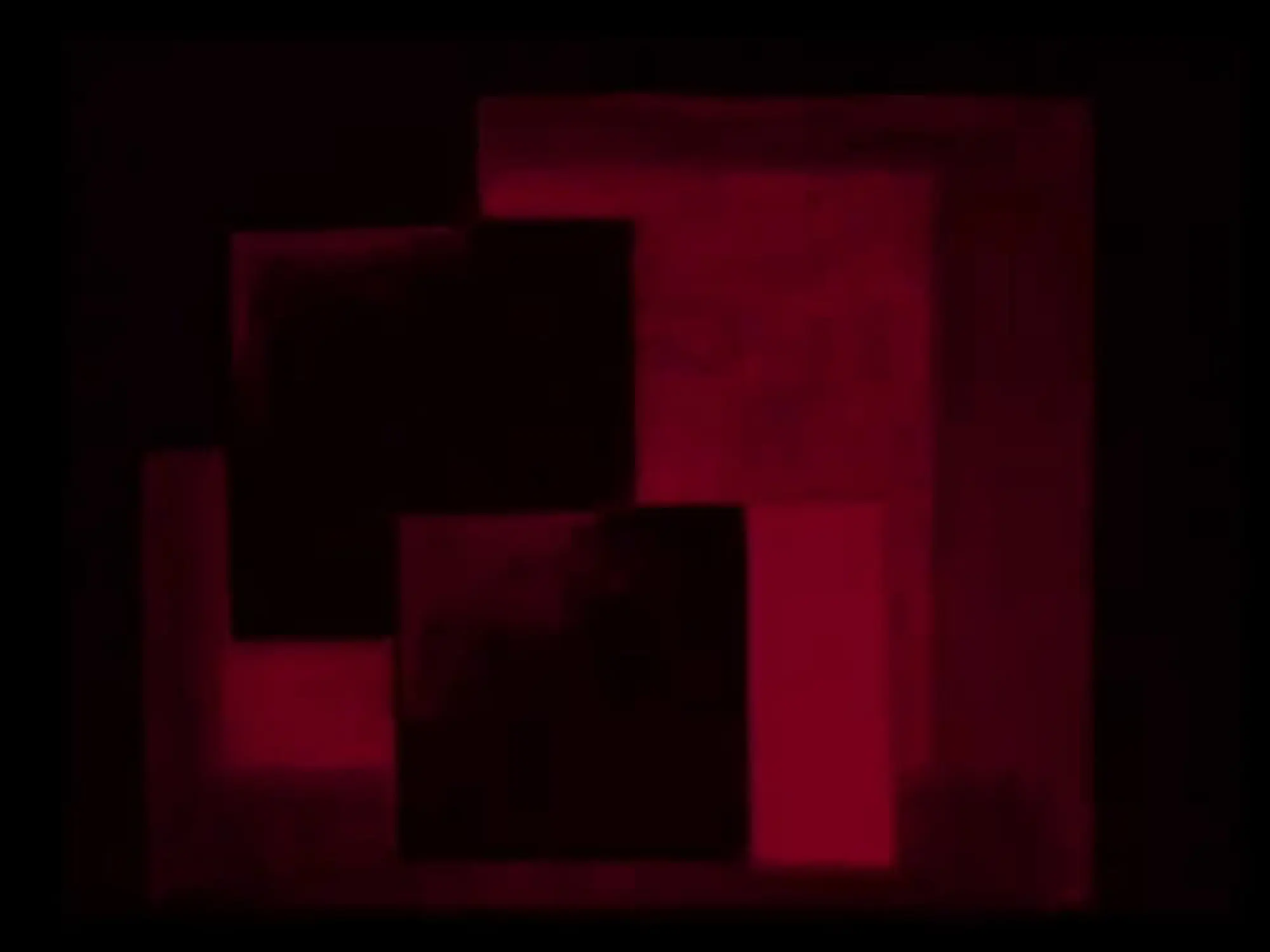
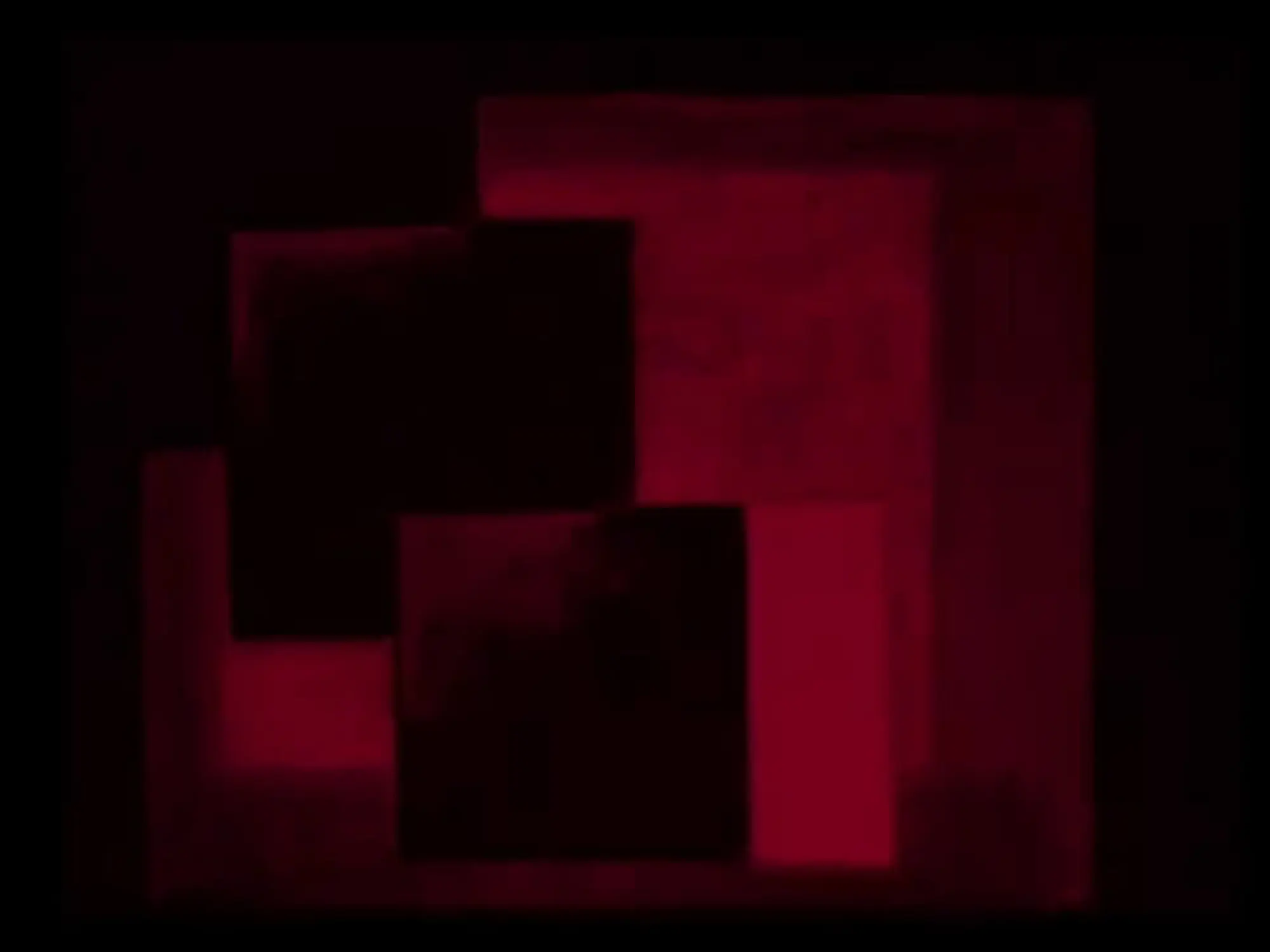
The core premise of 'Opus III' is disarmingly simple, yet its execution is profoundly complex. Against a backdrop of impenetrable darkness, luminous geometric and organic shapes materialize, shift, expand, contract, and interweave. These forms are not representational; they are not symbols of anything beyond themselves. They exist purely as dynamic visual elements, their interactions creating a continuous flow of movement and transformation. The brilliance of Ruttmann’s approach lies in his ability to imbue these abstract forms with a surprising sense of life and intention. They don't merely float; they dance, they collide, they merge, they dissolve, each action feeling purposeful, like notes in a carefully composed score.
The interplay of color is particularly striking. While the film predominantly features bright, stark forms against the void, Ruttmann masterfully employs a limited palette to maximum effect. The shapes often appear to glow from within, radiating an internal energy that contrasts sharply with the surrounding darkness. This stark dichotomy amplifies the visual impact, drawing the eye directly to the ephemeral dance unfolding on screen. One might observe a vibrant yellow square dissolving into a series of smaller, rapidly moving sea blue circles, only for these to coalesce into an undulating dark orange line. The transitions are fluid, often seamless, demonstrating Ruttmann's meticulous attention to continuity and rhythm.
Central to understanding 'Opus III' is the concept of visual music, or more broadly, synesthesia. Ruttmann, like many avant-garde artists of his time, was deeply interested in the correspondences between different sensory experiences. He aimed to create a film that could be 'heard' with the eyes, and 'seen' with the ears. While the original accompanying music for 'Opus III' might be lost to time or subject to varying interpretations, the film's inherent rhythm and structure strongly suggest a deep sonic sensibility. The movements of the shapes are not random; they possess a clear tempo, a dynamic ebb and flow that mimics musical phrasing. Fast, staccato bursts of movement are juxtaposed with slow, lingering glides, creating a visual counterpoint that resonates with the principles of musical composition.
One can almost imagine the swells of an orchestra accompanying the graceful expansion of a large, soft-edged form, or the sharp, percussive beats punctuating the sudden appearance and disappearance of smaller, angular fragments. This symbiotic relationship between the visual and the auditory elevates 'Opus III' beyond mere animation; it transforms it into an immersive, multi-sensory experience. It's a testament to Ruttmann's genius that even in its silent viewing, the film evokes a powerful sense of auditory presence, a rhythmic pulse that guides the viewer through its abstract landscape.
The creation of 'Opus III' was no small feat for its time. Ruttmann pioneered techniques of abstract animation, often working by painstakingly painting directly onto celluloid or employing cut-out animation methods. Each frame was a canvas, each movement a carefully planned sequence of incremental changes. This labor-intensive process underscores the artistic dedication and technical ingenuity required to bring such a vision to life. In an era where filmmaking technology was still in its relative infancy, largely focused on capturing reality, Ruttmann turned the camera inwards, using it as a tool for pure artistic expression, much like a painter uses a brush or a musician uses an instrument.
Unlike the more straightforward narrative constructions seen in contemporary productions such as The Reward of Patience or Eve's Daughter, Ruttmann's work demanded a different kind of technical mastery. It wasn't about convincing special effects or elaborate set pieces, but about the precise control of light, form, and movement across time. The subtle gradations of light, the crispness of the edges of the shapes, and the fluidity of their transformations speak volumes about Ruttmann's command over his chosen medium. He was not just an artist; he was an innovator, pushing the boundaries of what was cinematically possible and conceptually imaginable.
Ruttmann’s 'Opus' series emerged from a vibrant intellectual and artistic climate in post-World War I Europe. The Dadaists, Surrealists, and various other avant-garde movements were challenging traditional notions of art, society, and perception. Film, as a relatively new medium, became a fertile ground for experimentation. Artists like Ruttmann, Hans Richter, and Viking Eggeling were exploring the potential of absolute film – cinema stripped down to its most fundamental visual and temporal elements. These films were often screened in small, experimental venues, challenging audiences accustomed to the narrative conventions of mainstream cinema, whether it be a romantic drama like Cameo Kirby or an early Chinese film such as Lao gong zhi ai qing.
In this context, 'Opus III' wasn't just an artistic statement; it was a philosophical one. It argued that art did not need to imitate reality to be profound or meaningful. It could create its own reality, its own internal logic, its own aesthetic truth. This was a radical idea at a time when many films, even those with fantastical elements like The Evil Eye, still relied on a recognizable, if exaggerated, world. Ruttmann's work paved the way for future generations of experimental filmmakers, animators, and visual artists who would continue to explore the non-representational possibilities of the moving image. Its influence can be traced through the history of abstract animation, experimental video art, and even contemporary motion graphics, demonstrating a timeless appeal that transcends its historical origins.
The enduring power of 'Opus III' lies in its ability to captivate and challenge viewers even today. In an age saturated with complex narratives and hyper-realistic CGI, Ruttmann’s minimalist abstraction offers a refreshing counterpoint. It invites us to slow down, to engage with pure form and movement, to find beauty in the interplay of light and shadow, shape and void. It reminds us that cinema, at its heart, is about manipulating images in time, and that this manipulation can be an end in itself, a source of aesthetic pleasure and intellectual stimulation.
Watching 'Opus III' is akin to listening to a piece of classical music without lyrics or a discernible program. The meaning is not explicit; it is felt, intuited, experienced. It resonates with the viewer on a primal level, tapping into our innate appreciation for pattern, rhythm, and visual harmony. The film doesn't tell a story in the conventional sense, unlike a historical drama such as Sixty Years a Queen or a crime thriller like Pied Piper Malone. Instead, it creates an experience that is deeply personal and subjective. Each viewer might interpret the movements differently, project their own emotions onto the evolving forms, and derive a unique sense of meaning from its abstract dance.
This film remains a cornerstone of experimental cinema, a beacon for artists who seek to push beyond the boundaries of convention. Its influence can be seen in everything from animated music videos to avant-garde installations. It is a work that speaks to the fundamental human fascination with movement and light, demonstrating that even the simplest elements, when orchestrated with genius, can create something profoundly beautiful and endlessly engaging. 'Opus III' is not merely a historical artifact; it is a living, breathing work of art that continues to inspire and provoke, a timeless testament to the boundless possibilities of the cinematic medium.
Consider the sheer audacity of Ruttmann’s vision when contrasted with the prevailing cinematic trends of his era. While many filmmakers were refining narrative techniques to appeal to mass audiences, crafting comedies or melodramas, Ruttmann was meticulously constructing a world of pure abstraction. Films like Teufelchen or The Face in the Moonlight, despite their varied genres, shared a common commitment to representational storytelling. Ruttmann, however, was interested in the intrinsic properties of film itself – its capacity for temporal manipulation, its interplay of light and dark, its ability to create motion where none existed. This fundamental shift in perspective is what makes 'Opus III' such a pivotal work. It doesn't just show us something; it shows us *how* to see, *how* to experience film as a dynamic, autonomous art form.
The deliberate pacing and intricate choreography of 'Opus III' invite a different kind of spectatorship. It demands patience, an openness to non-linear perception, and a willingness to simply *be* with the moving images. This is a stark contrast to the often fast-paced, plot-driven narratives that define much of commercial cinema, even in its nascent stages, such as the nautical drama Det døde Skib or the historical narrative of The Cavell Case. Ruttmann's film allows for contemplation, for the mind to wander and connect with the abstract forms on a deeply personal and emotional level. It's a testament to the idea that sometimes, the most profound experiences come not from explicit meaning, but from pure aesthetic immersion.
In conclusion, 'Opus III' stands as a vibrant, essential piece of cinematic history. It is a powerful reminder of the medium's protean nature, its capacity to transcend mere documentation or storytelling and become a vehicle for pure artistic expression. Its legacy continues to echo through the corridors of experimental film, inspiring countless artists to explore the uncharted territories of visual abstraction. This is not just a film to be watched; it is an experience to be absorbed, a visual poem to be felt, a testament to Walter Ruttmann's audacious and enduring vision. It continues to challenge, to delight, and to remind us of the infinite possibilities inherent in the moving image, far beyond the confines of typical narrative productions like La principessa Giorgio or Dangerous Lies, proving that sometimes, the most profound statements are made without a single spoken word or a discernible plot.
IMDb 6.2
1912
Community
Log in to comment.