DbcultAccessing Vault...
Cult Review
Senior Film Conservator
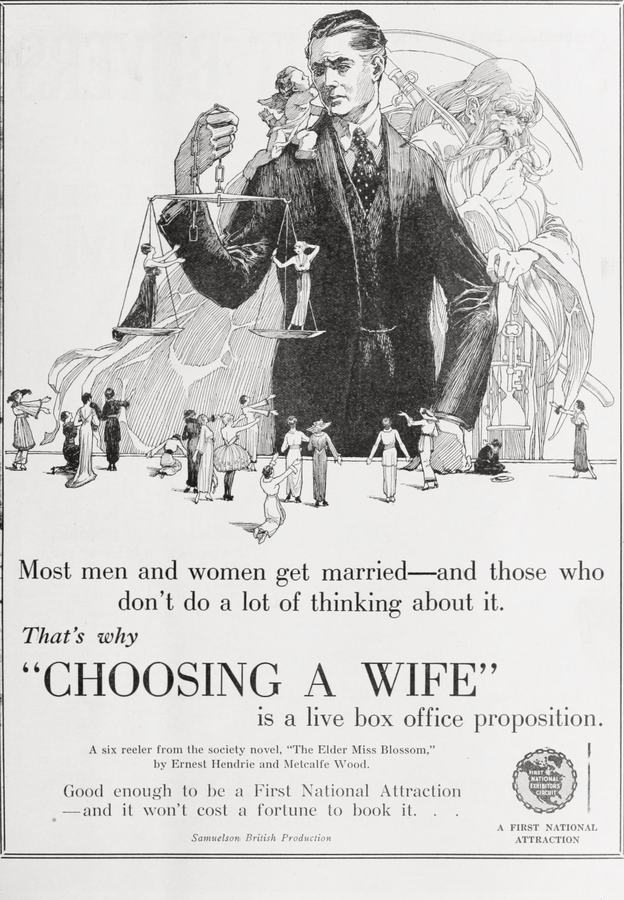
In the annals of early 20th-century cinema, 'Wanted a Wife' (1918) emerges not merely as a quaint artifact, but as a surprisingly potent melodrama that deftly explores the profound chasm between fervent hope and the crushing weight of reality. Crafted from the pens of Ernest Hendrie and Metcalfe Wood, this silent-era gem, though often overshadowed by its more boisterous contemporaries, offers a nuanced, if ultimately heartbreaking, examination of unrequited affection, societal pressures, and the devastating consequences of miscommunication. It's a film that speaks volumes through the silent eloquence of its performers and the stark simplicity of its narrative, inviting us to ponder the quiet tragedies that often unfold behind closed doors.
The film centers on Miss Blossom, a character whose very name seems to mock her autumnal state. Portrayed with a delicate blend of resignation and suppressed yearning by Minna Grey, Miss Blossom embodies the archetype of the dutiful spinster, her life a quiet testament to self-sacrifice. She is the anchor of her widowed brother's household, a silent sentinel overseeing the upbringing of his daughter, a vibrant young woman on the cusp of her own romantic awakening. This domestic arrangement, while seemingly harmonious, subtly underscores Miss Blossom's peripheral existence, a life lived in the shadows of others' happiness. The narrative's initial strokes paint a picture of genteel poverty and the unspoken expectations placed upon women of a certain age – to serve, to nurture, but rarely, to truly live for themselves. It's a thematic thread that resonates with the quiet desperation found in literary works like Little Women, though 'Wanted a Wife' injects a far more bitter dose of realism into its romantic aspirations.
The arrival of a dashing explorer, played by the charismatic Owen Nares, disrupts this carefully maintained equilibrium. Nares, a prominent figure in British cinema of the era, brings a compelling blend of adventurous spirit and romantic allure to the role. His character, fresh from exotic expeditions, represents a world of excitement and possibility that has long eluded Miss Blossom. It is, however, the younger daughter (presumably Isobel Elsom, though specific role assignments from this era can be fluid) who captures his attention. Their burgeoning romance, though brief, is depicted with a tender innocence, a fleeting summer idyll before the explorer must once again answer the call of adventure. This departure sets in motion the central conceit of the film, a fateful communication error that pivots the story from a conventional romance into a study of tragic irony.
The explorer, before his second departure, dispatches a message, a proposal of marriage, intended for the daughter. Herein lies the cruel heart of the film. Through a twist of fate – perhaps a postal mix-up, perhaps a subtle manipulation by unseen forces of destiny – the letter finds its way into Miss Blossom's hands. For a woman who has likely resigned herself to a life devoid of romantic fulfillment, this missive is a bolt from the blue, a validation she never dared to dream of. Her secret, long-harbored affection for the explorer, now unfurls into a joyous, if entirely mistaken, expectation of marriage. This pivotal misunderstanding is handled with a delicate touch, allowing the audience to witness Miss Blossom's internal world transform from quiet despair to radiant, albeit deluded, anticipation. The film excels in conveying this emotional shift without a single spoken word, relying instead on the nuanced expressions of its lead actress and the evocative power of silent film conventions.
The dramatic tension builds as Miss Blossom prepares for a future that exists only in her mind. Her quiet joy, her renewed sense of purpose, are almost unbearable to watch, precisely because the audience is privy to the tragic truth. The film, like Garden of Lies, masterfully uses dramatic irony to heighten the emotional impact, drawing the viewer into a complicit understanding of the impending heartbreak. This narrative device, though simple, is incredibly effective, creating a palpable sense of dread and sympathy for Miss Blossom. The screenplay by Hendrie and Wood demonstrates a keen understanding of human psychology, exploring how deeply ingrained desires can warp perception, turning a simple error into a catalyst for profound personal tragedy. The social context of the time, where a woman's value was often tied to her marital status, further amplifies Miss Blossom's desperate clinging to this mistaken hope.
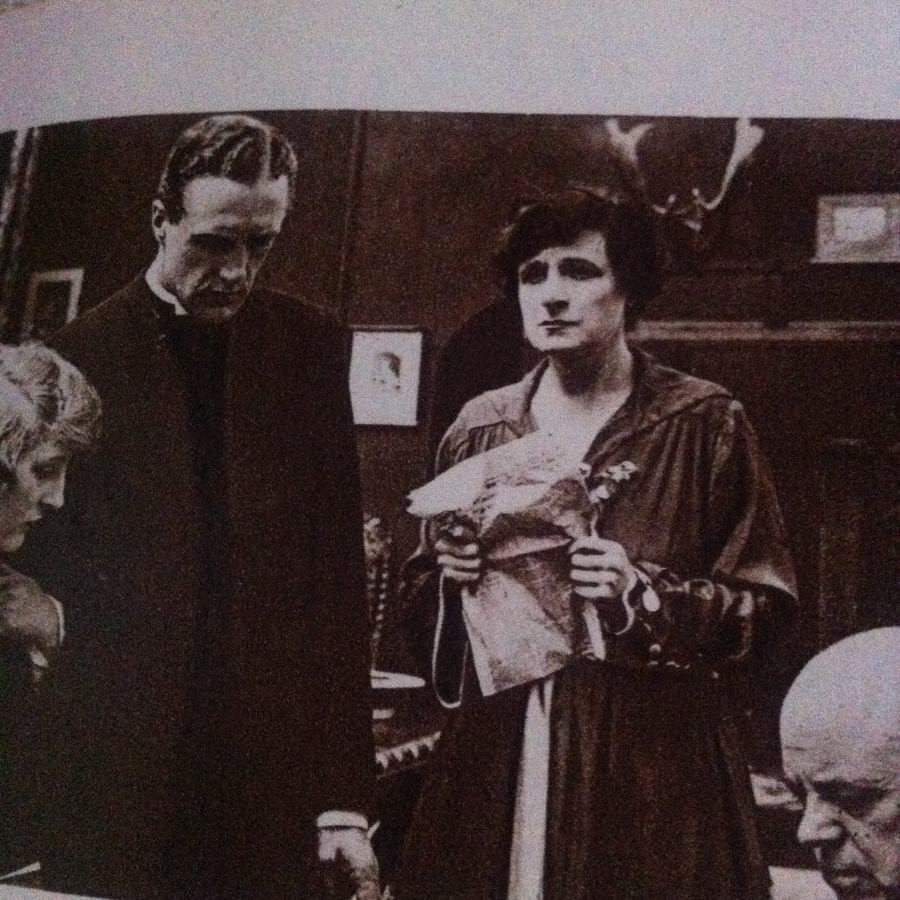
The performances in 'Wanted a Wife' are, as expected for the era, largely expressive and gestural, yet they convey a surprising depth of emotion. Minna Grey's portrayal of Miss Blossom is particularly noteworthy. She manages to imbue her character with a quiet dignity even in moments of profound vulnerability. Her transformation from demure self-effacement to hopeful anticipation is subtly rendered, making her eventual disillusionment all the more devastating. Owen Nares, as the explorer, projects an air of effortless charm and worldliness, making his appeal to both women entirely believable. The supporting cast, including C.M. Hallard, Isobel Elsom, and Tom Reynolds, provide solid foundations for the central drama, contributing to the film's overall coherence and emotional resonance.
The pacing of 'Wanted a Wife' is deliberate, allowing the emotional beats to register fully. Unlike some contemporary melodramas that might descend into histrionics, this film maintains a measured tone, which only serves to amplify the tragedy. The visual storytelling, characteristic of early cinema, relies on clear staging and evocative intertitles to advance the plot and reveal character motivations. While the absence of spoken dialogue might seem a limitation to modern viewers, it forces a greater reliance on visual cues and the actors' abilities to convey complex emotions through facial expressions and body language. In this regard, the film is a masterclass in the silent art form, proving that a compelling narrative doesn't always require a cacophony of sound.
Beyond the immediate heartbreak, 'Wanted a Wife' prompts deeper reflection on themes that remain pertinent even today. It explores the perils of miscommunication, the fragility of hope, and the often-unseen struggles of individuals trapped by societal expectations. The film subtly critiques a social structure where a woman's identity and happiness were so intrinsically linked to marriage, particularly for those past their youthful prime. Miss Blossom's desperate grasp at a perceived offer of matrimony is not merely a personal failing, but a symptom of a larger cultural condition. Her story, in its quiet desperation, echoes the plight of countless women who felt invisible or overlooked, their desires relegated to the realm of fantasy. One might draw parallels to the existential loneliness depicted in films like Gatans barn, where individuals grapple with their place in a indifferent world, though 'Wanted a Wife' focuses its lens more acutely on personal, romantic disillusionment.
The film also raises questions about agency and perception. To what extent is Miss Blossom a victim of circumstance, and to what extent does her own deeply ingrained desire for love contribute to her misinterpretation? Is her secret love for the explorer a reflection of genuine affection, or a desperate projection onto the only eligible man who has entered her orbit? The script wisely leaves some of these ambiguities open, allowing the audience to ponder the psychological complexities at play. This refusal to offer simplistic answers elevates 'Wanted a Wife' beyond mere melodrama, imbuing it with a psychological depth that is often surprising for its era. It's a testament to the enduring power of a well-crafted narrative that can explore the nuances of human emotion without relying on explicit exposition.
In its quiet portrayal of a life upended by a simple piece of paper, 'Wanted a Wife' offers a stark reminder of the fragile nature of human connection and the often-unseen suffering that can arise from even the most innocent of errors. The film, though over a century old, possesses a timeless quality in its exploration of universal themes: love, longing, hope, and the crushing weight of disappointment. It is a work that deserves rediscovery, a poignant example of how early cinema, often dismissed as primitive, was capable of profound emotional storytelling. While it might not share the grand scale or sensationalism of other films of the period, its intimate focus on Miss Blossom's internal world makes it incredibly impactful. The film's lasting impression lies not in spectacle, but in its ability to evoke profound empathy for a character caught in a tragic web of circumstances.
'Wanted a Wife' ultimately serves as a powerful testament to the skill of its writers and performers, who, with limited tools, crafted a narrative that continues to resonate. It's a film that lingers in the mind long after the final frame, a melancholic ode to the unfulfilled desires and unspoken dreams that often define the human experience. For aficionados of silent cinema and those interested in the evolution of dramatic storytelling, this film is an essential watch, a quiet masterwork that speaks volumes about the human heart, its capacity for hope, and its susceptibility to the cruel whims of fate. Its narrative, while seemingly straightforward, unravels a complex tapestry of emotional truths, proving that sometimes, the most devastating stories are told in the softest whispers and the most profound silences.
IMDb —
1918
Community
Log in to comment.