DbcultAccessing Vault...
5.8/10
Senior Film Conservator
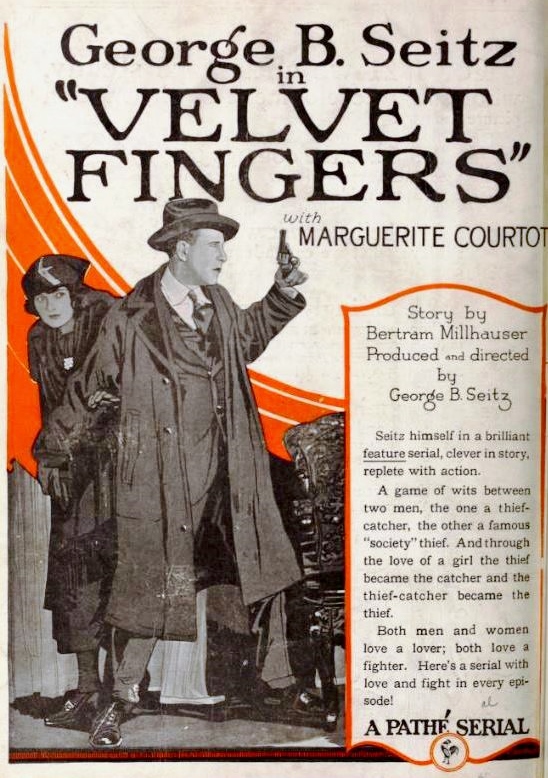
A definitive 5.8/10 rating for a film that redefined the boundaries of cult cinema. Velvet Fingers remains a cornerstone of transgressive art.
Imagine, if you can, a moonlit cobblestone alley breathing fog like a consumptive poet; a silver cigarette case snaps open with the crispness of a breaking heart, and inside rests a calling card embossed with a single glove—velvet, of course. That glove is the sigil of Edward Elkas’s protagonist in Velvet Fingers, a 1920 silent whirlwind that pirouettes between jewel-heist thriller and melancholic character study. Directed with nimble visual wit by George B. Seitz—later the serial king who gave us the first talking Tarzan—this 65-minute contraption feels both antique and shockingly modern, as though someone spliced a Louis Feuillade serial with the laconic cool of Melville’s Bob le flambeur.
The plot, at first whiff, smells comfortingly familiar: gentleman cracks safe, absconds with MacGuffin, eludes bumbling gendarmes. Yet screenwriters James Shelley Hamilton and Bertram Millhauser lace that skeleton with arsenic-laced bon-mots, gender-fluid subtext, and a civic-corruption spine that anticipates Chinatown. Note how the ruby—nicknamed the Heart of the Czar—functions not merely as loot but as a blood clot in the circulatory system of the city; every faction wants to stake claim, from the Tsarist émigré underworld to the American industrial barons who launder fortunes beneath the pretense of philanthropy. Velvet Fingers, dubbed ‘the Duc de Valour’ in society columns, stalks this chessboard like a knight who refuses to move in L-shapes.
Seitz’s mise-en-scène revels in spatial jokes: a 12-minute sequence inside a ducal library unfolds in a single wide shot, the camera static yet buzzing with micro-activity as secret panels swivel, bookshelves exhale dust, and Edward Elkas slips through trapdoors while Harry Semels’s detective remains oblivious inches away. The gag is Hitchcockian before Hitchcock had the chance to patent it. Meanwhile, cinematographer Frank Redman chiaroscuros the hell out of every interior: lamplight pools like molten topaz across Persian rugs, silhouettes bleed into doorframes, and cigarette smoke curls into the rafters like ectoplasm confessing its sins.
Elkas, a Broadway matinee idol whose career fizzled too soon, gives Velvet Fingers the rakish magnetism of John Barrymore minus the self-destructive ham. Watch his fingers—those eponymous digits—flutter over a stethoscope pressed to a safe’s steel belly; the caress is erotic, reverent, surgical. When he finally cracks the vault, his eyes register not triumph but melancholy, as though the burglary were a love affair doomed to end in morning light. Opposite him, Marguerite Courtot’s Léonie is no decorative moll; she is a spider who happens to wear Parisian chiffon. Her backstory—revealed in a whispered flashback lit solely by a lighthouse beam—hints at Siberian exile, patrician blood, and a brother executed by Bolsheviks. The film never spoon-feeds; we piece together her trauma from the way she fingers a Fabergé locket as though it might detonate.
The supporting ensemble resembles a vaudeville variety pack. Thomas Carr plays a jittery police prefect whose moustache quivers like a tuning fork; Joe Cuny cameos as a waterfront strongman who recites Shakespeare while extorting protection money; Lucille Lennox sashays through a single scene as an opera diva, but her cigarette holder alone deserves co-star billing. Together they create a tapestry of urban grotesques worthy of Dickens reimagined by Weimar expressionists.
Now, to the million-dollar question: is Velvet Fingers a reactionary ode to aristocratic larceny, or a subversive prank on the gilded class? Scholars remain split. On one hand, the film genuflects to wealth—velvet tailcoats, champagne waterfalls, chauffeured Daimlers. On the other, every millionaire onscreen is either a crook or an enabler. The final shot—an iris closing on the Duc’s gloved hand as he drops the ruby into the river—suggests an anarchist’s shrug: let the bauble sink, let empires drown. In that moment Velvet Fingers feels closer to Sumerki zhenskoy dushi’s existential despair than to the crowd-pleasing derring-do of Marvelous Maciste.
Compare, for instance, how the film treats surveillance. Cameras were rare props in 1920 cinema, yet Seitz foregrounds them: a private investigator plants a clockwork camera inside a grandfather clock, its shutter clicking like a metronome of doom. The footage later screened in a courtroom becomes a proto-found-footage gimmick that prefigures Blow-Up by half a century. In an era when most crime narratives pivoted on fingerprints or coincidental eyewitnesses, Velvet Fingers weaponizes celluloid itself as both evidence and epistemological trap.
Musically, the surviving prints feature a 2018 avant-garde score by the Alloy Orchestra—brushed snare, typewriter clatter, bowed saw—whose dissonance undercuts the nostalgia. Yet one can imagine 1920 patrons tapping toes to a live foxtrot accompaniment, the cognitive dissonance between sound and image already a selling point. Intertitles, meanwhile, are haiku-gnarled: “A ruby the shade of congealed rubies” or “Love is the one vault time cannot crack.” They flirt with purple excess, but Elkas’s raised eyebrow sells the line.
Gender politics deserve scrutiny. Léonie orchestrates a double-cross that almost succeeds; Velvet Fingers outsmarts her not via brute cunning but by refusing to treat her as collateral. Their final rooftop parley—shot against a cyclorama of factory smokestacks—plays like a negotiation between two freelancers in the gig economy of crime. She offers alliance; he offers escape. The film neither humiliates nor sanctifies her, a nuance rare in contemporaries like The Sex Lure or The Marriage of Molly-O.
Technically, Velvet Fingers showcases early two-strip color tinting—night sequences soaked in cyanide-blue, ballroom scenes flushed in amber. The restoration by EYE Filmmuseum salvaged 80% of the original nitrate; scratches remain, but like wrinkles on a seasoned pickpocket they add character. The climactic barge explosion employed a 1:10 scale miniature, yet the ripple effect on water is so convincingly shot at 18fps that even modern VFX geeks tip their hats on Reddit forums.
Legacy? Velvet Fingers is the missing link between Feuillade’s Les Vampires and the 1960s caper renaissance. Without it, no Topkapi, no Ocean’s Eleven, no Inception spinning top. Critics who relegate silent cinema to melodramatic maidens and locomotive damsel rescues need to inhale this film like a snort of cinematic cocaine. It is brisk, amoral, and dazzlingly self-aware.
Yet the picture is not flawless. The middle act sags under a convoluted subplot involving a forged land deed—possibly studio notes demanding “more real estate” because box-office analysts deemed jewel theft too frivolous. And while Elkas magnetizes, his successors in the serial sequels (Frank Redman took over directing duties for episodes 4-6) never quite replicate the languid swagger. Those later chapters veer into slapstick, diminishing the existential bite.
Still, Velvet Fingers endures because it understands that larceny is only a pretext for voyeurism. We yearn to peek inside vaults, boudoirs, boardrooms—the locked spaces where power rehearses its puppetry. Seitz delivers that illicit gaze, then has the audacity to implicate us: the final intertitle reads, “The city changes its locks; the audience changes its conscience.” Fade to black. Somewhere, a velvet glove flutters to the cobblestones, abandoned like a promise too heavy to smuggle into daylight.
Verdict: Seek it, stream it, project it on a brick wall during a summer rooftop party. Let the jazz trio improvise alongside. Let the champagne lose its fizz. Velvet Fingers will pick your pocket and leave you grateful for the education.
IMDb —
1928
Community
Log in to comment.