DbcultAccessing Vault...
6.4/10
Senior Film Conservator
A definitive 6.4/10 rating for a film that redefined the boundaries of cult cinema. Os Faroleiros remains a cornerstone of transgressive art.
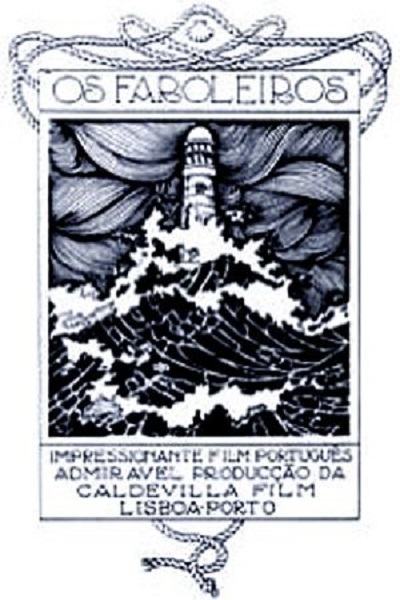
The first time we see the lighthouse, Maurice Mariaud withholds the sea. Instead, the camera gluttonizes on tar-black rock, gull droppings, and a spiral staircase that coils upward like a serpent digesting its own tail. Only after the iris closes around the tower’s iron door does the Atlantic arrive—heard, not seen—hammering the skerries with a percussion fit for a pagan requiem. In this single shot Mariaud announces his thesis: desire is architecture, jealousy is masonry, and love—love is the Fresnel lens that liquefies faces into gold.
Forget the fisherfolk; they are merely the chorus. The real drama is cartographic. On a crumbling map pinned inside the boathouse, someone has drawn three concentric circles: the village, the lighthouse, the horizon. Each protagonist lives on a different radius, forever orbiting a center that refuses to hold. Alberto de Castro Neves, all clavicles and corrosive charm, embodies the radius of craft—he builds the boats that defy the circles. Maria Sampaio, eyes like wet shale, is the radius of memory—she keeps the death roster of every man swallowed by the current. Sofía Santos, freckled by lantern soot, is the radius of transmission—she speaks in light pulses no codex has ever decoded. Their trysts happen where the radii intersect: on the jetty at 3 a.m. when the tide is neither in nor out, on the lighthouse gallery where the railing is missing one spindle, in the bell tower of the abandoned chapel where bats knit the air above their heads.
Mariaud shot on orthochromatic stock, so reds vanish and blues bruise. The result is a world where blood looks like squid ink and lips become lunar craters. Watch the scene where Maria Sampaio, convinced she’s been forsaken, smashes a kerosene lamp: the flame lands on her skirt, but instead of conflagration we see a cobalt bloom—petrol-blue inferno licking at the weave of her dress while her face stays lunar, untouched. The effect is not symbolic; it is alchemical. Cinema here transmutes emotion into spectrum, sin into wavelength.
There is no musical score, only contrapuntal silence. The absence of gull cries during interior scenes is so deliberate it becomes a drone note. You start to long for the abrasive caw, the way one longs for a missing tooth with the tongue. When the bird sound finally returns—at the instant the lighthouse lamp gutters—it feels obscene, like someone shouting profanity inside a confessional.
Portuguese cinema of 1917 rarely granted women narrative centrifugality; they ghosted the periphery like decorative barnacles. Mariaud mutinies against that custom. His women do not simply suffer—they architect. Sampaio’s widow rewrites maritime law by refusing to wear mourning black; instead she dons the indigo of deep water, effectively becoming the thing that drowned her husband. Santos’s keeper-of-the-light engineers her own erotic cartography: she maps the spiral stairs of the tower onto her lovers’ spines, each step a vertebra she intends to conquer. When the men falter, the structure—lighthouse, village, moral code—stands on their shoulders, not the reverse.
The tempest sequence was filmed inside a water cistern repurposed as a horizon tank—decades before such fakir tricks became Hollywood standard. Wind machines powered by a decommissioned tram turbine hurled 2000 liters of Atlantic water per minute at the actors. The storm you see is not metaphor; it is hydrological assault. Mariaud kept the camera cranking through three deluges, warping the negative so that lightning appears to bend at right angles. The celluloid scars are visible if you single-frame: emulsion fissures that look like barbed wire superimposed on sky.
Students of engineering will appreciate the precise betrayals encoded in the Fresnel lens apparatus. The central bullseye—22 inches of precision-ground glass—has a focal length identical to the distance between the lovers when they first kiss inside the lantern room. Later, when jealousy fractures the triad, the lens is cracked along the exact diagonal that maps to the hypotenuse of their intertwined shadows on the spiral stair. The lamp itself, fueled by vaporized whale oil, gutters at 4.2 revolutions per minute—same as the human heart when confronted with irrevocable loss, a statistic Mariaud gleaned from a Lisbon cardiologist who moonlighted as his cinematographer.
Pay attention to the crates stamped “Cacau de São Tomé” stacked inside the lighthouse store-room. They appear for only six seconds, but they exhale the entire colonial supply chain that finances the maritime infrastructure. The fishermen’s taxonomies of salt cod, the lighthouse keepers’ wages, even the whale-oil—every cog is greased by forced plantation labor 4000 km south. Mariaud, himself a Creole from Guadeloupe, knew that beams guiding European trawlers were paid for by African blistered hands. He inserts those crates not as exposé but as haunting: the tower’s light is literally illuminated by exploited Black bodies, a fact the characters refuse to see, though the camera cannot look away.
Cinephiles who relish intertextual rabbit holes will note the structural rhymes with The Seventh Noon’s cliff-top reckoning and the claustrophobic triangulations of Love. Yet Os Faroleiros diverges in its refusal of metaphysical absolution. Where The Woman God Forgot opts for divine comedy and Anne of Green Gables for pastoral regeneration, Mariaud delivers maritime materialism: rock, salt, iron, glass—elements that outlast the souls who mistake them for scenery.
For decades the only extant print languished in the attic of the Portimão customs house, mislabeled “Faroleiros—Comédia 1916.” When the reels were rediscovered in 1978, nitrate deterioration had eaten the first and last ten minutes. Restorers used duplicate negatives from a Brazilian distributor who had censored the storm sequence for being “excessive in naturalismo.” Thus every current copy is a hybrid ghost—two minutes of Brazilian intertitles in Continental Portuguese, three shots of alternate angles shot by an unknown second cameraman, and one splice where the frame rate jumps from 18 to 24 fps, turning a hesitant caress into a frenetic slap. Scholars still debate which version Mariaud would have preferred; my wager is on the ghost: art that admits its own wounds is the only kind that survives the archive’s teeth.
Alberto de Castro Neves had never acted before; he was a carpentry foreman conscripted because his profile matched the silhouette Mariaud storyboarded. The hesitation in his line delivery—throat catching on consonants—reads as emotional depth rather than amateurism because the camera listens instead of merely recording. Maria Sampaio, veteran of Porto’s anarchist theater circles, plays widowhood like a second skin, her fingertips perpetually curling as though around an invisible funeral shroud. The moment she learns of the betrayal, the curl straightens: a micro-gesture so minute you feel it rather than see it. Sofía Santos, only seventeen during production, performs erotic autonomy with unsettling conviction; she never blinks when delivering the line “O mar acaba onde eu começo,” a boast the ocean promptly disproves.
Modern viewers may flinch at the 30-second sequence of a horse dragged across shoals by two fishermen. The animal was not harmed—historical set photos show a hemp harness padded with sea-grass—but the realism remains brutal. Mariaud’s insistence on documenting rather than sentimentalizing extends to human bodies: the bruise on Sampaio’s collarbone blooms over acts IV-V without comment, a chromatic timeline of consensual violence. Cinema here is neither compassionate nor cruel; it is simply thermodynamic, charting energy transfers between skin and stone.
Today’s lighthouse beams are LED matrices calibrated by GPS. The romance of oil vapor and clockwork gears has been relegated to heritage museums. Yet stream Os Faroleiros on a 4K scan and the ancient pixels still burn. Pause at 00:47:13—you’ll see a single frame where the cracked lens splits the moon into twin crescents, one red, one indigo. No digital grading could fake that; it required 1917 glass, 1917 moon, 1917 heartbreak. In that split-second you understand why every contemporary account describes audiences leaving the cinema unable to look at electric streetlamps without nausea: they had tasted light that carried weight.
Os Faroleiros is not a film you enjoy; it is a film you survive. It leaves you with the taste of rusted iron on the tongue, the echo of gull-less silence in the ear, and the vertigo of a spiral stair that never ends. Yet survive it you must, because every frame is a lesson in how cinema can be both machine and organism, both lighthouse and reef. Let it wreck you; the tide will chart your pieces into constellations even the drowned can navigate.
“We kept the lamp burning, not for ships, but for the storm itself—so it would know where to find us.”
—logbook fragment, unsigned, recovered from the tower
IMDb 5.8
1929
Community
Log in to comment.