DbcultAccessing Vault...
6.7/10
Senior Film Conservator
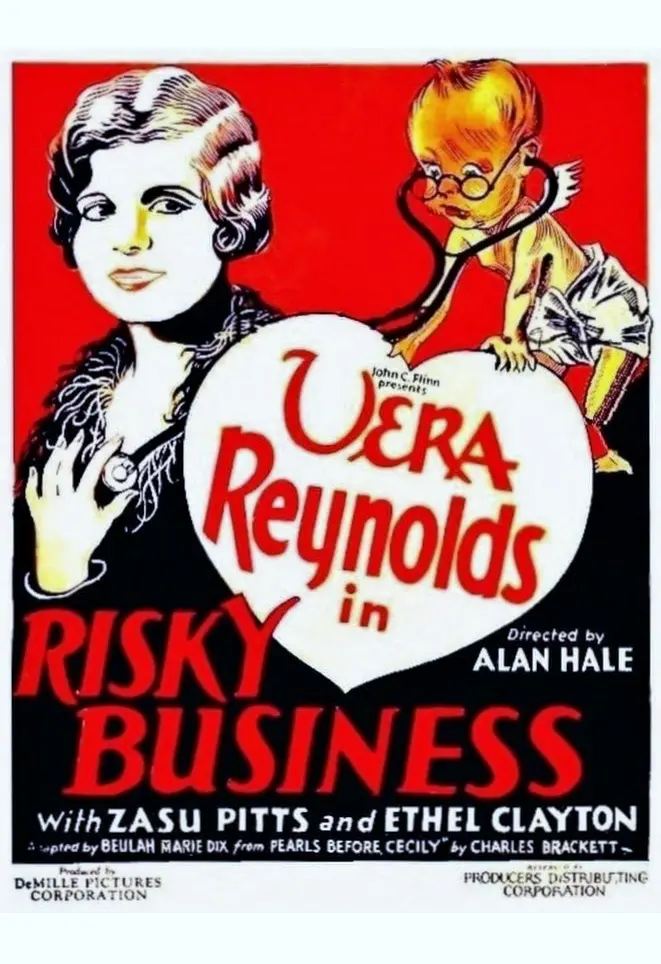
A definitive 6.7/10 rating for a film that redefined the boundaries of cult cinema. Risky Business remains a cornerstone of transgressive art.
Is Risky Business (1926) worth your time in the modern era? Short answer: Yes, but only if you enjoy watching the slow-motion car crash of a toxic family dynamic rather than a traditional romance.
This film is specifically for viewers who appreciate the nuance of silent-era social politics and the early work of legendary writers. It is certainly not for those looking for high-octane action or the slapstick humor common in the mid-20s.
1) This film works because the script by Charles Brackett and Beulah Marie Dix treats the mother’s manipulation as a strategic chess game rather than a cartoonish villain plot.
2) This film fails because the resolution for Ted Pyncheon feels somewhat hollow compared to the intense psychological buildup of the first two acts.
3) You should watch it if you are fascinated by the transition of 1920s cinema from simple moral plays to complex character studies like those seen in The Perfect Flapper.
Risky Business is a film that understands the terrifying power of a mother’s 'best intentions.' Mrs. Stoughton is not a villain who twirls a mustache; she is a woman who uses the social conventions of 1926 as a weapon. Every dinner party she hosts is a battlefield.
The way she introduces 'better' candidates for Cecily’s hand is handled with a surgical precision that feels modern. It reminds me of the social climbing seen in Scandal, where reputation is the only currency that matters.
One specific scene stands out: a garden party where Ted is visually isolated from the rest of the group. The cinematography uses the physical space of the Stoughton estate to show how Ted is being squeezed out of Cecily’s life. It is subtle, effective, and brutal.
Vera Reynolds delivers a performance that anchors the film’s emotional stakes. As Cecily, she has to convey the exhaustion of being a puppet. Her eyes often dart toward her mother before she speaks to Ted, a small detail that speaks volumes about her domestic cage.
Then there is Zasu Pitts. Even in a supporting role, Pitts brings a unique energy that breaks the tension of the heavy domestic drama. Her presence is a reminder that even in a film this stiff, there is room for humanity.
The cast, including George Irving and Ethel Clayton, operates like a well-oiled machine. They represent the rigid social structure that the younger characters are desperately trying to escape. It’s a dynamic we also see explored in Miss Nobody.
Risky Business is worth watching for its historical significance and its surprisingly sharp script. It offers a window into the anxieties of the 1920s regarding marriage and class. If you value character-driven drama over spectacle, this is a rewarding experience.
It is impossible to discuss this film without mentioning Charles Brackett. Before he became the writing partner of Billy Wilder, he was honing his craft on silent dramas like this. You can see the seeds of his later cynicism here.
The dialogue—delivered via intertitles—is punchy and often double-edged. When the mother speaks of 'happiness,' she clearly means 'solvency.' This linguistic gymnastics is a Brackett trademark in the making.
The film lacks the visual flair of Lady Hamilton, but it makes up for it with psychological depth. It is a writer’s film in a director’s medium. It works. But it’s flawed.
The pacing of Risky Business is surprisingly brisk for a 1926 drama. The directors (though uncredited in some prints, the influence of the Stoughton-style domesticity is clear) keep the scenes short and the conflict constant.
The use of shadows in the Stoughton household creates a noir-lite atmosphere. It suggests that while the house is full of light and guests, the actual lives of the occupants are lived in the dark. This is a sophisticated visual metaphor for the era.
Compared to the more straightforward narrative of The Cricket on the Hearth, Risky Business feels like a step toward the modern psychological thriller. It understands that the greatest dangers are often found in the living room.
If the film has a glaring weakness, it is the suitors Mrs. Stoughton brings in. They are largely interchangeable. While this might be the point—that to the mother, these men are just bank accounts with faces—it makes for some dull middle-act sequences.
We never truly feel that Cecily is tempted by them. The conflict remains between her and her mother, rather than a genuine choice between two different lives. This lowers the stakes of the 'rivalry' with Ted.
However, the contrived devices mentioned in the plot are handled with enough wit to keep the audience engaged. One particular 'accident' orchestrated by the mother is so transparently evil that it becomes the film’s most memorable moment of camp.
Pros:
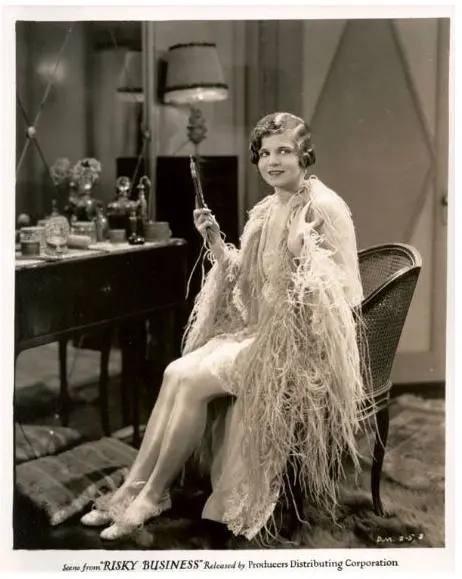
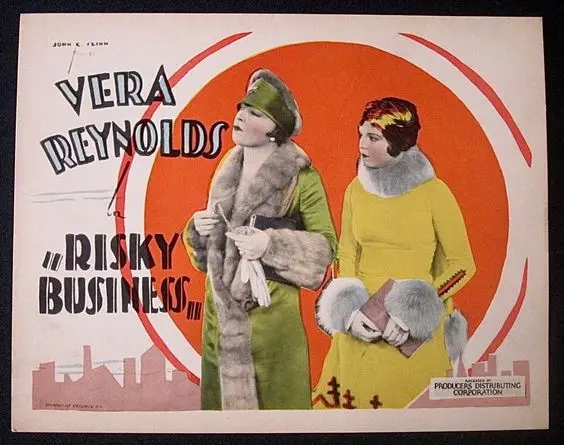
The script is sharp and avoids many of the era's cliches. Vera Reynolds is a compelling lead. The film provides an excellent look at 1920s high-society fashion and decor.
Cons:
The ending is a bit too tidy for the mess that preceded it. Some of the 'contrived devices' used by the mother feel a bit too convenient for the plot.
One thing that struck me was the film’s cynical view of the 'American Dream.' In most films of this era, like Jes' Call Me Jim, hard work and goodness are rewarded. In Risky Business, goodness is a liability that Mrs. Stoughton exploits.
It suggests that the only way to win in this society is to be as manipulative as the person holding the strings. This is a remarkably dark sentiment for a 1926 production. It’s a stance that makes the film feel ahead of its time.
Risky Business (1926) is a fascinating artifact. It isn't a sweeping epic, but it is a precise, painful look at the domestic cages women built for one another. The performances are strong, the writing is early-career brilliant, and the themes of parental overreach are timeless.
While it may not have the name recognition of other 1920s staples, it deserves a spot in the conversation about the evolution of the social drama. It’s a film that proves that even in the silent era, the loudest things were the things left unsaid at the dinner table.
Ultimately, it is a recommended watch for the cinephile who wants to see the foundations of modern screenwriting being poured. Just don't expect a feel-good ending that feels earned.
IMDb —
1922
Community
Log in to comment.