DbcultAccessing Vault...
Cult Review
Senior Film Conservator
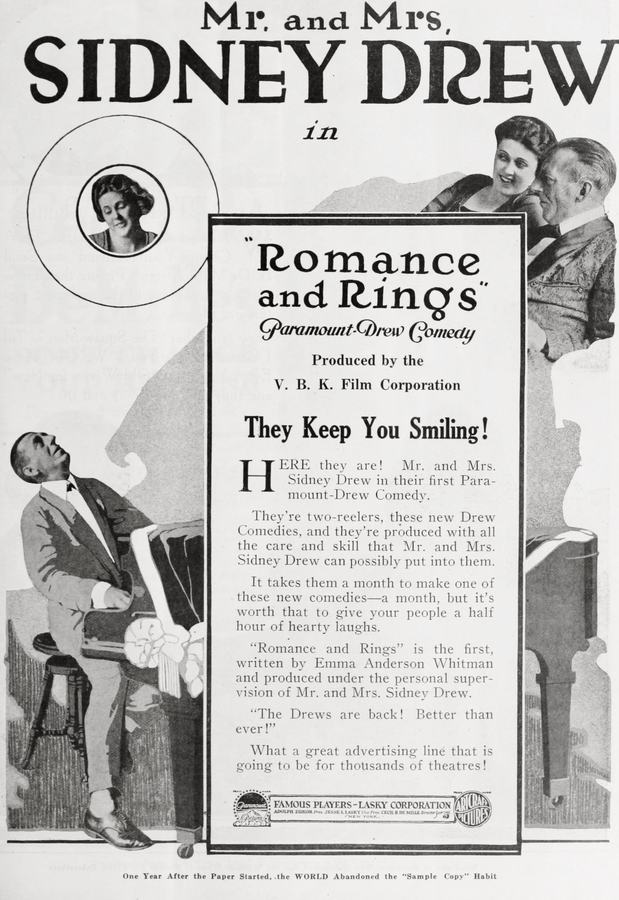
In the annals of early cinema, where the grand spectacle often vied with the intimate domestic tableau for audience attention, certain films emerged not by virtue of their lavish budgets or dramatic gravitas, but through the sheer, unadulterated brilliance of their comedic craft. 'Romance and Rings', a delightful silent offering featuring the incomparable Sidney Drew and Mrs. Sidney Drew, stands as a testament to this truth. Penned by a collaborative team including Tom Bret, Emma Anderson Whitman, and Mrs. Sidney Drew herself, this film transcends its humble origins to deliver a masterclass in situational farce, a delicate dance of social faux pas and escalating misunderstandings that remains as potent and amusing today as it undoubtedly was upon its initial release.
At its core, 'Romance and Rings' is a study in the exquisite agony of a well-intentioned blunder. The narrative unfurls at the precipice of Henry and Polly's wedding, an occasion typically imbued with solemnity and joy. However, Henry, portrayed with a charming, almost endearing ineptitude by Sidney Drew, embodies the archetypal forgetful groom. His last-minute realization that the crucial wedding ring has been left behind sets the stage for a comedic spiral that is both relatable and hilariously over-the-top. This is not the grand, existential dread one might find in a dramatic epic like The Doom of Darkness, nor the gritty realism of The Victim. Instead, it’s a distinctly human, domestic crisis, amplified by the rigid social decorum of the era.
The brilliance of the film’s premise lies in its immediate, high-stakes problem and the equally immediate, yet deeply problematic, solution. Enter Jimmy Teasdale, Henry’s old friend, whose loyalty is matched only by his susceptibility to a bad idea. In a moment of panic-driven ingenuity, Jimmy prevails upon his wife to loan her own wedding ring for the ceremony. This act of friendship, seemingly innocuous, becomes the linchpin of the entire comedic edifice. The ring, once placed on Polly’s finger, becomes stubbornly, inextricably affixed. This single, physical obstruction transforms a simple oversight into a monumental dilemma, igniting a chain reaction of frantic attempts to manage both the furious Mrs. Teasdale and the blissfully ignorant Polly.
The plot, rather than relying on broad slapstick, meticulously builds its humor through the escalating tension of concealment. Henry and Jimmy are trapped in a web of their own making, each desperate attempt to extricate themselves only tightening the knots of their deception. This intricate dance of evasion and placation is where the film truly shines, showcasing a sophisticated understanding of comedic timing and character-driven humor. It’s a far cry from the more overt, almost theatrical villainy depicted in films like The Vampires: The Poisoner, focusing instead on the everyday anxieties and awkwardness that resonate deeply with audiences.
Sidney Drew, often hailed as the 'King of Komedy' in his era, brings a nuanced performance to Henry. His forgetfulness isn't malicious; it's an intrinsic part of his character, making his subsequent frantic efforts to rectify the situation all the more sympathetic and funny. He isn't a clown in the traditional sense, but a man perpetually on the verge of social collapse, a figure with whom many a viewer, perhaps recalling their own minor domestic gaffes, could readily identify. His expressions, subtle shifts in posture, and the almost imperceptible tremor of his hands convey a world of internal panic without the need for a single spoken word.
Mrs. Sidney Drew, portraying Polly, is equally compelling in her role as the unwitting recipient of the borrowed ring. Her innocence and genuine happiness amplify the comedic predicament, as her joy contrasts sharply with the frantic machinations of the men around her. She is not a caricature but a believable bride, radiating a contentment that makes the audience simultaneously root for her continued ignorance and anticipate the inevitable, hilarious reveal. Their chemistry on screen, a hallmark of their collaborative work, adds an authentic layer to the domestic comedy, making the stakes feel genuinely personal even amidst the absurdity. This partnership was a cornerstone of their cinematic output, much like other iconic duos, though their brand of humor was distinctly focused on the gentle, often self-deprecating, aspects of marital life, rather than the more boisterous antics seen in films such as Double Trouble.
The direction, presumably by Sidney Drew himself (though specific directorial credits for many early films can be ambiguous), is remarkably adept at maximizing the comedic potential of each scene. The pacing is precise, allowing moments of quiet tension to build before erupting into physical comedy or a new twist in the deception. The use of intertitles is judicious, providing just enough information to advance the plot without interrupting the visual flow of the gags. The camera work, while perhaps rudimentary by modern standards, effectively frames the action, emphasizing facial expressions and crucial props – particularly the recalcitrant ring.
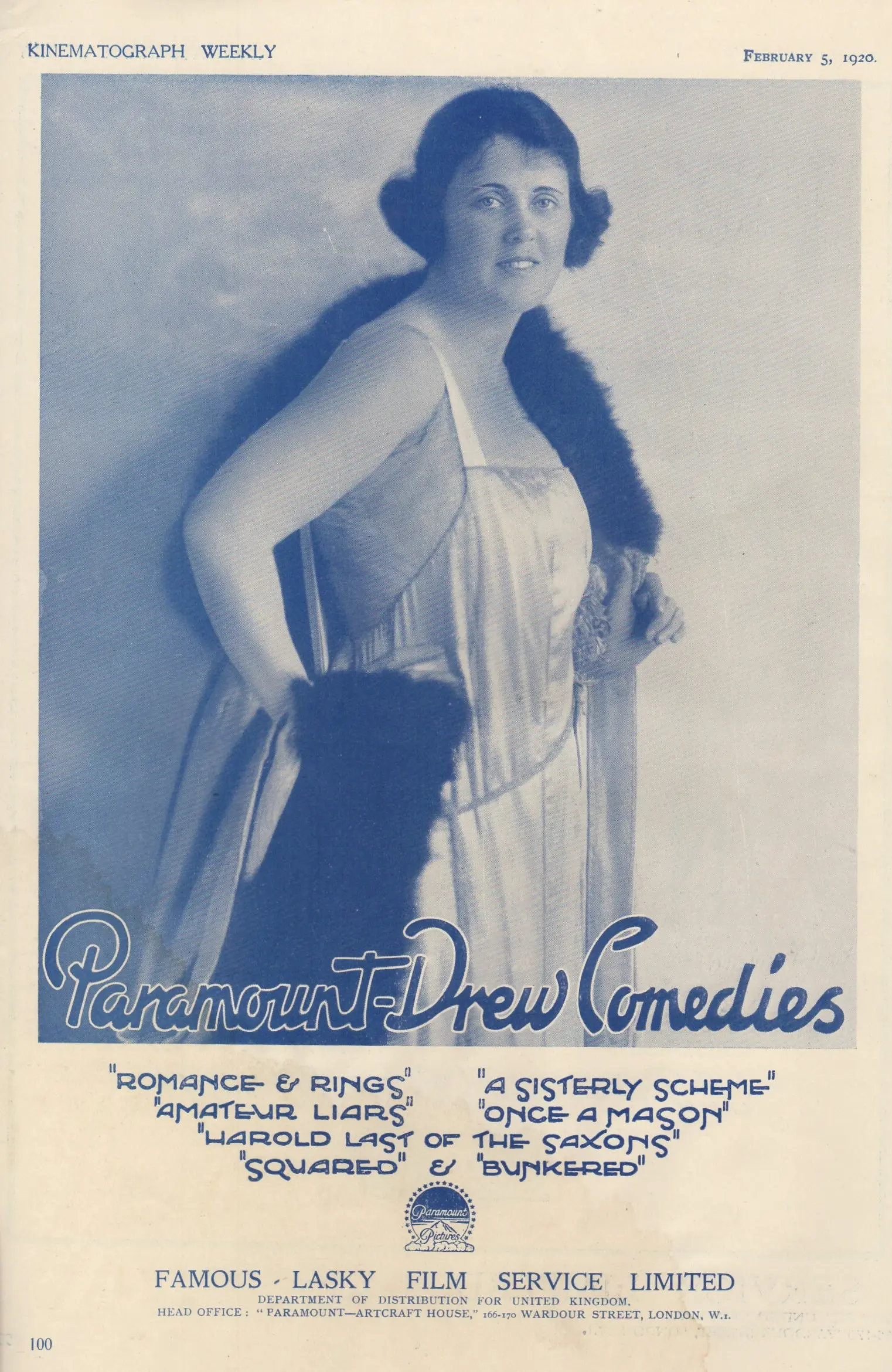
The writers, Tom Bret, Emma Anderson Whitman, and Mrs. Sidney Drew, deserve immense credit for crafting a narrative that is both simple in its premise and complex in its execution. They understood the mechanics of farce, knowing how to introduce complications, raise the stakes, and delay the inevitable resolution for maximum comedic impact. The plot doesn't meander; it drives relentlessly towards its farcical climax, each scene contributing directly to the escalating predicament. This kind of tight, economical storytelling is a hallmark of effective silent comedy, a skill honed by many writers of the era who had to convey narrative solely through action and reaction, a challenge perhaps even greater than that faced by the writers of more complex narratives like The Way of the World or The Warfare of the Flesh.
While primarily a comedy, 'Romance and Rings' inadvertently touches upon several intriguing themes. It subtly explores the pressures of social expectation and the lengths to which individuals will go to maintain appearances, particularly in the context of marriage. Henry's forgetfulness, while humorous, also speaks to the human tendency towards oversight, and the desperate attempts to cover up such lapses. The film also, perhaps unintentionally, comments on the nature of friendship and loyalty, as Jimmy's ill-advised intervention stems from a genuine desire to help his friend, even if it plunges them both into deeper trouble.
The ring itself, a symbol of eternal commitment, becomes a source of immense comedic friction, highlighting the absurdity that can arise when symbols clash with practical realities. It's a playful deconstruction of the solemnity surrounding marital rites, a gentle reminder that even the most sacred ceremonies are subject to human foibles. This lighthearted approach to serious themes contrasts sharply with the more earnest explorations of societal norms found in films like The Sporting Duchess or A Black Sheep, which often delved into moral quandaries with a more dramatic hand.
In an era dominated by sprawling serials and melodramatic narratives, 'Romance and Rings' offers a refreshing dose of concise, character-driven comedy. It demonstrates that a compelling story doesn't always require grand gestures or vast landscapes, but can thrive within the confines of a domestic setting and the intricacies of human interaction. Its humor is universal, rooted in situations and anxieties that transcend time and cultural barriers. While films like Germania or The Lady of the Dugout sought to capture epic scope or adventurous spirit, Drew's film found its strength in the microcosm of everyday life.
The film's influence, though perhaps not as overtly documented as that of some of the era's more prominent blockbusters, lies in its contribution to the evolution of comedic storytelling. It helped solidify the domestic farce as a viable and beloved subgenre, paving the way for countless subsequent portrayals of marital misunderstandings and social gaffes. The Drews, in their quiet, understated way, were pioneers in crafting comedies that relied on wit and character rather than mere spectacle. Their work, including 'Romance and Rings', stands as a crucial bridge between the theatrical farces of the 19th century and the more sophisticated cinematic comedies that would follow. It’s a film that, despite its age and silent nature, speaks volumes about the enduring power of a good laugh.
Comparing it to other silent comedies, one might find echoes of its clever plotting in films like The Silk-Lined Burglar, which also relies on a central deception, or the escalating chaos of Melting Millions. However, 'Romance and Rings' possesses a unique gentle touch, a warmth that prevents its characters from ever feeling truly malicious, even in their most frantic moments of subterfuge. It's a comedy of errors born from good intentions, a concept that resonates deeply and provides a comforting, rather than cynical, laugh. Its particular brand of humor, focusing on the minutiae of social embarrassment and the lengths people go to avoid it, also finds a kindred spirit in the Hungarian film Pufi - Hogyan lett ünnepelt hös egy jámbor pesti férjböl?, which similarly explores the comedic potential of a meek man thrust into an absurd situation.
For those who appreciate the delicate artistry of silent film and the timeless appeal of well-executed comedy, 'Romance and Rings' is an absolute must-see. It’s not merely a historical curiosity; it’s a vibrant, engaging piece of cinema that continues to charm and entertain. The performances by Sidney Drew and Mrs. Sidney Drew are masterful, imbued with a humanity and comedic timing that many contemporary actors would do well to study. The ingenuity of the plot, the escalating stakes, and the satisfying resolution all combine to create a film that is both a delightful escape and a fascinating glimpse into the comedic sensibilities of an earlier era. It reminds us that laughter, in its purest form, transcends the spoken word, finding its voice in the subtle gesture, the frantic expression, and the universally understood predicament of a forgotten ring and an unyielding finger. Its charm, much like the ring itself, proves to be quite indelible, making it a true classic worthy of rediscovery and celebration.
IMDb —
1919
Community
Log in to comment.