DbcultAccessing Vault...
Cult Review
Senior Film Conservator
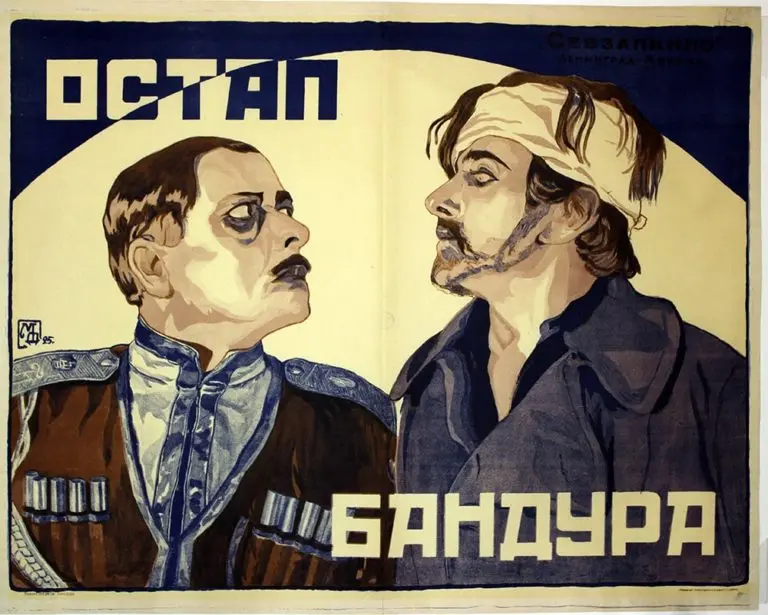
The celluloid landscape of the mid-1920s was a crucible of experimentation, yet few works capture the raw, unvarnished kinesis of historical upheaval quite like Ostap Bandura. Directed by the visionary Vladimir Gardin and penned with surgical precision by Mikhail Mayskiy, this silent epic serves as a profound meditation on the inevitability of the revolutionary spirit. Unlike the more escapist fare seen in The Fortune Teller, which meandered through mystical domesticity, this film thrusts the viewer into the visceral reality of the Ukrainian front. It is a work that demands an intellectual engagement with its form, utilizing the montage techniques that would soon define the Soviet avant-garde, while maintaining a deeply humanistic core through the performance of Vladimir Lisovskiy.
The narrative arc of Ostap is not merely a biographical journey but a symbolic ascent. We witness the protagonist’s evolution from a subjugated laborer to a tactical commander, a transition handled with a lack of sentimentality that is startling for the era. The cinematography captures the vastness of the steppe, transforming the geography itself into a silent witness to the carnage of the Civil War. There is a haunting quality to the long shots of the horizon, reminiscent of the atmospheric gravity found in Armenia, the Cradle of Humanity under the Shadow of Mount Ararat, though Gardin replaces the ethnographic reverence of the latter with a gritty, revolutionary urgency.
The casting of Vladimir Lisovskiy in the titular role provides a magnetic center around which the chaotic elements of the plot revolve. His face is a map of the era’s anxieties—stoic yet brimming with a latent volatility. Supporting him is Liana Iskritskaya-Gardina, whose portrayal of the feminine struggle within the revolutionary framework offers a nuanced counterpoint to the masculine militarism. Her performance avoids the melodramatic pitfalls often seen in contemporary Western productions like Her Moment or the lighthearted whimsy of Don't Call Me Little Girl. Instead, she brings a gravitas that anchors the film’s more didactic sequences.
Special mention must be reserved for the legendary Mariya Zankovetskaya. As a titan of Ukrainian theater, her presence on screen is an event in itself. Her ability to convey profound grief and resilience through minimalist gestures elevates the film from a mere political document to a high-art tragedy. The ensemble, including Dmitriy Kapka and Dmitri Erdman, operates with a communal synergy that mirrors the collective ideology of the screenplay. Even the smaller roles played by Teodor Brainin and Ivan Kapralov are etched with a distinctiveness that prevents the film from descending into a blur of anonymous faces, a common failing in large-scale epics like Michael Strogoff.
Technically, Ostap Bandura is a marvel of its time. The lighting design utilizes a harsh chiaroscuro that emphasizes the moral binary of the conflict without sacrificing visual complexity. Shadows are used not just for aesthetic flair but as thematic indicators of the old world’s lingering grip. This is far removed from the simplistic visual language of Bull Arizona - The Legacy of the Prairie or the slapstick clarity of Le peripezie dell'emulo di Fortunello e compagni. Gardin’s camera is inquisitive, often lingering on the textures of the earth and the calloused hands of the workers, creating a tactile connection between the audience and the screen.
Mikhail Mayskiy’s script avoids the episodic fragmentation found in Beatrice Fairfax Episode 9: Outside the Law, opting instead for a symphonic progression. The pacing is deliberate, allowing the tension to accumulate until the inevitable eruptions of violence. These sequences are edited with a rhythmic intensity that predates the more famous works of Eisenstein, showcasing the early prowess of the VUFKU (All-Ukrainian Photo-Cinema Administration). The film’s ability to weave together personal vendettas with grand historical shifts makes it a far more sophisticated narrative than the straightforward heroism of Pure Grit.
To watch Ostap Bandura in the 21st century is to engage with a phantom of a lost era. It possesses a sincerity that is often missing from contemporary political cinema. The film does not shy away from the brutality of its subject matter, yet it maintains an aspirational tone that is infectious. While films like June Madness or A Pair of Sixes were busy entertaining the masses with light social satire, Gardin was attempting something far more ambitious: the creation of a national mythos. The inclusion of actors like Vasiliy Vasilenko and Nikolai Panov ensures that every layer of the social strata is represented, creating a panoramic view of a society in flux.
The thematic depth here is staggering. It explores the concept of sacrifice not as a heroic choice, but as a biological necessity for the survival of the collective. This echoes the intensity of What Love Will Do, but pivots from romantic devotion to ideological martyrdom. The film’s conclusion, which I will not spoil for the uninitiated, is a masterclass in cinematic catharsis, blending the personal and the political into a singular, unforgettable image. It lacks the cynical edge of Fantomas - On the Stroke of Nine, replacing mystery with a stark, undeniable truth.
In the broader context of silent cinema, Ostap Bandura stands as a testament to the power of regional filmmaking. It is uniquely Ukrainian, grounded in the specificities of its culture and history, yet its themes of liberation are universal. The collaborative effort between the cast—including the likes of B. Chuyevskiy and Olga Bystritskaya—and the technical crew resulted in a film that feels remarkably modern in its sensibilities. It eschews the theatrical artifice that plagued many early films, such as Call a Taxi, in favor of a naturalism that would later influence the neorealist movements.
Ultimately, this is a film that requires the viewer to slow down and absorb its rhythms. It is not a fast-paced thriller like Monty Works the Wires, but a deep, resonant exploration of the human condition under duress. The collaboration of Mikhail Mayskiy and Vladimir Gardin resulted in a piece of art that is as much a historical artifact as it is a cinematic triumph. It remains a vital watch for anyone interested in the roots of political filmmaking and the evolution of visual storytelling. The scorched fields and resolute faces of Ostap Bandura will linger in the mind long after the final title card fades, a haunting reminder of the cost of change and the enduring power of the human spirit.
IMDb 6.5
1936
Community
Log in to comment.