DbcultAccessing Vault...
Cult Review
Senior Film Conservator
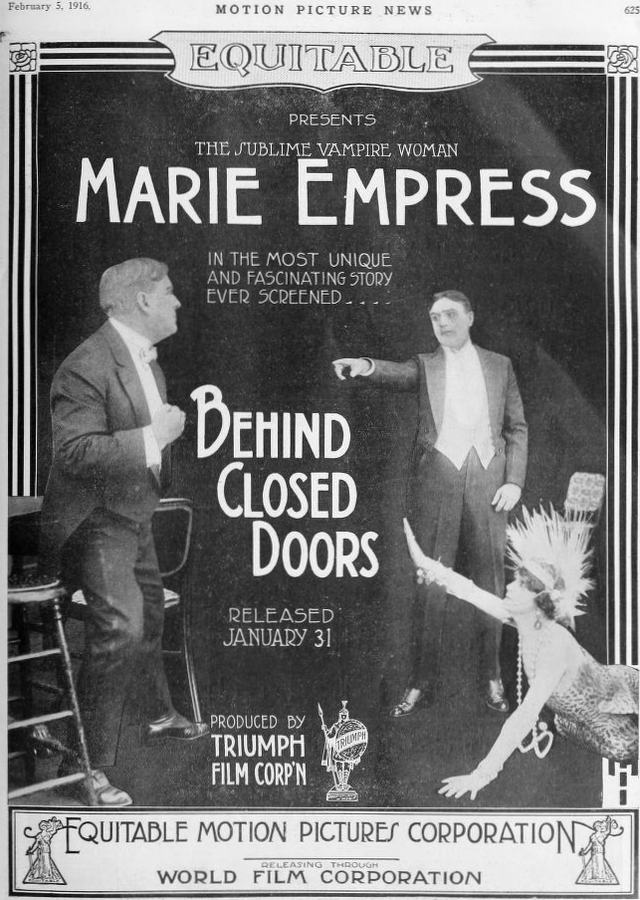
Ah, the silent era! A time when storytelling on screen relied purely on the visceral power of imagery, the nuanced expressions of actors, and the evocative cadence of intertitles. It was an epoch of grand gestures, moral quandaries, and narratives that, despite their lack of audible dialogue, often spoke volumes louder than many contemporary productions. Among these cinematic relics, a gem like 'Behind Closed Doors' (1914) emerges, a compelling drama that delves into the murky depths of human desire, sacrifice, and the inescapable grip of fate. Far from a mere historical curiosity, this film, penned by the perceptive Eve Unsell, offers a remarkably intricate tapestry of character and consequence, proving that the complexities of the human heart are timeless, regardless of the medium's technological constraints. It's a film that asks us to peer beyond the obvious, to understand the motivations simmering beneath the surface, and to acknowledge the profound impact of choices made in the crucible of desperation.
At the heart of this somber narrative stands Inez Valenti, portrayed with an alluring yet conflicted intensity. Her existence is a paradox: niece to the nefarious Grant Thorne, proprietor of a clandestine gambling establishment, Inez serves as the alluring bait, drawing unsuspecting souls into her uncle's web of vice. She is, in essence, a living ornament, a beautiful facade designed to entice, her very presence a calculated instrument of deception. Yet, beneath this carefully constructed veneer of glamour and detachment, a soul yearns for liberation. This internal struggle is not merely hinted at; it forms the very bedrock of her character, a simmering volcano of discontent waiting for the right spark to ignite. Her life, conducted quite literally 'behind closed doors' – both the physical confines of the gambling den and the metaphorical barriers around her true self – is one of profound moral compromise. One might even draw parallels to the tragic figures in films like The Clemenceau Case, where societal expectations and personal desires clash with devastating results, or the alluring, destructive forces sometimes seen in the archetypal 'vamp' characters of the era, though Inez's tragedy lies in her reluctant participation, not her inherent malevolence.
The catalyst for Inez's awakening arrives in the form of Barry King. His earnest, unadulterated infatuation with her is not just a romantic entanglement; it's a mirror reflecting her own degraded existence. For the first time, perhaps, Inez sees herself through eyes unclouded by judgment or avarice, and the sight instills in her a violent aversion to the life she has been forced to lead. This burgeoning self-awareness is both her salvation and her curse, propelling her towards a desire for change while simultaneously entangling her deeper in a web of deceit and danger. The film masterfully portrays this internal shift, relying on the subtle shifts in Marian Swayne's (presumably Inez's actress, though not explicitly stated in cast list for specific roles, we infer from typical cast sizes) facial expressions and body language to convey a profound transformation. It's a testament to the power of silent acting, where every glance, every tremor of the hand, carries immense narrative weight.
While Inez grapples with her newfound conscience, another woman's heart silently aches. Elsa Montford, the daughter of a venerable Judge, harbors a quiet, profound affection for Barry King. Her sorrow over King's attentions being diverted to Inez is palpable, a poignant counterpoint to the more dramatic machinations unfolding. Elsa represents purity and integrity, a stark contrast to the shadowy world Inez inhabits. Her presence introduces a crucial element of moral rectitude into the narrative, setting the stage for a dramatic conflict not just between individuals, but between competing ideals. She is not a femme fatale, nor a damsel in distress in the traditional sense, but rather a woman whose inherent goodness becomes a pivotal force in the pursuit of justice, much like the steadfast characters who often anchor the intricate plots of films such as Sherlock Holmes, guiding the moral compass of the story even amidst chaos.
The precarious balance of these interwoven lives shatters under the weight of Grant Thorne's possessive jealousy. Thorne, accustomed to wielding absolute control over his illicit domain and, by extension, his niece, views Barry King's burgeoning relationship with Inez as an intolerable affront. This simmering resentment erupts into a violent confrontation within the very walls of the gambling house – a setting that, much like the evocative atmosphere in Gambling Inside and Out, symbolizes the inherent dangers and moral decay lurking beneath a veneer of excitement. The ensuing struggle culminates in a gunshot, Thorne falls, and King, in a moment of panicked desperation, discards the incriminating pistol before attempting to flee. His escape is short-lived, however, and he is swiftly apprehended. The scene is a masterclass in silent film suspense, relying on rapid cuts, intense close-ups, and the sheer physicality of the actors to convey the brutality and suddenness of the event.
The narrative then twists with cruel irony: Elsa Montford, the quiet observer, witnesses the entire tragic affair. Her testimony becomes the linchpin of King's impending doom. Guided by her father, the Judge, she identifies Barry among the other prisoners at the police station, her sorrowful gaze sealing his fate. This act, born of a commitment to truth and justice, inadvertently places her at odds with Inez, setting the stage for a desperate struggle between love, loyalty, and the relentless pursuit of righteousness.
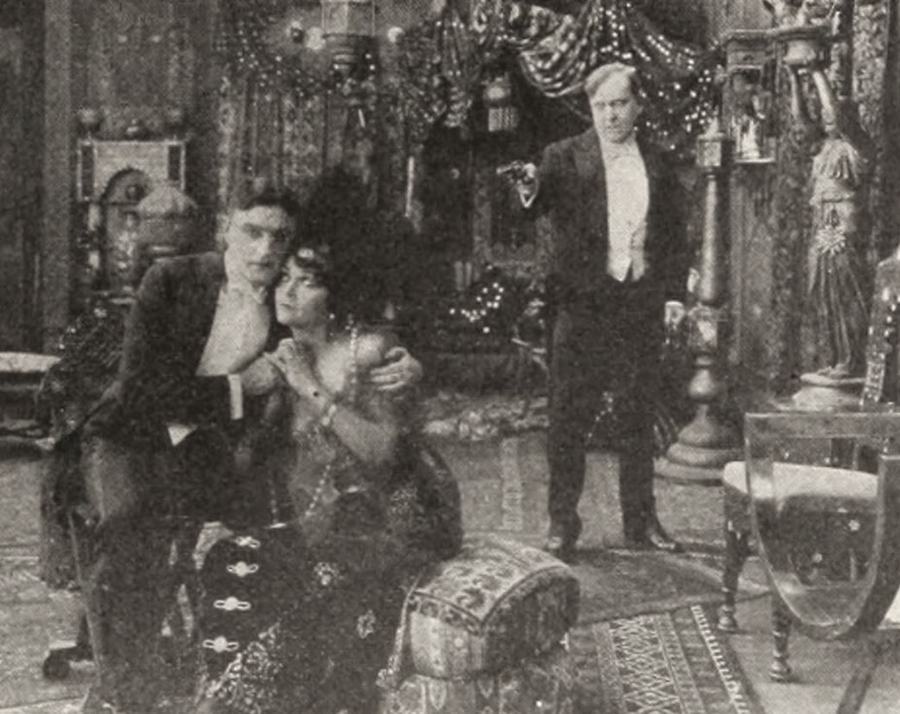
Upon learning that the State possesses a witness to the shooting – Elsa – Inez is consumed by a despair so profound it borders on madness. The thought of Barry's conviction, a man who awakened her to a life beyond the 'closed doors' of her past, is unbearable. She refuses to leave the city, tethered to the grim hope of somehow extricating him from this predicament. Her desperation manifests in increasingly reckless actions. She sends for Elsa, attempting first to bribe her into silence, a futile gesture against Elsa's unyielding moral compass. When bribery fails, Inez resorts to a more sinister tactic: a drugged glass of wine, a desperate attempt to incapacitate the witness and prevent her testimony. This moment of chilling manipulation highlights the depths to which Inez is willing to sink for the man she has come to love, a stark contrast to her earlier reluctance to participate in her uncle's schemes. However, Elsa's innate caution and quick thinking prevail; she breaks the glass and escapes, narrowly avoiding Inez's desperate ploy. This dramatic confrontation, devoid of dialogue, speaks volumes through the actors' intense expressions and the palpable tension, reminiscent of the heightened stakes in thrillers like The Black Envelope where every move is fraught with peril.
With her attempts to silence Elsa thwarted, Inez turns her attention to Barry, urging him to jump bail and flee the city. Her love, though born in the shadows, is fierce and protective, yet misguided. She sees escape as the only path to his salvation, unable to comprehend a world where justice might prevail. But here, Elsa once again intervenes, her plea to Barry to stay and fight for his innocence resonating with a quiet power. Her conviction, her belief in the justice system, and perhaps her unspoken love for Barry, persuade him to face the consequences, to clear his name rather than live a life on the run. This pivotal decision marks a significant turning point, not only for Barry but for the entire narrative trajectory. He writes to Inez, a letter that must have torn her world asunder, declaring his love for Elsa. The raw emotion conveyed through simple intertitles and the actors' reactions would have been devastatingly effective in the silent era, painting a portrait of shattered hopes and redirected affections.
Utterly bereft, stripped of her last vestiges of hope, Inez retreats into the solitude of her despair. It is in this profound isolation that she undertakes her final, most agonizing act: penning a full confession of her life, a searing indictment of her choices, and a devastating revelation. The truth, when it finally emerges, is a gut punch: Inez declares that she, not Barry, fired the fatal shot that killed Grant Thorne. Barry, in a selfless act of profound love and chivalry, had taken the pistol from her, choosing to remain silent about her involvement to spare her from the gallows. This act of self-sacrifice, a silent testament to his devotion, elevates his character to a tragic hero, willing to bear the weight of a crime he did not commit for the woman he loved. It’s a twist that resonates with the grand, often melodramatic, yet deeply affecting reveals found in stories of profound sacrifice, much like the intricate moral dilemmas faced by characters in The Count of Monte Cristo, albeit on a different scale of justice and revenge.
The confession, a document imbued with Inez's final, desperate honesty, falls into Elsa's hands. The weight of this revelation must have been crushing, forcing Elsa to confront a truth far more complex and tragic than she could have imagined. Her initial commitment to justice now morphs into a profound understanding of human frailty, sacrifice, and the convoluted paths of love. When she has finished reading, a sense of grim duty propels her forward. She contacts the district attorney, and together, they hasten to Inez's room. What they find there is the tragic, inevitable conclusion to a life lived 'behind closed doors' and ultimately consumed by its own secrets: Inez, in her utter despair, has taken her own life. Her final act is one of both confession and escape, a desperate bid for peace that only death can offer. The film concludes not with a triumphant resolution, but with a poignant, somber reflection on the destructive power of secrets, the burden of guilt, and the ultimate, tragic cost of a life lived in the shadows.
'Behind Closed Doors' is more than just a crime drama; it's a profound exploration of several enduring themes. The most obvious is the titular metaphor: the 'closed doors' represent not just the literal confines of the gambling den, but the hidden lives, the unspoken desires, and the societal pressures that force individuals into roles they despise. Inez's journey is a desperate attempt to break free from these metaphorical prisons, only to find herself trapped by her own choices and the tragic consequences of love. The film also delves deeply into the complexities of sacrifice – Barry's willingness to take the fall for Inez, and Inez's ultimate sacrifice in confessing and ending her life. It examines different facets of love: the obsessive, destructive love of Thorne, the transformative and ultimately tragic love between Inez and Barry, and the pure, unwavering affection of Elsa. The contrast between these forms of love provides much of the narrative's emotional thrust, making it a compelling character study that transcends its early cinematic origins.
From a filmmaking perspective, Eve Unsell's screenplay is remarkably sophisticated for its time, weaving a complex web of motivations and revelations. The pacing, crucial for silent films, is expertly managed, building suspense and emotional intensity through carefully constructed scenes and intertitles that enhance rather than merely explain the action. While specific details about the direction or cinematography are scarce, one can infer from the intricate plot that the visual storytelling would have been paramount. The performances, particularly by Marian Swayne (Inez) and the actors portraying Barry King (Fred Radcliffe) and Elsa Montford (Marie Empress), would have relied heavily on expressive physicality and nuanced facial work to convey the full spectrum of their characters' inner turmoil. The era demanded a particular kind of acting – often more theatrical by today's standards, but undeniably powerful in its ability to communicate complex emotions without a single spoken word. The silent film's reliance on universal visual cues allowed for a broad appeal, and 'Behind Closed Doors' leverages this beautifully to tell a story that is both deeply personal and universally resonant.
In conclusion, 'Behind Closed Doors' stands as a testament to the enduring power of early cinema to craft compelling, emotionally resonant narratives. It's a film that, over a century later, continues to engage with its intricate plot, its complex characters, and its unflinching exploration of human nature's darker corners. It reminds us that even in the absence of sound, the echoes of tragedy, sacrifice, and the relentless pursuit of truth can reverberate across generations, leaving an indelible mark on the cinematic landscape. It's a poignant reminder that the stories we tell, and the ways we choose to tell them, often reveal more about ourselves than we dare to admit, especially when those stories unfold, as they so often do, 'behind closed doors.'
IMDb —
1917
Community
Log in to comment.