DbcultAccessing Vault...
4.6/10
Senior Film Conservator
A definitive 4.6/10 rating for a film that redefined the boundaries of cult cinema. Nice and Friendly remains a cornerstone of transgressive art.
Imagine, if you can, a bijou bauble of celluloid slipped into a velvet ring-box rather than a projector gate—Nice and Friendly is exactly that: a private trinket Charlie Chaplin minted for two aristocrats who already owned half the Empire’s silverware. Yet within its scant four-minute pulse beats a riotous manifesto about ownership, appetite, and the sheer absurdity of wanting.
Shot in September 1922 on the terraces of Broadlands, the Mountbattens’ Hampshire abode, the film never wanted for distribution; it was a nuptial gag, a cinematic inside joke. Still, its DNA—slapstick DNA, yes, but also a kind of proto-surrealist chromosome—has leaked into the cultural groundwater. You can taste it in Buñuel’s Der violette Tod, where poison lipstick replaces pilfered pearls, or in the lawless toddler abandon of Nonsense, another short that believes plot is a bourgeois superstition.
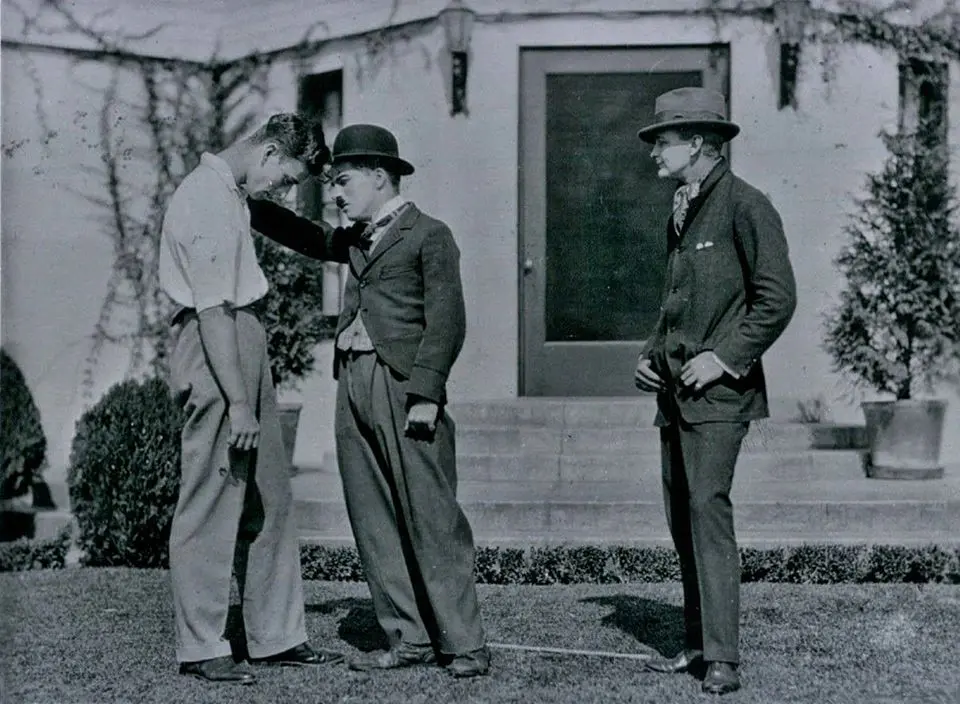
The inciting MacGuffin—Edwina’s pearl collar—glints like a string of captured full moons. It is coveted by a swarm of tuxedoed brigands who erupt from topiary shadows, their waxed moustaches twitching like antennae. They could have stumbled out of Should a Baby Die? or Dollars and the Woman, films where desire is always a gentleman’s sport gone septic.
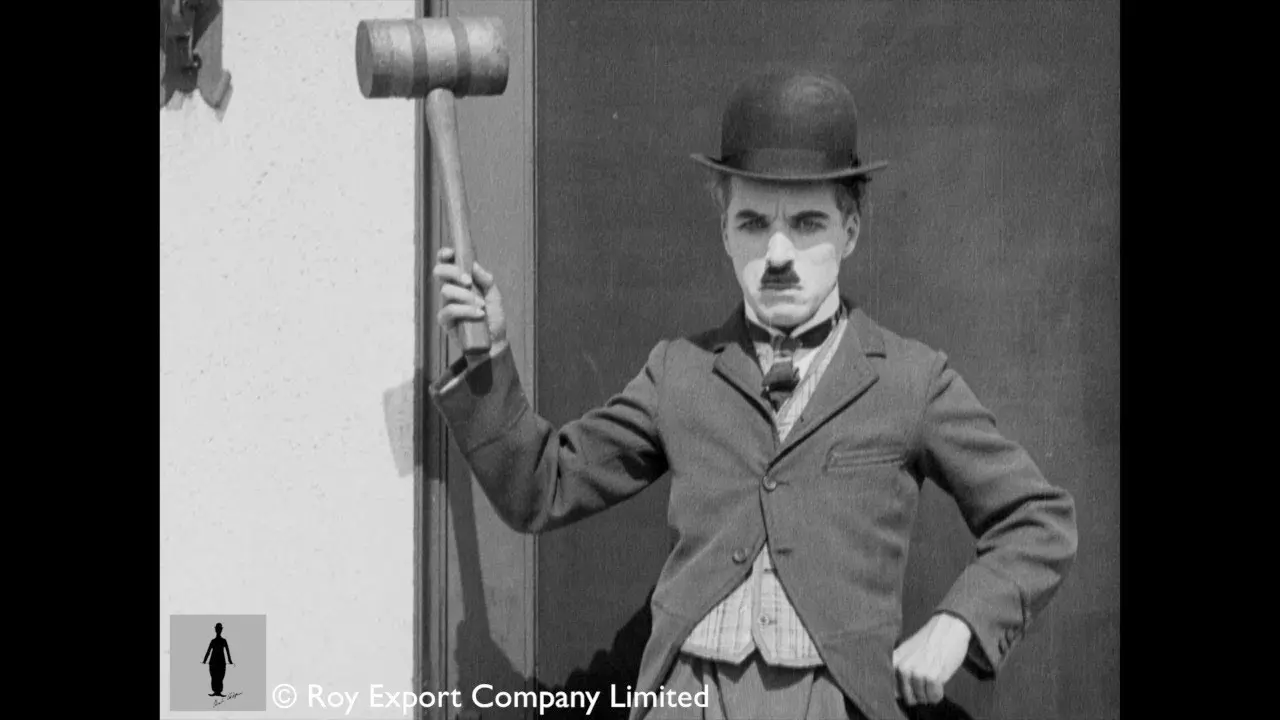
But Chaplin, tramp attire incongruous against Palladian columns, refuses the role of conventional sleuth. He is part commedia zanni, part avenging angel armed with a carpenter’s prop that materialises like a Freudian daydream. Each thwack of the hammer lands with the wet thud of cosmic punchline; bodies crumple, yet no blood, no consequence. The lawn becomes a still-life of prostrate dandies, a human croquet course. Meanwhile Jackie Coogan, the infant prodigy who made the world weep in The Kid, lies beneath a quilt, peeking out with the blasé wisdom of a child who already suspects adults are the real infants.
There is no narrative arc in the classical sense—only a daisy-chain of visual puns. Consider the moment when a burglar’s gloved hand snakes toward the necklace: Chaplin stomps the shadow, not the man, flattening the silhouette into a Rorschach blot. It’s a gag that anticipates the ontological pranks of In Wrong, where identity itself proves as pliable as taffy.
Technically, the film is a marvel of guerrilla craftsmanship. Chaplin had no studio overhead, no deadline beyond the wedding breakfast. He shot with available light, letting the low autumn sun carve lambent halos around Edwina’s lace train. The camera, operated by Rollie Totheroh, glides handheld—almost sashays—through the melee, its occasional wobble lending the affair a tipsy immediacy. Compare that to the cathedral stateliness of Civilization, where every frame genuflects to moral grandeur; here, the lens giggles and lurches, drunk on improvisation.
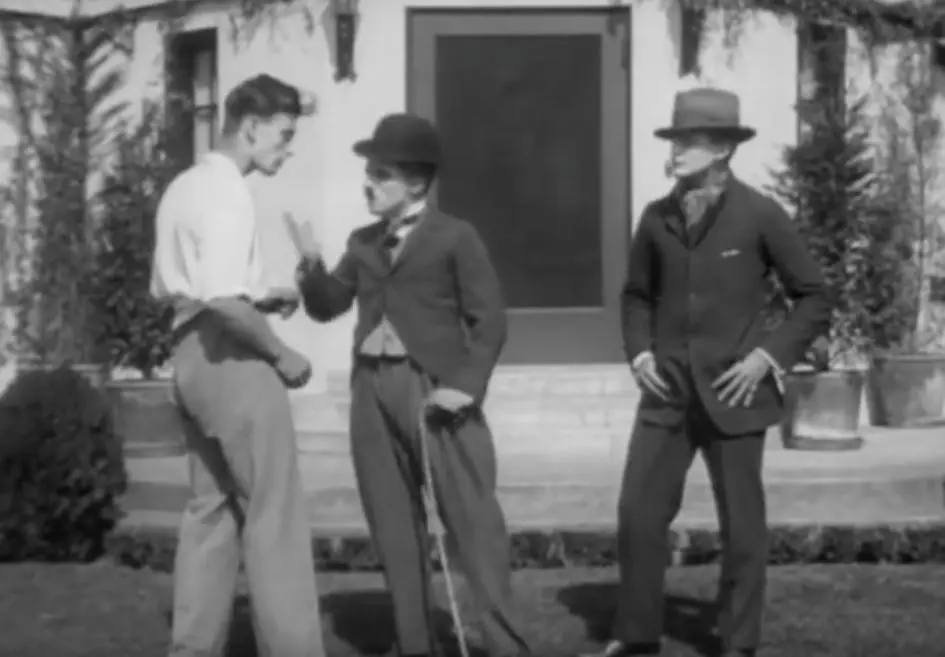
“Property is theft,” Proudhon famously wrote. Chaplin answers with a shrug: theft is just another parlour game, and property—those pearls—are happiest when rolling through grass, untethered from clavicles and codes.
Sound, of course, is absent, yet the film crackles with aural ghosts: the whip-crack of the hammer, the hush of lawn-sprinklers, the gasp of Edwina’s pearls skittering like marbles. Chaplin understood that silence is not vacant; it is an echo chamber where the spectator’s own heartbeat becomes Foley. In that regard, Nice and Friendly converses across the decades with La gitana blanca, another mute vignette whose flamenco rhythms exist solely in the viewer’s inner ear.
Gender politics, usually a minefield in early slapstick, are here refreshingly diffused. Edwina Mountbatten plays herself with the unflappable poise of a woman who knows pearls can be replaced, but a good anecdote is immortal. She is neither damsel nor femme fatale; she is the bemused monarch of a domain temporarily overrun by jesters. Contrast that with the hysterical maternal anguish of Good Women or the sacrificial virgin of Should a Baby Die?; Edwina’s composure feels like a feminist preview in miniature.
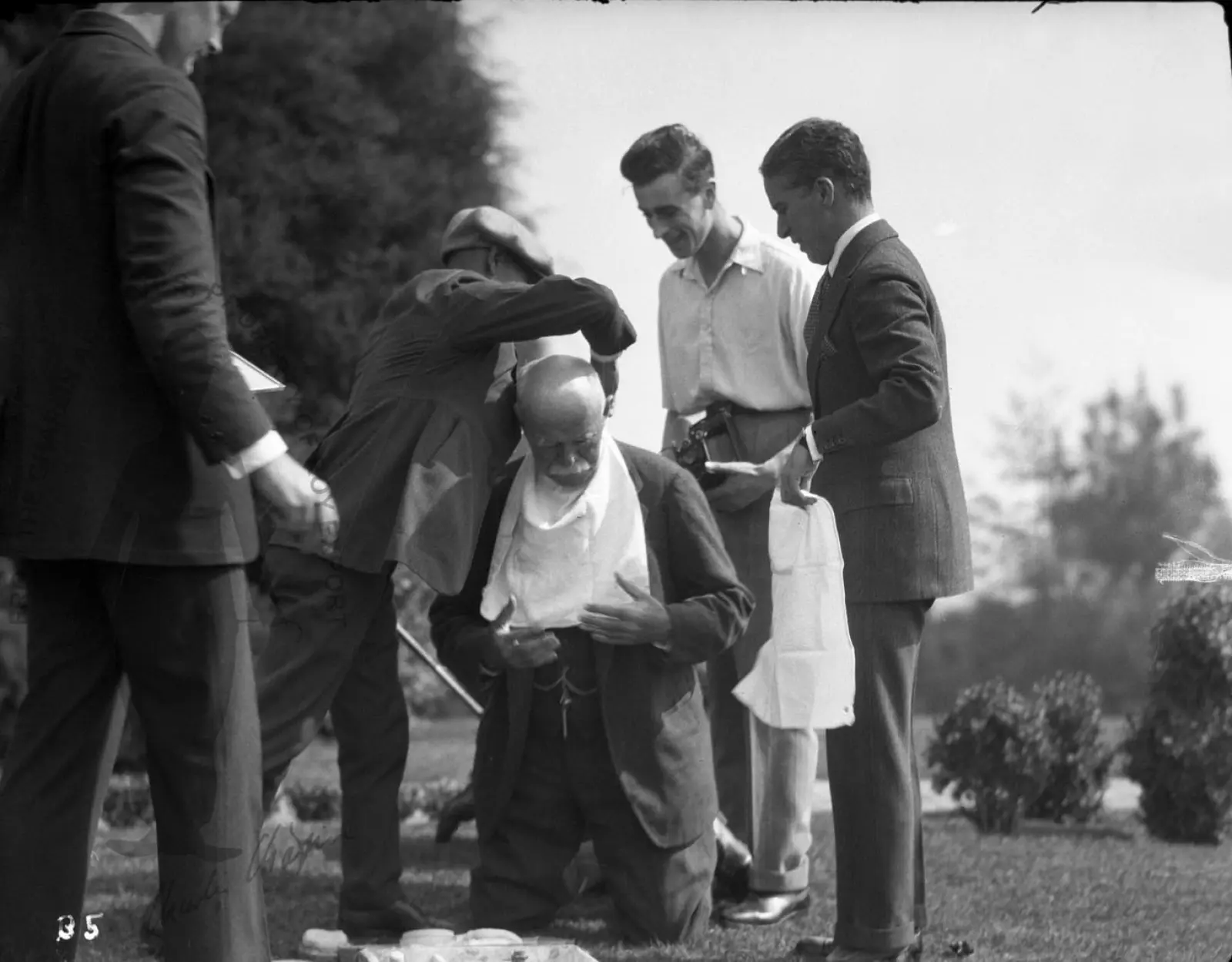
And then there is the matter of the hammer—wooden, almost totemic. It is the inverse of the sword in The Juggernaut, where machinery grinds destinies. Here, the tool is pre-industrial, almost pastoral. Each conk on the cranium is less a violent act than a ritual purging, a homeopathic dose of chaos to keep the aristocracy honest. One cannot help but recall the slapstick sacraments of Uncle Sam of Freedom Ridge, where liberty itself is a custard pie lobbed at the face of pomp.
Scholars often treat Nice and Friendly as a footnote, a gewgaw. But footnotes are where subversion hides. The film’s refusal of plot is itself a political act: a denial of the capitalist logic that every object must propel a story toward profit. Instead, pearls roll, crooks collapse, and the camera—bored, amused—tilts up to watch clouds reassemble into new, ungovernable shapes.
As for Jackie Coogan’s cameo, it operates like a magic-eye stereogram: once seen, it reconfigures the entire lattice of meaning. Hidden beneath a blanket for no narrative reason, he is the film’s idling conscience, the child who will grow up to sue his parents for squandering his fortune and, by extension, expose the exploitative underskirts of Hollywood. His blink-and-miss grin here is a seed of future resistance, a reminder that even within a wedding gift, history’s worm is already gnawing.
Color grading, though monochromatic, flirts with temperature shifts: the pearls bloom with icy bluish highlights, while the lawn exudes chlorophyll greens that verge on the lurid. It’s a miniature primer on how value is a trick of light. One thinks of the amber gels bathing Wild Youth, where adolescence is colourised as literally incandescent. Chaplin achieves a similar alchemy without dyes, using only reflectors and sun-angle.
Viewing the film today—preferably on a 16-mm print that clatters through a portable projector—feels like gate-crashing a séance. The Mountbattens are long gone, the marriage dissected by biographers, the estate now a heritage site trafficked by pensioners clutching audio guides. Yet each time the reel spins, the lawn re-inflates with anarchic life, the pearls scatter anew, and Charlie’s hammer rises in an eternal arc, forever about to fall. It is cinema as pocket-watch, ticking inside the waistcoat of history.
So, is Nice and Friendly merely a trifle? Only if you regard haikus as trifles, or sketches by Da Vinci, or the scrawled equations on Fermat’s margin. Its brevity is its shield: too fleet to be commodified, too playful to be embalmed by academia. In the endless buffet of cinematic content—where even mediocrity is served in super-size—it is the equivalent of a single, perfect oyster: briny, luminous, gone before you can quite name the taste.
Seek it out, should you ever be granted access to an archive’s inner sanctum. Watch it twice: once for the gags, once for the ghost. And when the lights come up, notice how your own pockets feel inexplicably heavier, as if someone has slipped you a pearl you did not earn and certainly never bought. That larcenous tingle—that is the film’s parting gift, a reminder that ownership, like narrative, is just another sleight of hand waiting to be joyously, ruthlessly, lovingly dismantled.
IMDb 7.3
1925
Community
Log in to comment.