DbcultAccessing Vault...
Cult Review
Senior Film Conservator
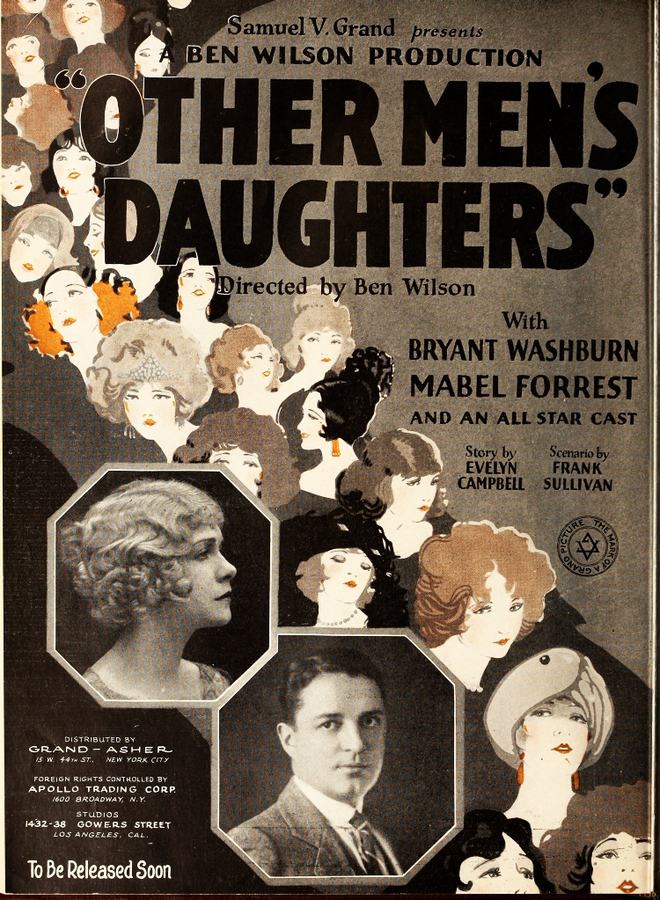
Stepping back into the cinematic landscape of 1923, one encounters a fascinating, albeit often overlooked, artifact: Other Men's Daughters. Directed with a keen eye for the social mores and hypocrisies of its era, this silent drama, penned by Evelyn Campbell and Frank Sullivan, offers a compelling, if somewhat melancholic, glimpse into a society grappling with changing values, nascent female independence, and the enduring double standards that permeated the early 20th century. It’s a film that, despite its age, resonates with a surprising contemporary relevance, particularly in its unflinching portrayal of familial dysfunction and the moral labyrinth individuals navigate when confronted with uncomfortable truths.
The narrative pivots around Dorothy Kane, portrayed with a compelling blend of innocence and burgeoning resilience by Mabel Forrest. Dorothy’s life, initially depicted as one of constrained domesticity, is abruptly upended by the tyrannical hand of her father, a businessman whose public persona of respectability masks a life of clandestine indulgence. This patriarchal figure, a man who wields absolute authority within his home, simultaneously lavishes his affections and resources upon a coterie of female companions in the city’s burgeoning nightlife. It’s a stark dichotomy, a blatant hypocrisy that serves as the film’s central thematic anchor. The father’s denouncement of Dorothy, the catalyst for her departure from the family home, propels her into a world she scarcely understands, a world that, ironically, is inextricably linked to her father’s secret life.
Forrest’s performance as Dorothy is crucial. She manages to convey the character’s initial naiveté without rendering her entirely helpless. As Dorothy navigates the treacherous waters of urban life, she encounters Lottie, Trixie, and Alaska—a trio of women who, in their world-weariness and pragmatic approach to survival, represent a stark contrast to Dorothy’s sheltered upbringing. These characters, though perhaps archetypes of the 'fallen woman' prevalent in silent cinema, are sketched with enough nuance to avoid caricature. They are products of their environment, a society that offered limited avenues for women, particularly those without significant means or powerful male protectors. Their interactions with Dorothy, initially cautious, gradually evolve into a form of camaraderie, offering her a glimpse into a different kind of female solidarity, one forged in the crucible of societal marginalization.
The film truly hits its stride in the sequences depicting the city’s nightlife. These scenes, while perhaps sanitized for the sensibilities of the era, nonetheless evoke a sense of clandestine allure and moral ambiguity. The flickering lights, the hushed conversations, the opulent interiors—all contribute to an atmosphere of hidden desires and forbidden pleasures. It is within this milieu that Dorothy, through a cruel twist of fate, finds herself at a dinner party, a gathering of elderly men and young women, a stark visual representation of the transactional nature of certain social relationships. The moment she locks eyes with her father across the crowded room is a masterstroke of silent film drama. The shock, the betrayal, the dawning realization of his profound hypocrisy—all are conveyed through Forrest’s expressive eyes and subtle facial gestures, a testament to the power of non-verbal acting in this era.
This pivotal encounter sets in motion Dorothy’s profound moral dilemma. Her initial instinct, a righteous and understandable urge, is to expose her father’s duplicity to her mother. The thought of her neglected mother, languishing in a domestic prison built on lies and emotional abandonment, fuels Dorothy’s desire for justice. However, the film delves deeper, exploring the complexities of such a revelation. It presents a nuanced argument against the simplistic pursuit of truth, particularly when that truth might inflict irreparable harm. Dorothy’s agonizing reconsideration, her eventual decision to shield her mother from further sorrow, is perhaps the most powerful aspect of the film. It speaks volumes about the sacrifices made by women in that era, the silent burdens they carried, and the difficult choices they faced in protecting the fragile emotional ecosystem of their families.
The portrayal of Mrs. Kane, though perhaps peripheral to Dorothy’s immediate journey, is crucial to understanding Dorothy's ultimate decision. She is depicted as a woman already burdened by neglect, her spirit perhaps dimmed by years of unfulfilled expectations and a loveless marriage. To shatter her remaining illusions, however threadbare, would be an act of cruelty, an imposition of a harsh reality that she may not have the strength to bear. This moral calculus, the weighing of truth against compassion, elevates Other Men's Daughters beyond a mere melodrama into a more thoughtful exploration of human relationships and the often-unseen costs of societal hypocrisy.
Comparing this film to others of its time reveals interesting parallels and divergences. For instance, the themes of women navigating restrictive societal norms are also evident in films like The Divorcee (1919), which similarly probes the complexities of marital discord and female agency. However, Other Men's Daughters distinguishes itself by focusing more intensely on the filial bond and the profound ethical quandary faced by a daughter discovering her father’s double life. Whereas The Divorcee might explore the wife's direct confrontation of marital infidelity, here, the burden of knowledge falls upon the child, adding another layer of tragic weight to the narrative.
The directorial choices throughout the film are noteworthy. The use of close-ups to emphasize emotional states, a common technique in silent cinema, is particularly effective during Dorothy’s moments of introspection. The contrast between the stark, almost austere, visuals of the Kane household and the opulent, shadowy aesthetics of the city’s nightlife visually reinforces the thematic divide between public morality and private vice. The intertitles, while serving their functional purpose of advancing the plot and conveying dialogue, often carry a poetic weight, contributing to the film’s overall somber tone. The performances, typical of the era, employ a heightened expressiveness, yet Mabel Forrest manages to imbue Dorothy with an internal struggle that feels remarkably authentic.
The film also serves as a valuable historical document, offering insights into the social fabric of the early 1920s. The Jazz Age, with its burgeoning freedoms and challenges to traditional morality, is subtly yet effectively depicted. The ‘flapper’ culture, while not overtly central, is hinted at through the characters of Lottie, Trixie, and Alaska, who embody a certain modern sensibility that challenged the more rigid Victorian ideals. The film touches upon the economic realities that often pushed women into precarious social positions, a theme that resonates with other contemporary works exploring urban life and its attendant dangers for young women. It’s a period piece that manages to transcend its specific historical context by tapping into universal themes of family, betrayal, and the search for integrity in a morally ambiguous world.
One might draw a thematic connection to films that explore the consequences of hidden actions, such as The Evil Thereof, if one were to consider the broader implications of the father's actions. While Other Men's Daughters focuses more on the emotional and moral fallout within the family unit, both films implicitly deal with the ripple effects of morally questionable behavior. However, Other Men's Daughters maintains a more intimate, character-driven focus, making the viewer deeply invested in Dorothy's personal struggle rather than a broader societal expose.
The ensemble cast, while perhaps less prominent than Forrest, contributes effectively to the film’s atmosphere. William H. Turner, as the dictatorial father, embodies the patriarchal villain with a chilling conviction, his stern demeanor at home contrasting sharply with his dissolute behavior in the city. The supporting players, including Roscoe Karns, Kathleen Kirkham, and Martha Franklin, each add texture to the urban landscape Dorothy finds herself in, portraying characters who are both products and agents of their environment. Their collective performances underscore the film’s exploration of class, gender, and moral compromise.
The title itself, Other Men's Daughters, carries a poignant double meaning. On one hand, it refers to the young women patronized by men like Dorothy’s father, highlighting the transactional nature of their relationships. On the other hand, it subtly alludes to Dorothy herself, who, in her father’s eyes, becomes just another 'other man’s daughter' once she defies him and enters the very world he inhabits. It’s a title that encapsulates the film’s central irony and its critique of a society that compartmentalizes women into distinct, often contradictory, categories.
While the film may not possess the sprawling ambition of an epic or the groundbreaking cinematic techniques that define some of its more celebrated contemporaries, its strength lies in its focused, emotionally resonant storytelling. It's a testament to the power of a well-crafted narrative and strong performances to convey complex moral themes without relying on spoken dialogue. The film’s exploration of the silent suffering of women, the corrosive effects of hypocrisy, and the difficult choices individuals make to protect those they love, remains remarkably poignant.
In conclusion, Other Men's Daughters stands as a compelling example of early 20th-century cinema's capacity for social commentary and psychological depth. It’s a film that quietly dissects the moral fabric of its time, presenting a powerful argument against the destructive nature of double standards and the profound emotional cost of maintaining appearances. Mabel Forrest’s performance as Dorothy Kane is particularly memorable, anchoring the film with a nuanced portrayal of a young woman caught between righteous anger and compassionate restraint. For those interested in the social history embedded within silent films, or simply in a well-told human drama, this film offers a rich and rewarding experience. It reminds us that the struggles against hypocrisy and the dilemmas of truth-telling are timeless, echoing from the flickering screens of the past into the complexities of our present. Its quiet power lies in its ability to force us to consider the often-unseen burdens carried by individuals, particularly women, in societies that demand conformity while secretly condoning transgression.
IMDb 4.5
1934
Community
Log in to comment.