DbcultAccessing Vault...
Cult Review
Senior Film Conservator
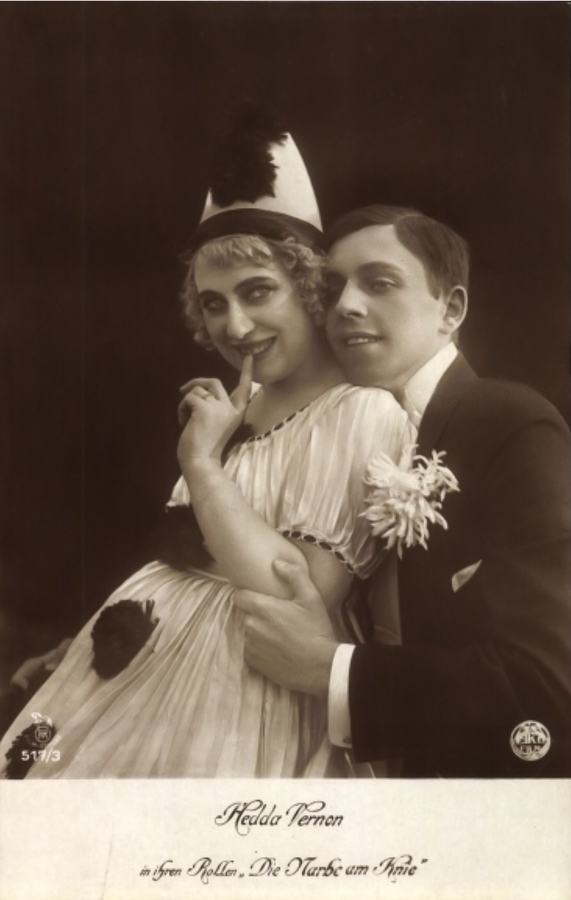
The 1917 production Die Narbe am Knie stands as a haunting testament to the burgeoning sophistication of German silent cinema. In an era where the visual medium was still grappling with its linguistic boundaries, this film utilized the human body as a primary text. The titular scar is not merely a plot device; it is an ontological anchor. Directed by the prolific Hubert Moest, the film navigates the precarious intersection of class mobility and the permanence of physical history. Unlike the more overt melodrama found in Lena Rivers, Moest opts for a simmering atmospheric tension that relies heavily on the audience's ability to read the unspoken. The narrative architecture is built upon the fragility of the bourgeois facade, a theme that would later define the Kammerspiel movement but here finds its early, raw expression.
At the heart of this cinematic inquiry is Hedda Vernon, an actress whose capacity for internalizing conflict was arguably unparalleled in the late 1910s. Her performance in Die Narbe am Knie is a masterclass in restraint. Where her contemporaries might have leaned into the histrionics common in productions like Beatrice Cenci, Vernon maintains a stoic exterior that only cracks in the privacy of her boudoir. The way she shields her knee—and by extension, her soul—from the scrutinizing gaze of the elite reflects a profound understanding of the 'mask' that society demands. Her chemistry with Paul Westermeier provides a jarring contrast; his presence is earthy and threatening, serving as the catalyst for the film's existential dread. Vernon’s character is trapped in a gilded cage, much like the protagonists in The Huntress of Men, yet her struggle is far more internalized, focusing on the indelible nature of the past rather than the pursuit of a future.
The cinematography in Die Narbe am Knie predates the full-blown Expressionism of the 1920s but certainly hints at its arrival. Moest utilizes deep shadows and sharp angles to mirror the fractured psyche of his protagonist. The camera lingers on textures—the lace of a dress, the cold marble of a fireplace, and the jagged line of the scar—creating a sensory experience that transcends the limitations of silent film. This visual density is reminiscent of the atmospheric dread seen in The Ship of Doom, where the setting becomes as much a character as the actors themselves. The lighting, often harsh and unforgiving, serves to strip away the protagonist's pretenses, exposing the 'truth' that she so desperately tries to conceal. This is not the soft-focus romanticism of Less Than the Dust; this is a stark, almost clinical examination of a woman under pressure.
In 1917, Germany was a nation in flux, and the cinema of the time often reflected a deep-seated anxiety regarding social stability. Die Narbe am Knie taps into this zeitgeist by suggesting that one’s history is written in the flesh. The scar becomes a semiotic marker of 'otherness,' a signifier that no amount of wealth or social maneuvering can erase. This thematic preoccupation with the 'mark' is shared with Madame de Thebes, though Moest grounds his narrative in a more domestic, tangible reality. The supporting cast, including Ferry Sikla and Arthur Schröder, flesh out a world that is both opulent and predatory. Sikla, often known for more comedic roles, provides a necessary weight here, grounding the film in a reality that feels uncomfortably close to the audience's own experiences of social judgment. The film’s pacing is deliberate, allowing the tension to build not through action, but through the escalating threat of exposure.
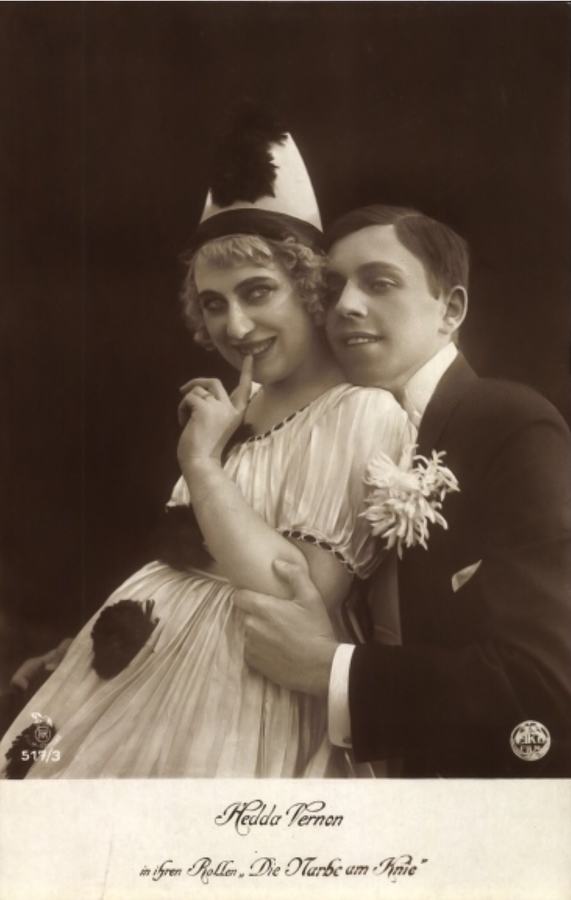
When comparing Moest’s work here to other contemporary dramas like Vater und Sohn or The Cavell Case, one notices a distinct lack of moralizing. Moest is not interested in preaching to his audience; he is interested in observing the mechanics of a collapse. The screenplay, though ostensibly a melodrama, possesses a clinical detachment that makes the character’s eventual unraveling all the more poignant. There is a specific scene, involving a ballroom dance, where the proximity of the 'secret' to the 'spectacle' creates a sense of vertigo that is rarely achieved in early cinema. It lacks the whimsical nature of The Midnight Burglar, opting instead for a somber tone that aligns it with the darker psychological explorations of Serdtse dyavola. The director’s ability to maintain this tonal consistency throughout the film is a testament to his burgeoning mastery of the medium.
While Die Narbe am Knie utilizes the 'fallen woman' archetype, it subverts the trope by giving the protagonist agency in her own concealment. She is not a passive victim of fate, like the characters in The Reward of Patience, but an active participant in a complex deception. This nuance is crucial. It elevates the film from a simple morality play to a sophisticated character study. The scar is a reminder of a moment where she may have been a victim, but her life since that moment has been a calculated performance of strength. This duality is what makes Vernon’s portrayal so compelling. She embodies both the wound and the shield. In contrast to the straightforward narrative of The No-Good Guy, Moest’s film suggests that goodness and badness are secondary to the sheer necessity of survival. The scar is the price of that survival, a permanent tax on her soul.
Technically, the film is a marvel of its time. The set design, though limited by the constraints of 1917, is utilized to create a sense of claustrophobia that mirrors the protagonist's internal state. Every room she enters feels like a trap. The use of mirrors is particularly effective, often showing Vernon’s character looking at herself, searching for the crack in her own armor. This level of visual metaphor is something we see expanded in Professor Nissens seltsamer Tod, but in Die Narbe am Knie, it feels more intimate, more personal. The film also benefits from a robust editing style that emphasizes the rhythmic nature of her anxiety. The cuts between her anxious face and the looming figures of her past create a percussive tension that drives the film toward its inevitable, tragic conclusion. It avoids the languid pacing of Beloved Adventuress, opting instead for a focused, almost relentless narrative drive.
Ultimately, Die Narbe am Knie is a film about the impossibility of erasure. In a world that constantly demands we reinvent ourselves, Moest and Vernon remind us that the body remembers what the mind tries to forget. It is a precursor to the great psychological thrillers of the later 20th century, a film that understands that the greatest horrors are not found in the shadows, but in the things we carry with us. Like the uncontrollable forces in Like Wildfire, the revelation of the scar is an elemental force that destroys everything in its path. To watch this film today is to witness the birth of a cinematic vocabulary that is still in use—a language of symbols, shadows, and the profound power of a single, hidden mark. It remains a essential piece of the silent era, a dark jewel in the crown of early German cinema that continues to resonate with its raw, uncompromising vision of human fragility.
IMDb —
1927
Community
Log in to comment.