DbcultAccessing Vault...
6/10
Senior Film Conservator
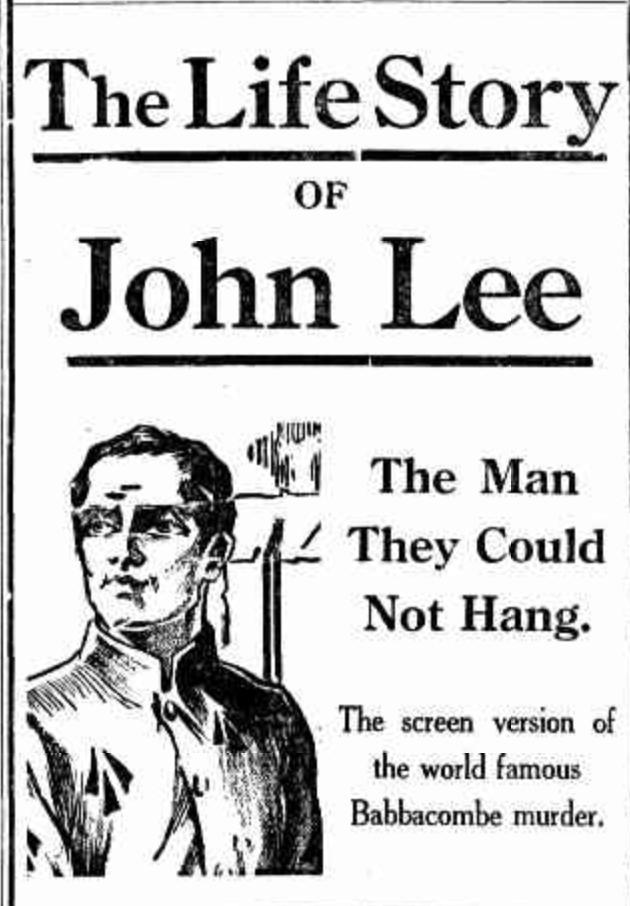
A definitive 6/10 rating for a film that redefined the boundaries of cult cinema. Life Story of John Lee, or The Man They Could Not Hang remains a cornerstone of transgressive art.
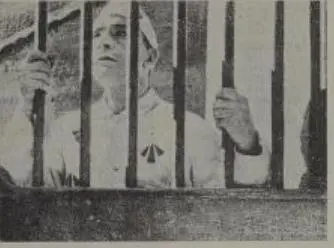
Arthur W. Sterry’s Life Story of John Lee, or The Man They Could Not Hang (1935) emerges as a masterclass in narrative tension, a film that refuses to sanitize its protagonist’s crimes even as it elicits sympathy for his plight. John Lee (David Edelsten) is a man whose life is a series of collisions with an indifferent society, a figure who drifts between desperation and defiance. The film’s opening sequence—a stark, unadorned scene of Lee’s arrest—immediately establishes a tone of fatalism, the camera lingering on his gaunt face as if to say, “This is a man whose story is already written.” Yet Sterry, with the precision of a literary realist, resists the urge to reduce Lee to a mere victim. Instead, we are presented with a character whose actions are as much a product of systemic neglect as they are of personal failings.
Edelsten’s performance is a tour de force of physicality and restraint. His Lee is not the roaring tragic hero of melodrama but a man who wears his guilt like a second skin. In one striking scene, he stands before a tribunal, his voice trembling as he recounts the night of the murder, and the camera circles him slowly, as if the institution he faces is itself a living, breathing entity. This is contrasted sharply with the scenes of his childhood, where George Fredericks’ portrayal of his father is a study in emotional absence; the man’s disdain for his son is not overt but implied in every dismissive glance, every door slammed shut. The film’s genius lies in its ability to make us complicit in Lee’s fate—his crimes are not excused, but their inevitability is laid bare.
Visually, the film is a blend of stark realism and theatrical artifice. The courtroom sequences, bathed in harsh white light, feel almost like staged plays, with the judge and jury arranged in rigid rows like pawns on a chessboard. Yet when the narrative shifts to Lee’s past, the lighting softens, and the compositions become more dynamic. A pivotal flashback to his early labor in a factory—a sequence that echoes the industrial decay of Belgium, the Broken Kingdom—uses shadow and movement to convey the suffocating monotony of his existence. The camera here is not a passive observer but an active participant, following Lee through narrow corridors and echoing rooms, as though the environment itself is conspiring against him.
One of the film’s most daring elements is its use of non-linear storytelling. The trial unfolds in real time, yet we are constantly interrupted by fragments of Lee’s past: a love affair with a working-class woman (Louise Farndon), a brief stint in prison, and the fateful night that leads to his downfall. These flashbacks are not merely expository; they are psychological dissections, forcing the audience to piece together the shattered soul of a man who is both perpetrator and product of his circumstances. The editing here is sharp and unyielding, with rapid cuts that mirror the chaos of Lee’s mind. This technique, reminiscent of the fragmented narratives in Pick Out Your Husband, adds a layer of disorientation, making us feel the disintegration of his moral compass.
Rose Rooney’s performance as Lee’s estranged wife, Alice, is a quiet revelation. Her character is not a damsel in distress but a woman grappling with her own complicity in the tragedy. In a particularly harrowing scene, she confronts Lee in a dimly lit tavern, her voice cracking as she accuses him of selfishness. Rooney’s portrayal is subtle; the emotion is not in her words but in the way her hands tremble, in the glances she steals toward the door, as if she expects to be dismissed at any moment. This scene, juxtaposed with a later one in which she kneels at the gallows, weeping not for Lee but for the lost parts of herself, creates a narrative symmetry that is both beautiful and devastating.
The film’s exploration of gender dynamics is equally nuanced. Alice’s plight is not framed as a moral lesson but as a human tragedy. Her relationship with Lee is complicated by the societal constraints of the era—she is a woman trapped in a loveless marriage, yet her infidelity is treated with the same judgmental gaze as Lee’s crimes. This duality is most evident in the courtroom, where the prosecutor’s rhetoric focuses on her “moral failure” as the catalyst for Lee’s descent into violence. Sterry, however, resists this reductive framing; instead, he presents Alice as a character whose choices are as much a product of her environment as Lee’s. This thematic depth elevates the film beyond the typical melodramatic fare of the time, drawing parallels with the psychological complexity of Ramona.
The film’s climax—the final moments before the execution—is a masterstroke of cinematic poetry. The gallows, a towering, skeletal structure, looms over the narrative like a bad omen. Yet it is in these final scenes that Sterry’s true genius shines. The execution is not depicted as a cathartic resolution but as a hollow, bureaucratic ritual. The guards, indifferent and mechanical, move with the precision of automata, while the audience—a mix of curious onlookers and grieving family members—whispers in hushed tones. The camera, for once, does not linger on Lee’s face but on the faces of the crowd, capturing the collective numbness of a society that has long since stopped believing in redemption.
What makes Life Story of John Lee endure is its refusal to offer easy answers. Unlike the tidy moralizing of What Becomes of the Children?, this film acknowledges the gray areas that define human behavior. The final shot—a close-up of Lee’s eyes, wide and unblinking as the trapdoor opens—is not a moment of catharsis but a question left hanging in the void: is this justice, or merely the end of a story that was never truly his to write?
Though often overshadowed by the more commercially successful Broken Blossoms, The Man They Could Not Hang holds a unique place in the annals of 1930s cinema. Its unflinching look at crime and punishment, coupled with its innovative narrative structure, paved the way for later films that would explore the intersection of law and morality. The film’s influence can be seen in the works of directors like Carol Reed, particularly in the courtroom sequences of Under Handicap, and in the character-driven realism of The Splendid Sinner.
For modern audiences, the film remains a provocative meditation on the systems that shape us. Its themes of economic despair, judicial hypocrisy, and the fragility of human connection are as relevant today as they were nearly a century ago. In an age where true crime narratives dominate popular culture, Life Story of John Lee stands as a reminder that the most compelling stories are those that force us to confront uncomfortable truths about ourselves.
Community
Log in to comment.