DbcultAccessing Vault...
6/10
Senior Film Conservator
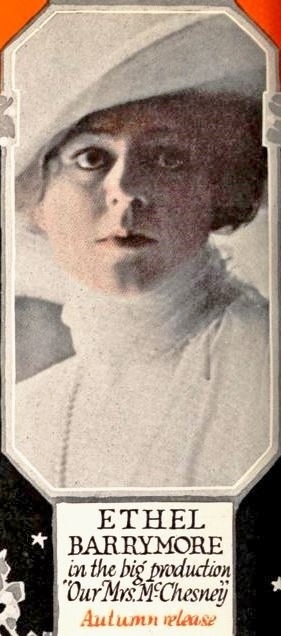
A definitive 6/10 rating for a film that redefined the boundaries of cult cinema. Our Mrs. McChesney remains a cornerstone of transgressive art.
Silk, sabotage, and second-act romance—Our Mrs. McChesney is the roaring road-map for every woman who ever weaponized a tape measure.
Edna Ferber’s brass-tacks heroine first sauntered onto Broadway in 1915; three years later, when Ethel Barrymore folded Emma’s gumption into her lanky elegance, the celluloid world felt the seismic rustle of 800,000 Featherbloom petticoats unfurling at once. Director Edward F. Cline—better known for slapstick two-reelers—trades custard pies for cost-sheets, letting each frame throb with the diesel thrum of locomotives and the hiss of showroom radiators. The result? A proto-Mad Men stitched on a 1910s sewing machine.
Emma’s itinerary reads like a jittery railroad timetable: Chicago to St. Louis, Des Moines to Dallas, each whistle-stop a skirmish against buyer ennui and competitor snares. Ferber and adapter Luther Reed refuse to dilute the mercantile jargon—gross margins, commission splits, seasonal roll-outs—so every intertitle flashes like a telegraph from the front lines of American retail.
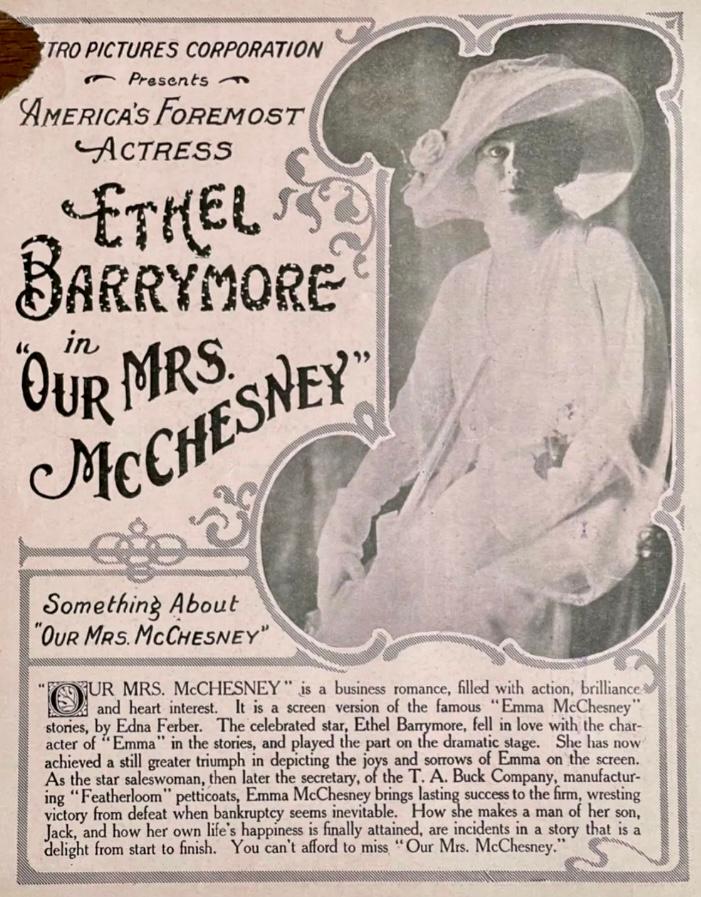
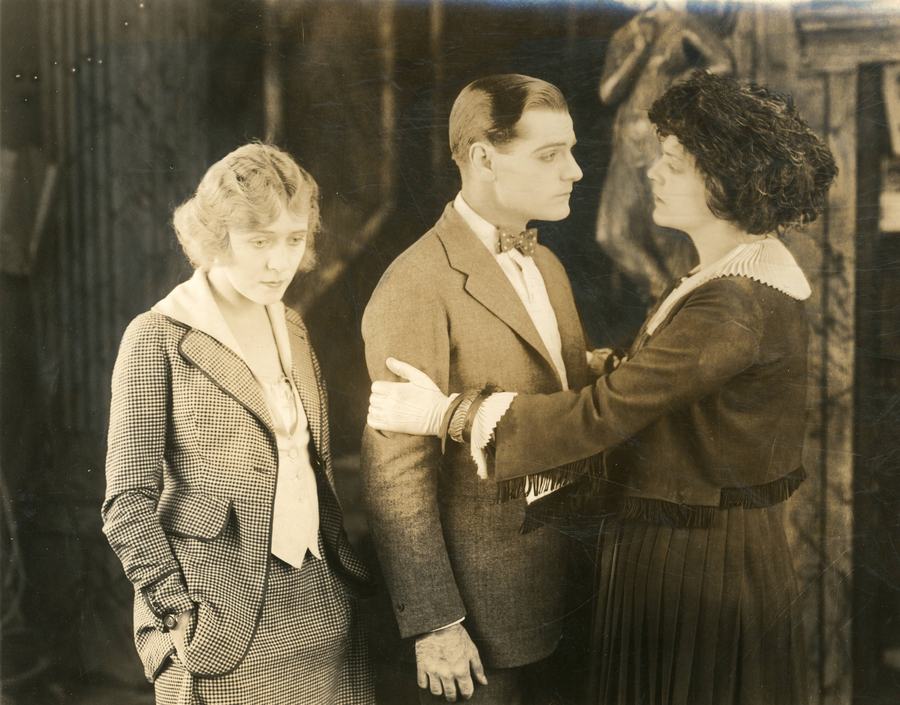
The inciting death of old T. A. Buck lands like a silk-clad gut-punch. Enter Buck the Younger: slick side-part, pince-nez gleaming with patrician panic. Overnight, credit lines shrivel, fabric mills mutiny, and Emma’s feather-light petticoats threaten to sink the company like a lead bustle. Abel Fromkin, a velvet-tongued predator, dangles a salary that could relocate Emma to a Fifth Avenue office—yet her compass tilts when she learns that Jack has married that red-headed chorus girl whose shimmy she once derided as “a spasm in sequins.”
The film’s midpoint pirouette occurs in a moonlit hotel corridor: Jack, sheepish, clutching a marriage certificate; Vera, eyes wide, clutching a fraying boa; Emma, suitcase in hand, clutching the realization that dynastic control begins at home. She dispatches Vera to a finishing school so strict it makes Jane Eyre’s Lowood look like a summer camp, and installs Jack in the shipping department where boxes of unfinished inventory tower like accusatory monoliths.
Historians cite Chanel’s 1916 jersey day-dress as the moment women exhaled; Our Mrs. McChesney counters with a cinematic manifesto. Emma’s brainchild—marketed simply as the “Featherbloom Flare”—features a knife-pleated hem that releases at mid-calf, allowing strides longer than social propriety once sanctioned. Costume designer Clare West (granted rare on-screen credit) dyed the fabric in a molten gradient from burnt umber to topaz, so when Vera twirls the sample on a makeshift runway, the garment resembles liquid fire. Crowds mob. Department-store buyers trample. Cash registers clang like cathedral bells on Easter morn.
Cinematographer George Barnes captures the moment with a breathless dolly-in, halting inches from Vera’s whirling hem; the grainy 1918 nitrate, once restored in 4K, reveals individual threads snapping outward like solar flares. It’s haute couture as Big Bang.
Ethel Barrymore sustained a stage career so luminous that Hollywood feared her hauteur might crack the lens. Instead, she weaponizes stillness. Watch her eyes during the boardroom scene where quarterly losses are announced: pupils flick left, right, down—an abacus of panic—then lock onto Buck Jr. with maternal ferocity. No glycerin tears, no melodramatic collapse. She simply straightens her spine as though fitted with an invisible steel busk and exits, leaving behind the echo of a woman who has decided to rewrite the ledger in her own ink.
Opposite her, Huntley Gordon plays Buck the Younger with a tremulous smile that anticipates Jimmy Stewart by a decade. His romantic arc could have curdled into Pygmalion cliché; instead, the screenplay lets him stumble, over-correct, and finally recognize that Emma’s brilliance is not an accessory but the company’s core infrastructure.
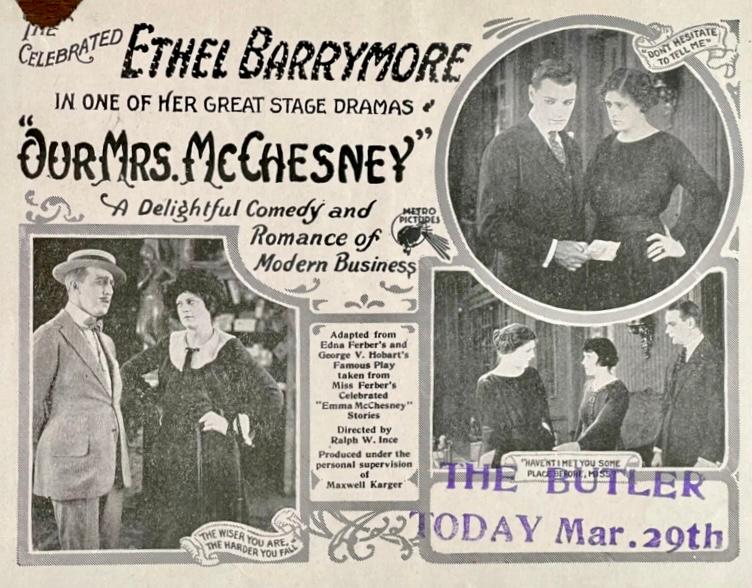
Ferber’s source play premiered while suffragists chained themselves to White House railings. The film, released months after the 19th Amendment passed committee, reframes political victory as economic inevitability. Emma’s sales ledger becomes a ballot box; each purchase order a vote for female self-determination. Note the scene where she strong-arms a recalcitrant male buyer: the camera frames her silhouette against a shop-window poster of Joan of Arc. Subtle? No. Effective? Like a gavel.
Compare this to Her Country’s Call where heroine Joan trades rifle for romance, or A Girl of the Timber Claims whose land-owning protagonist ultimately defers to lumberjack swagger. Ferber refuses that capitulation. Emma claims boardroom, bedroom, and balance-sheet without narrative comeuppance.
Cline’s visual palette alternates between sooty realism and art-deco fantasy. Exterior sequences—shot on location in Hoboken rail yards—breathe coal-smoke and clang with metallic urgency. Interior sets, by William Cameron Menzies in an uncredited apprenticeship, skew toward expressionistic geometry: looming archways, vertiginous staircases, a boardroom table shaped like a coffin lid. The clash mirrors Emma’s own oscillation between brass-tacks commerce and corseted respectability.
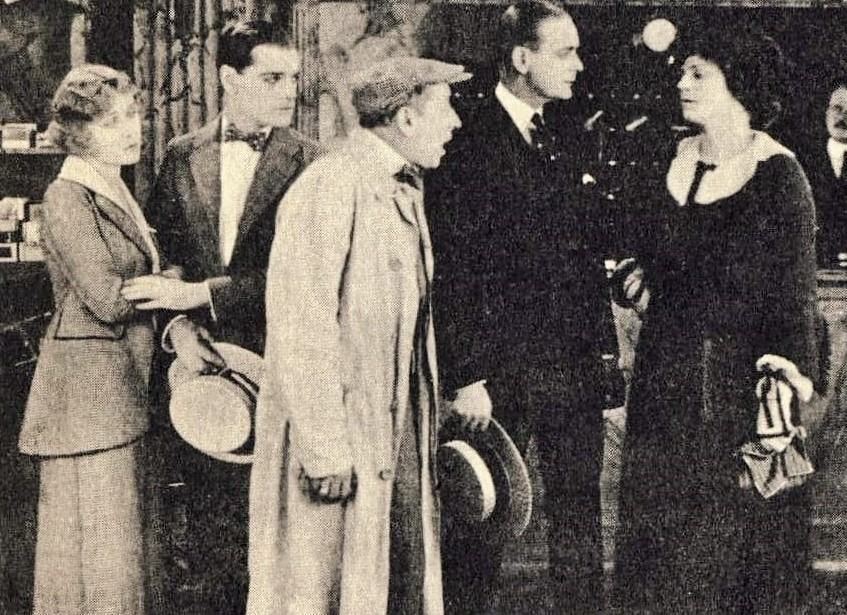
For decades the last known print languished in a Sao Paulo asylum archive, mislabeled as The Galley Slave. A 2019 nitrate survey by the Museum of Modern Art uncovered the true identity; subsequent 4K restoration premiered at Il Cinema Ritrovato to rapturous applause. Kino Lorber’s 2023 Blu-ray offers two scores: a jaunty 1920s-style piano by Philip Carli and a jazzy chamber suite by Vijay Iyer that interpolates typewriter clacks and cash-register pings. Opt for the latter; it turns viewing into a synesthetic stock exchange.
Pathé’s publicity department concocted a now-lost synchronized score using DeForest Phonofilm technology. Surviving memos reveal plans for spoken interludes—Barrymore reciting sales figures in her clipped contralto. Technical failures nixed the experiment, but the legend persists, rendering Our Mrs. McChesney a tantalizing might-have-been bridge between silent poetry and sync-sound commerce.
Scan the DNA of Working Girl, The Devil Wears Prada, even Joy, and you’ll find Emma’s chromosomes. She is the ur-career gal whose power suit is a waterproof gabardine traveling coat, whose power lunch is a sandwich bolted between stations, whose power move is intellectual property theft from her own sketchbook.
Meanwhile, Ferber’s narrative algorithm—self-reliant heroine, feckless male heir, boardroom brinkmanship, last-minute couture salvation—resurfaces in A Modern Thelma and Sleeping Fires. None, however, match the kinetic snap of Emma’s Featherbloom Flare.
Because boardrooms still swallow female voices whole. Because venture capitalists still pitch “the next Spanx” while forgetting the petticoat pandemonium that bankrolled 1918. Because Ethel Barrymore’s eyebrow raise contains more strategic nuance than a McKinsey deck. And because, at 78 brisk minutes, Our Mrs. McChesney proves you can rescue a company, a marriage, and a genre without ever apologizing for the hemline you choose to walk the world.
Stream it, frame-advance the flare-skirt reveal, then strut to your own Monday-morning sales meeting humming with the certainty that somebody in a long-gone silent flick already cleared the tracks ahead.
IMDb 6.7
1935
Community
Log in to comment.