DbcultAccessing Vault...
6.8/10
Senior Film Conservator
A definitive 6.8/10 rating for a film that redefined the boundaries of cult cinema. Life's Whirlpool remains a cornerstone of transgressive art.
As a connoisseur of classic cinema, especially those poignant narratives from the silent era, I often find myself drawn to stories that peel back the veneer of societal norms to expose the raw, unfiltered machinations of the human psyche. Life's Whirlpool, a cinematic adaptation of Frank Norris's seminal naturalistic novel 'McTeague,' stands as a towering testament to the era's capacity for profound psychological drama. Directed with an unflinching gaze, this film plunges into the depths of human degradation, painting a vivid, albeit bleak, portrait of how unchecked desires and the corrosive touch of avarice can dismantle lives with devastating finality.
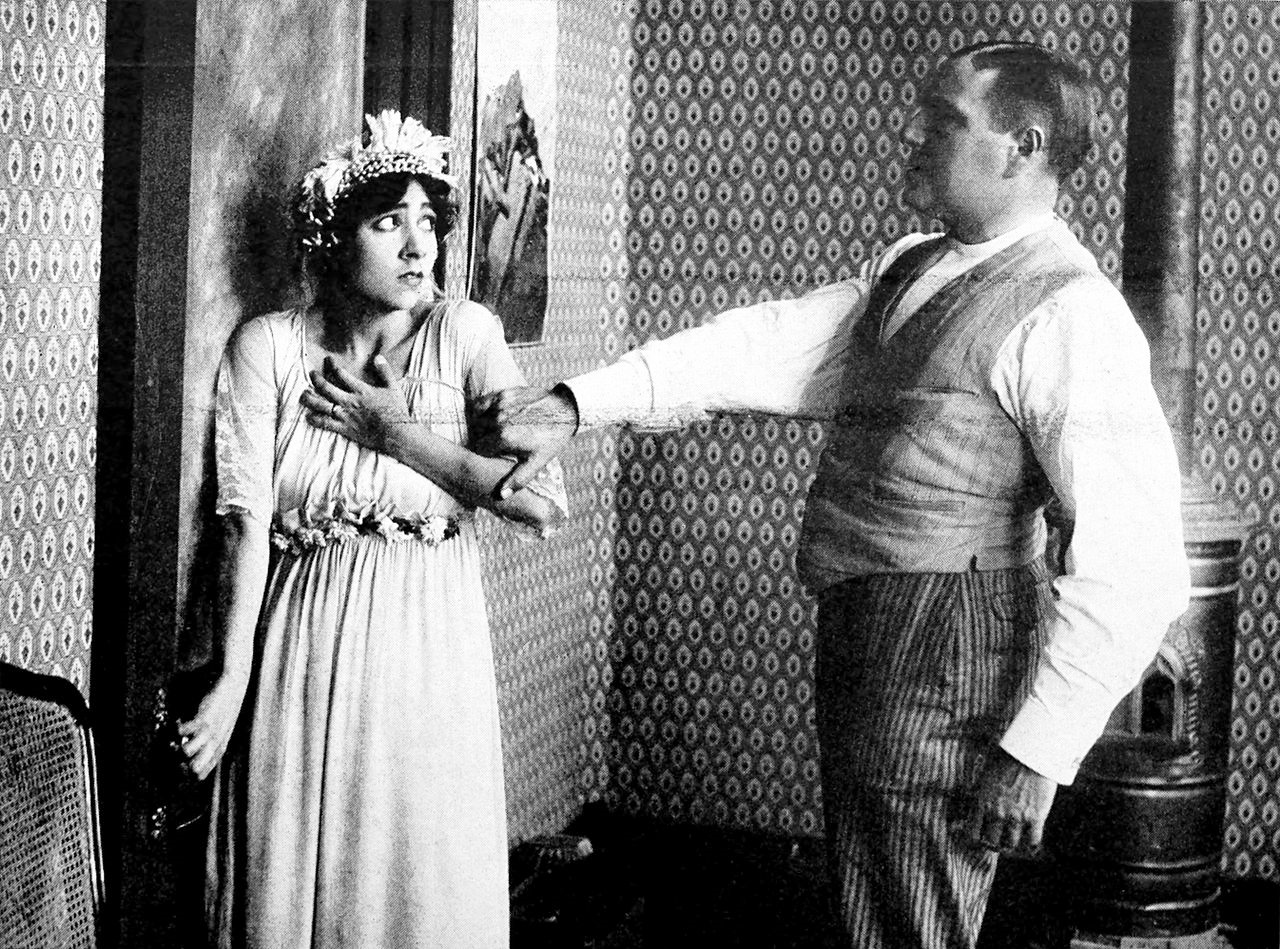
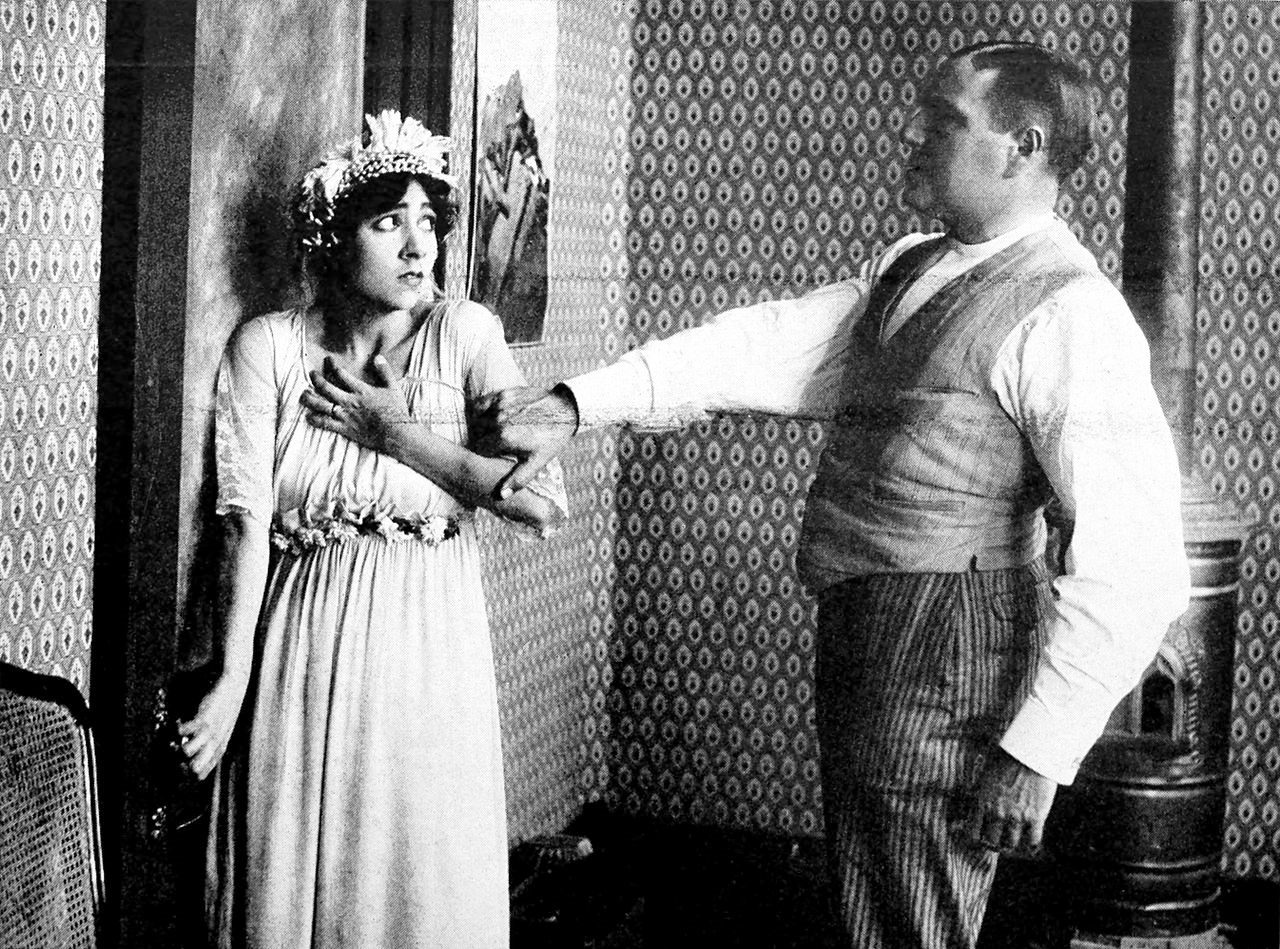
The narrative commences with McTeague, portrayed with a compelling blend of primitive innocence and simmering aggression by Holbrook Blinn, whose physicality is key to his characterization. His initial existence, toiling in the mines, grounds him in a world of manual labor and unrefined instincts. His transition to an unlicensed dentist is a fascinating, almost absurd, leap, suggesting a man adrift, seeking a place in a society he barely comprehends. It is in this newfound, if illicit, profession that fate intervenes in the form of Trina, brought to life with nuanced complexity by Fania Marinoff. Until Trina's arrival, McTeague's passions lie dormant, a sleeping giant within him. Her presence acts as a catalyst, awakening a primal, possessive love that is less about tender affection and more about forceful acquisition. The film masterfully portrays this uncomfortable courtship, where McTeague's domineering personality asserts itself, coercing Trina into a union that feels less like a choice and more like an inevitability born of his sheer will.
The marital discord that follows is not merely a consequence of incompatible personalities but a slow, agonizing unraveling fueled by an external force: a $5,000 lottery prize. This seemingly innocuous stroke of luck becomes the serpent in their Eden, twisting Trina's character into an unrecognizable caricature of miserliness. Her transformation is chilling to behold; the once gentle Trina becomes utterly consumed by her hoard, the gold becoming an extension of her very being. This thematic exploration of wealth's corrupting influence is not unique to Life's Whirlpool, finding echoes in countless narratives across cinematic history. One might draw parallels to the destructive obsessions seen in films like The Temptations of Satan, where moral integrity crumbles under the weight of vice, or even the desperate measures taken by characters in Oliver Twist, though Trina's avarice is a more internal, self-inflicted wound, a psychological malady rather than a response to external poverty.
The simmering tension between McTeague and Marcus, played by Walter Greene, McTeague's former rival for Trina's affections, escalates the tragedy. Marcus, wounded pride and jealousy driving him, engineers McTeague's downfall by exposing his lack of dental credentials. This act of petty revenge, born from a personal slight, has monumental consequences, stripping McTeague of his livelihood and his last vestiges of societal standing. It's a stark reminder of how easily personal vendettas can spiral into irreversible destruction, a theme that resonates through many dramatic works, where the human capacity for spite often outweighs reason. McTeague, now utterly dependent, turns to Trina, only to find her miserly instincts have calcified into an impenetrable wall of selfishness. Her refusal to support him marks a critical turning point, pushing him further into the abyss of desperation and resentment.
The film then descends into its darkest chapter. Trina, afflicted by illness, finds perverse solace in her gold, a mania that sees her showering herself with the coins, an act both pathetic and horrifying. This scene, undoubtedly powerful in its silent rendition, must have been a visual tour de force, conveying the depth of her psychological derangement without a single spoken word. When McTeague returns to witness this grotesque spectacle, the confrontation is inevitable, a clash of his raw, unbridled fury and her pathological obsession. The brutal strangulation of Trina and McTeague's subsequent theft of the money are acts of ultimate desperation, marking his complete moral collapse. It's a moment of profound horror, depicting the absolute nadir of human behavior when driven by desperation and a twisted sense of entitlement. The writers, Barry O'Neil, Frank Norris, and E. Magnus Ingleton, craft a narrative that, while extreme, feels chillingly plausible within its naturalistic framework.
The final act of Life's Whirlpool is a relentless pursuit, a stark, almost primeval chase across the unforgiving landscape of Death Valley. Marcus, a man now driven by a singular, consuming desire for vengeance for Trina's death, relentlessly tracks McTeague. This climactic confrontation, under the blistering desert sun, is a powerful visual metaphor for the inescapable consequences of their actions. The vast, empty expanse of Death Valley accentuates their isolation, reducing them to two figures locked in a fatal struggle, stripped of all pretense and societal constraint. It's a brutal, existential battle, devoid of mercy, culminating in a death match where both men are ultimately consumed by the very passions that defined their lives. The choice of location, with its inherent harshness and symbolism of desolation, elevates the tragedy to an almost mythical level, mirroring the internal wasteland that has become of their souls.
The performances, particularly from Holbrook Blinn and Fania Marinoff, are crucial to the film's impact. In the silent era, actors relied heavily on exaggerated facial expressions, grand gestures, and body language to convey emotion and narrative. Blinn's McTeague is a fascinating study in suppressed brutality, a man whose quietude belies a volcanic temper. Marinoff's Trina undergoes a remarkable transformation, from a timid woman to a monstrous miser, a journey she communicates with striking clarity through her physicality and increasingly hardened demeanor. The supporting cast, including Julia Stuart, Eleanor Blanchard, Rosemary Dean, and Philip Robson, contribute to the tapestry of this bleak world, each playing their part in the unfolding tragedy.
What makes Life's Whirlpool resonate even today is its unflinching commitment to naturalism. Frank Norris, a pioneer of the genre, believed in depicting life as it truly was, often highlighting the darker, more deterministic aspects of human existence. The film, under the guidance of its adaptors, remains true to this spirit, portraying characters who are often victims of their own instincts and environmental forces, rather than masters of their destinies. This deterministic view of humanity, where fate often trumps free will, is a powerful and unsettling concept, a common thread in naturalistic works. One might compare this sense of inescapable doom to the moral decay explored in Dorian's Divorce, where characters are similarly trapped by their choices and circumstances, leading to a tragic end.
The film's visual storytelling, a hallmark of silent cinema, must have been particularly effective in conveying the escalating tension and psychological torment. The use of close-ups to capture Trina's avaricious expressions, the wide shots emphasizing McTeague's isolation, and the stark, sun-baked grandeur of Death Valley for the climax, all contribute to a powerful cinematic experience. While we can only imagine the full impact of its original presentation with live musical accompaniment, the surviving narrative structure and character arcs speak volumes about its artistic merit. The film avoids easy answers, presenting a world where greed is not just a moral failing but a destructive force, capable of consuming souls and tearing apart the fabric of relationships.
In conclusion, Life's Whirlpool stands as a profound, if harrowing, exploration of human nature's darker impulses. It is a cautionary tale, as relevant today as it was over a century ago, about the perils of unchecked desire and the corrupting influence of wealth. The film's legacy lies not just in its faithful adaptation of a literary classic but in its enduring power to unsettle and provoke thought. It reminds us that sometimes, the greatest tragedies are not external forces but the whirlpools we create within ourselves, pulling us down into an inescapable vortex of our own making. For those who appreciate the raw, expressive power of early cinema and stories that delve deep into the human condition, Life's Whirlpool is an essential, if disquieting, viewing experience, a testament to the timeless struggle against our baser instincts and the relentless pursuit of self-destruction.
IMDb —
1916
Community
Log in to comment.