DbcultAccessing Vault...
Cult Review
Senior Film Conservator
A lantern-slide of thunderclouds rolls across the opening iris, and already the film is cheating time: 1919 audiences gasped as if the storm were theirs, not the countess’s.
Charles Maigne’s scenario—adapted from Maria Thompson Davies’s serial—refuses the usual exile melodrama; instead it stitches lacework European despair onto homespun American linen until both fabrics gleam alien under the same kerosene lamp. The result feels like a Georges Seurat painting left in the rain: pointillist privilege dissolved into muddy dots of peril.
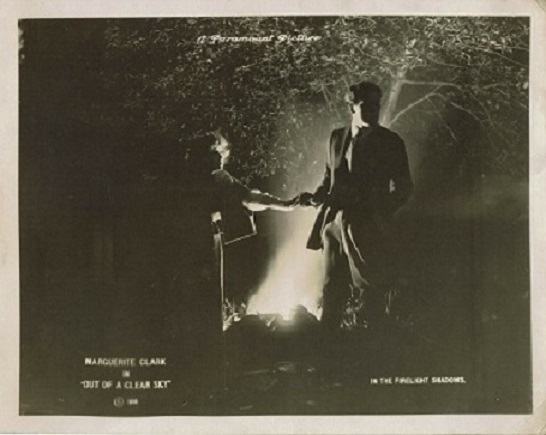
Director William C. deMille (yes, Cecil’s lesser-known yet fiercely precise sibling) shoots the Smoky Mountains as though they were a cathedral nave. Notice how the camera tilts up from Irène’s Parisian trunk—monogrammed, brass-latched—to a ridge where loblolly pines rake the sky like Gothic vaulting; the cut is so abrupt it feels like a slap of Protestant wind on Catholic skin. Cinematographer L. Guy Wilky favors backlit fog, so every character arrives haloed yet half-erased, a visual prophecy of how easily identities blur once geography no longer kneels to class.
Intertitles arrive sparingly, painted on what looks like birch bark: “She traded a coronet for a corncob pipe—and found the smoke sweeter.” The apostasy is playful, but the typeface—thin, spindly, almost starved—whispers the cost.
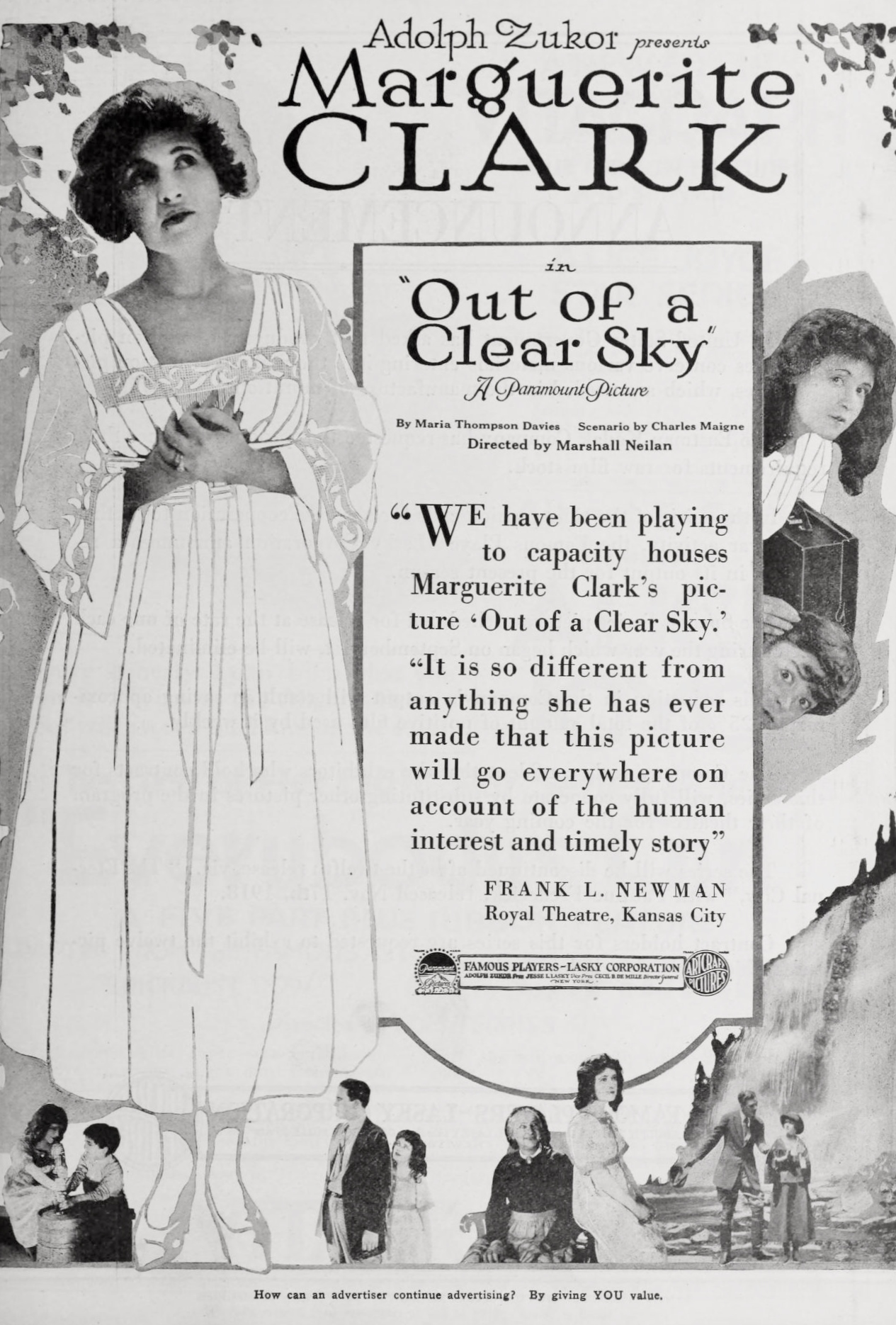
Marguerite Clark, barely five feet tall, was thirty-four yet could still pass for a runaway bride in her teens. She lets Irène’s aristocratic poise flake away in petals: watch her fingers in the post-office scene—first clutching kidskin gloves, then drumming the counter in a syncopation that betrays she has memorized ragtime without ever admitting she’s heard it. The moment is wordless, but the wrists shout.
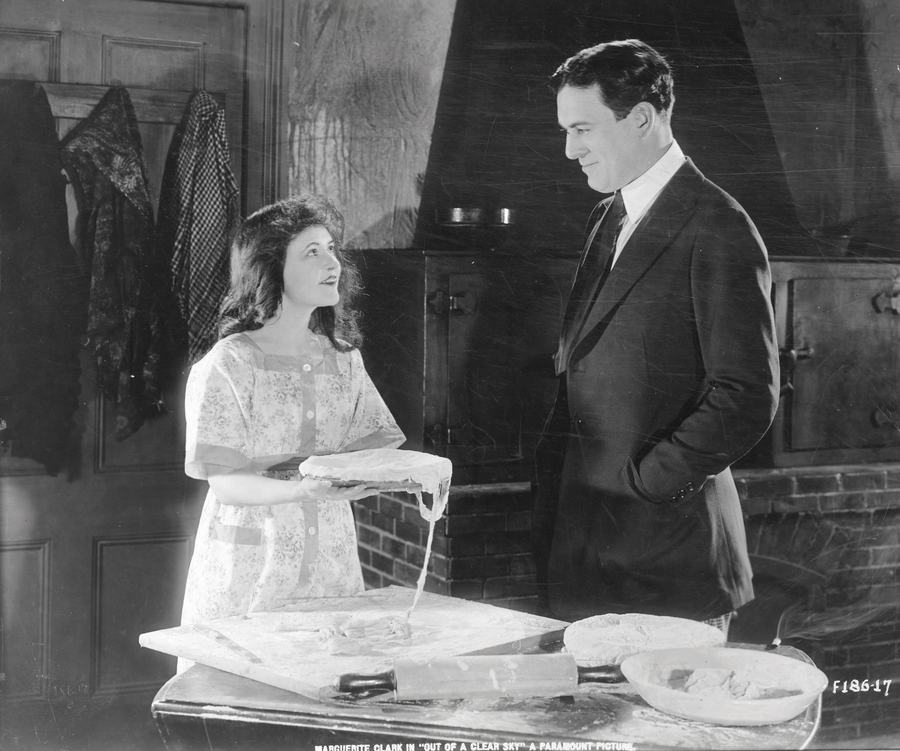
Thomas Meighan’s Alan Moreland provides the gravitational anchor. Meighan had the kind of carved granite face that looked as if it had been quarried rather than born; when he smiles, the granite doesn’t warm—it fissures, revealing quartz glints of sorrow. Their chemistry is not combustion but conduction: two disparate elements achieving equilibrium at precisely body temperature.
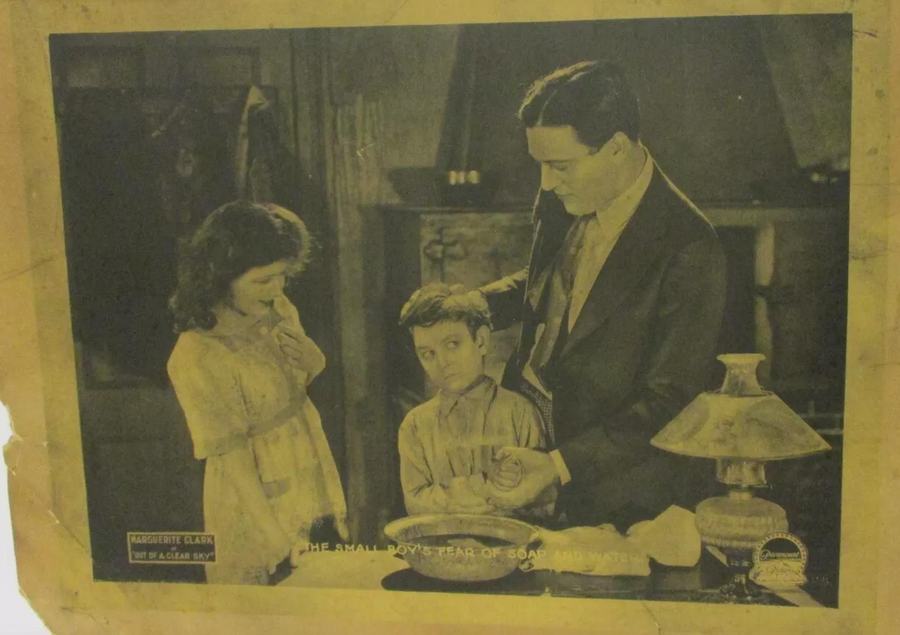
Among the supporting tapestry, Bobby Connelly as the harmonica-wielding orphan Tad steals reels without effort. He was fourteen but played ten, his cheeks still padded with baby fat that the studio’s electric fans tried unsuccessfully to hollow. Every time he lifts the tin harp to his lips, the score (a 2012 restoration commission by the University of Tennessee) interpolates “Shenandoah” in a minor key, and the effect is like hearing your own childhood photos sigh.
Out of a Clear Sky belongs to that micro-genre—call it “Transatlantic Shepherdess”—where titled European women till American soil and discover that democracy is less a gift than a dare. Compare it to The Heart of the Blue Ridge (1920): both films send pampered heroines to Appalachian hollers, but where Blue Ridge sentimentalizes the mountain man as noble brute, Clear Sky grants him engineering schematics and a union card, letting intellect share the porch with brawn.
The picture also flirts with The Climbers’ social-climbing cynicism, yet ultimately sides with hope. Irène’s refusal to return—even when her uncle cables that the betrothed duke has conveniently died of influenza—plays like an answer to the ending of The Duchess of Doubt, where matrimony mutates into mercantile transaction.
No review can skirt the era’s blind spots. The town’s Black population appears exactly once: a nursemaid lifts Tad off the tracks seconds before a runaway ore car thunders past. She is unnamed, uncredited, and vanishes after two seconds—yet the studio felt compelled to tint that fragment in amber, the only sequence not monochrome. The gesture is both condescension and confession: history’s marginalia highlighted in order to be more efficiently ignored.
When the dam ruptures, deMille refuses the Griffith-style spectacle of floating babies and ice floes. Instead he crosscuts:
The sequence lasts ninety seconds, contains 127 shots, and ends on a freeze-frame of Irène’s hand clutching Alan’s mud-caked fingers—a Pietà rendered in Mississippi silt.
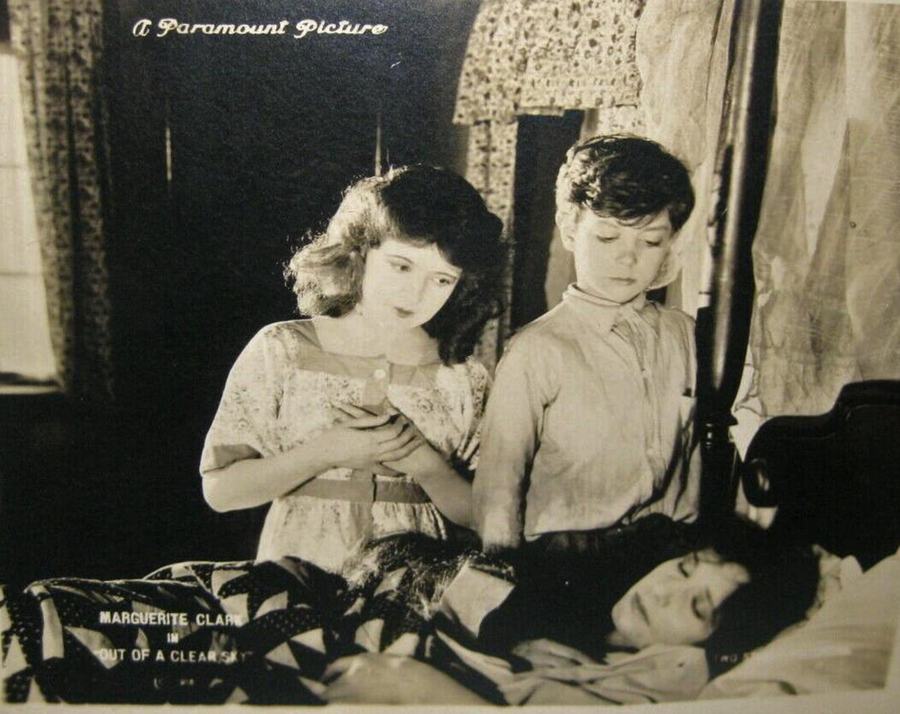
Like so many silent features, the original nitrate negative of Out of a Clear Sky was melted down in 1931 for its silver content; only a 28-minute partial—reels 3 and 5—survived in the Gosfilmofond vaults until a 2018 4K restoration padded the gaps with production stills and symphonic re-scoring. Hence every contemporary viewing is part film, part séance. Yet absence has become part of the text: the gaps hiss like mountain wind, reminding us that history is not a library but a half-remembered lullaby.
If you emerge from this flicker with wet eyes, blame the cumulative echo: Clark’s tremulous inhale before she speaks the final intertitle—“I was born in a palace, but I came alive in a cabin with a leaking roof.” Meighan’s half-smile that never quite crests. The knowledge that somewhere a Belgian castle still holds her abandoned wedding gown, moth-nibbled yet too heavy for any modern bride to lift.
The restored version streams on Criterion Channel (region-locked) and plays festivals under a live score by the Knoxville Chamber Orchestra. If you attend, bring a raincoat—not for weather, but for the moment when the orchestra’s string section mimics the creak of a dam about to burst; you’ll swear moisture seeps from the screen.
Verdict: A fractured lantern-slide of a film, yet its shards glitter sharper than most intact epics. Let it wash over you, and you may find yourself, like Irène, tasting mountain water once laced with coal dust and discovering it sweet enough to stay.
IMDb —
1928
Community
Log in to comment.