DbcultAccessing Vault...
6.8/10
Senior Film Conservator
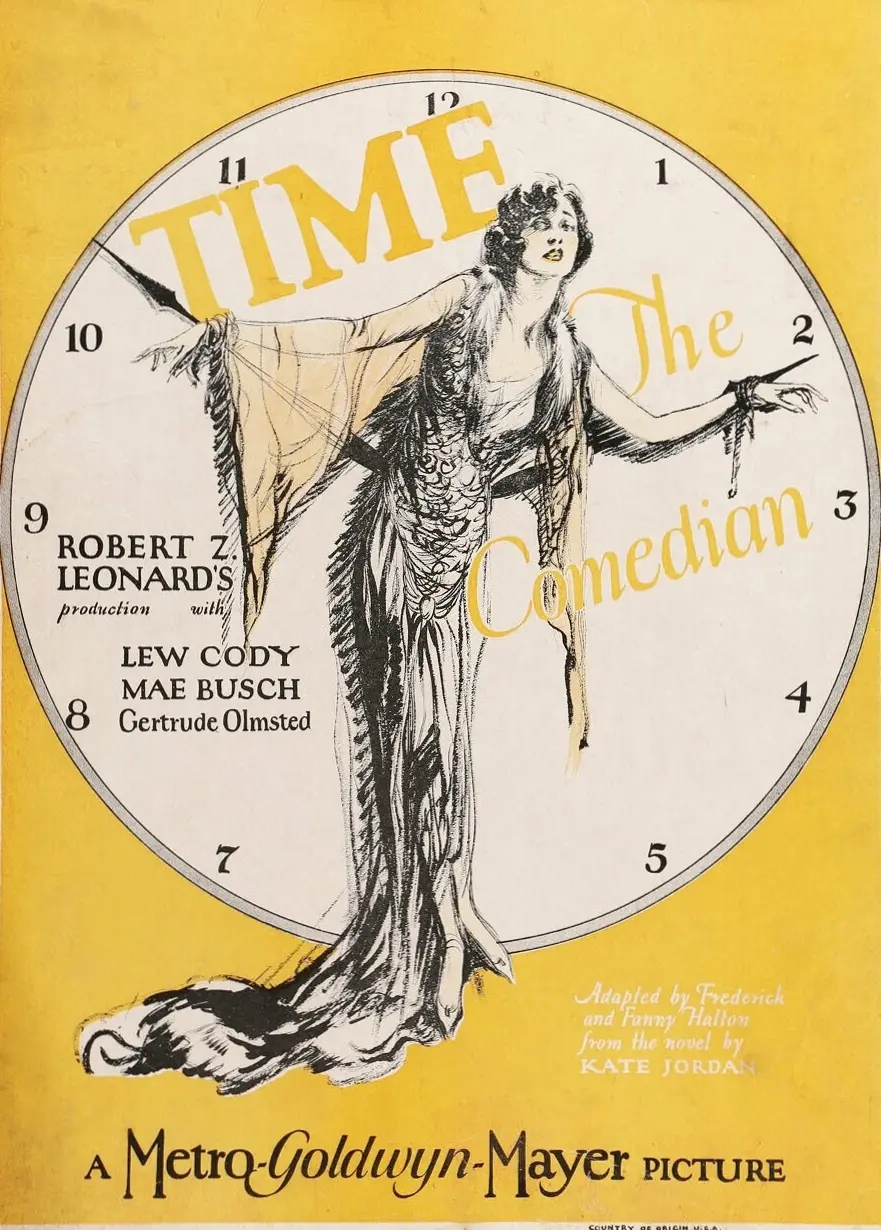
A definitive 6.8/10 rating for a film that redefined the boundaries of cult cinema. Time, the Comedian remains a cornerstone of transgressive art.
To watch Time, the Comedian is to witness a sophisticated, albeit brutal, exploration of the cyclical nature of human error. The 1925 silent era was often characterized by broad moral strokes, yet the screenplay by Fanny and Frederic Hatton, adapted from Kate Jordan’s work, offers a nuanced interrogation of the 'fallen woman' trope. Unlike the more whimsical explorations of social mobility found in A Very Good Young Man, this film leans into the gravitational pull of past sins, treating time not as a healer, but as a sardonic observer. The titular 'Comedian' is a deity of irony, ensuring that every attempt Nora Dakon makes to outrun her shadow only brings her closer to a confrontation with it.
Mildred Vincent delivers a performance of startling interiority. In the opening acts, her portrayal of Nora is defined by a rhythmic restlessness. She isn't merely a bored housewife; she is a woman undergoing a slow asphyxiation by the mundane. When she flees to Larry Brundage, the film avoids the typical melodramatic histrionics, opting instead for a sense of grim inevitability. This isn't a romance; it is a frantic escape that carries the seeds of its own destruction. The cinematography captures the stark contrast between the claustrophobic interiors of New Jersey and the cold, expansive opulence of Brundage’s New York world, a visual dichotomy that underscores Nora's displacement.
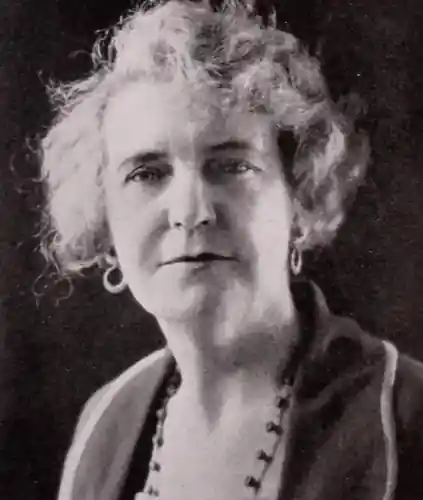
The transition to Paris is where the film’s aesthetic ambitions truly flourish. The post-war setting provides a backdrop of collective trauma that mirrors Nora’s personal history. As a 'noted singer,' she has transformed her grief into art, a theme we see echoed in the theatrical subcultures of Bag Filmens Kulisser. However, while the latter film focuses on the artifice of the stage, Time, the Comedian uses the stage as a shield. Nora’s success is her armor, but the film posits that no amount of Parisian glamour can insulate one from the recursive loops of destiny.
The appearance of Larry Brundage in Paris is handled with a chilling lack of sentimentality. Templar Saxe plays Brundage not as a mustache-twirling villain, but as a man of profound, casual entitlement—the kind of 'sportsman' who views human emotions as mere statistics in a game. His pursuit of Ruth, played with a burgeoning luminosity by a young Joan Crawford, creates a tension that is almost unbearable. Crawford, even in this early role, possesses a screen presence that threatens to eclipse her seasoned co-stars. Her Ruth is the embodiment of the innocence Nora lost, making Brundage’s attraction to her feel particularly predatory and incestuous in its thematic implications.

The climax of the film—Nora’s confession to Ruth—is a masterclass in silent film editing and emotional pacing. It subverts the traditional expectations of the genre. Often, in films like No Woman Knows, the maternal figure is a martyr to external circumstances. Here, Nora is a martyr to her own truth. She must dismantle the idol her daughter has built of her to save the girl from the same predator. This act of self-immolation is far more profound than her husband’s literal suicide; it is the death of her carefully curated Parisian identity.
"The genius of the film lies in its refusal to offer a clean slate. Time may be a comedian, but its jokes leave permanent scars."
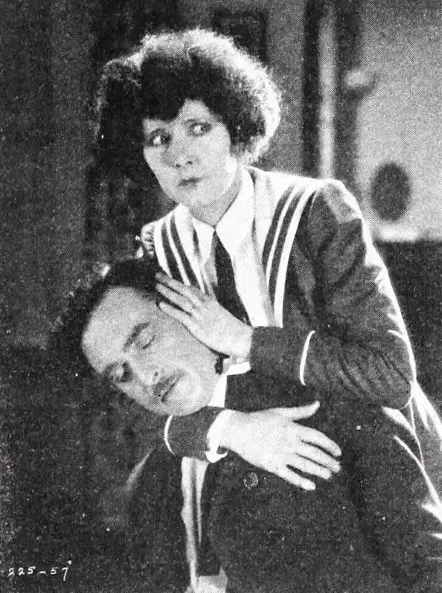
Comparing this to the redemptive arcs in A Prince in a Pawnshop, we see a much darker philosophical thread. There is no simple transactional kindness that can undo the damage here. The resolution, which sees Ruth finding solace in Tom Cautley (Robert Ober), feels less like a 'happily ever after' and more like a hard-won reprieve. Cautley, as an art student, represents the antithesis of Brundage’s materialistic 'sportsman'—he is a creator, not a consumer.
Technically, the film utilizes light and shadow to articulate the psychological states of its characters with a sophistication that rivals the best of the decade. The use of deep focus during the party scenes allows the audience to track Nora’s internal collapse even as the background remains a blur of hedonistic celebration. The intertitles are sparingly used, allowing the physical grammar of the actors—the tightening of a throat, the hollow stare of realization—to carry the narrative weight. This reliance on visual storytelling places it in a different league than the more dialogue-heavy structures of American Maid.
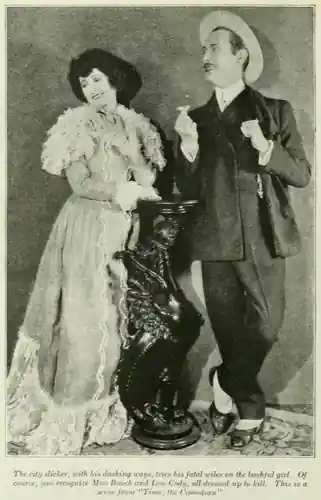
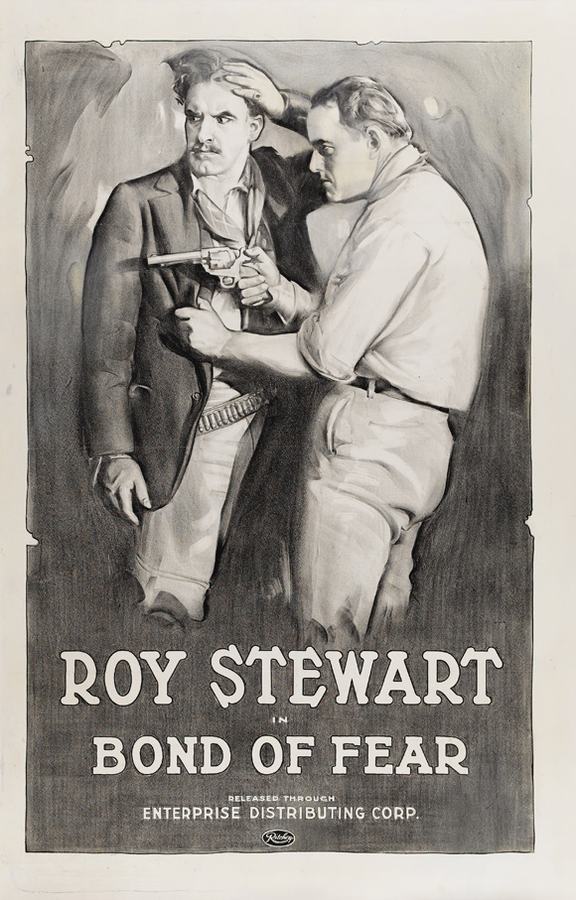
The ensemble cast, including Roy Stewart and Lew Cody, provides a sturdy framework for the central trio. Each character feels like a cog in the titular comedian's machine. The direction ensures that the pacing never falters, moving from the drab New Jersey prologue to the kinetic energy of Paris with a fluidity that mirrors the passage of years. Even the minor roles, like those played by Paulette Duval and Mae Busch, contribute to a sense of a lived-in, albeit tragic, world.
In the broader context of 1920s cinema, Time, the Comedian stands as a precursor to the more cynical noir sensibilities of the 1940s. It lacks the moralizing safety net found in The Lucky Devil or the adventurous escapism of The Carpet from Bagdad. Instead, it offers a sobering look at the permanence of consequence. The film suggests that while we can change our names, our locations, and our social standing, we cannot alter the fundamental architecture of our history.
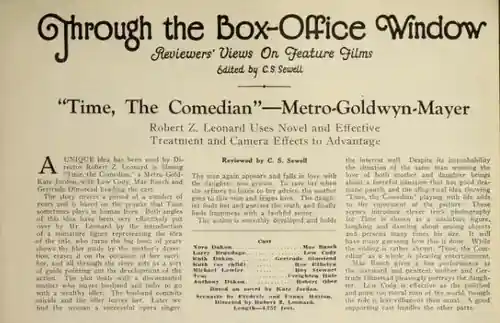
The final scenes leave the viewer with a sense of melancholy triumph. Nora is left alone, her daughter saved but her own secrets laid bare. It is a haunting image that lingers long after the final frame. The film doesn't just tell a story; it maps the topography of regret. For those who appreciate cinema that dares to look into the abyss of human fallibility with a wink of cosmic irony, this is an essential text. It serves as a stark reminder that in the theater of life, we are rarely the directors—we are merely the players in a script written by a very dark humorist.
By the time the credits roll, one cannot help but reflect on the thematic parallels with Pagan Passions, where the heat of impulse is eventually cooled by the ice of reality. Time, the Comedian remains a vital, visceral piece of silent filmmaking, a testament to the power of a well-told tragedy that refuses to flinch. It is a work of high lexical visuality, where every frame speaks volumes about the fragility of the human condition and the relentless, laughing tick of the clock.
An evocative, intellectually stimulating drama that transcends its era. With a powerhouse performance by Mildred Vincent and an early glimpse of Joan Crawford’s magnetism, it is a cynical yet deeply moving exploration of fate. If you seek a silent film that prioritizes psychological depth over simplistic moralizing, this is your next obsession.
IMDb 6.6
1929
Community
Log in to comment.