DbcultAccessing Vault...
4.8/10
Senior Film Conservator
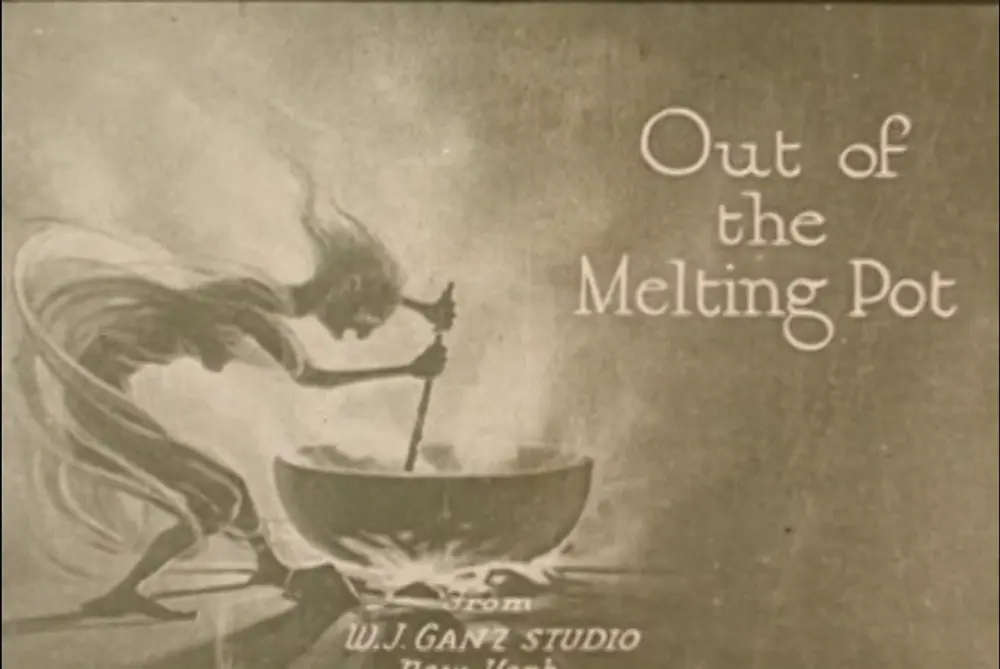
A definitive 4.8/10 rating for a film that redefined the boundaries of cult cinema. Out of the Melting Pot remains a cornerstone of transgressive art.
Is 'Out of the Melting Pot' worth watching today? Short answer: yes, but with significant caveats that demand a specific kind of viewer. This rarely seen experimental short film, a fascinating relic from cinema’s formative years, offers a unique, albeit challenging, glimpse into the nascent possibilities of abstract animation. It is unequivocally for enthusiasts of film history, avant-garde art, and those with a deep appreciation for the technical and conceptual pioneering spirit of early cinema. Conversely, it is absolutely not for audiences seeking traditional narrative, character development, or easily digestible entertainment; those expecting the emotional beats of a The Hoosier Schoolmaster or the intricate plots of a Beatrice Fairfax Episode 9 will find themselves utterly bewildered.
The film works because of its audacious commitment to pure visual experimentation, pushing the boundaries of what a moving picture could be beyond mere documentation or storytelling. It fails, however, in its capacity to engage a broad, contemporary audience, its brevity and lack of conventional structure making it feel more like an academic exercise than an entertaining spectacle. You should watch it if your curiosity extends to the very foundations of cinematic art and you possess the patience to appreciate abstract visual poetry; otherwise, it’s best left to the archives.
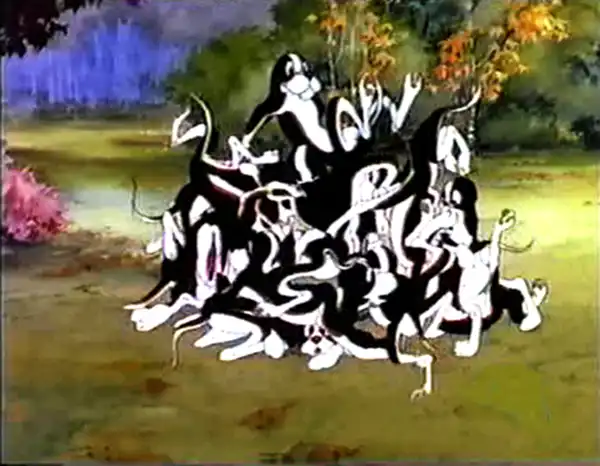
In the grand tapestry of early cinema, where the majority of films were either documenting life, enacting theatrical plays, or developing rudimentary narratives like A Prince in a Pawnshop, 'Out of the Melting Pot' stands as a peculiar, almost alien artifact. It’s a film that defiantly shrugs off the shackles of representation and instead plunges headfirst into the realm of the abstract. The premise is disarmingly simple, yet profoundly ambitious for its time: abstract images transform into animals. This isn't just a technical trick; it's a conceptual declaration.
The film’s historical significance cannot be overstated. It belongs to a lineage of early cinematic pioneers who dared to ask, “What else can film *do*?” While others were perfecting the chase scene or the dramatic close-up, the creators of 'Out of the Melting Pot' were exploring the very plasticity of the image, demonstrating cinema’s capacity to depict not just reality, but the unreal, the fluid, the evolving. It’s a testament to an era where the rules were still being written, and innovation was the only constant.
The film’s audacious commitment to pure visual experimentation pushes the boundaries of what a moving picture could be beyond mere documentation or storytelling.
The true marvel of 'Out of the Melting Pot' lies in its visual execution. We are presented with forms that defy immediate classification – swirling patterns, amorphous blobs, lines that writhe and intertwine. These aren't random; there's an underlying intelligence to their design, a sense of controlled chaos. The pacing of these transformations is deliberate, almost meditative. Each shift feels like a breath, a slow reveal, rather than a jarring cut. It demands patience, rewarding sustained attention with the subtle emergence of a familiar outline from the visual noise.
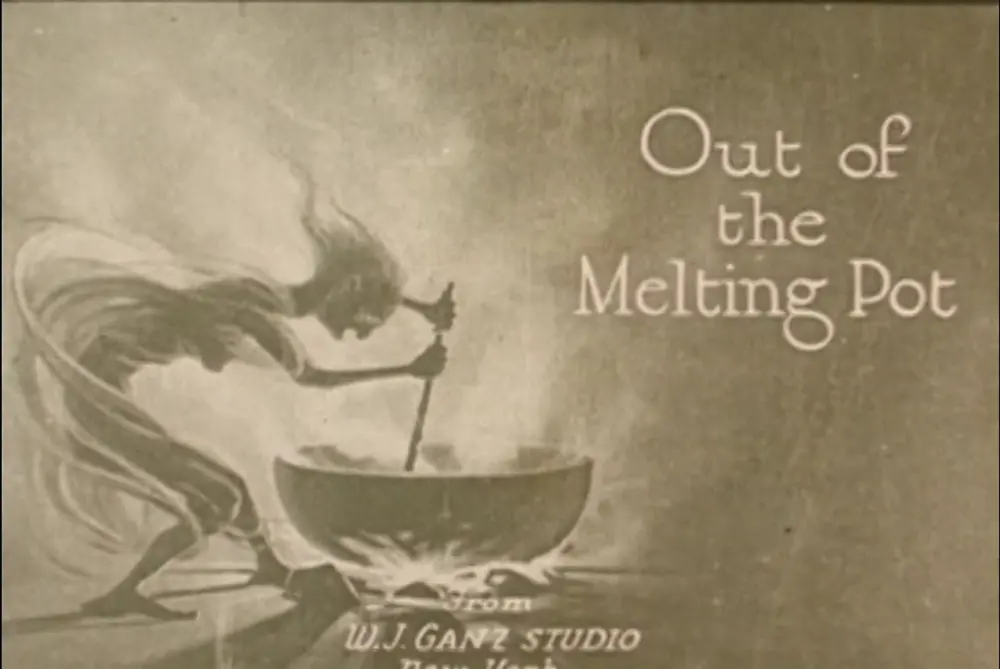
Consider the transition where a seemingly random cluster of dots and dashes slowly, painstakingly, resolves into the undeniable silhouette of a bird in flight. It’s not an instantaneous morph; it’s a gradual, organic process, akin to watching a cloud slowly take shape. This meticulous, hand-crafted approach to animation, without the aid of sophisticated digital tools, is breathtaking. It speaks to an incredible level of dedication and foresight, understanding that the power lay not just in the final image, but in the journey to get there.
The tone, if one can ascribe a tone to such an abstract work, is one of quiet wonder. There’s no bombast, no dramatic urgency. It's an invitation to observe, to contemplate the very nature of form and recognition. In an age saturated with hyper-realistic CGI, there's a raw, almost tactile charm to these early animated effects. They feel honest, a direct communication between the artist's hand and the viewer's eye. It’s a stark contrast to the narrative-driven spectacles of the time, such as Firebrand Trevison, which focused on human drama and action.
What was the creator's intention behind 'Out of the Melting Pot'? Without traditional writers or a clear narrative arc, we are left to infer. My strong opinion is that this film was less about telling a story and more about demonstrating the unique capabilities of the cinematic medium itself. It's a philosophical inquiry into creation, a visual metaphor for evolution, or perhaps simply a playful exploration of perception. Is it a commentary on the origins of life, where complexity emerges from simplicity? Or is it a more fundamental question about how our minds impose order on chaos?
The film doesn't provide answers; it provides questions. This is both its greatest strength and its most significant hurdle for modern audiences. We are accustomed to films that guide us, that provide emotional anchors. 'Out of the Melting Pot' offers none of that. It’s a pure, unadulterated visual experience, demanding that the viewer bring their own interpretations and intellectual engagement. This lack of hand-holding is, in my estimation, a bold artistic choice that elevates it beyond mere novelty.
It's a film that operates on a different wavelength entirely, one that prioritizes visual poetry over conventional storytelling. While films like Kiss Me Again captivated audiences with romantic comedy, 'Out of the Melting Pot' sought to captivate with pure form and movement.
Yes, 'Out of the Melting Pot' is absolutely worth watching today for specific audiences. It offers a rare opportunity to witness groundbreaking early animation. It challenges modern viewers to engage with film in a purely visual, non-narrative way. It serves as a vital historical document for understanding the evolution of cinema. However, it requires an open mind and a willingness to appreciate abstract art. It is not for casual viewing or those seeking passive entertainment.
While 'Out of the Melting Pot' might not have spawned a direct lineage of blockbusters, its spirit of experimentation undoubtedly contributed to the broader avant-garde movement in cinema. Its influence is subtle, perhaps more philosophical than stylistic, seeping into the collective consciousness of artists who believed film could be more than just a mirror to reality. One could argue it foreshadows later abstract animation pioneers, or even the visual philosophies behind modern generative art and AI-driven imagery. The idea of emergent forms from abstract data is more relevant now than ever.
My unconventional observation: the film’s fundamental concept, the transformation of abstract patterns into recognizable forms, feels strikingly prescient in an era dominated by artificial intelligence creating images from text prompts. It’s as if this early film was intuitively grappling with the very mechanics of how meaning and form are generated from raw, unorganized data. It’s a proto-AI art piece, a century ahead of its time.
It works. But it’s flawed. Its brevity and singular focus, while strengths for its artistic purity, are also its weaknesses in terms of broader appeal. It's a short, potent burst of creativity that leaves you pondering, rather than feeling satisfied in a conventional sense. This is not a film that will feature in casual movie night recommendations alongside Winners of the Wilderness, but it absolutely deserves its place in any serious discussion of cinematic innovation.
'Out of the Melting Pot' is not a film that will sweep you off your feet with a gripping story or unforgettable performances – there are none. Instead, it offers something far more rare and, for the right audience, far more valuable: a direct line to the audacious, experimental spirit of early cinema. It’s a challenging watch, undoubtedly, a piece of cinematic archaeology that demands an active, thoughtful viewer. But for those willing to engage with its abstract beauty and historical significance, it’s a profoundly rewarding experience. It reminds us that film, from its very inception, has been a medium of endless possibilities, capable of transcending mere storytelling to explore the very fabric of perception and creation. It’s a niche film, a curio, perhaps, but a vital one that deserves to be seen and discussed, even a century later. Its legacy isn't in its box office, but in its bold, unyielding pursuit of pure visual art.

IMDb 5.8
1935
Community
Log in to comment.