DbcultAccessing Vault...
Cult Review
Senior Film Conservator
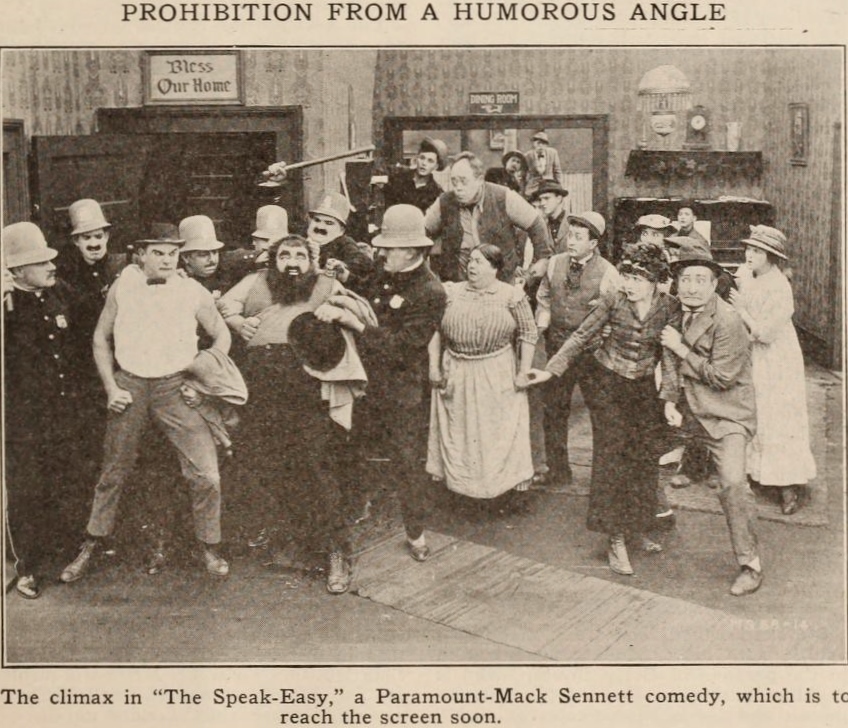
In the pantheon of early silent cinema, few themes resonate with as much chaotic vitality as the subversion of social mandates. The Speakeasy, a production that captures the burgeoning anxiety and hilarity of the Prohibition era, stands as a quintessential artifact of its time. While many films of the late 1910s leaned toward the melodramatic intensity found in The Woman in the Case, this particular work pivots toward a frantic, rhythmic comedy that utilizes space and architectural constraints as its primary comedic engine. The premise—a hotel proprietor running a secret bar in his cellar—is a deceptively simple hook that allows for a complex exploration of human duplicity and the sheer exhaustion of maintaining a facade.
Garry O'Dell delivers a performance that is nothing short of Herculean in its physical demands. Unlike the more stoic protagonists found in contemporary dramas like Blackie's Redemption, O'Dell’s hotelier is a man in constant, vibrating motion. His eyes, wide with the perpetual fear of discovery, serve as the film's emotional compass. There is a specific genius in how he navigates the verticality of the set; the stairs between the respectable lobby and the debaucherous cellar are not merely a transitional element but a stage for a desperate ballet. Each ascent represents a return to the rigid expectations of society, while each descent is a plunge into a world of vibrant, albeit illegal, camaraderie.
The supporting cast provides a sturdy scaffolding for O'Dell’s manic energy. Patrick Kelly and John Rand bring a seasoned gravitas to their roles, acting as the perfect foils to the proprietor's escalating panic. Their presence ensures that the film never devolves into mere slapstick but remains grounded in a recognizable social reality. The chemistry between the ensemble is palpable, suggesting a world that exists beyond the frame—a world where everyone is in on the secret, yet no one can afford to acknowledge it. This tension is far more palpable here than in the more fantastical elements of films like The Sky Monster.
One cannot discuss The Speakeasy without acknowledging the luminous Marie Prevost. In an era where female roles were often relegated to the damsel or the temptress—as seen in the more traditional The Dancer's Peril—Prevost brings a sharp, modern sensibility to the screen. Her comedic timing is impeccable, often stealing scenes with a subtle shift in expression or a deftly executed gesture. She represents the shifting cultural tides of the late 1910s, embodying a sense of agency and wit that would soon define the flapper era. Her interaction with the chaotic environment of the hotel provides a necessary counterpoint to the male-driven hysteria, offering a glimpse into the sophisticated urbanity that would eventually dominate the 1920s.
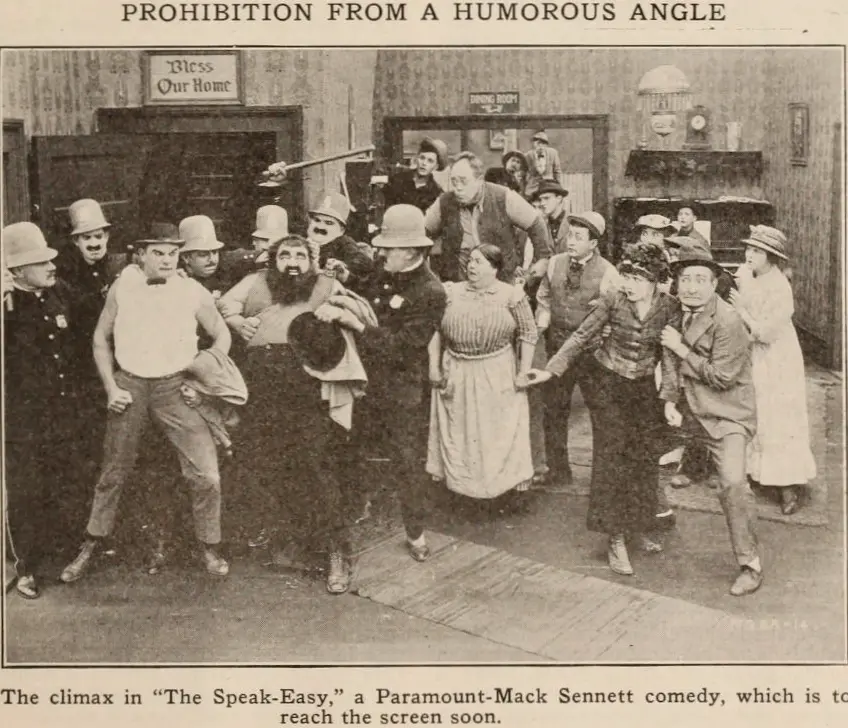
"The film functions as a subterranean symphony, where the clinking of glasses and the muffled laughter of the cellar provide a dissonant, yet strangely harmonious, soundtrack to the silence of the upstairs world."
From a technical perspective, the cinematography in The Speakeasy is remarkably sophisticated for its time. The lighting in the cellar scenes utilizes deep shadows and high-contrast pools of light, creating an atmosphere that feels both cozy and claustrophobic. This visual dichotomy mirrors the proprietor's internal state—the warmth of his secret success clashing with the cold reality of potential incarceration. When compared to the sprawling outdoor vistas of A Child of the Prairie, the tight, interior focus of this film highlights the ingenuity of the set designers. They managed to create a sense of scale and complexity within the confines of a few rooms, using every nook and cranny to hide a bottle or a patron.
The editing, too, deserves commendation. The cross-cutting between the 'safe' spaces and the 'danger' zones creates a rhythmic tension that propels the narrative forward. We see a suspicious guest leaning over the floorboards in the lobby, followed immediately by a shot of the patrons below trying to silence a popping cork. This juxtaposition is the heart of the film's comedy, a precursor to the sophisticated farces of the sound era. It lacks the maritime vastness of Les travailleurs de la mer, but it replaces that scale with an intense, localized pressure that is equally compelling.
Beyond the laughs, The Speakeasy offers a fascinating sociological glimpse into American life on the precipice of the Volstead Act. It captures a moment of transition where the law and the populace were moving in opposite directions. The hotel, usually a symbol of transit and transient respectability, becomes a microcosm of a nation divided. The proprietor is not a villain; he is an entrepreneur navigating a landscape of shifting morality. In this way, the film shares a thematic DNA with High Play, where the stakes of the game are as much about social standing as they are about financial gain.
The inclusion of characters like James Finlayson—whose iconic squint and double-take were already becoming legendary—adds a layer of recognizable trope that audiences craved. Finlayson’s ability to convey incredulity with a single facial twitch is the perfect instrument for a film centered on the unbelievable. Whether he is playing a confused guest or a menacing official, his presence elevates the stakes. The film’s logic is a closed loop of cause and effect; a spilled drink in the cellar leads to a damp patch on the lobby rug, which leads to a frantic cover-up involving a misplaced ottoman. This cascading causality is the hallmark of great silent comedy, reminiscent of the best moments in I'm on My Way.
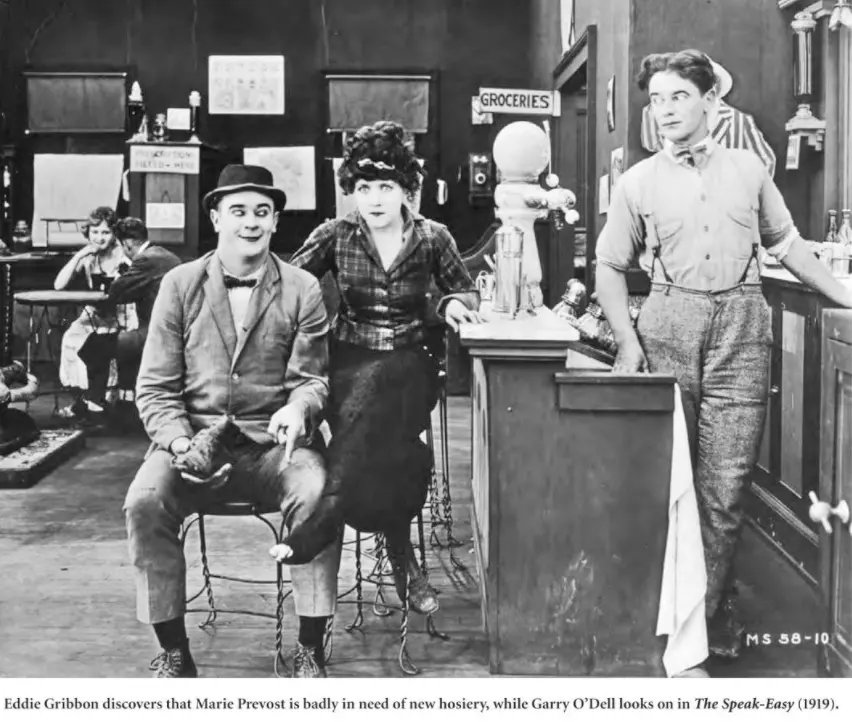
When we look at The Speakeasy in the context of its contemporaries, its unique flavor becomes even more apparent. While The Wildcat of Paris explores the exotic and the dangerous in a foreign setting, The Speakeasy finds the exotic in the mundane. It suggests that the most thrilling adventures aren't found in the snowy wastes of The Spell of the Yukon, but right under our feet. The film’s focus on the domestic sphere—the hotel, the cellar, the kitchen—reclaims these spaces as sites of rebellion. It is a more grounded, though no less intense, version of the mystery found in The Island of Intrigue.
Even when compared to films that deal with marital or domestic strife, such as My Unmarried Wife or Women's Weapons, this film stands out for its kineticism. It doesn't dwell on the emotional toll of deception; instead, it celebrates the ingenuity required to maintain it. There is an optimism here—a belief that through enough quick thinking and fast moving, one can outrun the inevitable. This is a far cry from the more somber tone of Each to His Kind, proving that the silent era was a broad church capable of housing both existential dread and buoyant farce.
As the film reaches its crescendo, the slapstick reaches a fever pitch that rivals any of the era's great comedies. The 'difficulties' mentioned in the plot summary are not merely obstacles; they are the very substance of the film's soul. The proprietor’s hotel becomes a living organism, pulsing with the heartbeat of the hidden speakeasy. Every closing door is a beat, every sliding panel a melody. It is a work that rewards repeat viewings, as the background gags and the subtle interplay between the bit players—like the reliable Eddie Gribbon and the versatile Al Cooke—reveal themselves over time.
In conclusion, The Speakeasy is a triumphant example of how cinema can turn social restriction into artistic liberation. It takes the heavy, moralistic weight of Prohibition and spins it into a light, airy, and endlessly entertaining confection. It lacks the didacticism of The Little Shepherd of Bargain Row, choosing instead to let the absurdity of the situation speak for itself. For the modern viewer, it serves as a vibrant window into a bygone world, reminding us that no matter how hard society tries to lock the cellar door, someone will always find a way to keep the taps flowing. It is a testament to the enduring power of the underdog and the eternal appeal of the secret, a cinematic toast to the rebels of the basement.
Reviewer's Note: This film represents a pivotal moment in the transition of silent comedy toward more structured, narrative-driven farce. Its influence can be seen in decades of sitcoms and feature films that rely on the 'secret identity' or 'hidden room' trope to generate conflict and humor.
IMDb 6.5
1930
Community
Log in to comment.