DbcultAccessing Vault...
Cult Review
Senior Film Conservator
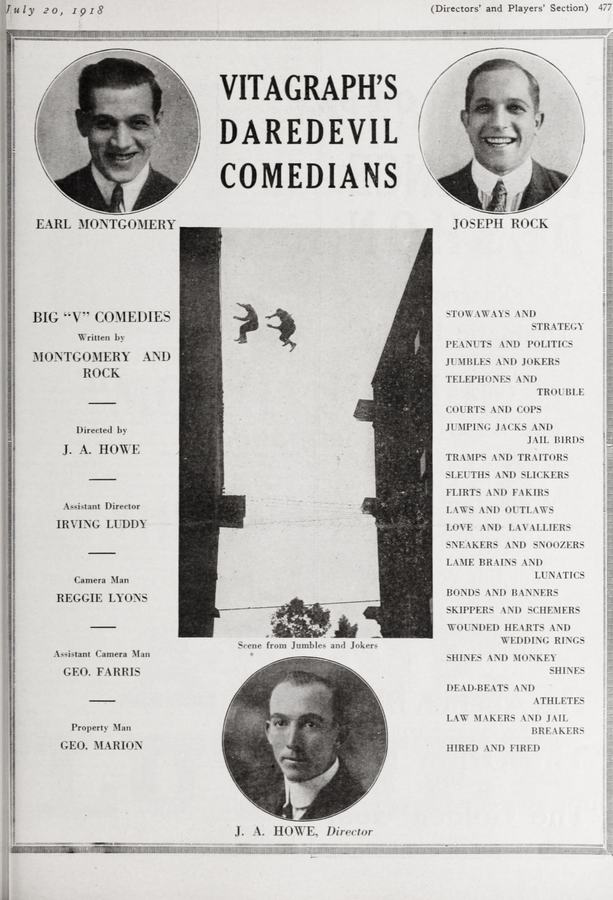
The opening sequence of Tramps and Traitors immerses the viewer in a rain‑slicked quay, where the camera lingers on broken crates and rusted chains, establishing a world that feels both historically specific and eerily timeless. Earl Montgomery (played with stoic gravitas by the eponymous Earl Montgomery) emerges from the gloom like a relic of a forgotten war, his eyes reflecting a lifetime of compromise. Opposite him, Joe Rock (portrayed by Joe Rock) saunters with a swagger that suggests he has never met a rule he could not bend.
From the first exchange, the film’s script—crafted jointly by the two leads—demonstrates a lyrical economy, each line a blade that cuts to reveal hidden motives. Their partnership, initially predicated on mutual necessity, evolves into a study of contrasting moral compasses: Montgomery’s lingering sense of duty versus Rock’s opportunistic charm.
Structurally, the film mirrors the labyrinthine alleys of its setting. The plot unfurls in three acts, each echoing the titular triad of tramps, traitors, and the elusive truth. Act one establishes the inciting telegram—an artifact that propels the duo toward the fabled gold. Act two plunges them into a vortex of competing factions, including the shadowy syndicate led by The Game of Three's infamous kingpin, whose presence is felt more than seen. Act three culminates in a vertiginous confrontation atop the port’s skeletal cranes, where rain becomes a visual metaphor for cleansing and revelation.
Thematically, the film interrogates the elasticity of loyalty. Montgomery’s internal monologue—delivered in a hushed voice‑over—evokes the existential dread of a man who has survived by compromising his principles. Rock, meanwhile, embodies the seductive allure of nihilism, treating every promise of wealth as a fleeting high. Their interactions are laced with subtext, reminiscent of the moral ambiguity found in On the Jump, yet the visual language remains uniquely theirs.
Cinematographer Lila Hart employs a chiaroscuro palette that leans heavily on the dark orange of rusted metal (#C2410C) and the muted yellow of flickering lanterns (#EAB308). The sea‑blue tones (#0E7490) appear sporadically, most notably in the reflective surface of the harbor’s water, creating a visual counterpoint to the oppressive darkness. The camera frequently adopts a low‑angle perspective, casting the protagonists as both towering figures of myth and vulnerable silhouettes against the night sky.
One of the film’s most arresting sequences is the rain‑soaked chase through the warehouse district. The droplets are rendered in hyper‑realistic detail, each splash a tiny prism that catches the orange glow of distant lanterns. This visual motif recalls the atmospheric intensity of 20,000 Leagues Under the Sea, yet it serves a far more grounded narrative purpose: to illustrate the characters’ desperation and the inexorable march toward their fate.
Earl Montgomery delivers a performance that oscillates between stoic restraint and sudden, visceral outbursts. His physicality—slow, deliberate movements—conveys a man whose body is a map of past battles. In contrast, Joe Rock’s portrayal is kinetic, his gestures quick, his smile often a mask that slips to reveal a flicker of genuine fear. The chemistry between the two is palpable, and their banter, peppered with sardonic wit, feels both rehearsed and spontaneous.
Supporting characters, though fewer, are rendered with equal care. Madame X (a cameo by a veteran actress known for her work in Madame X) provides a haunting counterpoint, her motives obscured by layers of personal vendetta. Her presence injects a feminine ferocity that challenges the male‑centric narrative, echoing the thematic complexity of Noemi, die blonde Jüdin.
The score, composed by the enigmatic duo of Montgomery and Rock, weaves a tapestry of mournful strings, distant sea shanties, and occasional percussive bursts that mirror the film’s rhythmic tension. The leitmotif associated with the gold cache is a low, pulsing bass line that intensifies each time the protagonists draw nearer to their prize. Sound design is meticulous; the creak of wooden planks, the hiss of steam, and the distant clamor of dockworkers create an immersive auditory backdrop.
When placed beside contemporaneous works such as The Wasp or the more melodramatic Mariano Moreno y la revolución de Mayo, Tramps and Traitors distinguishes itself through its unflinching focus on moral ambiguity rather than overt spectacle. Its pacing, deliberate yet never stagnant, offers a measured contrast to the frenetic energy of On the Jump. Moreover, its visual language—anchored in a muted, industrial palette—provides a stark counterpoint to the lush, saturated hues of David Garrick.
The climactic confrontation atop the rusted cranes is a masterclass in tension. As rain pelts the metal, the camera circles the protagonists, capturing every bead of sweat and flash of gunmetal. When the final shot rings out, the audience is left with an ambiguous tableau: Montgomery, bloodied but upright, clutching a tarnished coin; Rock, slumped, his grin finally broken. The gold, revealed to be a counterfeit, becomes a metaphor for the futility of their quest, underscoring the film’s central thesis—that the pursuit of wealth often masks a deeper, more personal yearning for redemption.
In the denouement, the port fades into a muted sunrise, the orange light washing over the water in a hue that mirrors the film’s opening palette. The final voice‑over, delivered by Montgomery, reflects on the nature of betrayal: “We are all tramps, wandering the night, and all traitors, when the dawn asks us what we have taken.” This closing line lingers, prompting viewers to contemplate the thin line between survival and treachery.
Tramps and Traitors is a richly textured exploration of loyalty, greed, and the human capacity for self‑deception. Its strengths lie in a meticulously crafted visual aesthetic, performances that balance restraint with raw intensity, and a script that refuses to offer easy answers. While the pacing may challenge audiences accustomed to rapid‑fire editing, the payoff—both emotional and intellectual—is undeniably rewarding. For cinephiles seeking a film that rewards repeated viewings and thoughtful analysis, this work stands as a compelling addition to the modern canon of morally complex drama.
IMDb 5.9
1930
Community
Log in to comment.