DbcultAccessing Vault...
Cult Review
Senior Film Conservator
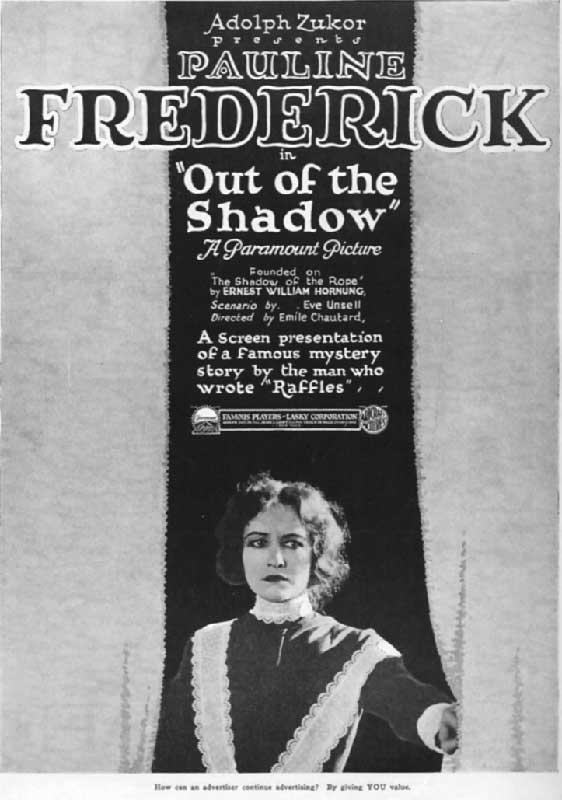
Stepping into the world of 'Out of the Shadow' (1917) is akin to unearthing a forgotten relic, a cinematic artifact that, despite its age, pulses with a vibrant, often unsettling, energy. Directed by J. Searle Dawley and starring the luminous Pauline Frederick, this film navigates the treacherous waters of domestic despair, illicit affection, and the chilling specter of murder with a quiet intensity that belies its silent nature. It’s a testament to the power of early cinema, demonstrating how nuanced storytelling and compelling performances could transcend the absence of spoken dialogue, crafting narratives that resonate deeply with universal human experiences.
From its very opening frames, the film establishes a palpable sense of unease. Ruth Minchin, portrayed with exquisite pathos by Frederick, exists in a state of profound marital unhappiness. Her husband, Minchin, a man defined by his belligerence and his alcoholic tendencies, casts a long, oppressive shadow over her life. Their union, born of circumstance rather than affection, is a stark tableau of misery, a familiar trope in melodramas of the era, yet rendered here with a particular sting. Frederick’s ability to convey a universe of suppressed emotion through subtle gestures and expressive eyes is nothing short of remarkable. She doesn't just play a character; she embodies the quiet desperation of a woman trapped in a gilded, yet suffocating, cage.
The narrative gains momentum with the introduction of Severino, a sensitive pianist residing in the same apartment building. His artistic soul, a stark contrast to Minchin's coarseness, draws Ruth in. Their connection is not one of overt passion, but rather a shared understanding, a quiet communion forged in the loneliness of their respective existences. It's a friendship that blossoms in the margins of Ruth's unhappy marriage, a fragile bloom threatened by the harsh realities of her domestic life. The film masterfully portrays the delicate balance of this platonic affection, hinting at deeper emotional currents without succumbing to overt sensationalism. This nuanced portrayal of human connection in the face of adversity is one of the film's enduring strengths.
The inevitable collision occurs with brutal force. Minchin, in a drunken stupor, discovers Ruth and Severino together. His reaction is swift and violent: a furious expulsion of the pianist, followed by a shocking act of physical abuse against his own wife. This scene, though silent, speaks volumes about the pervasive nature of domestic violence and the powerlessness experienced by many women during that period. It's a moment designed to elicit outrage and sympathy, and it succeeds admirably. The audience is left with a visceral understanding of Ruth's plight, solidifying her as a figure deserving of our deepest empathy. This escalation of conflict sets the stage for the dramatic events that follow, plunging the characters into an abyss of suspicion and moral quandary.
The film takes a sharp turn into the realm of crime drama when Minchin is found dead. The official cause is attributed to a delirium following pneumonia, a convenient explanation that nonetheless fails to quell the rising tide of suspicion. Ruth, having suffered so profoundly at his hands, naturally becomes the primary suspect. This twist elevates the film beyond a mere melodrama of marital woe, injecting elements of a whodunit that keep the audience captivated. The tension is palpable as Ruth navigates the accusatory glances and the looming threat of legal repercussions, her every move scrutinized, her every emotion misinterpreted.
Into this fraught atmosphere steps Richard Steel, a man with a past connection to Minchin from their days in Australia. Wyndham Standing, in the role of Steel, brings a quiet strength and a sense of protective calm to the proceedings. His sudden appearance offers Ruth a glimmer of hope, a potential ally in her darkest hour. Yet, the labyrinthine plot ensures that even Steel, with his seemingly benevolent intentions, becomes ensnared in the web of suspicion. This clever narrative device ensures that no character is entirely above reproach, adding layers of complexity to the mystery. The film deftly plays with audience expectations, constantly shifting the focus of guilt and innocence, much like the intricate plots seen in later crime dramas or even some of the more complex narratives of its own time, such as The Lone Wolf series, which often revelled in misdirection and unexpected revelations.
Ruth's predicament deepens into a profound moral crisis. How can she contemplate a future with Steel, a man she is growing to care for, if he might be the one who ended her husband's life? The emotional weight of this dilemma is carried beautifully by Frederick, whose portrayal of internal conflict is both subtle and powerful. Her performance during these moments of agonizing introspection is a masterclass in silent acting, conveying the turmoil of a soul caught between love, duty, and the shadow of a terrible secret. The film avoids easy answers, instead allowing Ruth to grapple with the ethical complexities of her situation, making her journey all the more compelling.
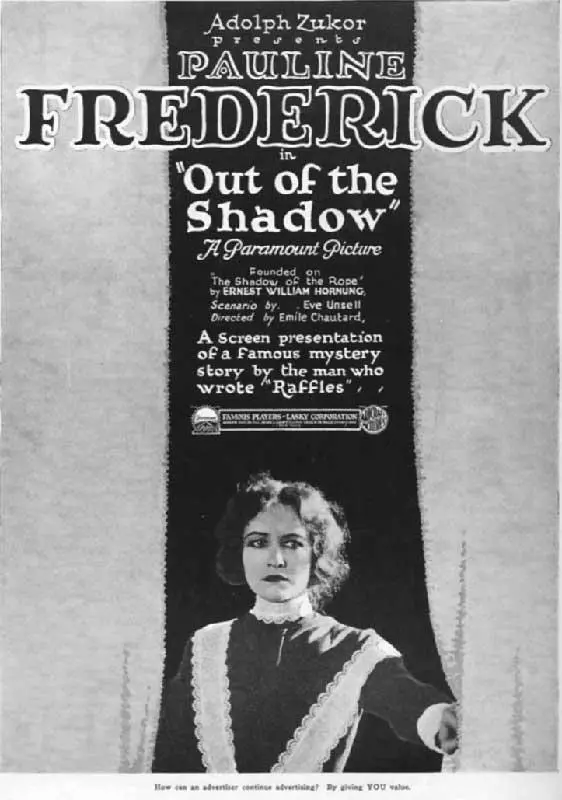
The resolution arrives not with a dramatic courtroom confession, but through a more intimate, psychological unraveling. A sudden, vivid recollection of Severino's agitated state during their last encounter before Minchin's death begins to gnaw at Ruth. This memory, initially dismissed, slowly gains prominence, pushing her to re-evaluate the pianist's role. Under the intense pressure of the ongoing investigation and Ruth's renewed scrutiny, Severino finally cracks, confessing to the murder. This isn't a pre-meditated act of malice, but a desperate, perhaps even delirious, reaction to Minchin's violence and his own fragile state. The film paints him not as a villain, but as a tragic figure, pushed to the brink by circumstance and a sudden illness.
Pauline Frederick is, without question, the beating heart of 'Out of the Shadow'. Her command of expression, her ability to convey a spectrum of emotions from quiet suffering to burgeoning hope, is truly captivating. She navigates the emotional landscape of Ruth Minchin with remarkable grace and depth, making her character's journey utterly believable and deeply moving. Her talent shines brightest in the moments of silent contemplation, where her eyes alone tell a story of profound inner turmoil. This film serves as a powerful showcase for her abilities, solidifying her status as a leading lady of the silent era.
The supporting cast, while perhaps not reaching Frederick's heights, nonetheless provides solid backing. Wyndham Standing's Richard Steel is a welcome presence, offering a grounded, steadfast counterpoint to the chaos surrounding Ruth. His portrayal ensures that Steel is more than just a romantic interest; he's a figure of stability and quiet determination. Even the brief, yet impactful, performance of Syn De Conde as Severino is noteworthy. He manages to convey the pianist's sensitive nature, his burgeoning affection for Ruth, and ultimately, his tragic descent into a desperate act, all without uttering a single word. The ensemble works in concert to create a believable world, albeit one fraught with peril and moral ambiguity. The nuanced performances elevate the material beyond simple melodrama, giving it a gravitas that resonates long after the final fade out. One might even draw parallels to the powerful, often understated, emotional performances found in other period dramas that rely heavily on visual storytelling, such as Nobleza gaucha, where the dramatic weight is carried by the actors' expressions and body language.
J. Searle Dawley's direction is competent and effective, guiding the narrative with a steady hand. He understands the power of visual storytelling, utilizing close-ups to emphasize emotional states and wider shots to establish the oppressive atmosphere of Ruth's home. The pacing is deliberate, allowing the audience to fully absorb the emotional beats and the unfolding mystery. While not overtly flashy, the cinematography serves the story well, creating a visual language that enhances the dramatic tension and the characters' internal struggles. The use of light and shadow, a hallmark of early cinema, is particularly effective in underscoring the film's themes of concealment and revelation, of being trapped 'out of the shadow' and emerging from it.
The film's exploration of themes like domestic abuse, the justice system, and the complexities of human motivation remains surprisingly relevant. While the societal context has changed dramatically, the core emotional truths—the yearning for freedom, the search for love, and the burden of guilt—are timeless. 'Out of the Shadow', therefore, is more than just a historical curiosity; it's a compelling piece of early cinema that offers a window into the narrative sophistication and emotional depth achievable in the silent era. It reminds us that powerful storytelling transcends technological limitations, relying instead on universal human experiences and the artistry of its creators.
The journey of Ruth Minchin, from a life overshadowed by brutality to a future illuminated by truth and the promise of happiness with Richard Steel, is a compelling arc. It's a narrative that speaks to resilience, to the quiet strength required to endure unimaginable hardship, and to the ultimate triumph of justice, however circuitous its path. The film's conclusion, while offering a sense of resolution and a 'road to happiness,' doesn't feel entirely saccharine. Instead, it feels earned, a hard-won peace after a harrowing ordeal. This nuanced ending prevents the film from devolving into mere sentimentality, cementing its place as a thoughtful and impactful drama.
In an era of cinematic experimentation, 'Out of the Shadow' stands as a strong example of how early filmmakers were already mastering the art of narrative tension and character development. It's a film that deserves to be rediscovered and appreciated, not just for its historical significance, but for its intrinsic qualities as a gripping and emotionally resonant story. It showcases the enduring power of silent film to evoke deep feelings and explore complex human dilemmas, proving that the absence of sound never meant an absence of voice. Much like other dramatic works of the period, such as The Silent Battle, it uses visual cues and compelling performances to convey profound internal struggles and societal pressures, leaving a lasting impression on the viewer.
Ultimately, this film is a powerful reminder of the foundational elements of storytelling that continue to captivate audiences today. The intricate dance of suspicion and revelation, the quiet desperation of a woman seeking freedom, and the unexpected twists of fate all combine to create a compelling cinematic experience. For those with an appreciation for the rich history of film and the artistry of its pioneers, 'Out of the Shadow' offers a rewarding and thought-provoking journey into a past era, yet with themes that remain strikingly contemporary. It's a testament to the enduring power of a well-crafted story, regardless of the technological advancements that have since transformed the medium.
IMDb 5.7
1935
Community
Log in to comment.