DbcultAccessing Vault...
Cult Review
Senior Film Conservator
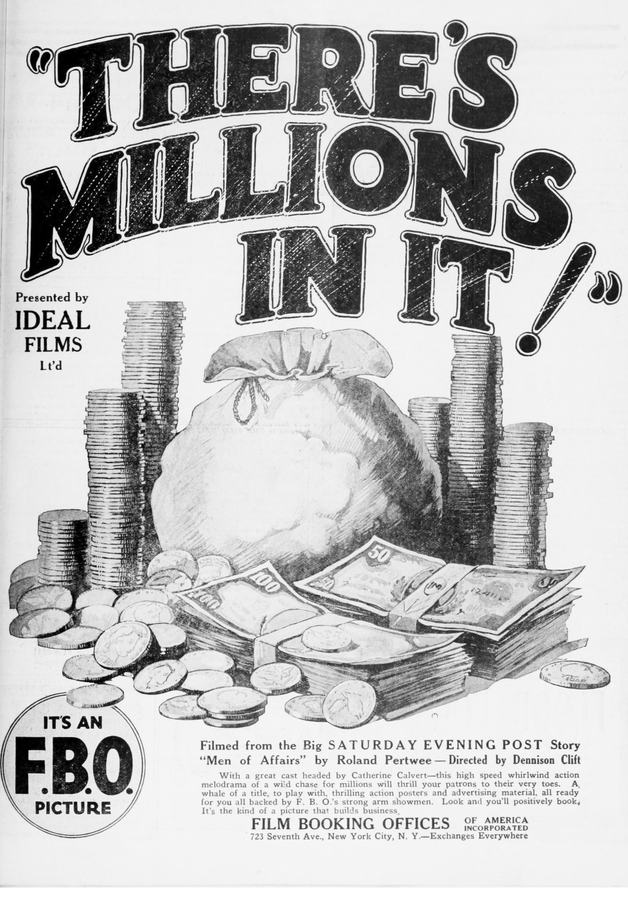
The premise of Out to Win unfurls like a dimly lit stage set against the glitter of radium, the early twentieth‑century miracle that promised both medical salvation and industrial power. Ernest E. Dagnall’s portrayal of the itinerant Jack Harrow is a study in chameleon‑like adaptability; his gaunt features and weather‑worn eyes convey a man who has learned to survive by shedding identities as easily as a snake sheds skin. The film’s opening sequence—an alleyway drenched in soot, a lone figure huddled around a flickering lantern—immediately establishes a visual metaphor for the darkness that will pervade Harrow’s deception.
At the heart of the narrative lies a consortium of financiers, embodied by A.B. Imeson’s cold‑calculated Baron von Kessler, who view radium not as a scientific breakthrough but as a commodity to be hoarded. The script, penned by Dion Clayton Calthrop and Roland Pertwee, weaves a tapestry of intrigue that feels eerily prescient of modern corporate espionage. The Balkan concession, a thinly veiled stand‑in for the real‑world Balkan mining districts, becomes a crucible where greed, nationalism, and the nascent dread of nuclear power intersect.
Clive Brook, in a supporting role as the charismatic yet morally ambiguous diplomat Sir Reginald Whitford, brings a suave, almost rakish energy that contrasts sharply with Dagnall’s stoic desperation. Brook’s eyes, ever‑watchful, hint at hidden motives, a performance that would later echo in his talkie career. Meanwhile, Daisy Campbell’s portrayal of the enigmatic socialite Elena Varga—whose allegiance wavers between love and ambition—offers a nuanced glimpse into the limited agency afforded to women in 1920s cinema. Her expressive gestures, amplified by the film’s intertitles, convey a layered character whose choices ripple through the plot’s climax.
Cinematographer Robert English employs chiaroscuro with a deft hand, allowing the luminous quality of radium to serve as both a literal and symbolic beacon. In the pivotal scene where Harrow first beholds the glowing ore, the camera lingers on the phosphorescent glow, bathing the characters in an otherworldly hue that seems to pulse with unseen power. This visual motif recurs throughout, reminding the audience of the duality of progress: the promise of illumination and the peril of blindness.
The film’s pacing is deliberate, each act unfolding like a chess move. The first act establishes Harrow’s impoverished existence, the second thrusts him into the opulent yet treacherous world of Balkan aristocracy, and the third spirals into a feverish denouement where identities collapse. This tripartite structure mirrors the classic three‑act design championed by early Hollywood, yet the screenplay’s intertitles inject a wry, almost sardonic tone that keeps the audience engaged despite the absence of spoken dialogue.
If you appreciated the moral ambiguity of The World's Applause or the intricate power plays in Circumstantial Evidence, you’ll find Out to Win a compelling companion piece. Its exploration of deception for survival echoes the existential dilemmas faced by protagonists in The Lone Wolf, while the scientific backdrop anticipates the speculative anxieties later dramatized in The Unknown.
The art direction juxtaposes the squalor of Harrow’s street‑level world with the gilded interiors of Balkan palaces. Set pieces—crumbling stone arches, opulent chandeliers dripping with crystal—are rendered with meticulous attention to period detail, creating a visual dialectic that underscores the film’s central conflict: authenticity versus artifice. The use of actual radium samples (albeit safely simulated) in certain close‑ups adds a tactile authenticity that heightens the audience’s immersion.
Though silent, the film’s accompaniment—originally performed live by orchestras—features a recurring leitmotif in a minor key, echoing the protagonist’s inner turmoil. Modern restorations have paired the visuals with a newly commissioned score that weaves in subtle electronic pulses, evoking the hum of radioactive decay. This marriage of old and new enriches the viewing experience, allowing contemporary audiences to feel the tension that the original audiences would have sensed through the orchestra’s crescendo.
Jack Harrow’s evolution from a nameless tramp to a calculated impostor is rendered with a quiet intensity that avoids melodrama. Each decision he makes—whether to betray a confidant or to protect an innocent—reveals layers of ethical complexity. The film refuses to present a tidy moral resolution; instead, it leaves Harrow standing on a precipice, his future as uncertain as the glowing ore he coveted. This open‑ended conclusion invites viewers to grapple with the question: does the end ever truly justify the means?
While many silent era dramas leaned heavily on romantic subplots, Out to Win prioritizes geopolitical intrigue, placing it in a unique niche alongside films like Gas and Air. Its focus on the exploitation of scientific breakthroughs predates the Cold War anxieties that would dominate later cinema, making it a prescient commentary on the perils of unchecked technological ambition.
Released in the early 1920s, the film captures a moment when radium was still a marvel, celebrated in newspapers and used in dubious medical treatments. The public’s fascination—and fear—of this luminous element is palpable throughout the narrative, mirroring real‑world debates that would later culminate in the establishment of safety standards for radioactive materials. As such, the film serves as both entertainment and a historical artifact, reflecting contemporary anxieties about scientific progress.
The thematic threads woven in Out to Win can be traced forward to the espionage thrillers of the 1930s and the atomic paranoia of the 1950s. Its nuanced portrayal of a protagonist who is both victim and perpetrator anticipates the morally ambiguous heroes of film noir. Moreover, the film’s visual language—particularly the use of glowing substances as a narrative device—finds echoes in later works such as Half a Hero and even contemporary sci‑fi blockbusters.
Every frame of Out to Win is a testament to the collaborative artistry of its creators. From the meticulous set design to the haunting intertitles that blend poetry with exposition, the film rewards repeat viewings. Its relevance persists, reminding modern audiences that the allure of progress often hides a shadowed cost. For scholars of silent cinema, aficionados of period dramas, and anyone intrigued by the interplay of science, morality, and survival, this film offers a richly textured experience that lingers long after the final fade‑to‑black.
IMDb 5.8
1933
Community
Log in to comment.