DbcultAccessing Vault...
Cult Review
Senior Film Conservator
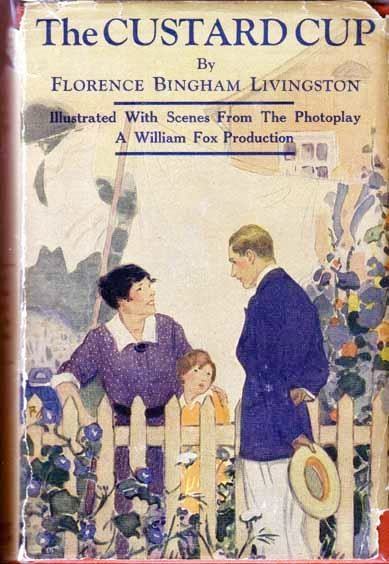
The year 1923 stands as a pivotal epoch in the silent cinematic tradition, a time when the medium began to shed its primitive skin in favor of sophisticated social realism and nuanced character studies. Among these relics of light and shadow, The Custard Cup emerges not merely as a melodrama, but as a vibrant tapestry of urban struggle and maternal fortitude. Directed with a keen eye for the textures of poverty, the film serves as a vehicle for Mary Carr, the quintessential screen mother of her generation, whose performance here transcends the tropes of the era to touch upon something profoundly elemental.
The titular 'Custard Cup' is more than a setting; it is a character in its own right—a labyrinthine courtyard that encapsulates the claustrophobia and the communal intimacy of the working class. Unlike the sprawling vistas seen in Back to God's Country, which utilizes the vastness of the wilderness to highlight human insignificance, The Custard Cup finds its drama in the friction of close quarters. The lens captures the peeling paint and the shared laundry lines with a documentary-like precision that predates the Italian Neorealist movement by decades.
Within this crucible, Penzie Penfield moves with a grace that contradicts her surroundings. Mary Carr’s portrayal is a masterclass in silent expression; her face is a landscape where the topographical maps of a thousand sorrows are etched into the lines around her eyes. She is the 'Custard Cup’s' beating heart, a woman who has transmuted her own widowhood into a radical form of communal care. Her adoption of three children is not framed as a burden, but as a defiant act of hope against the encroaching gray of the tenements.
Contrast is the engine of 1920s drama, and the presence of Frank and Gussie Bosley provides the necessary chiaroscuro to Penzie’s radiant altruism. Their involvement in a counterfeiting ring introduces a noir-ish element that anticipates the gritty urban thrillers of the following decade. While films like The Taint explored the moral decay of individuals, The Custard Cup looks at how criminality parasitizes the honest poor. The Bosleys are not merely villains; they are the rot within the walls, using the respectability of the tenement to mask their subversion of the national economy.
"The forgery of currency serves as a potent metaphor for the forgery of character. While Penzie offers the 'gold' of her spirit, the Bosleys attempt to circulate the 'paper' of their deception."
The tension builds with a slow-burn efficiency. The writers—Charles E. Blaney, Ralph Spence, G. Marion Burton, and Florence Livingston—skillfully weave the domestic minutiae of Penzie’s life with the escalating danger of the Bosleys' operation. We see the children playing in the courtyard, oblivious to the fact that their neighbors are printing phony bills that will eventually lead to the destruction of their fragile peace. This juxtaposition of innocence and vice is a hallmark of the era's storytelling, yet it feels remarkably fresh here due to the specificity of the performances.
The film’s centerpiece is undoubtedly the boat excursion hosted by Alderman Curry. In the early 20th century, these excursions were a vital social outlet for the urban poor—a brief escape from the soot of the city. The production values here are surprisingly high for a 1923 release. The cinematography captures the transition from the festive atmosphere of the departure to the chaotic horror of the fire with a visceral intensity that rivals the maritime disasters in Adele.
When Frank Bosley attempts to burn the evidence of his crimes, he doesn't just ignite a fire; he ignites a reckoning. The flames on the boat are a visual manifestation of the 'fire' that has been smoldering within the tenement. The rescue sequence is edited with a rhythmic urgency that keeps the viewer on the edge of their seat. It is here that the film shifts from a character study into a high-stakes thriller, demonstrating the versatility of the Fox Film Corporation’s house style during this period.
The third act of The Custard Cup delves into the fallibility of the legal system—a theme often explored in contemporary works like The Debt of Honor. Penzie’s arrest for passing counterfeit money is a heartbreaking moment in the narrative. It highlights the vulnerability of the marginalized; a single piece of bad luck can dismantle a lifetime of reputation. The film critiques a system that is quick to judge based on surface-level evidence, and it requires the intervention of a specialized detective to see through the facade.
The detective character acts as a surrogate for the audience—a rational observer in a world of heightened emotion. His ability to prove Penzie’s innocence isn't just a plot device; it's a validation of her moral character. The apprehension of the Bosleys provides a catharsis that is both satisfying and necessary. Unlike the more ambiguous endings found in European imports like The Apaches of Paris, The Custard Cup adheres to the American tradition of moral equilibrium.
When we place The Custard Cup alongside its contemporaries, its unique strengths become even more apparent. While Bismarck sought to capture the grand sweep of history, this film finds the 'grand' in the small. It shares a certain DNA with Tell It to the Marines in its depiction of rugged, salt-of-the-earth characters, though its focus is domestic rather than military. Even compared to the lighthearted antics of Run 'Em Ragged or Pay Your Dues, there is a weightiness here that demands the viewer's respect.
The film also avoids the exoticism of Charlie in Turkey or the overt escapism of Shadows of the West. Instead, it leans into the reality of its era. Even the title, which sounds like something out of a lighthearted romance like A Wife's Romance, is subverted by the gritty reality of the tenement life it portrays. It is this groundedness that makes the film endure as a significant cultural artifact.
The direction—often attributed to the collaborative efforts of the writers and the studio's seasoned technicians—shows an advanced understanding of spatial dynamics. The way the camera moves through the oval courtyard of the 'Custard Cup' creates a sense of a self-contained universe. The lighting, particularly in the scenes involving the counterfeiting equipment, uses deep shadows to evoke a sense of dread, reminiscent of the atmospheric work in Madame d' Ora.
Furthermore, the integration of the child actors—including the young Ben Lyon and Miriam Battista—is handled with a lack of sentimentality that is rare for the time. They aren't just props for Penzie’s affection; they are individual characters with their own reactions to the unfolding drama. This ensemble approach gives the film a richness that elevates it above standard melodrama fare like Hands Off!.
In the grand lineage of silent cinema, The Custard Cup serves as a bridge between the Victorian morality plays of the 1910s and the more complex social dramas of the late 1920s. It captures a moment in American history when the city was becoming the dominant force in the cultural imagination, and when the figures within those cities were beginning to demand a more nuanced representation on screen. It lacks the propaganda-heavy tone of Allies' Official War Review, No. 23, opting instead for a humanistic approach that resonates across the decades.
Mary Carr’s performance remains the film's north star. Her ability to convey complex internal states through subtle shifts in posture and gaze is a reminder of why she was so beloved by audiences of the time. In The Custard Cup, she isn't just playing a mother; she is embodying the very concept of sanctuary. As the film concludes and the peace of the courtyard is restored, the viewer is left with a profound sense of the resilience of the human spirit. It is a film that deserves to be rediscovered, not just as a historical curiosity, but as a deeply moving piece of art that understands the true cost of kindness in a world of counterfeit values.
IMDb 6.9
1924
Community
Log in to comment.