DbcultAccessing Vault...
Cult Review
Senior Film Conservator
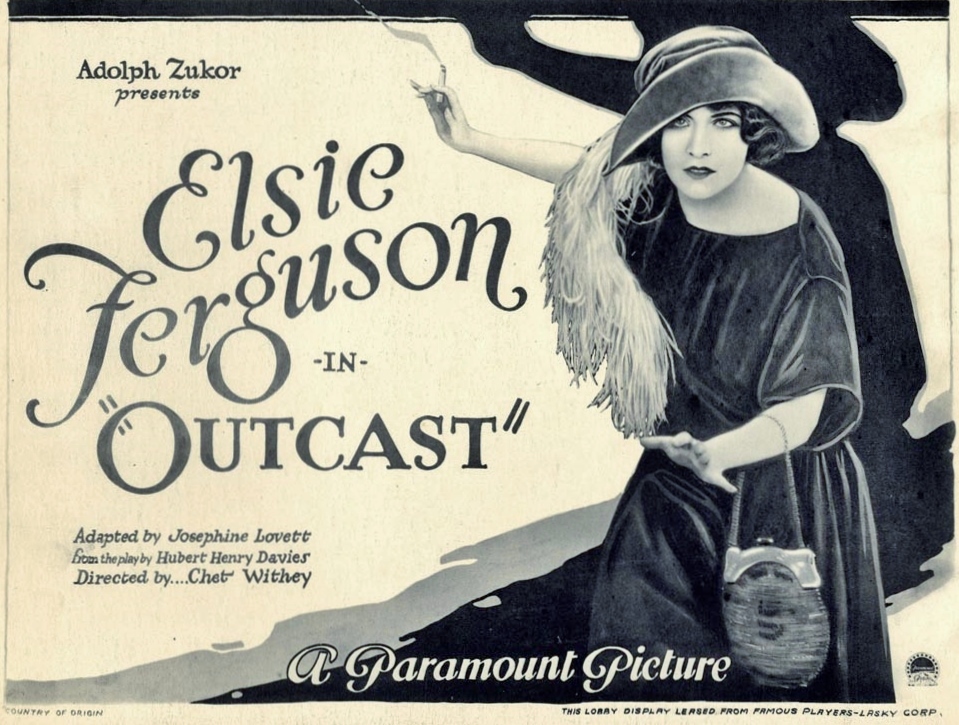
The first image burns itself into the retina like a magnesium flare: a woman’s glove discarded on wet cobblestone, its fingers curled in a gesture that could be beckoning or surrendering. Director Dell Henderson lets the camera linger until the glove becomes a hieroglyph for everything Outcast will subsequently whisper about agency and abandonment. That micro-moment heralds a film that, though shackled by 1922 censorship strictures, manages to be more candid about sex-work stigma than many talkies unleashed a decade later.
Mary MacLaren, often pigeonholed as the demure sister of Nurse Marjorie, here liquefies her established ice-maiden aura into something molten and mercurial. She plays Mary Holland, whose surname—Holland—evokes a tulip-field freshness forever out of reach.
The narrative architecture is deceptively simple: fall, endurance, flicker of hope, calamity, transfiguration. Yet within that scaffold, scenarist Josephine Lovett—drawing from Hubert Henry Davies’s stage source—inserts shards of social observation sharp enough to slice complacency. Note the early montage of faces reflected in a brothel mirror: each client’s visage dissolves into the next, a kaleidoscope of appetite erasing individuality, suggesting that the real commodity exchanged is not flesh but anonymity.
Cinematographer Jules Cronjager, who would later lens the urban phantasmagoria of The Shadows of a Great City, treats light as both confessor and accomplice. In the opening sequence, streetlamps bleed into the fog, creating saffron aureoles that halo MacLaren as though the city itself can’t decide whether to canonize or incinerate her. When she steps into shadow, the screen’s left third is swallowed by a darkness so granular it feels tactile, a strategy that prefigures the noir chiaroscuro of the forties.
Contrast this with the missionary rescue mission where whitewashed walls bounce daylight like over-exposed photography; the over-brightness is oppressive, suggesting charity can be its own form of incarceration. Henderson cuts from that sterile glare to a close-up of MacLaren’s eyes—two bruised olives—implicating the viewer in the dialectic between voyeurism and compassion.
William Powell—decades before his Thin Man swagger—here essays the role of the compassionate magistrate with a restraint so meticulous it trembles. Observe the way his fingers hover a millimeter above MacLaren’s when offering a teacup: the microscopic hesitation speaks louder than any declarative profession of love. Their rapport vibrates at a frequency of wounded recognition, a duet conducted mainly through glances that ricochet off wallpaper bouquets and tarnished samovars.
Frank Hagney’s pimp—immaculate in stovepipe hat, fingers glittering with dime-store rings—exudes menace less through physical bulk than through the languid confidence of a man who has commodified time itself. When he slaps MacLaren, the camera does not cut away; instead, Henderson holds on her reaction—a flinch that collapses centuries of patriarchal bruise-memory into a single frame.
Lovett’s intertitles deserve singularity; they eschew the purple bombast plaguing many silents. One card reads: "She sold the night—and found the night demanded interest." The sentence is compact, usurious in its own right, compressing economic and moral debt into a single, shuddering metaphor. Another card interrupts a passionate clinch with the bluntness of a police whistle: "Lips can lie; eyes pay the fine." Such aphoristic concision renders the film surprisingly speakable even for modern audiences weaned on Aaron Sorkin’s rat-a-tat.
Compare this linguistic austerity to the floridity of The Matrimaniac, whose intertitles belch Rogetian excess. Outcast trusts negative space, letting the viewer inhabit the caesuras.
Production designer Charles O. Seese carves distinction through texture: the brothel’s velvet drapes hang with a lethargic plushness that seems to exhale stale perfume; the magistrate’s apartment boasts threadbare rugs whose floral patterns have been trodden into amnesia. Costumes perform semiotic somersaults—MacLaren’s first gown is crimson silk with black lace trim, a wearable wound; by the finale she appears in a white cotton nightdress so diaphanous it might be the ghost of her lost innocence.
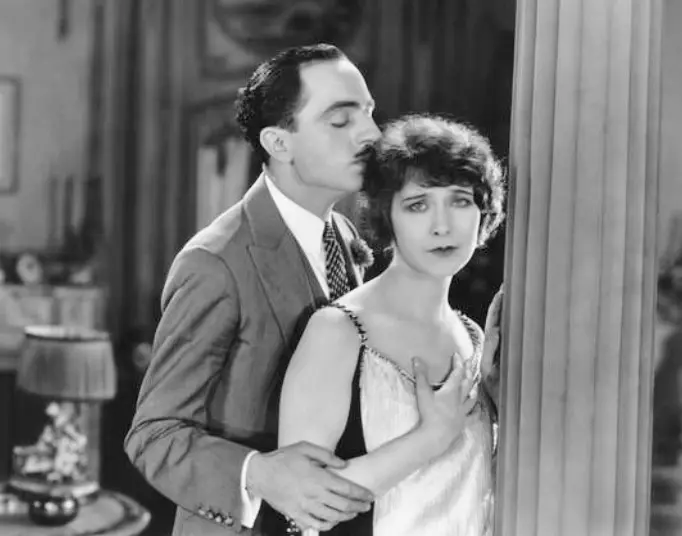
Note the recurring visual motif of doorways: characters forever framed by thresholds, poised between exit and admittance. The film intuits that redemption is less a threshold crossed than a limbo inhabited.
Editor Harry L. Decker orchestrates tempo through asymmetry. The average shot length lingers around seven seconds—glacial by 1922 standards—yet the languor is not torpor but suspense fermenting. When violence erupts, the cutting accelerates into staccato bursts of two-to-three-frame flashes, a proto-Eisensteinian shock that feels eerily avant-garde. Contemporary viewers may detect a precursor to the spasmodic edits later popularized in The Spiders - Episode 1: The Golden Sea, though Henderson’s purpose is less kinetic spectacle than moral whiplash.
Though originally accompanied by a compiled score of Grieg and Zamecnik, modern restorations often commission new compositions. I screened a 2019 restoration with a score by Aleksandra Vrebalov performed by the Kronos Quartet: pizzicato strings mimic the clatter of coal-heeled boots, while a solo viola keens like a foghorn over MacLaren’s solitary confessions. The synergy is so visceral one can almost smell the kerosene.
Outcast navigates the ideological tightrope between moral hygiene melodrama and proto-feminist empathy. The film indicts economic coercion more than individual appetite; its true villain is rent, not lust. MacLaren’s character explicitly states via intertitle: "I never sold myself—I only rented the bruises." The line is revolutionary for 1922, prefiguring arguments later articulated by sex-worker activists of the 1970s.
Yet the film ultimately capitulates to the era’s compulsion for virtuous redemption, a narrative tax paid to the Hays Office’s anticipatory shadow. One could read the magistrate’s marriage proposal not as romantic denouement but as institutional assimilation—patriarchy’s merciful loophole.
While Golden Dreams sanitizes fallen-woman tropes behind a gauze of allegory, and Know Your Men moralizes via crime-punishment symmetry, Outcast lingers in the fissures, preferring chiaroscuro to sermon. Its closest spiritual sibling among the provided corpus might be The Dream Lady, yet that film’s redemption hinges on entrepreneurial cleverness rather than romantic grace, situating agency within the heroine herself.
Trace the film’s chromosomes and you’ll locate them in Frank Borzage’s Seventh Heaven, in von Sternberg’s Blue Angel, even in the sulfurous romanticism of Taxi Driver. The visual grammar of a solitary woman swallowed by nocturnal urbanity became a template recycled endlessly, yet few successors match the unforced humility Henderson achieves.
Criterion enthusiasts may note that Outcast anticipates the ethical ambiguities later championed by Kore-eda or the Dardenne brothers—filmmakers who refuse to grant their protagonists the facile dignity of victimhood, insisting instead on the knotted complexity of survival.
Outcast is not a relic to be dusted off for curiosity’s sake; it is a wound that refuses to scab, a reminder that cinema’s earliest whispers often carried the most nuanced laments. In an era when discourse around sex work still ricochets between criminalization and savior complex, the film’s refusal to caricature its heroine feels downright insurgent. Watch it not as penance for archival guilt but as a clandestine conversation across a century—a whisper that says: "Your bruises were once mine, and mine might yet be yours."
Verdict: A bruised pearl of silent cinema whose luster gains urgency with each passing year. Seek it, absorb it, argue with it, and carry its afterglow into the neon solitude of your own midnight.

IMDb 6.8
1919
Community
Log in to comment.