DbcultAccessing Vault...
Cult Review
Senior Film Conservator
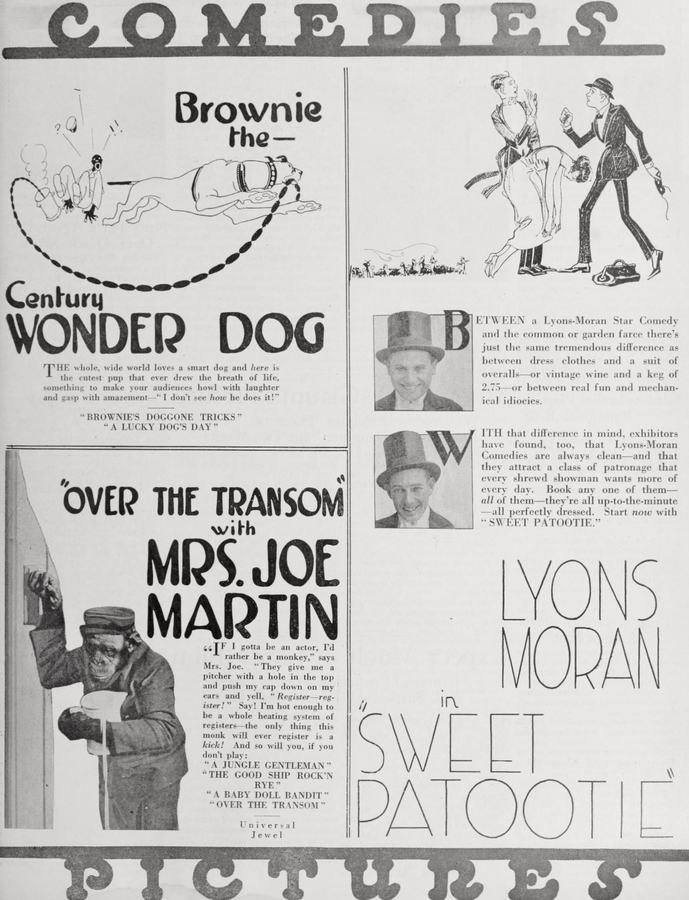
A hotel safe becomes both womb and tomb, a milkmaid’s heart oscillates like a metronome set to allegro, and a mustache—yes, merely a mustache—upends the social ladder in Fred Hibbard’s delirious one-reeler Over the Transom. Clocking in at a hair under twelve minutes, this 1922 curiosity distills the entire silent-comedy cosmos into a shot glass and then hurls it across the lobby.
Let us begin with the wake-up call. Jimmie’s bed, cantilevered above a cavernous well, prefigures the surrealist gag architecture of One Day and even the expressionist staircases in Stuart Webbs: Das Panzergewölbe. Yet Hibbard’s spatial impudence is pure Americana: a bedroom that doubles as a funhouse drop-shaft, gravity optional, dignity negotiable. The moment Jimmie yanks the counter-weight and plummets into darkness, we realize we’re not in the realm of Harold Lloyd’s plausible stunts or Keaton’s mechanical precision; we are in a universe where physics files for divorce.
Esther, the hotel’s milkmaid, enters like a pastoral hallucination. Her bottles clink with the erotic promise of cream freshly agitated, a sound design achieved entirely through the orchestra of our imagination. Silent cinema rarely granted dairy workers erotic agency; here, Esther weaponizes lactose. Observe the way she tilts a bottle toward the camera, the white liquid cresting just below the lip—an image as lascivious as any leg shot in All Kinds of a Girl.
Enter Count Zeeplotinxophsky—try spelling that without tripping over your own epaulettes. His mustache curls like baroque parentheses around a sentence that never ends. The moment he twirls it, the film’s tonal register shifts from bedroom farce to operatic absurdity. The Count is a refugee from a continental operetta who has crash-landed into a Keystone universe; he belongs beside the monocled dandies of The Society Bug, yet Hibbard refuses to let him remain decorative. The aristocrat must earn his keep, and the dowry he seeks is locked inside the hotel’s ironclad safe.
A word about that safe: it is the film’s true proscenium arch. Inside it, the hotel detective snoozes amid stacks of cash, a tableau of bureaucratic slumber that mocks the very concept of security. The explosion that breaches this vault is rendered with a hand-cranked over-crank—frame lines shudder, emulsion scratches flare like sparks, and the door pirouettes off its hinges in a ballet of low-budget pyrotechnics. Compare this to the heist sequence in Fast Company, where sleek editing glamorizes larceny; here, theft is a slapdash affair, as if crime itself were too lazy to be professional.
Post-heist, the Count’s getaway is a circular farce: he literally drives around the block and re-checks into the same establishment under the transparent alias “Mr. Smith.” It’s a gag that anticipates the recursive nightmares of Ultus 5: The Secret of the Night, yet Hibbard’s loop is tighter, meaner, funnier. The hotel corridors become Möbius strips where bellboys pop out of dumbwaiters and Jimmie hurtles along laundry chutes like a human loofah.
The film’s coup de grâce arrives in petticoats and fire helmets: a women’s fire brigade led by a matriarch who recognizes the Count as her former spouse. The moment she tears off his fake mustache—an unveiling as surgical as any revelation in Redemption—the comedy drains from his face like air from a punctured bladder. Suddenly the Count is no longer a continental villain but a hen-pecked ex-husband, his grandeur reduced to alimony fodder. The gendered inversion is delicious: women wield the axes, women command the hoses, women police the narrative.
Visually, Hibbard favors wide tableaux shot in medium depth; the camera rarely moves, but the frame teems with diagonal vectors. Milk bottles arc across the screen like comets; bellboys ricochet off pillars; the Count’s roadster enters from screen right and exits left, only to re-enter from the same side—a topological joke that screws with continuity before Keaton made it fashionable. The tinting, presumably amber for interiors and cerulean for exteriors (in the surviving print), heightens the dreamlike instability. One frame flares dark orange—#C2410C—as if the film itself were blushing.
Sound, though absent, is implied through intertitles that crackle with onomatopoeia: “K-R-R-R-ASH!” for the safe, “SPLISH-SPLASH-SPLUSH!” for the well. These linguistic sound effects prefigure the synesthetic intertitles of Spiritismo, yet Hibbard’s are more playful, less Modernist manifesto, more playground taunt.
Performance styles oscillate between the frenetic mugging of Jimmie Adams—whose elastic face seems carved from Silly Putty—and the understated hauteur of Patrick Herman’s Count. Adams’ pratfalls owe a debt to the circus, whereas Herman channels the declamatory sweep of the European stage. Their clash generates comic dissonance, like pairing a kazoo solo with a Wagnerian aria.
Thematically, Over the Transom is a stealth treatise on class mobility. The Count’s mustache is his passport to seduction; once stripped away, he plummets down the social elevator. Conversely, Esther—the dairy proletarian—ascends merely by batting eyelashes at nobility. Yet Hibbard refuses romantic catharsis. Esther does not stay elevated; she slips back into her milkmaid role, the temporary elopement exposed as a dalliance. The film thus enacts a Bakhtinian carnival: hierarchies inverted, then restored, laughter functioning as societal pressure valve.
Compare this to the suffragette courtroom drama of The Woman and the Law, where gender politics are argued in solemn legalese. Hibbard stages the same battle with custard pies and fire axes. The women’s brigade does not petition; they invade. Their hoses spurt not water but retribution, soaking the Count’s silk lapels until the fabric clings like a guilty conscience.
Cinematographically, the film exploits under-cranking for velocity: feet scurry like wound-up toys, flames flicker as if painted on the lens. Yet the trickery never feels gratuitous; it serves the gag. When the Count’s roadster speeds around the block, the Keystone-style fast motion compresses geography into a single gag breath.
Historically, Over the Transom belongs to the glut of early-’20s one-reelers cranked out by fly-by-night outfits, yet its formal bravado vaults it into conversation with the longer, more prestigious titles of the day. Where Golfo mythologizes pastoral Greece, and Colomba adapts Mérimée with literary gravity, Hibbard’s film is a pocket-sized anarchist bomb lobbed at propriety.
Restoration-wise, surviving prints circulate in 9.5mm Pathéscope formats, often spliced with Dutch intertitles. The version I screened—courtesy of Eye Filmmuseum—features a jaunty piano score by Maud Nelissen that quotes both “Ta-Ra-Ra-Boom-De-Ay” and fragments of Grieg, underlining the cultural mash-up at the film’s heart. The dark orange tint (#C2410C) blooms during the explosion, while the sea-blue night exteriors (#0E7490) evoke nocturnal menace without plunging the frame into illegibility.
Influence? One spots echoes in the recursive hotel corridors of The Grand Budapest Hotel, in the mustache-as-character gag of Miller’s Crossing, even in the gender-flipped firefighting troupe of Ghostbusters. Yet Hibbard remains a footnote, largely because the film survives piecemeal. What we have, however, is enough to certify him as a miniaturist genius of chaos.
So, is Over the Transom a lost masterpiece? Let us resist hyperbolic inflation. It is a shattered mosaic of genius—twelve minutes that feel like twelve shots of espresso laced with laughing gas. It will not deliver the metaphysical wallop of Happiness nor the moral reckoning of Redemption, but it does something rarer: it makes anarchy feel weightless, consequence-free, effervescent.
Watch it for the milkmaid’s wink, for the safe that births a sleeping detective, for the Count’s mustache wilting under feminist artillery. Watch it because history is too often written in three acts and 90 minutes, and sometimes the most truthful portrait of a society is a fever dream that ends before you can finish your popcorn.
Verdict: a kinetic curio that deserves to break out of the archival attic and streak—mustache askew—across your 21st-century screen.

IMDb 8.3
1934
Community
Log in to comment.