DbcultAccessing Vault...
Cult Review
Senior Film Conservator
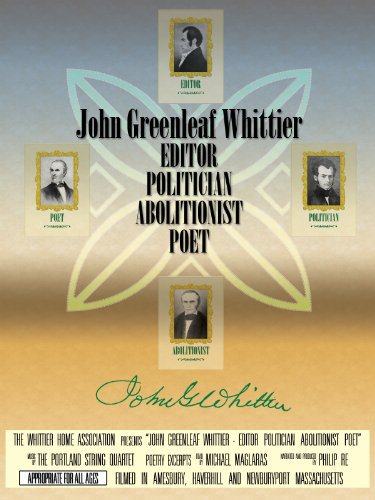
Kineto’s John Greenleaf Whittier is the sort of pocket-sized miracle that makes you distrust the word short. At sixteen minutes, it is closer to a lightning-bolt than to a vignette, and it left me blinking in the after-flash long after the final iris-in. Released in 1922 as the opening salvo of the Great American Authors cycle, the film was marketed to schools and women’s clubs as a thrifty lantern lecture. Yet what survives is a radical experiment in ethereal montage that anticipates the poetic documentaries of Huron’s later New Deal reels by more than a decade.
Director-cinematographer R. B. Miller, better known for industrial travelogues, smuggled avant-garde technique into what should have been a pedestrian biography. Double exposures are everywhere: a page of Justice and Expediency hovers like ectoplasm above a South Carolina slave auction, the translucent text bleeding into the auctioneer’s gavel so that words become a hammer. The camera itself behaves like a restless spirit—tracking through rows of corn stubble, then pirouetting until the horizon somersaults. In one breathtaking match-cut, the white blossom of a swamp-rose dissolves into the white bonnet of Whittier’s mother as she watches from a doorway; the blossom’s stamens align perfectly with the bonnet’s ribbon ties, suggesting that maternal tenderness and abolitionist conviction share the same root system.
Color tinting is deployed with surgical precision. The childhood sequences are bathed in a candle-gold wash that feels almost edible, while the antislavery editorials switch to a steel-blue tone that chills the screen. The transition tint—an amber-to-cyan gradient that flares across two frames—lasts perhaps a thirtieth of a second, yet it is enough to make the viewer’s pupils dilate as though stepping from a warm kitchen into a January barn.
James A. FitzPatrick, future voice of the Voice of the Globe travel series, appears here in his only known on-screen performance. He delivers two stanzas of Snow-Bound straight to camera, but Miller withholds the conventional intertitle: the words materialize as animated frost that crawls across the lens, letter by letter, until the entire frame is encrusted with icy text. The effect is both playful and uncanny; it is as though the poem is writing itself upon the window of the very farmhouse where the Blizzard of ’88 trapped the Whittier clan. FitzPatrick’s diction is rapid, almost conversational, a deliberate affront to the declamatory style then standard in elocution classes. The result humanizes the iconic Quaker, shrinking the marble-bust monumentality into a neighbor who might borrow your scythe.
Though silent, the film is obsessed with sound. We see a Quaker meeting house where congregants sit in tremulous stillness; Miller superimposes animated concentric circles over their bonnets and broad-brims, visualizing the inner vibration of silent prayer. Later, when Whittier’s abolitionist pamphlets are burned in a Savannah square, the ashes swirl into the shape of a phonograph record. The absence of diegetic noise becomes a moral vacuum: the crackle of flames is left to our imagination, and that very omission indicts the viewer more than any orchestral lament could.
Contemporary exhibitors often commissioned organists to accompany the reel. Surviving cue sheets suggest a cue titled Quaker Quietude followed immediately by Hail, Columbia!—a jingoistic clanger that would have annihilated the film’s pacifist undercurrent. Today, if you screen it digitally, I recommend pairing it with Caroline Shaw’s Partita for 8 Voices; the percussive breathwork mirrors the film’s strategy of making silence audible.
Most biographical shorts flatten historical time into a conveyor belt of factlets. Miller instead folds eras like origami. In a single 40-second passage we witness: 1833—Whittier, ink-stained, pens Justice and Expediency; 1854—he recoils from the flayed back of Anthony Burns on a Boston broadside; 1863—Emancipation is proclaimed while snowflakes swirl outside his Amesbury window. The snowflakes are animated by scratching directly on the celluloid, making each flake a tiny comet of liberation. The temporal compression is not mere montage but moral argument: the poet’s pen, the slave’s scar, and the nation’s edict are revealed as facets of the same historical crystal.
Compare this to the contemporaneous The Apostle of Vengeance, which also traffics in moral outrage yet relies on melodramatic fisticuffs. Whittier’s violence is archival: a blurred carte-de-visite of a lynching, a tax ledger where human beings are inked beside barrels of molasses. The horror is colder, therefore harder to shake.
The film dodges hagiography by fracturing its subject. We rarely see Whittier’s face head-on; instead we get wrists, shoulder blades, the dome of his bald pate bowed over manuscript pages. This fragmentation feminizes the gaze, aligning the viewer with the domestic circle—sisters, mother, housekeeper—who stitched pamphlets into quilted petticoats to smuggle them past Southern inspectors. In one shot, the camera ogles a half-finished loaf of brown bread on the windowsill; as afternoon light slants, the loaf’s crust becomes topographically similar to Whittier’s weathered brow. The metaphor is clear: the poet’s body is leavened by the same yeasts of toil and tenderness that feed his household.
Contrast this with The Lady Outlaw, where the female body is spectacularized for rodeo thrills. Whittier’s restraint feels revolutionary: it refuses to commodify suffering for sentimental ends.
John Greenleaf Whittier is a haunted film, but its ghosts are botanical. Miller shot exteriors in the Great Works Swamp of Massachusetts, the very acreage Whittier helped preserve. Reeds and pickerelweed appear so sharp they could slice bread. Superimposed over these textures are faint after-images of runaway slaves, not as figures but as negative space: absences that tug at the eye. The swamp becomes what eco-critics call a slough of memory, a biome where history ferments instead of fossilizes.
This ecological consciousness predates the Dust Bowl documentaries of the 1930s. When an intertitle intones, "He loved the soil because it had no master," the words are superfluous; the imagery of egret wings dissolving into Quaker hat brims has already delivered the credo.
Initial reviews were baffled. The Educational Screen praised its concise pedagogic utility while privately complaining to the distributor that students might find the swirly parts distracting. Yet within two years the film was pirated by Harlem film societies, who paired it with Bessie Smith records to create an improvised meditation on Black endurance. A 1924 clipping from the Amsterdam News calls it the most surreal quarter-hour this side of Buñuel, hyperbole that nonetheless testifies to its cross-racial resonance.
The Academy Film Archive restored a 35 mm dupe in 2018. The new print unveiled a discovery: beneath the final shot of Quaker cloth, the restorers found a single frame containing a microscopic image of Uncle Tom’s Cabin. Whether Miller or a lab worker inserted this Easter egg remains unknown, but its presence turns the film into a palimpsest of abolitionist texts, one tucked inside another like matryoshka dolls.
The restored version streams on several archival platforms; search John Greenleaf Whittier 1922 Kineto and filter for 2K. For deeper context, pair your viewing with two complementary works:
For further reading, Brenda Wineapple’s White Heat: The Friendship of Emily Dickinson & Thomas Wentworth Higginson offers rich background on the Amherst-Whittier literary nexus, though you’ll need to substitute Whittier’s name in your mental index.
Sixteen minutes can feel like trespassing on eternity if the minutes are sculpted by someone who trusts images more than words. Kineto’s John Greenleaf Whittier is such a trespass. It will not tell you what to think about slavery, pacifism, or even poetry; instead it tilts the floor so that your assumptions slide, crash, and reassemble. That, ultimately, is the most democratic pedagogy of all—one that leaves the viewer, like the poet, barefoot boy again, astonished by the ache of the world.
IMDb 5.5
1935
Community
Log in to comment.