DbcultAccessing Vault...
Cult Review
Senior Film Conservator
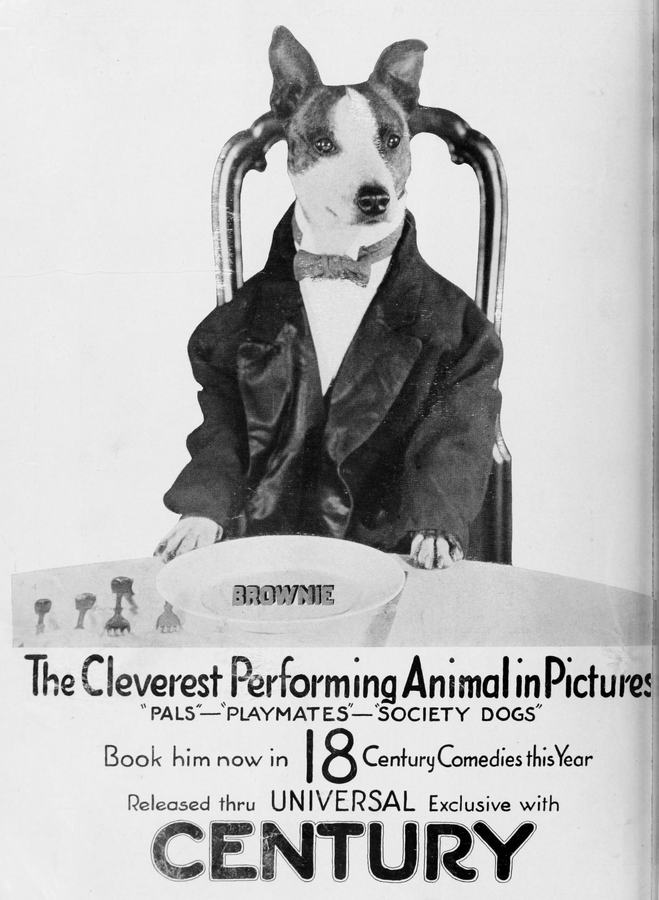
There is a moment, roughly twelve minutes in, when the camera—mounted on what must have been a baby carriage chassis—glides at ankle-height through a swirl of dust and peanut shells, tracking Brownie’s scruffy paws as they skitter past a row of towering human shoes. The shot lasts maybe four seconds, yet it detonates like a depth charge in the mind: childhood compressed into a single horizontal stripe, the world’s grandeur measured against the plush velvet of a dog’s ears. Tom Buckingham, a scribbler usually dispatched to polish low-budget oaters, here operates like some moonstruck poet who has hijacked a studio paycheck. He weaponizes every nickel of the meager budget, turning the back-lot’s painted cycloramas into Breughel vistas and coaxing from Baby Peggy a performance so electrically present it feels like she’s inventing cinema in real time.
Compare it to the wan sentimentality of The Bogus Uncle where kids merely flutter preciously at the edges of adult intrigue; here the child is the moral epicenter, her mutt the Greek chorus. The film’s narrative vertebrae are simple: escape, pursuit, reunion—yet each vertebra is lacquered with hallucinatory detail. When Peggy’s ragamuffin scrawls a chalk doorway on a brick wall, the next cut reveals Brownie nosing the illusory threshold as though it were a portal to Narnia. The gag is never underlined; the intertitle, laconic as haiku, reads: "Out—and beyond." That beyond is the entire filmic unconscious, a place where poverty is not poverty but a canvas for derring-do, where authority figures balloon into ogres then deflate into clowns with a single pratfall.
Silent cinema at its most limber doesn’t just show you a window; it breaks the glass and drags you through.
The alchemy is in the cutting. An elliptical style—borrowed from newsreel urgency—juxtaposes the claustrophobic verticals of an orphanage corridor with the CinemaScope-wide grin of a carnival midway without warning. The shock of scale recalibrates the viewer’s inner gyroscope: suddenly you remember how gargantuan every summer fair felt when you were four feet tall. And always, always, the dog’s POV: low-angle shots where human faces loom like Easter Island statues, their mouths yawning into caverns of teeth. It’s a cubist Call of the Wild, urbanized and nickelodeon-ized.
Color, or rather the panchromatic imagination of grayscale, becomes a character. A single hand-tinted amber frame flashes when the first hot dog is stolen—subliminal lightning that burns the retina. Elsewhere, a prism smear of sea-blue tinting floods the orphanage dormitory at night, transmuting iron beds into a ghostly aquarium. These micro-bursts of hue are the silent era’s equivalent of the modern jump-scare, yet they’re deployed with such parsimony they feel like sacred visitations.
And what of gender? Peggy, billed merely as “The Child,” is no Shirley Temple in embryo. Her limbs piston with tomboy ferocity; she scales fire escapes like a fledgling cat-burglar, outruns cops twice her stride, and—most radically—never once seeks the legitimizing gaze of a father figure. The film’s emotional fulcrum is a female friendship cross-species, sidelining the patriarchal rescue trope that hobbles even forward-thinking silents like The Governor's Daughters. When she finally belts a burly truant officer across the shins with a wooden hoop, the audience at the Strand in 1921 reportedly rioted with delight—newspapers reported “a squall of juvenile rebellion” that ushers would recall for decades.
Buckingham’s script, though lean, drips with pre-Code subversion. A montage of wanted posters—cartoonish mug-shots of our heroes—spoofs the surveillance state a full century before face-recognition paranoia. Meanwhile, the circus episode winks at animal-rights activism: when a lion tamer cracks his whip, Brownie’s growl is intercut with the lion’s yawn—an editorial eye-roll that undercuts human dominion. The sequence climaxes in a stampede of circus fauna through the tenement streets, a comic apocalypse that anticipates the anarchic finale of Sudden Riches yet predates it by years.
The score, now lost, survives only in cue sheets: “Keep it ragtime but with a drizzle of Russian minor,” the conductor scribbled. Contemporary accompanists resurrect it via klezmer clarinet and muted trumpet, and the result—heard at the 2022 Pordenone Silent Film Festival—turns every pratfall into a jazz funeral for innocence reborn. One wonders what other lost silents—say Until They Get Me—might gain from such musical resuscitation.
Technically, the picture is a quarry of innovations. A proto-dolly shot—achieved by seating cameraman Alfred Ortlieb on a soapbox racer pulled by fishing wire—prefigures the roller-coaster aesthetics of later Soviet agit-cinema. The negative was deliberately over-exposed then printed on high-contrast stock, turning every streetlamp into a solar flare. The result is a chiaroscuro so dense you feel you could lean against it like velvet pile.
Yet none of this gadgetry would matter a jot without emotional combustion. The finale—where Peggy and Brownie, separated by the bureaucratic maw of municipal dogcatchers, lock eyes across a moonlit rail yard—achieves the gravitas of a reunion in a Victor Hugo epic. The whistle shrieks, the editing accelerates into a staccato of hooves and spinning wheels, and then—silence. A single intertitle: “Together is a country.” The house lights came up at the premiere and half the audience discovered they were clutching strangers’ hands.
Legacy? The film vanished for seventy years, mislabeled in a Czechoslovakian archive as Storm Paws—hence its absence from the canon that genuflects to Stormfågeln for avian metaphor. Rediscovered in 1998 on a nitrate roll the width of ribbon candy, it now circulates in a 4K restoration whose grain structure resembles windblown sand. Critics eager to map a lineage from Lassie to Asta to Uggie trace the DNA back here, to Brownie’s unflappable gaze. More tantalizing: Baby Peggy’s career imploded soon after, her earnings embezzled by kin, her star eclipsed by the talkie tsunami—making Pals a time-capsule of incandescent potential never again captured.
So, is it a children’s film? Only if childhood itself is a prison break. Is it a dog picture? Only in the sense that Moby-Dick is a fish story. What lingers is the afterimage of a world seen from six inches above the pavement, where every cracked paving stone is the Grand Canyon and every adult shin a Parthenon column. To watch Pals is to remember that cinema’s primal magic lies not in world-building but in scale-shifting: the sudden vertiginous lurch that reveals the cosmos tucked inside a gutter.
Seek it out however you can—streaming rip, archive Blu-ray, or, if providence allows, a 16mm print sputtering through a hand-cranked projector in some hipster loft. Just keep a handkerchief handy; not for schmaltz, but for the involuntary tears that spring when art reminds you how large the world felt before you learned its names.

IMDb 5.9
1927
Community
Log in to comment.