DbcultAccessing Vault...
Cult Review
Senior Film Conservator
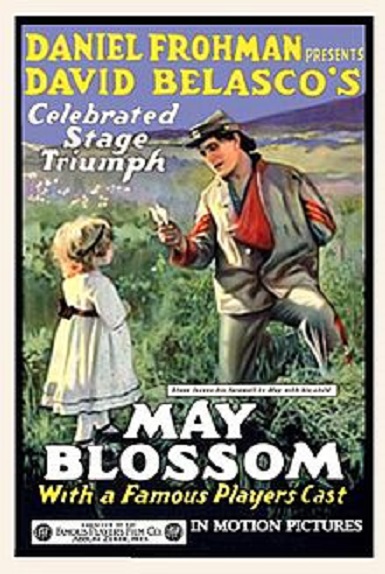
In the annals of early cinema, particularly within the rich tapestry of melodrama that captivated audiences during the nascent years of the 20th century, David Belasco's 'May Blossom' (1915) emerges not merely as a historical artifact, but as a potent exploration of human frailty, the corrosive power of deceit, and the enduring quest for redemption. This cinematic endeavor, brought to life through the expressive pantomime characteristic of its era, plunges viewers into a maelstrom of emotional turmoil, set against the backdrop of a nation fractured by conflict. It is a narrative that, despite its century-old vintage, retains a striking resonance, speaking to universal themes of love, betrayal, and the complex calculus of moral choice. The film, starring the compelling Gertrude Robinson as the titular May, alongside the nuanced performances of Russell Bassett, Marshall Neilan, and Donald Crisp, crafts a story that is both deeply personal and broadly allegorical, reflecting the profound societal anxieties and individual dilemmas of its time.
At its core, 'May Blossom' is a testament to the power of a single, fateful decision to irrevocably alter the course of multiple lives. We are introduced to May, a woman whose heart, pure and unwavering, belongs to Richard Ashcroft, a Southern officer whose very existence is fraught with peril. Their love, depicted with an earnestness typical of the period, is presented as an idyllic, almost sacred bond. Richard's proposal, swiftly accepted by May, underscores the depth of her affection and commitment. However, this romantic idyll is immediately challenged by the persistent, almost desperate, suit of Steve Harland, a man consumed by an unrequited passion for May. Her gentle, yet firm, rejection of Steve in favor of Richard sets in motion a chain of events that will unravel with tragic inevitability. This initial triangle, a classic trope of melodrama, is handled with a delicate touch, establishing the emotional stakes before the plot descends into its more dramatic convolutions.
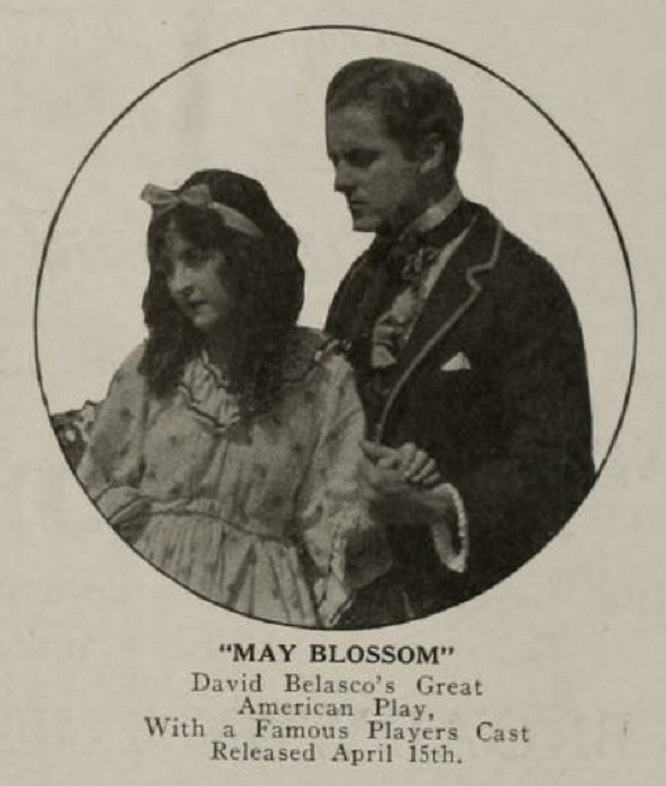
The crucible of war, ever present but rarely explicitly shown, casts a long, ominous shadow over their lives. Richard, suspected of espionage due to his frequent, clandestine crossings of the river, is brutally apprehended by Northern forces. This sudden, violent intrusion of external conflict into the personal sphere is a stark reminder of the era's brutal realities. It is here, in this moment of Richard's desperate capture, that Steve Harland's character is tested, and ultimately, found wanting. Witnessing the arrest, Steve is entrusted with a solemn vow by Richard: to convey the truth to May, to assure her of his faithfulness, and to promise his eventual return. This oath, a sacred trust forged in the fires of impending separation, becomes the fulcrum upon which the entire narrative hinges. The subsequent betrayal by Steve is not merely an act of malice, but a desperate, misguided attempt to secure his own happiness, born from a cocktail of jealousy, despair, and a deeply flawed sense of entitlement. His lie – that Richard has fled, abandoning May forever – is a cruel twist of fate, a poisoned arrow aimed at May's unsuspecting heart.
May's reaction to Steve's fabricated narrative is portrayed with a raw, heartbreaking authenticity by Gertrude Robinson. The audience witnesses her descent into a profound sorrow, a struggle to reconcile the image of the faithful Richard with the cruel reality presented to her. The film masterfully conveys her internal conflict, the agonizing process of trying to expunge Richard from her heart. In her vulnerability, and perhaps out of a desperate need for solace and stability, she eventually succumbs to Steve's relentless entreaties, marrying him. This decision, born of perceived abandonment and profound grief, is a poignant commentary on the pressures and limited choices often faced by women in such tumultuous times. The film doesn't shy away from the moral ambiguities of her choice, presenting it as a complex reaction to an impossible situation rather than a simple lapse in judgment. This echoes the intricate emotional landscapes explored in films like The Pretty Sister of Jose, where romantic entanglements are often fraught with societal pressures and personal heartbreak.
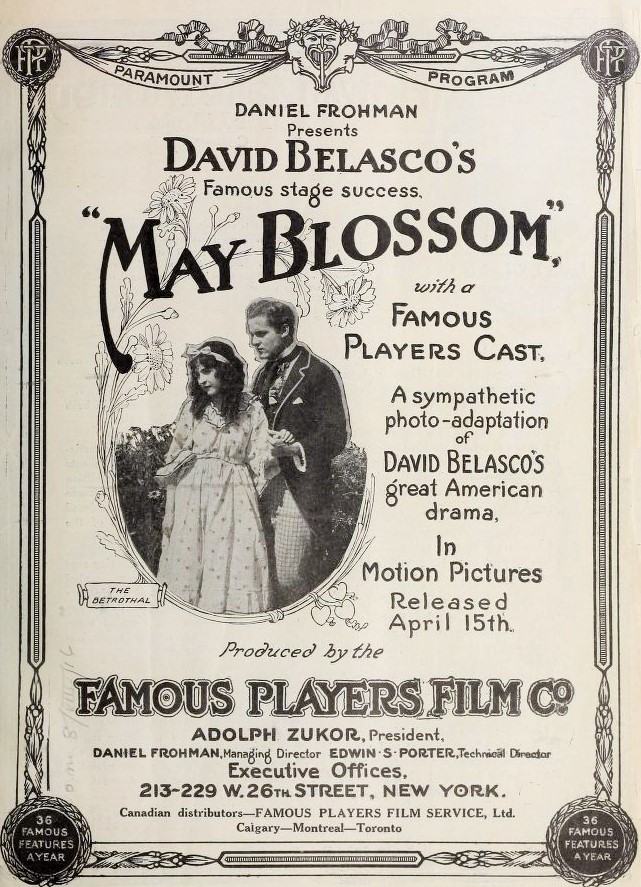
The ensuing year of May and Steve's marriage is painted with a bittersweet brush. A child, a little girl, comes into their lives, adored by both. This new life, however, cannot fully assuage the torment that ceaselessly plagues Steve. The remembrance of his perfidy, the ghost of Richard Ashcroft, whom all presume dead, haunts his every waking moment. This internal anguish, conveyed through subtle gestures and expressions characteristic of silent film acting, is a powerful exploration of guilt and its debilitating effects. Donald Crisp's portrayal of Steve is particularly commendable here, imbuing the character with a palpable sense of remorse that transcends simple villainy. He is a man trapped by his own deception, a prisoner of his conscience. This moral wrestling, the burden of a secret that threatens to consume, finds echoes in the thematic explorations of films such as In the Hour of Temptation, where characters grapple with profound moral compromises and their devastating consequences.
The dramatic fulcrum of 'May Blossom' arrives with the unexpected, almost spectral, return of Richard. Having finally escaped his captors, he returns to claim his promised wife, only to discover her married to Steve, with a child. This revelation, delivered with stark emotional impact, shatters the fragile peace that Steve and May have constructed. Richard, embodying the wronged hero, recounts the true story of his arrest and Steve's broken oath. The confrontation that ensues is the film's emotional apex. May, confronted with the devastating truth, is torn between her past love and her present reality. Her shock and anguish are palpable, a testament to Robinson's expressive capabilities. Steve, mute and paralyzed by the weight of his guilt, faces the man he wronged. His silence speaks volumes, confirming the accusations without uttering a single word. This scene is a masterclass in silent film drama, relying on gesture, expression, and the sheer power of the narrative to convey immense emotional depth. The tension is almost unbearable, as May stands on the precipice of an impossible choice.
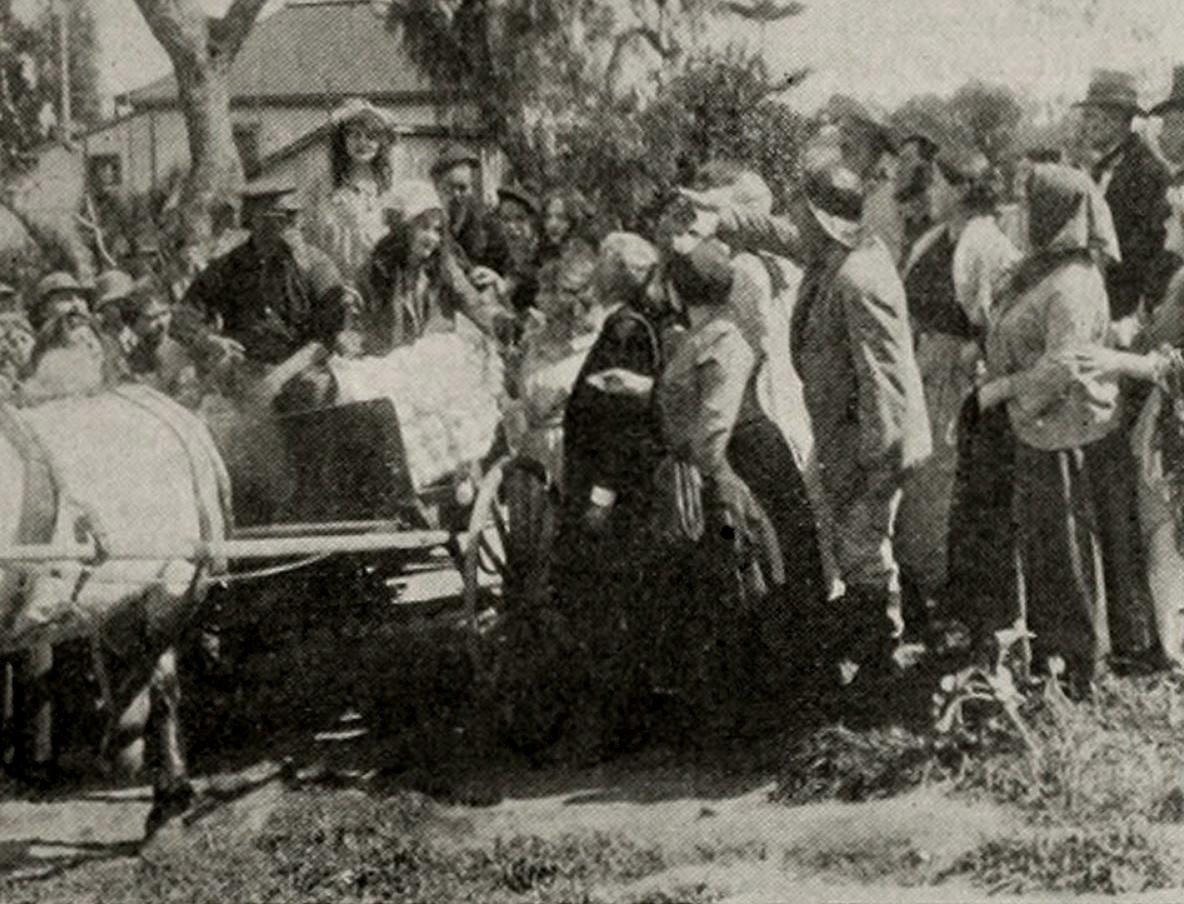
However, the narrative then veers into a fascinating exploration of love, possession, and the instinct for protection. As May hovers on the brink of being 'torn' from him, Steve undergoes a profound transformation. Like an angered lion, he rises to protect his own – his wife, his child, his family. This sudden surge of protective fury, a primal instinct overriding his guilt, is a powerful moment of character development. It complicates the audience's perception of Steve; he is not merely a villain, but a flawed man capable of profound love and fierce loyalty, albeit one born from deceit. May's subsequent decision to send Richard away is not a rejection of her past love, but an acknowledgement of her present reality, her commitment to the family she has built. It is a mature, difficult choice, sacrificing personal desire for the greater good of her child and the stability of her home. This complex resolution, where perfect justice is tempered by the realities of life and the sanctity of a new family unit, distinguishes 'May Blossom' from simpler melodramas.
The film's denouement sees Steve depart for war, a symbolic act of penance and a means to earn his forgiveness. His eventual return, and May's ultimate forgiveness, brings the narrative to a close that is both satisfying and tinged with the lingering effects of past transgressions. It is not a fairy-tale ending, but a realistic portrayal of human relationships, where trust must be rebuilt and reconciliation is a hard-won battle. The film explores the profound themes of remorse, atonement, and the enduring capacity for forgiveness within the human heart. It posits that love, even when born from deceit, can evolve and mature, and that true redemption often requires sacrifice and time. The narrative's willingness to embrace such moral complexity elevates it beyond mere entertainment, inviting reflection on the nature of right and wrong, and the nuances of human experience.
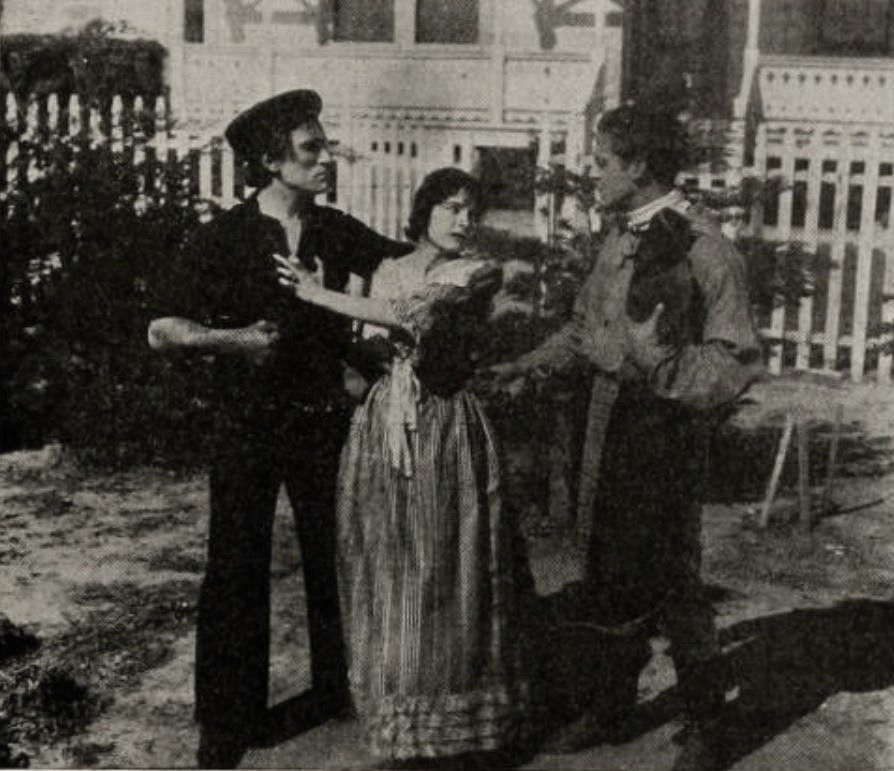
The performances are central to the film's success. Gertrude Robinson, as May, carries the emotional weight with remarkable grace and expressiveness. Her ability to convey profound sorrow, conflicted loyalty, and eventual resolve without spoken dialogue is a testament to the power of silent acting. Marshall Neilan, as Richard, embodies the noble, wronged hero, his suffering eloquently communicated through his gaze and posture. However, it is perhaps Donald Crisp's portrayal of Steve Harland that stands out for its psychological depth. Crisp manages to elicit both sympathy and disdain for his character, presenting a man deeply flawed yet ultimately capable of love and remorse. His internal struggle is palpable, making Steve a far more compelling figure than a one-dimensional antagonist. The ensemble cast, under the direction of the era's skilled filmmakers, effectively utilizes the visual language of silent cinema to convey intricate emotional states and narrative developments.
From a technical standpoint, 'May Blossom' showcases the evolving artistry of early filmmaking. While the specific director is not listed, the film's pacing, its use of intertitles to convey dialogue and narrative exposition, and its visual storytelling techniques are indicative of the period's advancements. The cinematography, though perhaps rudimentary by modern standards, effectively frames the emotional intensity of the scenes, utilizing close-ups to emphasize character reactions and wider shots to establish the dramatic context. The film's ability to sustain audience engagement through purely visual means is a reminder of the unique power of silent cinema, where every gesture, every facial expression, and every visual composition carried immense narrative weight. The film's production values, typical of a major studio release of the time, demonstrate a commitment to crafting a compelling and immersive cinematic experience.
Comparing 'May Blossom' to other melodramas of its era reveals its particular strengths. While films like The Great Divide might focus on societal pressures and moral regeneration in a frontier setting, 'May Blossom' delves into the more intimate, domestic consequences of wartime deception. The raw emotional intensity of Richard's return and May's subsequent decision bears a thematic resemblance to the profound emotional drama found in films such as Sumerki zhenskoy dushi, which also explored the depths of human passion and betrayal. 'May Blossom' contributes significantly to the genre by presenting a nuanced resolution that avoids simplistic moralizing, instead opting for a portrayal of forgiveness that acknowledges the scars of the past while embracing the possibilities of the future. It’s a testament to the fact that even in an era often characterized by overt sentimentality, filmmakers were capable of exploring complex human emotions with considerable depth.
In conclusion, 'May Blossom' stands as a compelling example of early American melodrama, a film that transcends its historical context to deliver a powerful and emotionally resonant narrative. Its exploration of love, deceit, wartime sacrifice, and the arduous path to forgiveness remains relevant, offering insights into the enduring complexities of the human heart. The film's ability to evoke such profound emotions through the silent medium is a testament to the artistry of its cast and crew. For enthusiasts of classic cinema, or anyone interested in the evolution of storytelling on screen, 'May Blossom' is an essential viewing experience. It reminds us that even in the absence of spoken words, the most profound human dramas can be conveyed with breathtaking clarity and emotional impact, leaving an indelible mark on the viewer long after the final frame. The questions it poses about fidelity, the burden of secrets, and the true meaning of a family continue to echo, making it a timeless piece of cinematic heritage that deserves renewed appreciation.
IMDb 6.1
1932
Community
Log in to comment.