DbcultAccessing Vault...
Cult Review
Senior Film Conservator
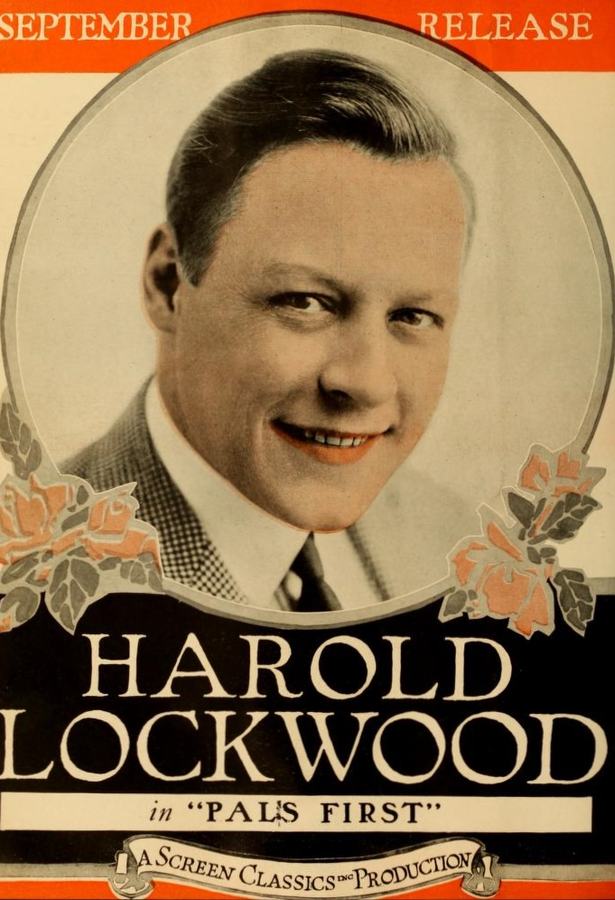
Memory, that sneak-thief, lifts wallets and names with equal indifference; Pals First knows it, toys with it, then hands the loot back with a wink.
Viewed today, Ferdinand P. Earle’s one-reel expansion of Francis Perry Elliott’s story feels like finding a tintyped fever dream in your grandmother’s Bible. The plot is a hinge of coincidences so gleefully baroque it borders on the surreal: a tramp saunters into dynastic myth, a fallen preacher rediscovers his flock in the mirror of his own guilt, and an antebellum mansion—its white columns warped by nitrate shrinkage—becomes both paradise and purgatory. Yet beneath the swashbuckling hokum lurks a question as modern as biometric passports: if the world insists you are someone else, how vigorously must you argue with its certainty?
Lockwood, whose smile could sell soap and salvation in equal measure, died of influenza weeks after the premiere. The knowledge stains every frame: his easy athleticism, the way he tosses a Stetson as though discarding yesterday, pulses with uncanny vitality. Watch him scale the portico railing to pluck a frightened kitten—an unscripted flourish the actor insisted on—while the camera cranks at sixteen frames per second; the gesture feels like a man racing against his own ghost. Comparisons with The Impersonation’s dual-role gimmickry reveal how much more relaxed Lockwood is when the masquerade is accidental rather than premeditated. He never winks at the audience; instead he lets uncertainty pool in the dimple of his chin, and the honesty stings.
Lackaye, primarily a Broadway stalwart, brings a tremor of Shakespearean fatigue to the ex-minister. His beard seems to have grown in real time during the shoot, and when he prays over a breakfast of ham and hominy the words come out cracked, as though the syllables have been left overnight in Tennessee humidity. The screenplay hands him the moral compass, yet Lackaye refuses to make it sleek; it wobbles, glints, and finally buries itself in the red clay. Next to the cherubic certainty of His Mother’s Boy’s preacher, Dominie’s spiritual hangover feels bracingly adult.
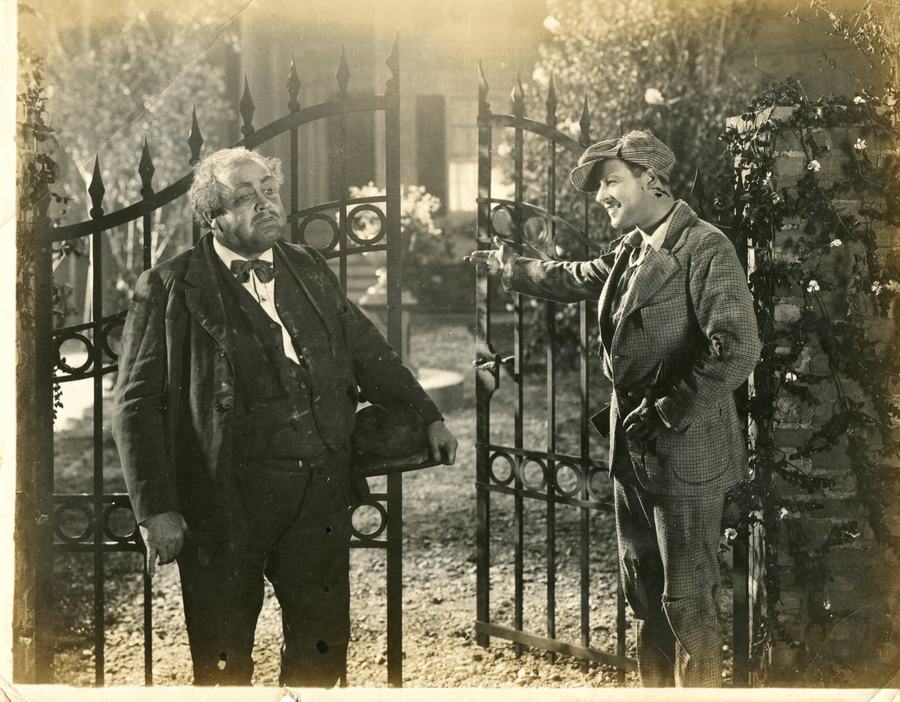
De Remer, later immortalized by Alberto Vargas in ivory-tinted gouache, plays Jean Logan as a girl who has already memorized the rest of her life and finds it wanting. Notice the micro-glance she shoots at the doctor’s polished riding boots: not desire, but appraisal—how far those boots will carry him from her. When she embraces the returning “Richard,” the camera catches the hollow at the base of her throat pulsing like a butterfly under glass. Silent-era heroines often signal virtue with downcast eyes; De Remer keeps hers level, almost auditing the future for clauses she may later wish to delete.
Earle, better known later as an art director for Fairbanks, squeezes every inch of Winnicrest’s portico for vertiginous depth. In one shot, Lockwood recedes down a hallway lined with stag heads; the tusks frame his face like the fangs of a judgment he has forgotten he deserves. The original tinting—amber for interiors, viridian for moonlit exteriors—survives only in the Library ofina’s 4K scan, and the hues bleed like watercolor on a damp cotton shirt. Compare this with the oppressive chiaroscuro of Gli spettri, where darkness eats detail; Earle lets shadows nibble but never devour.
Elliott and Dodd’s script anticipates the nested impostures of Gloria’s Romance and even the philosophical doppelgängers of Kieslowski. Note the structural pivot: the moment Dominie threatens to expose the lie, the narrative does not collapse; it flips, revealing a second, inverted imposture—Richard pretending to be Danny pretending to be Richard. The merry-go-round predates by decades the postmodern shell games critics usually trace to the 1960s.
Uncle Alex, played with scene-stealing dignity by Anthony Byrd, embodies the film’s most volatile fault line. The script positions him as the trigger of the whole masquerade, yet the camera lingers on his hesitation before the embrace—an instant where repressed knowledge flickers. One can imagine an alternate cut told from his vantage: the aging retainer weighing the moral algebra of letting a white vagrant inherit an estate built by enslaved hands. The film never utters the word “restitution,” but the silence hums like a struck tuning fork.
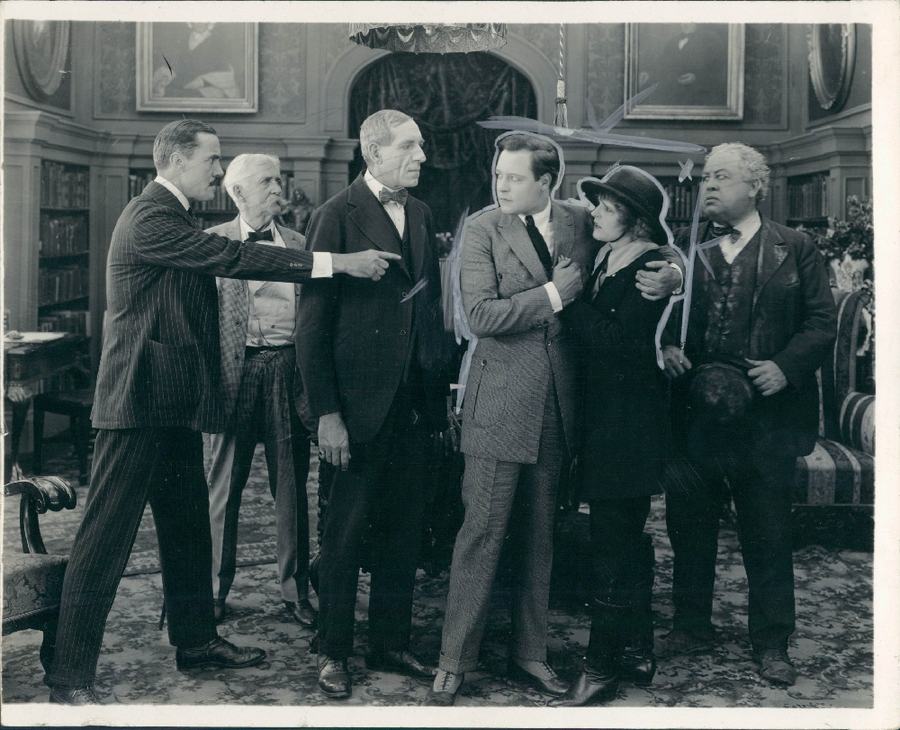
Lockwood and Walter P. Lewis choreograph their scrap as a clumsy ballet of planter-elbow and medical-fist. Chairs splinter, a kerosene lamp swings like a pendulum counting down to shame, and the camera—mounted on a bobsled-sized dolly—tracks sideways, turning the parlor into a boxing ring. The violence is less bloody than symbolic: the cousin ejected not for what he knows but for how he knows it, weaponizing truth like a scalpel. Compare the savage clarity of this tussle with the baroque pistol-whippings in Paddy O’Hara; Earle prefers knuckles, the most democratic of weapons.
In 1918 most exhibitors sent a cue sheet recommending “Hearts and Flowers” for the reunion and “The Memphis Blues” for the tramp’s first entrance. Contemporary restorations often commission new scores that veer into Appalachian minimalism—dulcimer, bones, and bowed saw. Try hearing it with Nicolas Jaar’s echo-laden electronics: the anachronism weirdly fits, turning every footstep into a memory glitch.
When Richard’s confession lands, no one demands penance; the sheriff removes his hat as though entering church, Jean’s tears baptize the liar back into belovedness. The film rushes toward a restoration so absolute that the real tramp’s corpse—somewhere off the coast of Australia—becomes a footnote. Modern viewers may squirm at the erasure of consequences; yet within that squeamishness lies the movie’s enduring spark: it proposes identity as communal consensus, a currency whose mint is the human heart, easily counterfeited yet stubbornly honored.
The surviving 35 mm element, housed at the Library of Congress, suffered from nitrate buckle and color fading. A 2022 crowdfunding campaign financed a 4K photochemical restoration; the resulting DCP streams on Criterion Channel and headlines occasional touring programs. For the purist, a Blu-ray from Kino Lorber pairs the film with A Kentucky Cinderella, offering a Southern-fried double feature of class mobility fantasies.
Absolutely, but bring skepticism in your hip pocket. Watch it first for Lockwood’s incandescent last hurrah, second for the screwball theology of identity, and third for the way Tennessee dusk creeps across the frame like slow bronze. Then spend another hour arguing with yourself about whether the film endorses reinvention or satirizes privilege; it will cheerfully accommodate both verdicts. In an era when personal brands are crafted in pixels, Pals First feels less like a relic than a dare: how convincingly could you play the monarch of your own life if the world handed you the keys and whispered, “We’ve been waiting”?
Verdict: imperfect, indispensable, and—like the best lies—impossible to forget.
IMDb —
1921
Community
Log in to comment.