DbcultAccessing Vault...
Cult Review
Senior Film Conservator
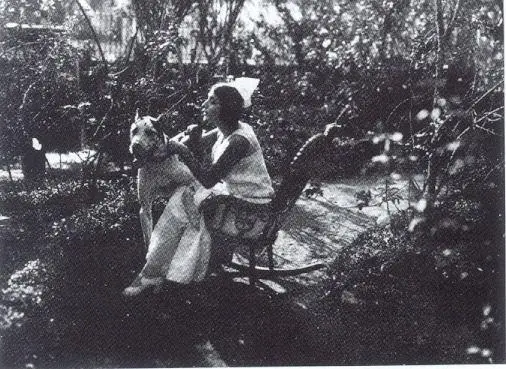
Is Suerte y azar a film that warrants your undivided attention in a crowded media landscape? Short answer: Yes, provided you are willing to trade traditional plot satisfaction for a haunting, atmospheric meditation on the cruelty of fate. This film is for the viewer who finds beauty in the bleak and meaning in the mundane, but it is certainly not for anyone seeking a feel-good escape or a fast-paced narrative resolution.
The film demands a specific kind of patience. It doesn't offer the easy thrills of something like Game Hunters, nor does it possess the whimsical charm of Betty and the Buccaneers. Instead, it sits in a quiet, uncomfortable corner of cinema where the only certainty is uncertainty. It works. But it’s flawed.
1) This film works because it refuses to provide easy answers, forcing the audience to sit with the same existential dread that plagues its protagonist.
2) This film fails because its second act leans so heavily into ambiguity that it occasionally loses its emotional tether to the audience.
3) You should watch it if you are a fan of minimalist character studies that prioritize mood and subtext over dialogue-heavy exposition.
If you are looking for a story that challenges the concept of meritocracy, then yes, this is essential viewing. Suerte y azar posits that we are all just one bad roll of the dice away from total collapse. It is a sobering thought, and the film executes it with a cold, unwavering eye. However, if you prefer your cinema to have a clear hero's journey with a rewarding payoff, you will likely find this experience frustrating. It is a film of questions, not answers.
The direction in Suerte y azar is remarkably disciplined. There is a specific scene involving a long, unbroken shot of Camilo Cantinazzi sitting at a table, waiting for a phone call that may or may not change his life. The camera barely moves. The tension isn't built through music or quick cuts, but through the sheer duration of the silence. It’s an endurance test for both the character and the viewer. This isn't the frantic energy of The Nervous Reporter; it is a slow, methodical tightening of the noose.
The pacing is admittedly glacial. For some, this will feel like a sophisticated build-up; for others, it will feel like a lack of momentum. Unlike the structured mystery found in Who Killed Simon Baird?, Suerte y azar doesn't provide breadcrumbs. It provides a fog. You have to find your own way through it. This approach is bold, but it risks alienating the casual viewer who expects the story to do more of the heavy lifting.
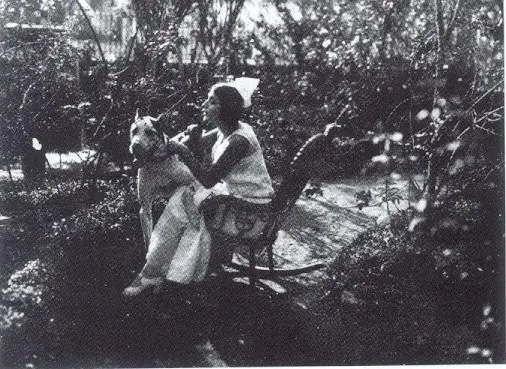
Camilo Cantinazzi carries the weight of the entire production on his shoulders. His performance is stripped of all theatricality. He doesn't perform for the camera; he simply exists in front of it. There is a moment near the midpoint where his character loses everything—not in a grand explosion of grief, but in a quiet, hollow-eyed realization. It is devastating precisely because it is so understated. It reminds me of the grounded realism seen in Big Dan, where the physicality of the lead speaks louder than any monologue.
His chemistry with the environment is more important than his chemistry with other actors. The way he handles objects—a glass of water, a tattered envelope, a coin—suggests a man who is constantly looking for signs in a world that offers none. It’s a performance of small gestures. If you blink, you might miss the flicker of hope or the shadow of despair passing over his face. This is high-level acting that avoids the melodrama often found in films like La belle Russe.
Visually, the film is a study in high-contrast lighting. The shadows are deep and intrusive, often swallowing the characters whole. This isn't just a stylistic choice; it represents the 'azar' (chance) that looms over the 'suerte' (luck). The cinematographer uses narrow depth of field to isolate Cantinazzi, making him feel like he is trapped in his own personal bubble of misfortune. It’s a claustrophobic experience, even when the scenes take place outdoors.
Compare this to the grander, more sweeping visuals of Creation. While that film used the screen to show the scale of the world, Suerte y azar uses it to show the limits of the individual. The film feels small, but in a way that makes its themes feel massive. The textures are tactile—you can almost feel the grit on the walls and the dampness in the air. The production design avoids the artifice of L'écrin du rajah, opting instead for a gritty, unvarnished reality.
What sets Suerte y azar apart is its refusal to moralize. In many films of this era, like The Third Degree, there is a clear sense of justice or cosmic balance. Here, there is none. Good things happen to bad people, and bad things happen to the protagonist for no discernible reason. It’s a nihilistic take that feels surprisingly modern. The film suggests that 'luck' is just a story we tell ourselves to make sense of the chaos.
This lack of a moral compass might be jarring for some. We are conditioned to want the protagonist to 'win' or at least learn a lesson. But Cantinazzi’s character doesn't learn. He survives. Or he doesn't. The film ends on a note that is so ambiguous it bordering on aggressive. It’s a deliberate choice that will spark debates long after the lights come up. It’s a gamble. And for me, it paid off.
When placed alongside other films like Two Moons or Stop That Wedding, Suerte y azar feels like it belongs to a different species. While those films are concerned with social dynamics and romantic entanglements, Suerte y azar is concerned with the void. It has more in common with the psychological intensity of Der Fall Dombronowska...! or the spiritual weight of Il miracolo della Madonna di Pompei, though it lacks the religious comfort of the latter.
It is a lonely film. It doesn't try to be your friend. It doesn't try to entertain you in the traditional sense. It simply presents a world and asks you to look at it. In an era where many films felt like they were trying to prove a point, like A Sister to Salome, Suerte y azar is content to just be. That is its greatest strength and its most significant hurdle for the average viewer.
Suerte y azar is a polarizing piece of work that avoids the safety of convention. It is a film that values the texture of a moment over the mechanics of a plot. While it may occasionally stray too far into the weeds of its own philosophical musings, the central performance by Camilo Cantinazzi is enough to keep it grounded. It is a bleak, beautiful, and ultimately haunting experience. It isn't a film you watch for fun; it's a film you watch to be challenged. It’s a risk. Take it.

IMDb 5.5
1921
Community
Log in to comment.