DbcultAccessing Vault...
Cult Review
Senior Film Conservator
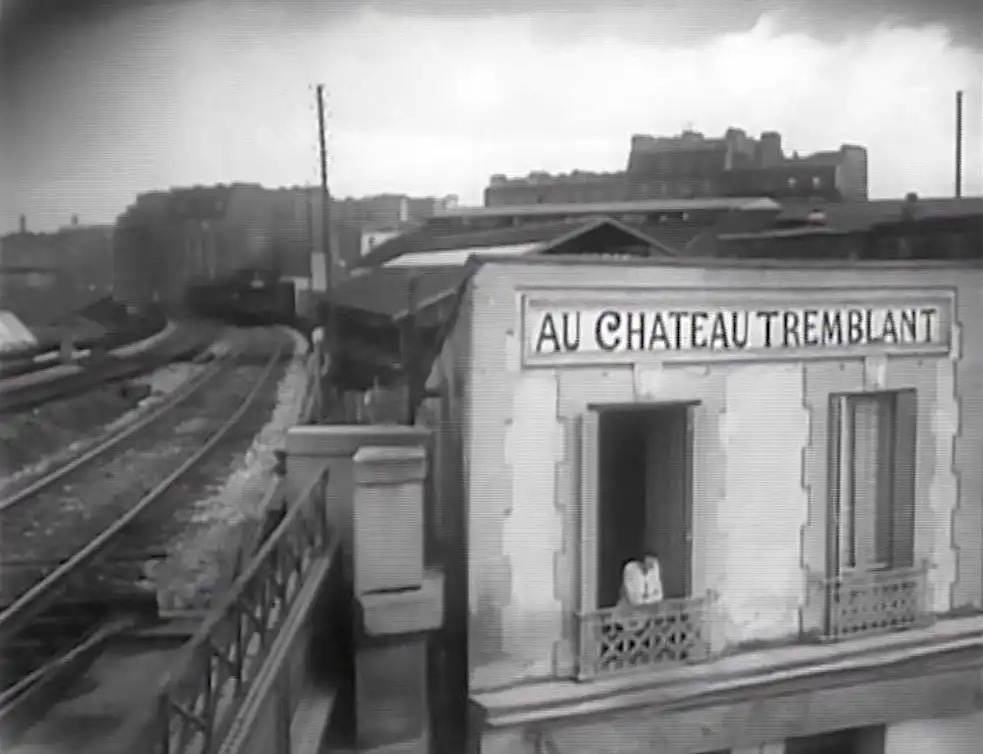
Okay, so 'Paris Express' is definitely not for everyone. If you're looking for a plot that makes sense, or characters you can root for, you'll probably bounce off this hard. But for anyone who digs early surrealist vibes or just loves seeing Paris through a really strange lens, it’s a quick, fascinating ride. Folks who prefer their cinema neat and tidy will likely find it frustratingly obscure.
Right from the start, the film throws you in. No gentle easing in, just a rapid fire of images. It feels like someone just pointed a camera at a bunch of stuff and then decided to stitch it all together later. A train, yes, but not in any way you expect. More like a symbol of constant movement, a blur.
There's this one bit, I think it's Gazelle Bessières, just kinda… looking at the camera. For ages. What was the point? I'm still not sure, but it sticks with you. Her expression, this mix of defiance and boredom, it's captivating in a very weird way. Almost like she knows she’s being watched, but doesn't quite care.
The streets themselves are a character here, buzzing with a kind of restless energy. Not the grand boulevards you see in postcards, but the smaller, grittier corners. People moving, shadows stretching. It reminds me a little of how Apaches of Paris tried to capture the underbelly, but this feels less like a narrative and more like an impression. Like a hurried sketch.
Jacques Prévert's touch is palpable, even if the narrative is so fragmented. There’s a certain poetic absurdity to it all. One moment you're seeing a close-up of a coffee cup, the next it’s a shot of some strange mechanism clanking away. It feels like they were just experimenting, trying to see what would happen if they broke all the rules. And honestly, *good for them*.
The pacing is all over the place, but in a deliberate way. Sometimes things rush by, a flurry of faces and gestures. Other times, a shot lingers for an uncomfortable length, making you scrutinize every detail. Like the shot of that old woman selling flowers; it just holds there. You can almost feel the chill in the air, the weight of her day. It’s quite striking. 👵
It’s not just Paris as a city, it's Paris as a collection of faces. You catch glimpses of artists, bohemians, everyday folks. Marcel Duhamel pops up, and Kiki of Montparnasse, naturally. Seeing her on screen, even in these fleeting moments, really brings that whole era to life. You get a sense of the creative ferment, the casual defiance. It’s not polished acting, it’s just… being.
The movie gets noticeably more unsettling in its middle section. There are these strange juxtapositions, like a festive scene cutting abruptly to something much darker, almost ominous. It keeps you on edge. You can almost feel the film trying to convince you this moment matters, even if you can’t quite grasp *why*.
I found myself wondering, did they just shoot whatever they felt like that day? Because it has that kind of spontaneous, unplanned feel. Yet, there’s an undeniable artistry to how it’s all put together. It's like a dream you're trying to remember, full of vivid but disconnected images. Some of the cuts are really sharp, almost jarring, pulling you from one thought to another. It's a bit like watching someone riff, but visually.
The ending, if you can even call it that, just sort of… happens. It doesn't conclude so much as it fades out, leaving you with a lingering sense of unease and curiosity. It’s an interesting little film, a window into a particular time and a particular way of seeing the world. Definitely worth a look if you’re into the weirder corners of film history. Just don't expect a story with a neat little bow on top. 🎀
IMDb 6.6
1934
Community
Log in to comment.