DbcultAccessing Vault...
Cult Review
Senior Film Conservator
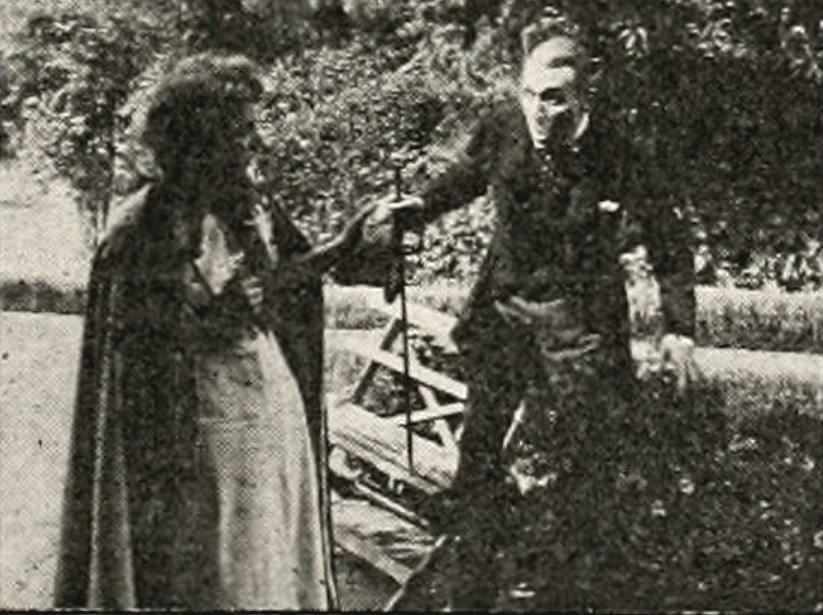
The year 1915 stands as a monumental pillar in the architecture of cinematic history, a period where the medium shed its infantile skin and began to grasp the complexities of human psychological frailty. Among the relics of this era, The Scarlet Sin emerges not merely as a relic of silent melodrama, but as a searing indictment of social stratification and the crushing weight of dogmatic morality. Directed by the formidable Hobart Bosworth, who also commands the screen with a rugged, patriarchal intensity, the film navigates the treacherous waters between the pulpit and the pit, the sacred and the profane.
At the epicenter of this narrative sits Reverend Eric Norton, a character portrayed with a stoic, almost terrifyingly righteous conviction. Norton’s decision to exchange a 'fashionable' New York congregation for the bleak, coal-dusted horizons of a mining town is presented as a spiritual migration, yet the film cleverly frames it as a catalyst for domestic disintegration. Unlike the ethereal struggles found in Ghosts (1915), the conflict here is grounded in the tangible soot and the very real dangers of subterranean labor.
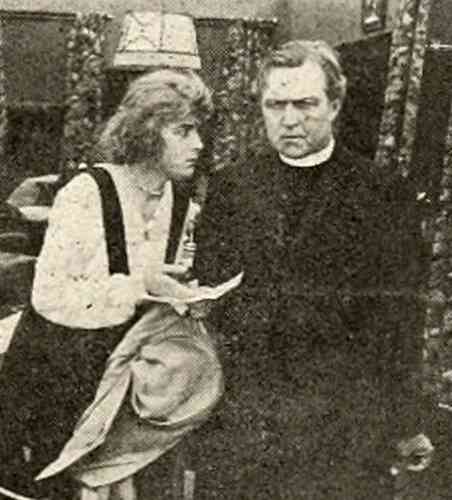
The mines themselves serve as a potent metaphor for the human soul—dark, volatile, and prone to collapse under the pressure of greed. When Norton uses his influence to reopen the shuttered veins of the earth, he isn't just performing an act of economic salvation; he is challenging the territorial hegemony of 'Bull' Morgan. This antagonism provides a visceral counterpoint to the more cerebral theological debates of the time. The physical presence of the miners, their faces etched with the weariness of the exploited, creates a texture of realism that was often absent in contemporary stage-bound productions like Anna Held (1915).
While the men battle for control over the earth’s resources, the film’s emotional core rots within the domestic sphere. Cecelia, played with a haunting sense of displacement by Jane Novak, represents the 'fallen woman' trope, but with a nuanced desperation that elevates her above mere caricature. Her boredom is not a trivial whim; it is a claustrophobic reaction to a life stripped of aesthetic beauty and intellectual stimulation. Her flight to Paris with Richard Allen is depicted not as a romantic adventure, but as a frantic, doomed attempt to reclaim a lost vitality.
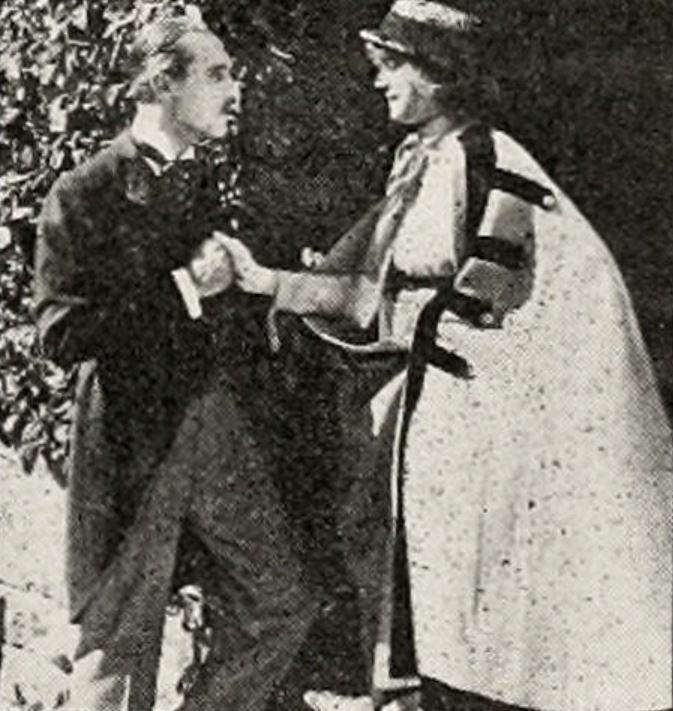
The contrast between the drab, monochromatic existence of the mining town and the implied (though unseen) decadence of Paris mirrors the thematic shifts found in My Official Wife (1914). However, where other films might focus on the glamour of the elopement, The Scarlet Sin dwells on the consequences. Cecelia’s eventual abandonment and her subsequent descent into penury are filmed with a starkness that anticipates the social realism of later decades. The moment she reads her own 'obituary' in a discarded newspaper is a masterclass in silent pathos—a woman witnessing her own erasure from the world of the living.
The second half of the film introduces a fascinating variation on the 'Enoch Arden' theme. Believing himself a widower, Norton marries his ward, Edith. This creates a moral quagmire upon Cecelia’s return. She is a ghost haunting the corridors of her own former life, a motif that resonates with the tragic inevitability of Den sorte drøm (1911). The tension here is not derived from a fear of exposure, but from the realization that her place has been seamlessly filled. The domestic unit has healed, leaving no scar where she once stood.
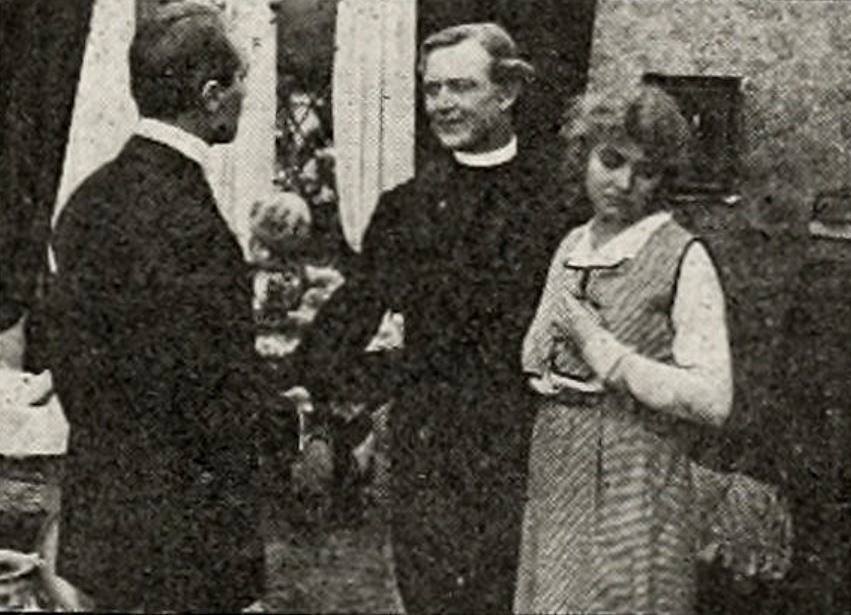
The arrival of 'Bull' Morgan’s destructive plot serves as the externalized manifestation of this internal chaos. The explosion in the mine—a sequence of surprising technical proficiency for 1915—acts as a catalyst for the final reckoning. It is a moment of high-stakes spectacle that rivals the intensity of early action cinema like The Corbett-Fitzsimmons Fight (1897), yet it remains firmly tethered to the character arcs.
The film’s climax is a harrowing synthesis of irony and tragedy. Cecelia, sneaking into the home for a clandestine glimpse of the son she abandoned, inadvertently ignites the very structure that represents her failure. The house fire is a spectacular, terrifying set-piece. In a final act of Herculean courage, she rescues the infant, effectively trading her life for the one she once discarded. This sacrificial ending is a staple of the era’s moral plays, similar in its heavy-handed yet effective catharsis to Beatrice Cenci (1908).

As she begs Eric’s forgiveness on her deathbed, the film poses a difficult question to its 1915 audience: can a 'scarlet sin' be washed away by blood and fire? The cinematography during these final moments utilizes tight framing to emphasize the intimacy of the tragedy, moving away from the wide, theatrical vistas typical of earlier silent works like Damon and Pythias (1914).
Hobart Bosworth’s direction is remarkably sophisticated. He understands the power of the landscape—the jagged edges of the mining equipment and the oppressive shadows of the shafts. His performance as Norton is equally layered; he avoids the histrionics of many silent actors, opting instead for a controlled, simmering intensity. Jane Novak’s portrayal of Cecelia provides the necessary emotional counterbalance, her expressive eyes conveying a lexicon of regret that dialogue cards could never fully capture.
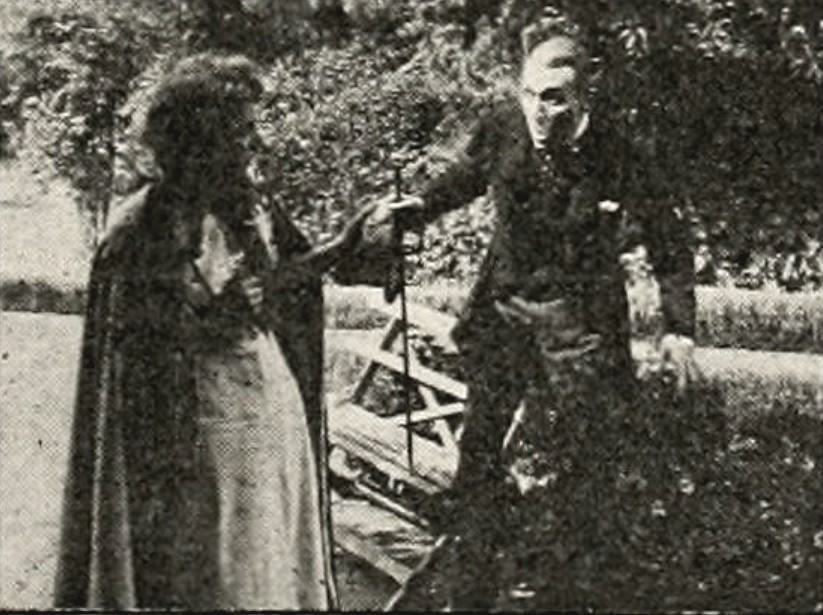
The writing, credited to James Dayton and Olga Printzlau, displays a structural integrity that keeps the disparate plot threads—the labor dispute, the Parisian elopement, and the domestic fire—tightly interwoven. While it shares some DNA with the epic scope of The Cloister and the Hearth (1913), The Scarlet Sin is a more claustrophobic, intimate affair. It is a film that breathes the same air as the characters, thick with dust and the scent of impending doom.
Looking back from a modern perspective, The Scarlet Sin serves as a fascinating window into the anxieties of the early 20th century. It explores the tension between urban sophistication and rural traditionalism, the burgeoning conflict between labor and capital, and the rigid gender roles that dictated the boundaries of 'acceptable' feminine behavior. It lacks the mythological detachment of Satyavan Savitri (1914), choosing instead to grapple with the messy, unrefined realities of American life.
In the pantheon of silent cinema, this film occupies a unique space. It is not as overtly political as some of its successors, yet its portrayal of the mining town’s volatility feels deeply rooted in the era’s labor unrest. It is a work of profound empathy for its flawed protagonist, suggesting that even in the depths of the 'scarlet sin,' there remains a flickering candle of humanity that no amount of coal dust or Parisian vice can fully extinguish. For those seeking to understand the evolution of cinematic storytelling, The Scarlet Sin remains an essential, if somber, viewing experience.
Note: While this film may seem distant in its sensibilities, its exploration of the human condition remains remarkably pertinent. It stands alongside other transformative works like For Napoleon and France (1914) and An Odyssey of the North (1914) as a testament to the power of early narrative film.
IMDb —
1924
Community
Log in to comment.