DbcultAccessing Vault...
Cult Review
Senior Film Conservator
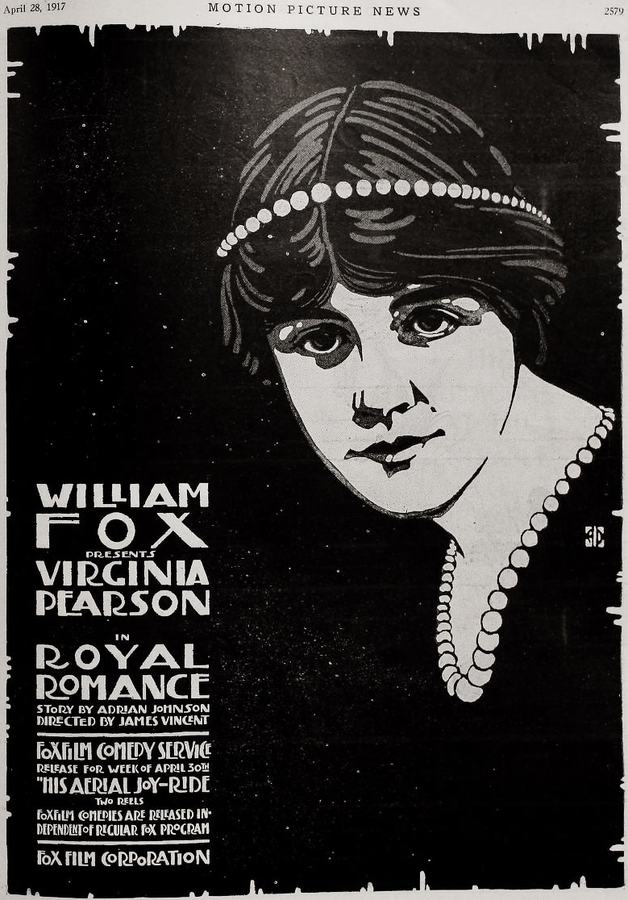
In the annals of early cinema, where narratives often relied on grand gestures and visually expressive performances to convey the intricacies of human emotion, Adrian Johnson’s 'A Royal Romance' stands as a charming, if somewhat archetypal, testament to the enduring power of love to transcend societal strictures. This silent era gem, featuring the compelling presence of Irving Cummings and Grace Henderson, unfolds a tale that, despite its period setting and cinematic conventions, still resonates with themes of authenticity, identity, and the pursuit of genuine connection over predetermined duty. It’s a narrative that, even without the benefit of spoken dialogue, manages to articulate a profound yearning for love that is earned, not inherited.
The film commences with a premise as old as monarchy itself: a proposed marriage of state, devoid of personal affection. Princess Sylvia, our spirited protagonist, finds herself the object of Emperor Maximilian of Rhaetia's diplomatic overtures. Her refusal, however, isn't born of caprice but a principled stand against a union dictated by political expediency rather than heartfelt sentiment. This initial act of defiance immediately establishes Sylvia as a character of considerable agency and independent thought, a refreshing portrayal for a princess in an era often depicting female royalty as passive pawns in dynastic games. Her rejection is not a mere 'no,' but a declaration of her intrinsic value, a refusal to be merely a commodity in a royal transaction. It sets the stage for a narrative arc where her desire for genuine affection will drive her beyond the confines of her gilded cage.
What follows is a delightfully audacious turn. Learning of Maximilian's retreat to a secluded hunting lodge in a remote village, Sylvia, rather than lamenting her fate, takes matters into her own hands. She sheds her royal robes, adopting the unassuming guise of an 'untitled English girl.' This act of disguise is more than a simple plot device; it's a symbolic shedding of the very constraints she seeks to escape. By stripping away her title, her lineage, and the expectations that come with them, she creates a space for a relationship to blossom on its own terms, free from the shadow of diplomatic obligation. This bold initiative positions Sylvia not as a damsel in distress, but as the architect of her own romantic destiny, a proto-feminist sensibility that, while perhaps unintentional, adds considerable depth to her character. In this new persona, she is free to be herself, or at least, a version of herself unburdened by the weight of a crown.
The emperor, initially presented as a figure of imperial duty, undergoes his own subtle, yet profound, transformation. Encountering Sylvia in her commoner disguise, he is immediately captivated. It’s a classic romantic trope: the powerful ruler falling for the 'ordinary' girl. Yet, in the context of 'A Royal Romance,' this attraction feels earned. He isn't drawn to her status or political utility, but to her inherent charm, wit, and perhaps, the very independence that led her to this audacious masquerade. Irving Cummings, through nuanced expressions and body language characteristic of silent film acting, conveys Maximilian's shift from a detached monarch to a genuinely smitten suitor. His initial proposal was an obligation; his burgeoning affection for the disguised Sylvia is an awakening of the heart. This emotional journey is crucial, lending credibility to the eventual resolution.
The narrative escalates with a dramatic interlude that solidifies the nascent bond between them. Back at the palace, an assassination attempt on Maximilian’s life provides Sylvia with an opportunity to prove her devotion in the most visceral way possible. Her courageous intervention not only saves the emperor but also underscores her unwavering loyalty and bravery. This act of heroism transcends the superficiality of her disguise, revealing the true character beneath. It is after this life-saving moment, with the gravity of mortality hanging in the air, that Maximilian, his heart now irrevocably swayed, proposes marriage once more. This second proposal is qualitatively different from the first; it is offered from a place of profound gratitude, admiration, and undeniable love. The diplomatic chess game has given way to a genuine declaration of affection, a pivotal moment that reshapes the entire dynamic of their relationship.
However, no royal romance is complete without obstacles, and in 'A Royal Romance,' this comes in the form of the Prime Minister, portrayed with suitable gravitas by Alex Shannon. His alarm at the prospect of the emperor marrying a commoner is not merely personal prejudice but a reflection of the rigid social hierarchies and political anxieties of the era. The Prime Minister embodies the forces of tradition and class distinction that Sylvia’s actions implicitly challenge. His machinations to preserve the purity of the royal line and maintain political stability drive the film’s penultimate conflict. Convinced that Sylvia is nothing more than an adventuress seeking to exploit the emperor’s affections, he summons her brother, intending to expose her and dismantle the unconventional union. This subplot highlights the societal pressures that threaten to crush individual desire, a theme explored in many films of the period, including those dealing with societal expectations and reputation, much like the dilemmas faced in The Blindness of Virtue.
The climax arrives with the orchestrated unmasking, a scene pregnant with tension and dramatic irony. The Prime Minister, confident in his ability to expose a fraud, sets the stage for Sylvia’s public humiliation. Yet, the revelation is not what he anticipates. Instead of an adventuress, the unmasking reveals the true identity of Princess Sylvia, a twist that simultaneously vindicates her and utterly confounds her detractors. This moment is a triumph of authenticity over superficiality, a testament to the idea that true worth lies not in titles but in character. With her royal lineage now unequivocally established, and Maximilian’s proposal having evolved from a cold political arrangement to a heartfelt plea, Sylvia finally accepts. Her acceptance now carries the weight of genuine choice, affirming a union built on mutual respect and love, rather than the dictates of statecraft. It’s a satisfying resolution that champions the individual’s right to happiness within the confines of a royal destiny.
From a performance perspective, Grace Henderson as Princess Sylvia delivers a nuanced portrayal that transcends the limitations of silent film. Her expressions, gestures, and overall demeanor convey a range of emotions—from initial defiance to playful cunning, courageous resolve, and ultimately, serene contentment. She imbues Sylvia with a spirited intelligence that makes her actions believable and her journey compelling. Her ability to project both royal dignity and the charm of an 'untitled English girl' is crucial to the film’s success. Irving Cummings, as Emperor Maximilian, complements her perfectly. His transformation from a somewhat stiff, duty-bound monarch to a man deeply in love is subtly rendered, allowing the audience to witness his emotional awakening. The supporting cast, including Alex Shannon’s rigid Prime Minister and brief appearances by Nora Cecil and Charles Craig, effectively populate this royal world, adding layers of intrigue and societal backdrop.
The screenplay by Adrian Johnson, while employing familiar tropes, crafts a narrative that is both engaging and emotionally resonant. For a silent film, the pacing is remarkably effective, building tension through character interactions and dramatic events rather than relying solely on intertitles. The visual storytelling is paramount, and the film utilizes it well to convey the shifts in power dynamics, the blossoming romance, and the underlying conflict. The direction, though uncredited in many historical records, clearly understood the need for clear visual cues and expressive acting to carry the story forward without dialogue. The use of close-ups to capture emotional reactions and wider shots to establish the grandeur of the royal settings or the intimacy of the hunting lodge helps to immerse the viewer in the film’s world. This careful attention to visual narrative distinguishes it within the burgeoning landscape of early cinema.
Thematic richness abounds in 'A Royal Romance.' At its core, it’s a profound exploration of authenticity versus appearance. Sylvia’s disguise forces Maximilian to see beyond her title, to fall in love with the person, not the princess. This challenges the very notion of inherited status and champions the idea that true connection stems from genuine understanding and shared values. The conflict between love and duty is another central pillar, a universal dilemma that resonates across centuries. Maximilian's journey from a duty-bound proposal to a heartfelt one exemplifies this struggle and its ultimate resolution. Furthermore, the film subtly critiques class and social barriers through the Prime Minister's fervent opposition to a commoner empress. His character serves as a stark reminder of the rigid social structures that often dictated destinies in that era, a societal pressure also seen in films like Hands Across the Sea where social standing impacts relationships. Sylvia’s journey is ultimately one of female agency, a princess who actively shapes her own fate rather than passively accepting it. Her courage to defy convention and pursue love on her own terms makes her a remarkably modern character for her time, offering a glimpse into the evolving portrayal of women in cinema. This active pursuit of one's desires, even through disguise, echoes similar themes of self-determination found in narratives like The Rival Actresses, where characters might adopt new identities to achieve their goals.
Historically, 'A Royal Romance' fits comfortably within the burgeoning genre of romantic dramas and comedies of the early 20th century. It predates the Hays Code, allowing for a certain degree of narrative freedom and emotional directness that would later be constrained. Its narrative structure—a misunderstanding, a disguise, a dramatic reveal, and a happy resolution—became a blueprint for countless romantic stories that followed. While it might not possess the groundbreaking technical innovations of some of its contemporaries, its strength lies in its timeless story and its effective use of the cinematic language available at the time. It’s a film that, perhaps without intending to, helped lay the groundwork for what we now recognize as classic Hollywood romance, where grand gestures and the triumph of love against all odds became cinematic staples. Its charm is not in flashy effects or complex dialogue, but in the raw, expressive power of silent acting and a story that taps into universal human desires. Comparing it to other films of its era, such as The Whip or Blue Jeans, which often focused on melodrama or social realism, 'A Royal Romance' offers a more idealized, escapist fantasy, yet one grounded in relatable emotional truths. It stands as a charming example of how early filmmakers captivated audiences with compelling characters and emotionally resonant plots, proving that a story well told, even without sound, can leave a lasting impression.
In conclusion, 'A Royal Romance' is more than just a historical curiosity; it’s a delightful and surprisingly insightful piece of early cinema. It’s a film that, through its engaging plot, well-drawn characters, and the expressive performances of its leads, manages to articulate a powerful message about the true nature of love. Princess Sylvia’s audacious journey from a reluctant royal to a woman who engineers her own happiness is both inspiring and enduringly charming. It reminds us that even in an age of strict social conventions and diplomatic necessities, the human heart often finds a way to assert its true desires. For those who appreciate the foundational works of cinema, and particularly the silent era’s unique brand of storytelling, 'A Royal Romance' offers a captivating glimpse into a world where love, even without words, speaks volumes. It’s a testament to the fact that some stories, like true love, are simply timeless, transcending the technological limitations of their creation to resonate with audiences across generations.
IMDb 5
1934
Community
Log in to comment.