DbcultAccessing Vault...
Cult Review
Senior Film Conservator
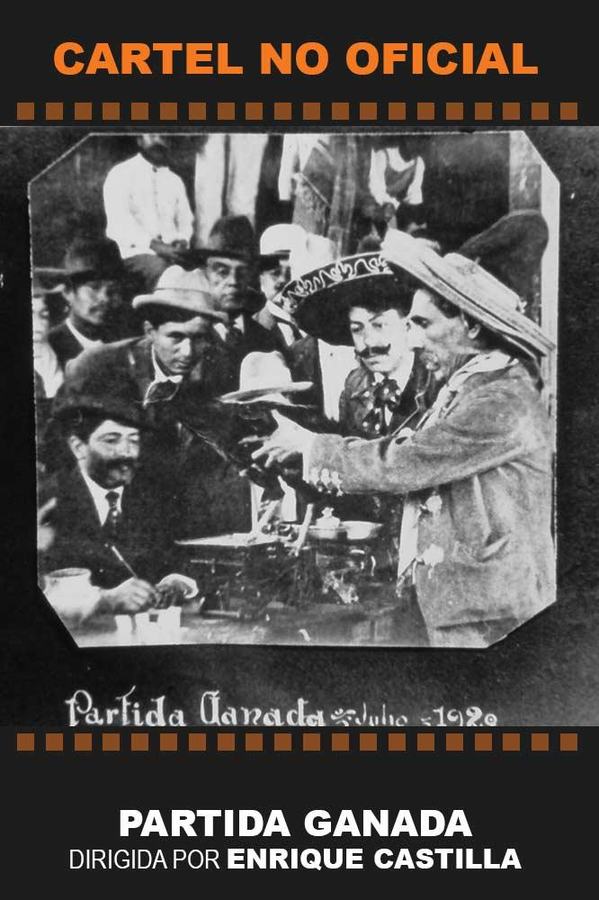
Streetlights smear amber across wet asphalt; a pocket chessboard clicks open like a switchblade. Partida ganada doesn’t announce its stakes—it lets them rust under your fingernails until you realize you’ve been scratching the board, not the itch. Ramos’s screenplay writes addiction in algebraic graffiti: every move is a transaction, every transaction a disappearance. The film’s Bogotá is a vertical labyrinth where cable-car cabins dangle like abandoned bishops and the Andean fog eats neon whole. You taste diesel, aguardiente, the copper tang of panic.
Castilla’s professor—nameless, coat fraying like an overused opening—carries the hollowed gravitas of a man who once tasted brilliance and found it bitter. His eyes flicker with the same ghosted glory as the protagonist of Pillars of Society, but while that film sought redemption in civic duty, Partida ganada seeks it in self-immolation. Urriola’s graffiti savant, La Ruina, is the board’s other color: spray cans rattle like shaken dice, her murals predicting police raids three moves early. She’s the oracle the city deserves—scarred, stenciled, impossible to price.
The camera itself is a third player. Acevedo’s documentarian—half Herzogian madman, half Instagram voyeur—records on grainy super-8 stolen from a German tourist. His lens glides over chess-piece silhouettes projected onto brick, over the emerald pawn cupped in a child’s palm like a lit fuse. The footage scratches, melts, reconstitutes itself; memory here is celluloid cancer. Compare this metatextual decay to the archival hauntology of The Soul Market or the erotic nitrate fantasies of Madame Peacock—Partida ganada fuses both impulses into a single, jittery heartbeat.
Ramos’s dialogue is a polyglot symphony: academic Spanish collides with streetwise chamuyo, broken English tournament jargon, and the occasional Danish curse nicked from Den kulørte slavehandler. Subtitles flicker yellow, then vanish—forcing non-fluent viewers to read facial tics instead of words. It’s a dare: keep up or forfeit comprehension, much like the professor’s opponents who blunder when they underestimate the quiet man with trembling hands.
Sound design weaponizes absence. There is no score, only environmental throb: TransMilenio brakes squeal in diminished fifths, illegal poker chips clack like wooden pieces toppled. When the emerald pawn finally lands on d4, the city holds its breath—an auditory blackout so absolute you hear your own iris dilate. Contrast that with the lush leitmotifs of From Caterpillar to Butterfly; here, silence is the killer’s tell.
Cinematographer Lucía Martínez desaturates primary colors until only rust, moss, and bruise remain. Yet within this drab palette eruptions of sea-blue (#0E7490) signal strategic pivots: a neon fish painted on a sewer, a tarp shielding a clandestine match, the flicker of a smartphone torch on the professor’s spectacles. The hue becomes a visual en passant—blink and you miss the threat. It’s more disciplined than the candy-pop excesses of Bull Arizona, more surgical than the chiaroscuro romanticism of The Jury of Fate.
Structurally, the film loops back on itself like a Möbius strip. The opening shot—a drone descent into a chess-themed nightclub—reappears at minute 73, but now we recognize the bouncer’s tell-tale rook tattoo, the bartender’s illegal gambit smile. Time folds, refolds, yet never confuses; Ramos trusts the viewer to hold tempo. Think of The Unwritten Code with its recursive flashbacks, but swap wartime morality for urban narcopolitics.
Performances oscillate between micro-gesture and grand mal seizure. Castilla’s breakdown inside the dilapidated Cine Dorado lasts four unbroken minutes—no dialogue, just the whir of a malfunctioning projector casting a 1920 checkmate on his face. He ages decades in real time, pores widening like unguarded files. Urriola counters with feral stillness; her final stare at the camera burns a hole in the fourth wall so absolute you swear you smell scorched celluloid. Supporting kids—actual street gamblers coached on set—steal every frame they’re in, especially when they chant algebraic notation like a playground rhyme.
Gender politics simmer beneath the surface. La Ruina’s murals feminize the hyper-male world of chess: queens with braided hair spear through multiple squares, knights breastfeed foals. Yet the narrative refuses to crown her a savior; she’s as complicit in the pawn-smuggling ring as the minister she detests. That moral sludge rivals the ethical quicksand of The Law’s Outlaw, but without the safety net of genre convention.
Themes of visibility and erasure dovetail with Colombia’s real diaspora. The emerald pawn—smuggled inside a DVD case labeled “Rainha Depois de Morta Inês de Castro”—becomes a MacGuffin for every undocumented prodigy who vanishes into cartel academies. Ramos indicts the spectator too: we crave a clean victory, but the film delivers a stalemate soaked in diesel. It’s a political sucker-punch as brutal as the ending of La morte che assolve, yet subtler, refusing catharsis.
Editing deserves a standing ovation. 2,538 cuts ripple like a speed-chess blitz, yet each splice lands with haiku precision. When the professor envisions 30 future boards superimposed over present traffic, the frames overlap translucent, a migraine of possibilities. Compare that to the stately longueurs of The Heart of a Child; here, contemplation kills, so the montage must outrun thought.
Production design turns poverty into occult iconography. Chess sets carved from cracked bus windows, bishops whittled from broom handles crowned with Coke-cap miters. A nightclub floor lights up in 64 squares; when patrons dance, they’re unwitting pieces in a living trap. The art department reportedly scavenged actual landfill junk during a citywide strike—every mote of dust earned, every rusted spring authentic.
Marketing teased the film via augmented-reality graffiti: scan a wall tag, watch a knight slide across your phone screen and disappear into the city’s grid. The stunt went viral, but authorities scrubbed the murals within 48 hours—an irony the characters would appreciate. Virality as check, censorship as mate.
Box-office chatter positions Partida ganada as the first Colombian feature bought by a major streamer without a festival premiere—proof that algorithmic hunger for global noir trumps red-carpet orthodoxy. Yet the directors insisted on a 35 mm print for select screenings, grain swirling like tropical mosquitoes. Those who caught it projected swear the analog version hides a secret QR code etched into reel 4; scan it and your phone opens a live chess app that challenges you to a blitz against an anonymous user rumored to be Castilla himself. Probably hoax, deliciously fitting.
Flaws? A mid-film exposition scene inside the sports ministry drags, speechifying the very machinations the visual grammar already decoded. And the minister’s motivations—cocaine-for-visa barter—skate dangerously close to telenovela cliché. Still, these are hairline fractures in an otherwise obsidian sculpture.
Final verdict: Partida ganada is the rare film that makes strategy feel carnal, that turns a child’s pocket pawn into Pandora’s emerald. It doesn’t preach; it checkmates your complacency and tips the board onto the floor. After the credits, you’ll walk outside and see city grids differently—every crosswalk a diagonal, every pedestrian a potential king in the wrong square. And when you spot a scrap of sea-blue graffiti, you’ll quicken your step, unsure whether you’re player or piece. That lingering paranoia is the film’s sharpest triumph—no endgame, only endless play.
IMDb 7.1
1924
Community
Log in to comment.