DbcultAccessing Vault...
Cult Review
Senior Film Conservator
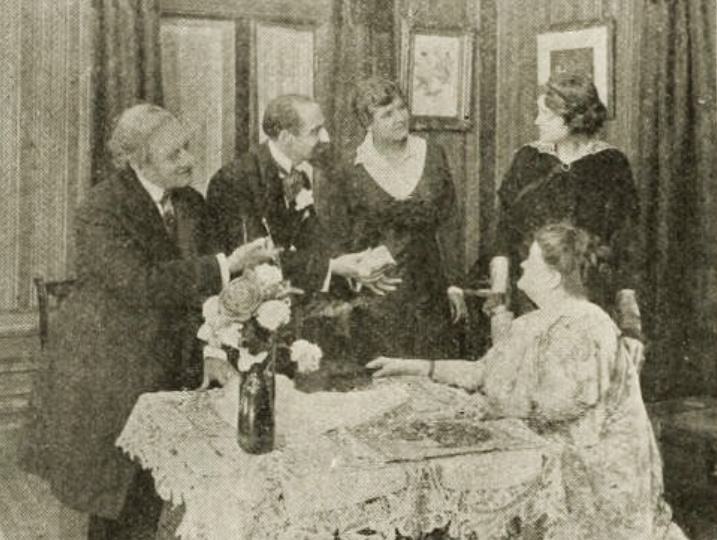
Charles Dana Gibson—line-drawn chronicler of wasp-waisted debutantes—translates his pen-and-ink wit to celluloid in The Education of Mr. Pipp, a 1914 one-reel whirlwind that pirouettes on the razor-edge between aspiration and absurdity. Pittsburgh’s blast-furnace millions transmute into Fifth Avenue marble, yet the stench of coke still clings to the ermine, a ghost of proletarian sweat haunting every champagne flute. Gibson’s satire is not content to lampoon the parvenu; it indicts the entire social bourse where pedigree is traded like debentures and honor is discounted to junk bonds.
Mrs. Pipp—played by Kate Jepson with fluttering ostrich-plume urgency—believes fluency in French will pick the lock of New York’s drawing rooms. Enter “Comte” de la Brioche (Frank Patton), a boulevardier whose accent drips like rancid honey, teaching conjugations while casing the silver. The film’s visual gag is subtle yet surgical: subtitles render his fractured French in perfect Parisian, while intertitles betray his true argot of back-alley Americana. The deception is a mise en abyme of class mimicry—each lesson a miniature theater where the American dream rehearses European aristocracy and forgets its lines.
Iris (Mona Ryan) and Daphne (Edna Mae Wilson) embody the dialectic of desire: Iris, statuesque in habit and hauteur, gallops into amour fou with a riding master whose leather smells of stables, not stock certificates. Daphne, bookish and balance-sheet savvy, yearns for John Willing (George Irving), the sober auditor whose heart ticks louder than the vault clock. Their dual courtships unfold like parallel ticker tapes—one racing toward romantic risk, the other toward fiduciary fidelity—until both strands knot in a trans-Atlantic chase that outruns the market’s closing bell.
The forged $75 check, bloated to $75 000, is more than MacGuffin; it is the film’s moral synecdoche. Inflation here is not merely numeric but ontological: value itself becomes speculative, a hallucination shared by crooks and capitalists alike. Director Augustus Thomas stages the cashing sequence aboard a White-Star gangway, the ocean liner’s funnel belching smoke like the very engine of modernity devouring its own promise. The moment the ink dries, the family’s social capital evaporates, proving liquidity is always only as solid as the next signature.
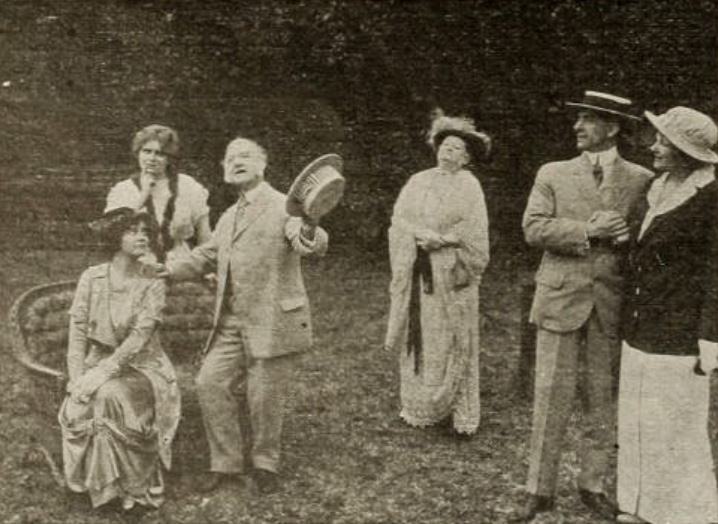
Once on English soil, the comedy of errors metastasizes. Lord Fitzmaurice (Harry Blakemore) doffs his title as easily as a silk hat, slipping back into groomsman anonymity while his ancestral halls echo with obsequious servants instructed to feign ignorance. The gag is pure Lubitsch avant la lettre: a nobleman desperate to be common, a common clan desperate to be noble, both orbiting the same chandelier like moths confused by twin flames.
The third act relocates to Montmartre’s gaslit labyrinth, where Count Charmarot (Henry Driscole) attempts to slip prussic acid into Mr. Pipp’s claret, believing widowhood will deliver Mrs. Pipp’s hand and purse. Cinematographer William A. Evans silhouettes the villain against a zinc bar mirror, fracturing his reflection into a kaleidoscope of greed. The tiara heist—an aborted burglary of the Duchess of Kent’s diamonds—provides slapstick crescendo: Pinkerton detectives slide down mansard roofs, policemen’s sabers spark against wrought-iron balconies, and the Seine swallows a satchel of counterfeit titles like a bourgeoisie baptism.
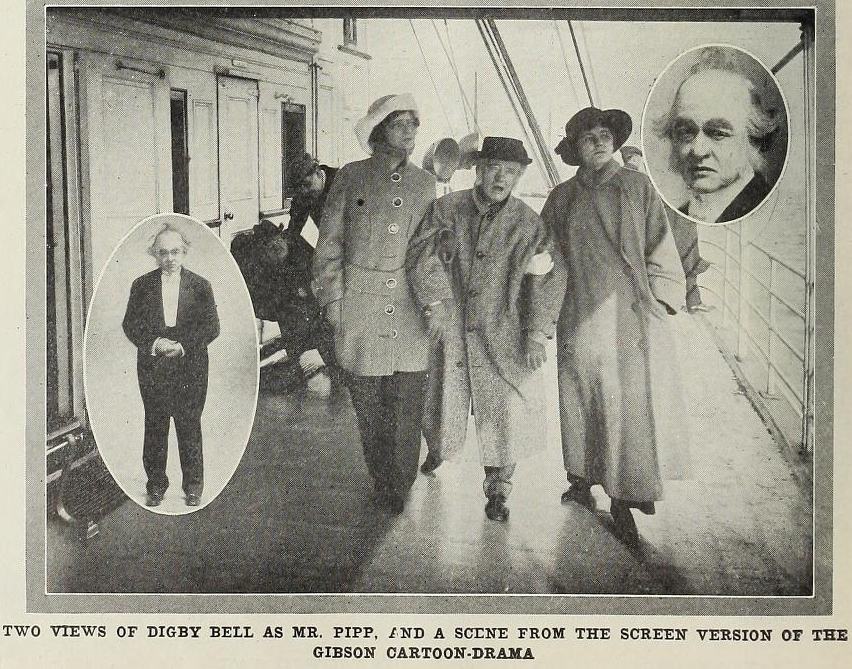
Digby Bell’s Mr. Pipp is a marvel of minimalist bewilderment—eyebrows semaphore distress while his moustache remains steadfast as a broom. Mona Ryan lets desire flicker across her cheekbones like sunrise on chrome; when she learns her beloved is a lord, her pupils dilate not with triumph but terror at the abyss between self-invention and inherited aura. George Irving’s John Willing is the film’s moral gyroscope, his gait measured, voice (via intertitle) terse, every syllable a ledger entry in the black.
Production designer Belle Daube translates Gibson’s pen-line elegance into flat-painted scrims: Fifth Avenue façades are merely propped rectangles, their trompe-l’oeil perspective winking at the artifice of social climbing. The color palette—hand-tinted amber for Pittsburgh steel-smoke, cerulean for Atlantic waves, rose for Parisian boudoir—anticipates the tempera whimsy of Sonho de Valsa by nearly three decades, yet retains a satirical edge sharp enough to slice foie gras.
Thomas employs intertitles like a ventriloquist, letting them speak in competing registers: the mother’s diary confesses “We must acquire the patina of antiquity” while the crooks’ coded telegraph reads “Package secured—proceed to pier.” The tension between linguistic aspiration and criminal argot underscores that language itself is the first counterfeited coin.
Where The Fates and Flora Fourflush lampoons Wall Street hypocrisy through rural farce, Mr. Pipp skewers the inverse: provincials drunk on metropolitan glamour. Both share DNA with Pierre of the Plains, where self-invention collides with wilderness, yet Gibson’s film is urbane, its wilderness the drawing-room jungle. Meanwhile, the Pinkerton subplot prefigures the investigative kineticism of The Convict Hero, though here the detective is less moral agent than deus ex machina with a bowler.
Recent 4K restoration by the Library of Congress reveals textures smothered by generations of dupes: the glint of mother-of-pearl opera glasses, the frayed cuff of the false comte, the soot smudge on a steelworker’s cufflink—details that convert caricature into census. The tinting schema—cobalt night exteriors, citrine ballrooms—has been recreated via Desmet color grading, yielding a luminosity unavailable since nickelodeon days.
Contemporary screenings benefit from a modular score: stride piano for Pittsburgh sequences, string quartet arrangements of Edwardian parlor songs for New York, accordion-tinged montmartroise for Paris. The anachronistic wink invites audiences to hear history as remix, much like Spartacus repurposed Khachaturian for antique spectacle.
Film historians now read Mr. Pipp as artifact of the 1913 Revenue Act era, when new income taxes fueled a rush to shelter wealth in social prestige. The picture’s forgery plot uncannily mirrors the era’s stock-watering scandals, making it a celluloid footnote to the Pujo Committee. In Gender Studies seminars, Mrs. Pipp’s linguistic masquerade is cited alongside Manon Lescaut’s courtesan codes, both women weaponizing tutelage to infiltrate patriarchal bourses.
Ernst Lubitsch lifted the identity shell-game for Cluny Brown; Preston Sturges borrowed the rapid-fire class inversion for The Palm Beach Story. Scorsese screened a 16mm print while prepping The Age of Innocence, claiming he wanted to study “how velvet gloves can bruise.” The DNA persists: every Gilded-Age binge-watch—from The Gilded Age to Downton—owes its sparkle to Gibson’s ironic twinkle.
The Education of Mr. Pipp endures because its target is evergreen: the human habit of price-tagging self-worth. In 1914 it mocked dowagers clutching genealogies like bearer bonds; in 2024 it roasts crypto broods brandishing JPEGs as titles. The film’s final image—Mr. Pipp pocketing his wife’s hand as their liner steams back toward Pittsburgh smoke—offers no moral, only a sigh: the only education is remembering where the soot first settled. Watch it for the laughter, re-watch it for the blush of recognition, then check your own balance sheet of dreams.
IMDb —
1926
Community
Log in to comment.