DbcultAccessing Vault...
7/10
Senior Film Conservator
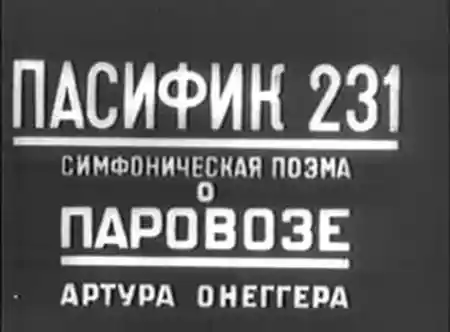
A definitive 7/10 rating for a film that redefined the boundaries of cult cinema. Pasifik 231 remains a cornerstone of transgressive art.
Alright, so, Pasifik 231. Is it worth watching today? Absolutely, if you're someone who loves old, experimental animation or just wants to see something truly different. If you need a clear plot with dialogue, you'll probably hate it. This one's for the film history buffs and those who appreciate visual rhythm over narrative.
This is a Soviet animated short from way back in 1931. It clocks in at just under ten minutes, set completely to Arthur Honegger’s intense orchestral piece, also called “Pacific 231.” No talking, just sound and pictures. 🚂
What hits you first is the sheer kinetic energy. The whole thing is built around the idea of a train, a locomotive, starting slow and then just building up this incredible, almost terrifying speed. Mikhail Tsekhanovskiy, the guy who made it, really understood how to make lines and shapes *move*.
It's not just a train, though. The film weaves in all these other images. There are gears grinding, pistons pumping, smokestacks belching. You see workers, almost swallowed by the machinery. It's this whole vibe of industry, of everything moving forward, sometimes with a scary kind of force.
Then things get a bit unsettling. You start seeing flashes of war. Soldiers marching, tanks, planes. It's quick, almost subliminal. One moment it's all about the power of the train, the next it’s a glimpse of destruction. It keeps shifting, almost jarringly so.
The animation style is super distinct. It’s all black and white, of course, but the lines are so dynamic. They're often thick, a little crude in a way that feels intentional. It gives everything this raw, almost anxious energy. Sometimes the lines vibrate like they’re about to jump off the screen.
There's a sequence where the train itself almost becomes this monster. Its wheels are like eyes, just churning and churning. It’s fascinating how much emotion and power they get from just simple shapes and relentless motion. You can almost *feel* the rumble.
One part that always sticks with me is how the perspective changes. You're sometimes looking head-on at the train, sometimes from above, sometimes it feels like you're right there on the tracks. It's a dizzying effect that really pulls you in, or pushes you away, depending on the shot.
It’s not trying to tell you a story with a beginning, middle, and end. It’s more like a visual poem, or a really intense dream. It washes over you. You might not understand every single visual choice, but you definitely feel something.
This film is a prime example of early animation pushing boundaries. It’s bold. It’s loud, even without dialogue. You come away from it feeling a little breathless, maybe a little thoughtful about how fast things move and what that speed can lead to. It's a quick trip, but a memorable one.

IMDb —
1931
Community
Log in to comment.