DbcultAccessing Vault...
Cult Review
Senior Film Conservator
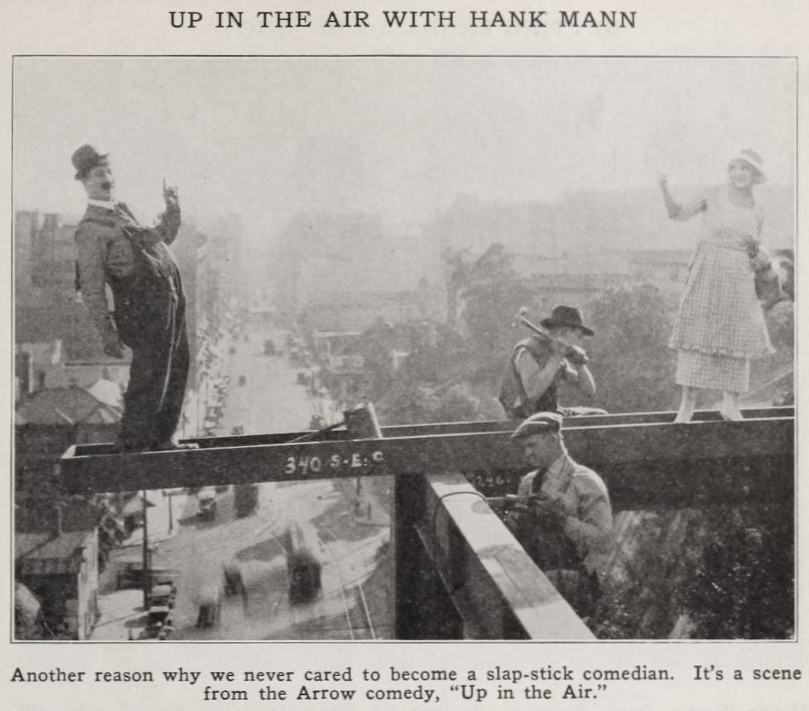
The first time I saw Up in the Air I yelped so loudly the museum archivist threatened to revoke my nitrate-privileges. Not out of shock—slapstick is supposed to be harmless—but because this 1920 one-reeler detonates like a custard-pie IED wedged inside the bourgeoisie. It is a film that laughs so hard at the powerful it leaves them gasping for oxygen masks at cruising altitude.
Picture the Gilded Age in mid-collapse: top-hatted titans of industry invent reasons to exist, and the cinema—still wet from birth-fluids—decides to chase them with a butterfly net. Vernon Dent embodies that era’s bloated confidence; his jowls are upholstered like a banker’s leather armchair. He enters the narrative already convinced gravity owes him interest. The airline he owns is less a business than a mahogany-lined echo chamber where stocks are puffed and workers are flicked away like cigar ash.
Enter Hank Mann, six-foot-four of animated scaffolding, a man whose knees arrive five minutes before the rest of him. Mann’s character has no name in the surviving continuity sheets; he is simply "Passenger, trouble," which feels like the way history tags its future ghosts. He boards incognito—first as a porter whose cap keeps sliding into his eyes, then as a stewardess whose skirt hem performs semaphore. The disguise is paper-thin yet nobody looks twice; the ruling class rarely looks down unless it’s to check if their shoes are being shined.
Directors who believe comedy needs "relatable stakes" should be forced to watch this print on a loop until their eyeballs file for workmen’s comp. The stakes here are existential: will the rich remain unsoiled? Answer: a resounding, custard-splattered no. Every mechanism meant to cocoon privilege—pressurised cabins, white-glove service, pneumatic call-buttons—gets inverted into a guillotine of pratfalls. A velvet rope becomes a tripwire; a champagne bucket becomes a mortar shell; the in-flight magazine turns into origami shurikens that ricochet down the aisle.
Watch the moment Mann cranks open the cargo hatch mid-flight. Out swirls a blizzard of office memorandums: pink slips, eviction notices, debt ledgers. They swirl like snow around Dent’s tuxedo as he clings to a strut, his cigar now a limp noodle of defeat. It’s 1920, but you’ll swear you smell the 2008 recession. The film predicts the gig economy by turning unemployment paperwork into confetti; the only difference is here the papers actually celebrate something.
Slapstick, at tooth and claw, is redistribution by other means. 39 East tried the same trick in drawing rooms; Mademoiselle Monte Cristo wielded revenge like a stiletto. But Up in the Air weaponises altitude itself. The higher the aircraft climbs, the farther the mighty have to tumble. Mann doesn’t merely trip Dent; he removes the entire floor beneath him, replacing it with trapdoors, greased tarps, and the occasional rabid raccoon smuggled aboard for comic punctuation.
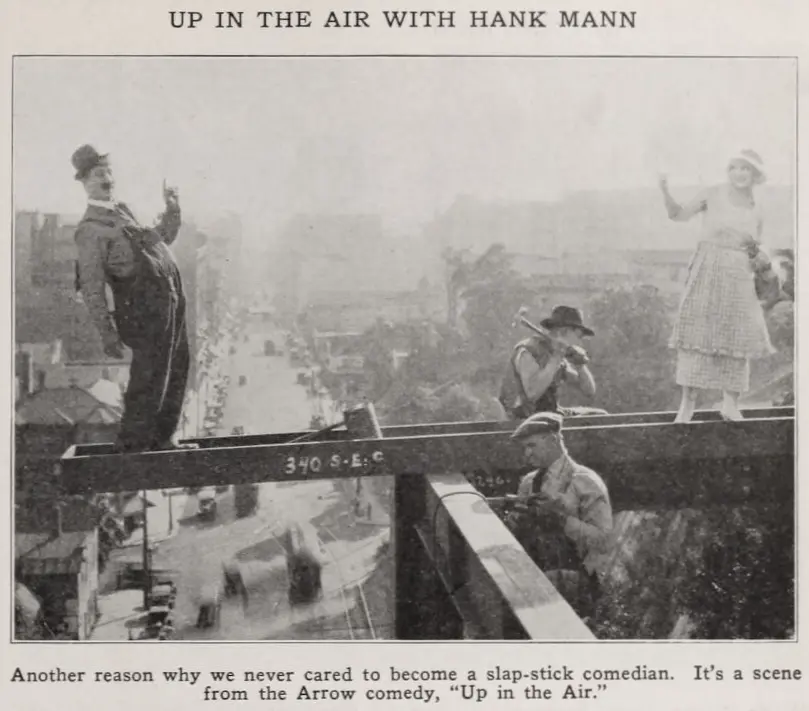
My favourite flourish: the folding berth that snaps shut like a wallet, swallowing a snoring mogul. The berth reopens to reveal not a corpse but a human pretzel, starched shirt now origami, monocle dangling like a monocle on a noose. Dent’s howl is silent, of course, but the intertitle—lettered in jittery, caffeinated font—reads: "Comfort adjusted for altitude, sir." It’s the film’s manifesto: comfort was always adjustable; you just weren’t the one holding the controls.
Modern viewers sometimes complain the silent era feels "distant." Nonsense. Silence is the native tongue of anxiety; we still live there when phones drop signal or when the landlord knocks. The lack of diegetic aeroplane roar makes every creak of the fuselage feel intimate, like the house settling in a childhood nightmare. The monochrome palette—silver nitrate shimmering like moonlight on a razor—heightens every splatter of white custard against black tailcoat. You don’t need Dolby to feel that collision; your spine supplies the bass.
Compare The Firefly of Tough Luck, drenched in tints so feverish they look like bruises. Its sentimentality lands like treacle after the astringent vodka of Up in the Air. Or take Brigadier Gerard, swaggering through Napoleonic wars with the same self-importance Dent parodies. Gerard’s heroics feel quaint once you’ve seen an entire social class defenestrated at 120 knots.
Keaton calculated trajectories like an engineer; Chaplin choreographed pathos like a poet; Mann works like an accountant who’s realised the books are cooked and decides to cook the clients. Every gag pays dividends, but the currency is humiliation. The film runs a brisk 24 minutes—short enough that no studio exec could slice it without amputating the punchline. Yet within that span it racks up more perceptual debt than The Senator managed in seven reels of bloated oratory.
Consider cost-per-laugh metrics, if you must. Dent’s inaugural tumble—sliding the length of the fuselage on a runaway serving tray—consumes maybe 40 feet of celluloid but detonates a chain reaction that topples valets, shareholders, and a U.S. postal sack. The sack bursts, spilling letters later revealed to be tax demands addressed to Dent himself. The gag loops back like a Möbius strip, reminding us that gravity and the IRS both operate on strict schedules.
Gender politics here wear trousers—literally. Mann’s drag sequences aren’t cheap cross-dressing; they’re infiltration tactics. When he doffs the wig and reveals his stubble mid-can-can, the matrons don’t faint; they cheer, as if witnessing a jailbreak. The moment nods toward Sleima, where a woman commandeers a locomotive, but Up in the Air refuses to moralise. Liberation here is not a sermon; it’s a side-effect of chaos, like finding money in a coat you thought you’d lost.
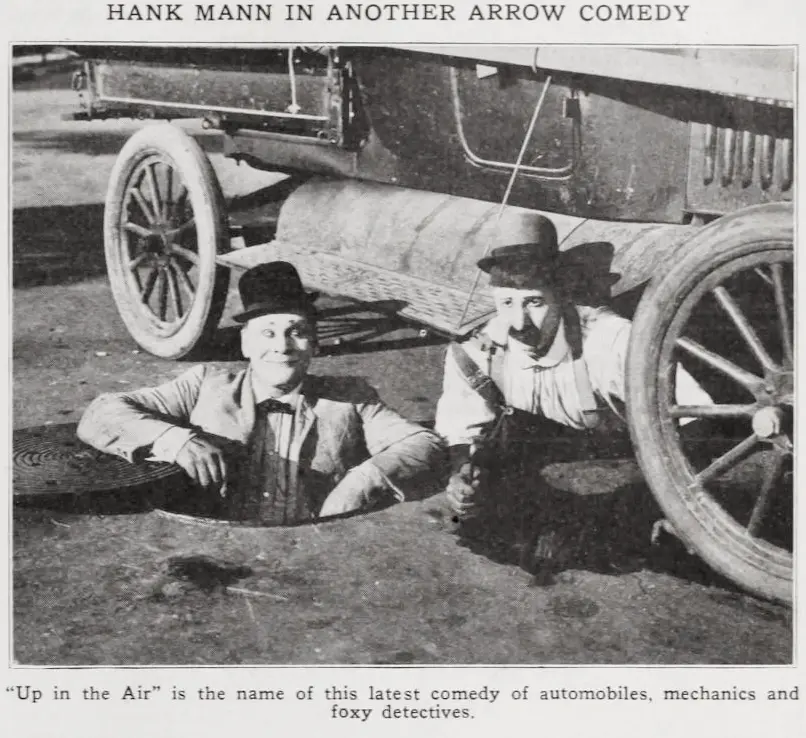
Still, the film isn’t flawless: minority representation is nonexistent unless you count the monkeys, and they’re saddled with racialised caricature that makes modern teeth grind. Yet even that stereotype gets undercut when the alpha monkey steals Dent’s pocket-watch, winds it, and flings it overboard—time itself jettisoned as excess baggage. The image is problematic, yes, but also prophetic: capital can’t govern once its instruments are snatched by paws it never bothered to notice.
Fast-forward a century and you’ll spot this film’s chromosomes in Airplane!, in Bridesmaids’ bridal-boutique meltdown, even in Jordan Peele’s airborne tethered. The DNA is recessive but persistent: the notion that enclosed spaces magnify social fault lines. Prisoners of the Pines tried the same trick in snowbound logging camps, but lumber is static; aeroplanes are velocity incarnate. Speed compresses class strata into a single pressurised tube until somebody ruptures.
Notice the whip-pan that follows a loose rivet as it ricochets from seat to seat, each impact scored only by a flicker of light on the blade of the rivet. The sequence predates Spielberg’s roaming shark-pov by half a century, yet it’s more kinetic because the camera itself seems to giggle. No Industrial Light & Magic, just a cameraman cranking like he’s churning butter, trusting that the audience will meet him halfway. We do, because fear of falling is pre-installed software in the human OS.
Most prints circulate in 16mm reductions struck for rural niteries in the ’20s; the original 35mm negative vanished in the 1965 MGM vault fire that also claimed The Crime of the Hour. What survives is speckled like a leopard with raindrop burns, but the scars feel earned—like watching a boxer still grinning through cauliflower scars. The Filmoteca de Catalunya is crowdfunding a 4K restoration; pledge if you can. The world needs every frame of Mann’s elastic limbs preserved in crystalline detail, if only to remind hedge-fund pilots that the sky remembers every insult.
The closing shot lingers on the aircraft’s tail-fin as it taxis into a hangar marked "Future." The letters wobble, possibly scratched into the emulsion by a departing hand. Dent limps away, hatless, while Mann—now wearing the captain’s stripes—salutes with a banana. Fade-out. No moral, no kiss, no sequel hook. Just the implication that tomorrow’s disasters will need new fools, and the supply is inexhaustible.
I walked out of the screening into a city where glass towers brag about touching the sky. I laughed anyway, because Up in the Air had already pulled those towers down one custard pie at a time. Watch it on a plane if you dare; the cabin crew may wonder why you’re cheering every bump of turbulence. Tell them you’re celebrating aviation history. Tell them gravity just filed its taxes. Then fasten your seatbelt—low and tight across your lap, like the film across your conscience.
IMDb 6
1928
Community
Log in to comment.