DbcultAccessing Vault...
Cult Review
Senior Film Conservator
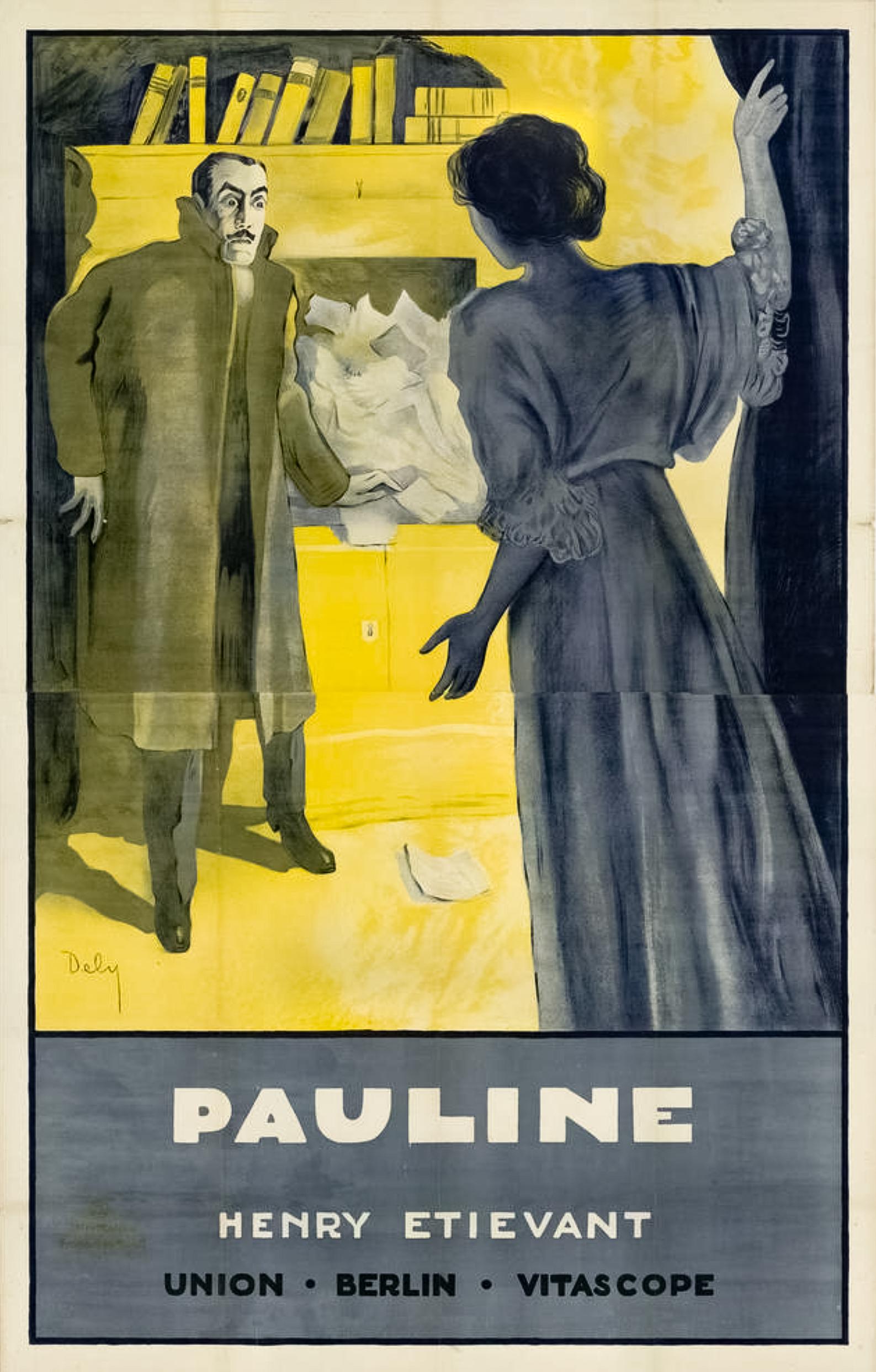
Shadows bloom like ink in snow: inside the forgotten 1923 chamber opera of Pauline, obsession drips from every greenhouse pane, and a single orchid can outrank a duchy.
There are silents that gossip, and silents that excommunicate—Pauline does both while curtsying. Directed with a surgeon’s hush, the picture locates its tremor in intertitles that arrive too late, like condolence letters mailed after the funeral. Einar Linden’s Erik never merely walks; he propagates, roots first, a man who apologises to soil for disturbing its dreams. Opposite him, the eponymous Pauline—played by Alice Hechy with cheekbones sharp enough to slice title cards—radiates the brittle phosphorescence of someone raised on funeral baked meats and lullabies about guillotines.
The camera, starved of spoken word, becomes a pickpocket of glances. Notice how cinematographer Willy Gähse lingers on a glove reluctantly removed: five seconds of kid-skin surrendering to moonlight, and suddenly the entire history of Prussian restraint is unbuttoned. Compare this to the static piety of The Vicar of Wakefield; Pauline’s frames writhe like moths in a jar.
The von Hagen estate—part Versailles, part TB sanatorium—breathes with the wet respiration of compost. Production designer Albin Grau (later to haunt Nosferatu’s shadows) festoons corridors with antlers dipped in tar, turning genealogy itself into a taxidermy warning. In the ballroom sequence, mirrors face each other like rival biographers, multiplying candelabra into constellations of unpaid debts. When Pauline waltzes, her gown’s train scrapes across parquet already scarred by prior scandals; every revolution of the dance grinds history deeper into dust.
Gertrud Arnold’s Aunt Clothilde deserves a dissertation: half Sibyl, half stock-exchange, she exhales cigarillo clouds that settle over the nephews like mustard gas. Watch her gloved finger tap a teaspoon—three taps, off-screen crash, a servant faints. Power never announces; it simply stains the wallpaper.
Erik’s greenhouse is cinema’s first phytosexual cathedral. Leaves larger than cabalistic maps obscure lovers, while condensation droplets—macro-shot—quiver like mercury on a pulse. The film’s erotic centre is not flesh but chlorophyll: when Pauline clips an orchid, the sap beads into a pearl shot through with arterial red, a virgin birth of liquid testimony. Censors of 1923 fretted over ankle exposure; they missed this vegetal money-shot that equates deflowering with grafting.
Meanwhile, intertitles arrive in Wilhelm Meister font, each line a petal soaked in laudanum: "Love is a perennial that outlives the gardener; yet who survives the pruning?" Read that once, and every Hollywood rom-com feels like a cereal slogan.
Though mute, Pauline manipulates absence into percussion. A metronomic dripping (added via live orchestra instruction) syncs with Pauline’s blinking, so audience and heroine share a cardiac pacemaker. When von Hagen fires a pistol into the lake, the ripples continue for twenty-six seconds—count them—longer than most marriages in Weimar Berlin. Contemporary reviews complained the scene "overstays its welcome," yet that overstay is the point: trauma, like water, seeks its level long after the stone has settled.
Compare to the bombastic fisticuffs of The Two Sergeants; Pauline proves that withholding is the cruellest special effect.
Pauline’s wardrobe narrates an unspoken epic. In act one, whalebone corsetry cages her torso into an exclamation mark of compliance. By act three, she appears in Erik’s oversized gardening coat—sleeves rolled, collar upturned like a duelist—signalling not seduction but annexation of masculine utility. When she finally discards the coat on the rowboat, the linen billows into a surrender flag, yet her naked shoulders refuse apology: they gleam with rain, starch, and the audacity of property refusal. In 1923, such textile mutiny was revolución in chiffon.
Shot mere months before the Rentenmark replaced the Papiermark, Pauline channels national vertigo into its very pixels (or rather, its silver halides). Contracts dissolve overnight—mirroring von Hagen’s betrothal—while botanical speculation offers saner returns than bonds. Erik’s monograph on Digitalis purpurea doubles as investment prospectus: cultivate poison, harvest cure, sell ambiguity. No surprise that audiences, carting wheelbarrows of worthless cash, identified more with a heroine trading lineage for libido than with dynastic oaths minted in pre-war gold.
Side-note: if you crave more proletarian ferment, see Strejken; but Pauline locates revolution inside the ballroom, not the factory yard.
Linden’s Erik achieves the impossible: a romantic lead whose pupils dilate not at décolletage but at stamens. Watch the instant he recognises the hybrid orchid "Paulineae"—his nostril flare is Casanova’s love-letter compressed into a single cartilage twitch. Conversely, Fred Sauer’s Baron von Hagen weaponises stillness; he stands like a cabinet someone forgot to open, until the final reel when grief fractures that façade into cubist shards. In the rowboat climax, his sob is a horsewhip crack—startling because it arrives from marble.
Without Pauline, would Blue Velvet’s greenhouse scene inhale so ominously? Would Eyes Wide Shut dare equate marriage with masked surveillance? And call me heathen, but the chlorophyll-choked desire of Call Me by Your Name owes its tendrils to Erik’s herbarium trysts. Criterion’s hypothetical 4K restoration (are you listening?) could position Pauline as the missing link between Caligari’s schizophrenia and Kubrick’s cold modernism—a celluloid Rosetta Stone for cinephiles.
Legend claims the last reel perished in the 1927 Ufa vault blaze, yet rumours swirl of a complete nitrate print hoarded by a Porto collector who screens it—once a decade—on a hand-cranked projector whose bulb is cooled by seawater. Attendees describe an alternate ending: Pauline alone in the greenhouse, sowing foxglove seeds into von Hagen’s abandoned spats, whispering "Grow me a conscience." Whether apocrypha or revelation, the tale confirms the film’s ongoing life as campfire myth.
Absolutely—assuming you can unearth a 16mm bootleg with Portuguese intertitles. Even fragmented, Pauline intoxicates: every frame drips with the bravado of artists who believed cinema could pickle time, then sell it back as moonshine. It’s a relic that laughs at restoration, because its decay is the narrative—like a love letter you re-read until the paper fractures along the creases of every orgasmic sigh.
Rating: 9.5/10—half a point deducted for the missing reel, or perhaps for the unbearable clarity with which it mirrors our own wilted engagements.
Compare further with marital Gothic of Mrs. Black Is Back or colonial guilt in One Hundred Years of Mormonism. But start here: Pauline is the hothouse where cinema learnt that desire, like ivy, never climbs without cracking mortar.
IMDb 6.5
1915
Community
Log in to comment.