DbcultAccessing Vault...
6.4/10
Senior Film Conservator
A definitive 6.4/10 rating for a film that redefined the boundaries of cult cinema. Telegramtyvene remains a cornerstone of transgressive art.
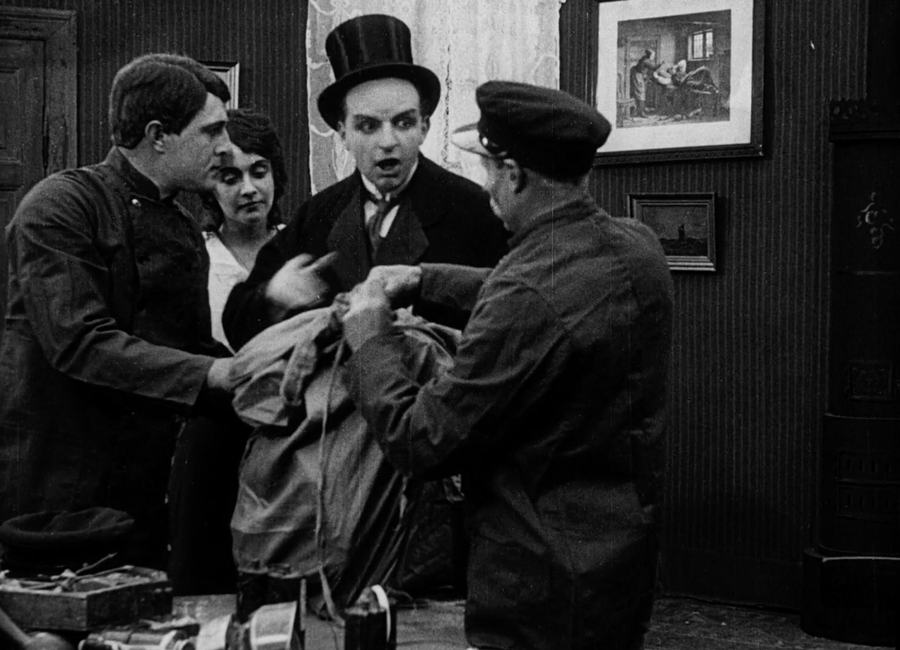
The first time I saw Telegramtyvene I thought the projector was coughing—turns out it was the film itself, a 1916 Danish fever dream exhaling soot and static. Nitrate curls like cigarette smoke while Mac Davis—played with velvet menace by Peter S. Andersen—leans against a cast-iron press that towers like a pagan altar. His fingers, stained Prussian blue, drum a waltz of doom on stacks of freshly forged cablegrams. One flick of his wrist and a banker in Christiania becomes a pauper; another flick and a parliamentarian’s mistress receives funeral flowers she never ordered. The film doesn’t walk, it slithers, leaving a slug-trail of ink that still feels wet a century later.
Director Emanuel Gregers never allows a single honest daylight shot. Instead, Copenhagen’s nightscape is rendered in shards—lamplit cobblestones glisten like black mirrors, harbour cranes bow like gallows, and every window frames a face that’s already halfway through betraying someone. The visual grammar anticipates both The Yellow Traffic’s neon existentialism and the chiaroscuro cynicism of Vendetta, yet predates them by decades. This is Nordic noir before the term existed, a proto-cyber-thriller where information itself is the stolen currency.
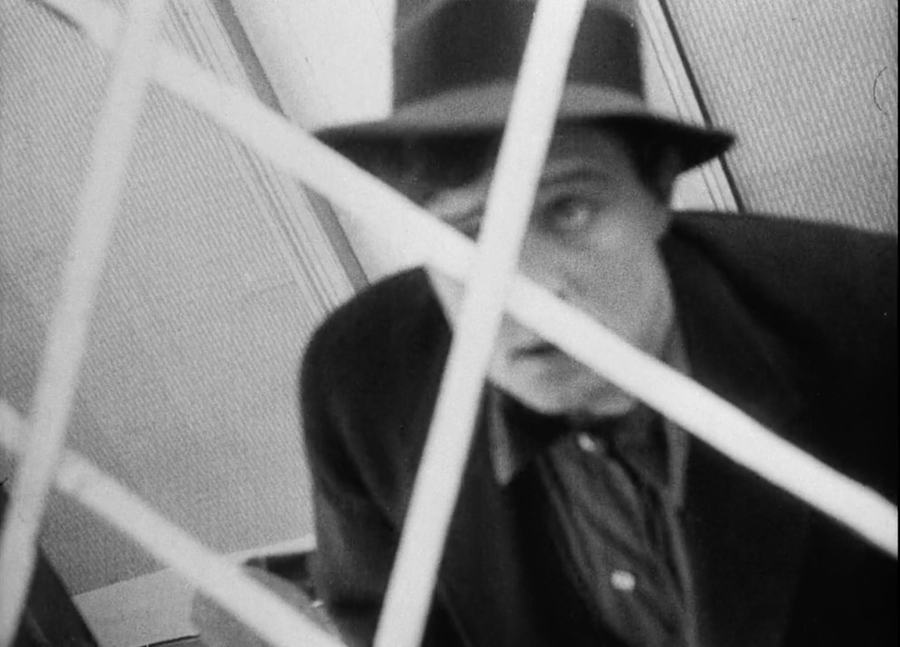
Ellis (Agnes Rehni) enters frame wearing a coat the colour of dried blood, faux-collar tickling her jaw like a confession she hasn’t yet spoken. Watch her eyes in the brothel-adjacent bar scene: they don’t blink when Clark admits he’s skimmed enough kroner to flee to Argentina. Instead, she lifts a cigarette, lets the paper burn almost to the filter, then presses the glowing tip to Clark’s wrist—an impromptu brand sealing the pact that will later unspool him. The gesture is so casually vicious it feels documentary, as though the camera merely happened upon a woman inventing her own morality in real time.
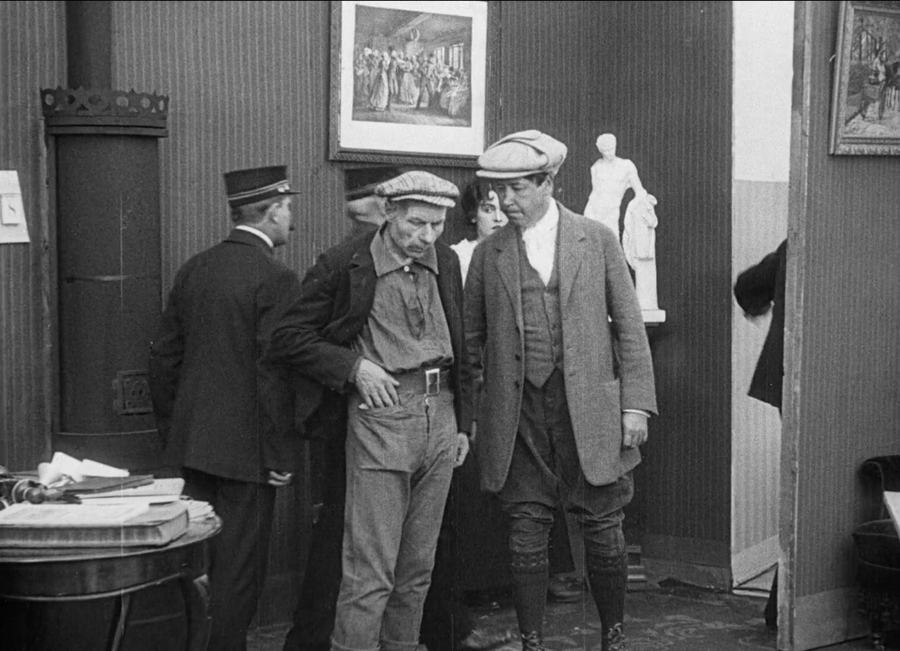
Durkins, meanwhile, is the spreadsheet incarnate. Charles Løwaas plays him with shoulders permanently hunched from tallying other people’s sins. In one insert close-up—so tight you can count the pores—he licks his thumb before flipping a ledger page, a microscopic flourish that tells you everything about his creed: even saliva is an investment. When he and Ellis bolt, they don’t sprint; they calculate the escape, timing their exit to the 3:07 steam whistle that masks the scratch of their suitcase locks. The film’s genius lies in refusing to romanticise their treachery; instead, it watches like an entomologist while two pragmatists devour the third.
Silent films live or die on their musical accompaniment, but Telegramtyvene was conceived for absolute hush. The original Danish premiere featured a lone telegraph key onstage, its clicks amplified through a brass horn. Every time Davis sends a lethal wire, the metallic clatter ricochets around the auditorium like bullets in a cathedral. Restorers at the Danish Film Institute recreated this for the 2023 Blu-ray; I played it at 2 a.m., neighbours be damned, and the sound lodged behind my eyes for days. Try hearing anything else after you’ve experienced morse as Morse—as coded mortality tapping at your cranium.
Visually, the tinting strategy is berserk: interiors soaked in tobacco amber, exteriors daubed arsenic green, flashbacks bleached until actors resemble X-ray ghosts. One cyan-tinted shot of Clark wandering Nyhavn’s frozen docks feels plucked from Life in a Western Penitentiary, had that film been dunked in Nordic seawater. The colour becomes narrative—cyan equals exile, amber equals complicity, green equals the liminal space where trust is bartered.

Censors in 1916 missed the filthiest joke: Ellis’s seduction of Durkins happens off-screen, yet the aftermath arrives in the form of a stamped envelope delivered to Davis. Inside: a single pubic hair pressed between two sheets of onionskin, its curl echoing the flourish of her forged signature. Davis holds it to the lamplight, and for a full four seconds—an eternity in silent-film time—his expression cycles from disbelief to admiration to grudging respect. It’s the most economical sex scene ever filmed; pure bureaucratic erotica, proof that desire can be reduced to a clerical notation.
Compare that to the florid couplings in Hearts and Flowers or the chaste yearning of The Sparrow, and you realise how radically Telegramtyvene strips intimacy to its transactional bones. Love is just another wire to send, another account to close.
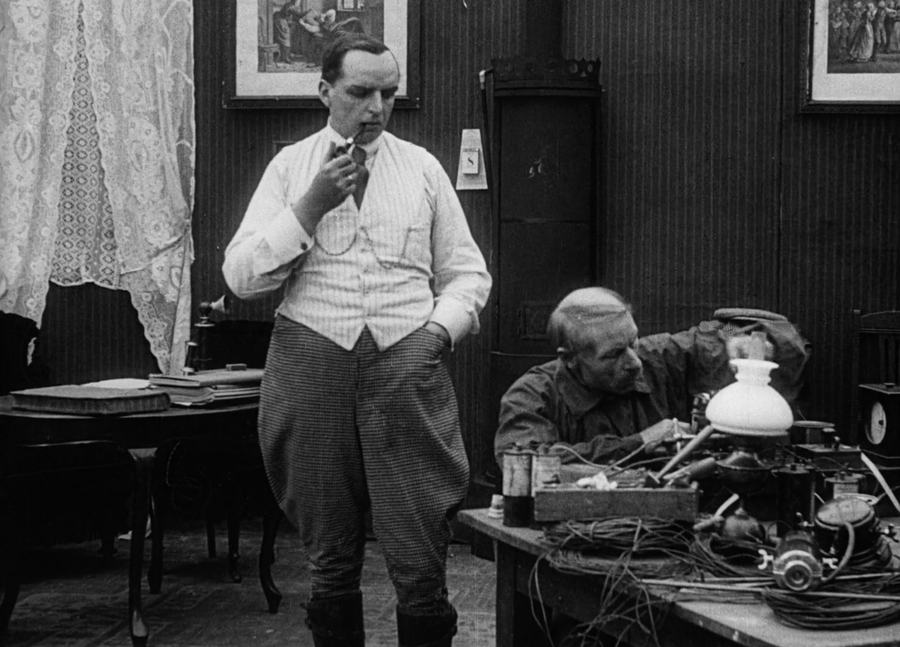
The plot’s MacGuffin isn’t gold or microfilm—it’s access. Possession of the city’s pneumatic telegram tubes grants the power to reroute truth itself. Davis’s henchmen jimmy open iron lids in dead-of-night alleys, insert forged cylinders, and suddenly a stock price plummets, a marriage implodes, a judge sentences the wrong man. The camera lingers on these brass capsules sliding through subterranean tubes with the same reverence Griffith reserved for battlefield cranes, transforming civic infrastructure into a circulatory system of venality.
Halfway through, the film stages a bravura sequence inside the Central Post Office: a single take (masked by hidden cuts) that follows a forged telegram from clerk to sorter to dispatcher to courier, each handoff a relay of plausible deniability. The tension skyrockets not through chase but through process. You realise evil isn’t a Snidely Whiplash moustache-twirl; it’s a clerical error that compounds while everyone obeys procedure. The DNA of this sequence reappears ninety years later in the hotel-room wiretap of The Conversation and the parcel-tracking montage of Memories of Murder, yet Telegramtyvene got there first, armed with nothing more than rotating brass wheels.
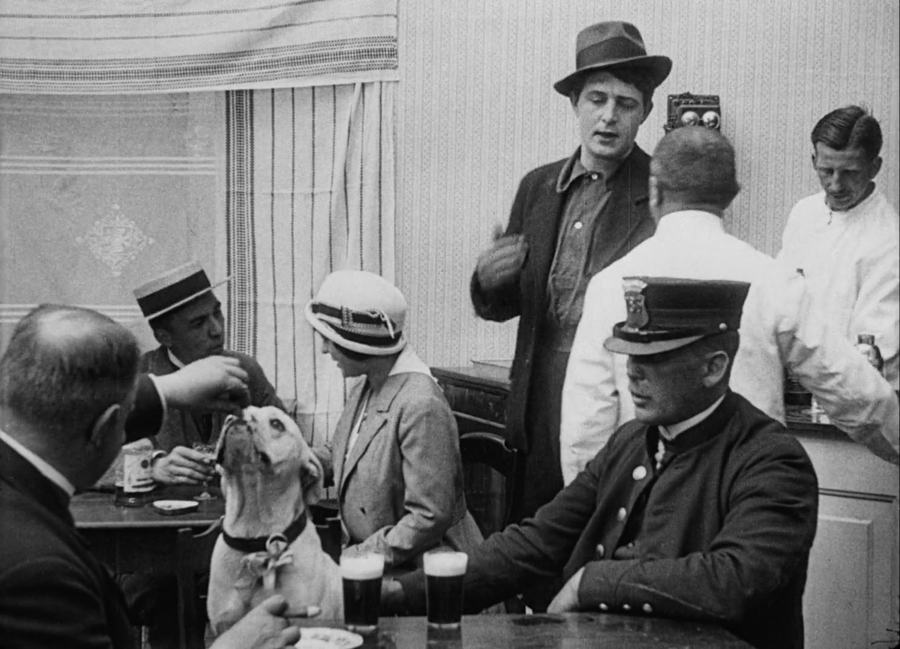
Ellis’s final twist—she double-crosses Durkins mid-Atlantic, absconding with both the money and the incriminating ledgers—lands harder because the film never infantilises her. She isn’t a femme fatale in the American sense, motivated by lust or hysteria; she’s a CEO of chaos, outsourcing desire the way Davis outsources blackmail. Notice how she rehearses her goodbye speech in a mirror, adjusting the angle of her hat until the brim slashes her face like a barcode. She isn’t practising sincerity; she’s calibrating how much sincerity to simulate. In 1916, that’s revolutionary.
Contrast her with the martyr-wives of Pamela Congreve or the virginal cipher in Assisi, Italy, and you see how Telegramtyvene grants its woman the same moral plasticity it gifts its men. Equality, at last, through mutual corruption.
The final shot freeze-frames on Davis’s face, eyes narrowing as he reads Ellis’s last telegram: “Account closed. Yours in perpetuity.” The image holds until the celluloid itself seems to burn, white-hot in the gate, as if the film refuses to let us look away from his dawning realisation that he’s become a client of his own terror. No closing titles, no iris-out—just a sustained glare that mutates into our reflection. The first time I reached for the remote; the second I realised the film was already over, had always been over, would never stop being over. That’s the sting: Telegramtyvene doesn’t end; it simply disconnects you from the wire you thought was your life.
Seek it out. Stream it illegally if you must; the ghosts of Davis & Ellis won’t sue. But for god’s sake, watch it alone, volume off, telegraph key rattling somewhere in the dark. And when the neighbours pound on the wall, tell them it’s only morse—just the sound of your own secrets coming home to roost.

IMDb 5.1
1931
Community
Log in to comment.