DbcultAccessing Vault...
4.2/10
Senior Film Conservator
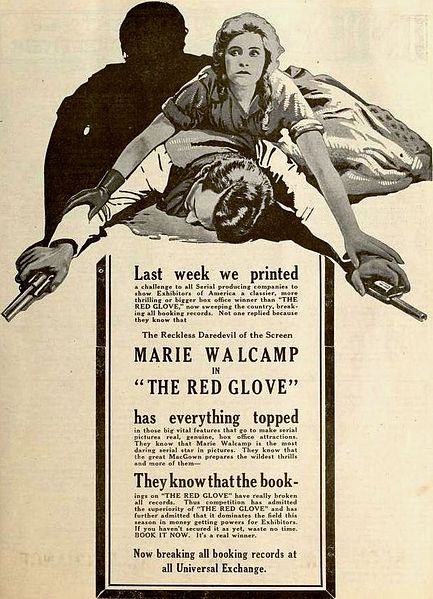
A definitive 4.2/10 rating for a film that redefined the boundaries of cult cinema. The Red Glove remains a cornerstone of transgressive art.
In the pantheon of early silent cinema, few figures command the screen with the visceral intensity of Marie Walcamp. In the 1919 serial The Red Glove, Walcamp transcends the decorative expectations of her time, delivering a performance that is as much about physical endurance as it is about dramatic nuance. Unlike the delicate protagonists found in The Foundling, Walcamp’s Billie is a creature of the elements, a woman whose skin seems tanned by the very celluloid grain of the frontier. The film functions as a kinetic exploration of gender dynamics, where the 'female cowboy' is not a novelty but a necessary evolution in a world where the weak are quickly subsumed by the shadows of the canyon walls.
The narrative structural integrity of The Red Glove owes its complexity to the collaborative genius of Isabelle Ostrander and Hope Loring. These writers did not merely script a series of escapes; they engineered a psychological landscape where the threat is often invisible, symbolized by the enigmatic red glove. While many contemporary productions like Love's Conquest leaned into sentimental melodrama, Ostrander and Loring infused this serial with a hard-boiled sensibility that predates the noir movement. The dialogue—rendered through evocative intertitles—avoids the purple prose of the era, opting instead for a sparse, rhythmic cadence that mirrors the staccato firing of a Winchester rifle.
The antagonistic forces Billie faces are not mere caricatures. Thomas G. Lingham and William Dyer provide a masterclass in silent-era villainy, utilizing their physicality to loom over the frame. Their presence creates a palpable sense of dread that elevates the stakes of each episode. In contrast to the more domestic conflicts seen in Milestones of Life, the stakes here are existential. Every encounter in the desert is a flirtation with mortality, and the chemistry between Walcamp and her tormentors is charged with a friction that feels surprisingly modern. The supporting cast, including Evelyn Selbie and Leon De La Mothe, populates this world with a sense of lived-in history, ensuring that the frontier feels like a character in its own right—ancient, indifferent, and lethal.
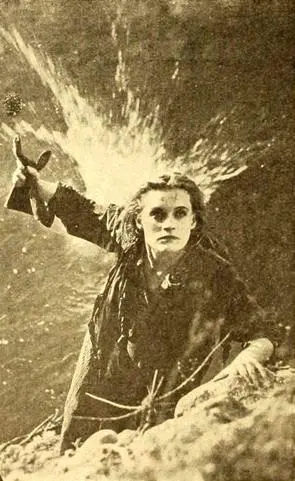
Visually, The Red Glove is a revelation of location scouting and practical stunt work. The camera, often static in this period, seems to strain against its tripod, desperate to capture the movement of horses across the scrubland. There is a raw, unvarnished quality to the cinematography that distinguishes it from the studio-bound artifice of L'enfant prodigue. The use of natural light—the harsh midday sun casting long, skeletal shadows—adds a layer of grit that reinforces the film's thematic preoccupation with exposure and concealment. Billie’s stunts are not the choreographed ballets of modern action cinema; they are desperate, scrambling feats of athleticism that remind the viewer of the genuine danger faced by performers in the pre-CGI era.
To watch The Red Glove in the context of 1919 is to witness a society in flux. The Great War had ended, and the American identity was being forged anew. Billie represents a departure from the Victorian ideal, a precursor to the flapper, yet grounded in the agrarian roots of the American myth. While films like A Gentleman from Mississippi explored the political machinations of the East, The Red Glove looks Westward to find the soul of the nation. It suggests that the true American spirit is found in the ability to withstand the onslaught of 'bad men' through sheer force of will and a well-aimed revolver.
When placed alongside The Clue, the mystery elements of The Red Glove feel more integrated into the action, less like a parlor game and more like a hunt. The pacing is relentless, a necessity of the serial format that prevents the narrative from stagnating into the theatricality found in The Great Ruby. There is a democratic quality to the film's thrills; it does not aim for the high-brow aspirations of Drótostót, yet it achieves a level of pure cinematic engagement that many 'prestige' films of the era lack. The episodic nature allows for a depth of world-building, where even minor characters like those played by Pat O'Malley and Truman Van Dyke are given moments of significant pathos.
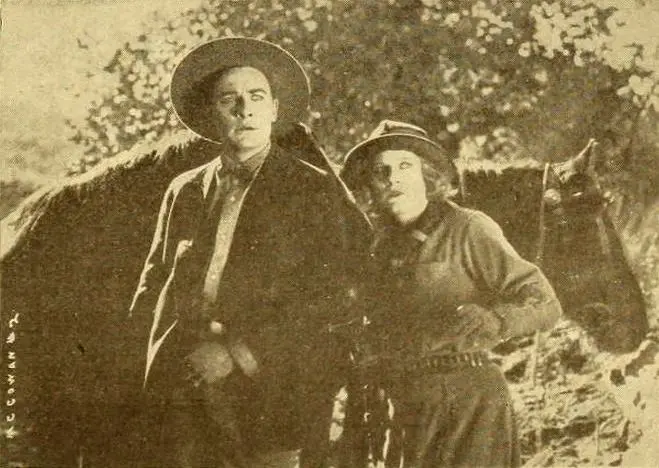
The central motif of the red glove is a fascinating semiotic choice. Red, the color of blood and passion, set against the utilitarian leather of the frontier, creates a visual dissonance. It is a mark of Cain, a signal of intent, and a reminder of the artifice of civilization within the wild. This focus on a singular, recurring object provides a narrative anchor that prevents the various subplots from drifting into incoherence—a common pitfall in longer serials. It functions much like the titular stakes in A Ticket in Tatts, though with far more ominous implications. The glove is the ghost in the machine of the frontier, a reminder that every action has a consequence and every villain has a signature.
The editing of The Red Glove exhibits a sophisticated understanding of suspense. The cross-cutting between Billie’s peril and the encroaching villains creates a rhythmic tension that is almost musical. This is a far cry from the more leisurely pacing of The Price She Paid. Here, the cut is a weapon. The transition from a wide shot of the desert to a tight close-up of Walcamp’s determined eyes serves to humanize the scale of the adventure. It is in these moments that the film achieves its greatest power, bridging the gap between the mythic and the personal. The contribution of Alfred Allen and Andrew Waldron to the ensemble cannot be overstated; they provide the necessary friction that allows Billie’s character to shine with such brilliance.
Ultimately, The Red Glove is a seminal work that deserves a prominent place in the history of the Western. It challenges the notion that the genre was exclusively a male playground during its formative years. By centering a woman who is both the primary agent of action and the moral compass of the story, the film predates the revisionist Westerns of the 1970s by half a century. While films like Black and Tan Mix Up explored different cultural intersections, The Red Glove remains focused on the primal struggle for autonomy. It is a testament to the enduring power of the serial format to capture the imagination of an audience, one cliffhanger at a time.
To revisit The Red Glove today is to peel back the layers of cinematic history and find a work that is startlingly vibrant. The collaboration between the cast and the visionary writing of Ostrander and Loring creates a synergy that is rare in any era. It lacks the saccharine sentimentality of The Little Runaway or the moral simplicity of Forgiven; or, the Jack of Diamonds. Instead, it offers a gritty, uncompromising vision of the American West—a place where a red glove can mean the difference between life and death, and where a woman named Billie proved that the frontier was never just a man’s world. The film is a masterclass in tension, a celebration of physical cinema, and a haunting reminder of the ghosts that still linger in the canyons of the American imagination.
IMDb 5.5
1921
Community
Log in to comment.