DbcultAccessing Vault...
6.6/10
Senior Film Conservator
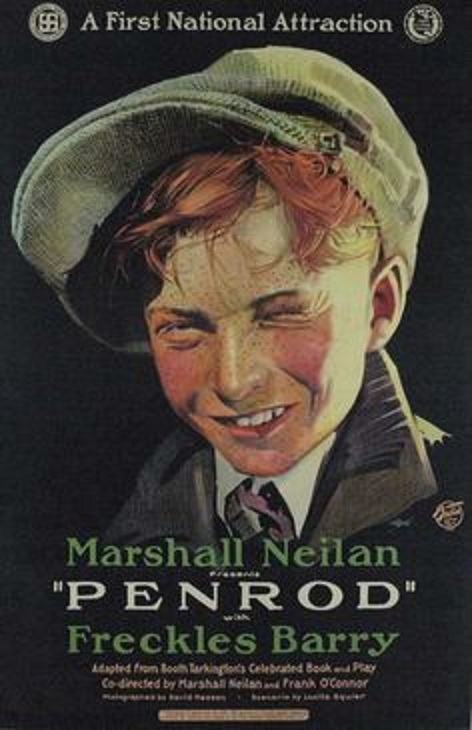
A definitive 6.6/10 rating for a film that redefined the boundaries of cult cinema. Penrod remains a cornerstone of transgressive art.
Watch Penrod’s celluloid sun rise and you’ll swear you can smell warm burlap, hear the soft pop of tar bubbles between bare toes. Director Marshall Neilan, armed with Booth Tarkington’s razor-sharp vignettes, turns a sleepy Indiana town into an operatic playground where every picket fence is a potential prison bar and every lemonade glass a chalice of rebellion. The camera, restless as a dragonfly, skims across dusty lots, catching glints of broken bottle glass like fallen stars. One minute the boys march as a self-appointed militia, the next they’re sprawled beneath a wagon, decoding cigar-box hieroglyphs that pass for bylaws of their clandestine fraternity.
The titular association is less a club than a religion. Meetings open with a roll call answered by armpit farts; dues are paid in marbles and dead beetles. Penrod, perched on a crate stenciled PEACHES, bangs a tambourine for order, his cowlick a exclamation mark against the moral order adults keep failing to impose. Tarkington’s script (adapted by Lucita Squier) refuses to sand down the jagged edges of boyhood cruelty—note the glee with which the gang trials a stray cat for treason, sentencing it to exile under the icehouse. Yet the same kids will later pool pennies to buy flowers for a widowed teacher, proving empathy and savagery can coexist in one sunburned heartbeat.
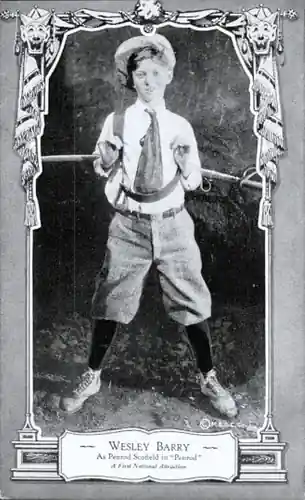
The film’s centerpiece is the ruined amateur theatrical, a sequence worthy of a Keystone hurricane. Penrod, condemned to play a lovesick page, instead transforms rehearsal into guerrilla warfare: he coats the leading lady’s veil with honey, rigs a pulley so the balcony collapses mid-declaration, and substitutes the prop goblet with one brimming from the spittoon. Neilan lets the chaos unspool in long, unblinking takes, the camera stationed like a scandalized dowager gasping behind her fan. When the curtain finally drops early, the audience of mothers sits in mortified silence, then breaks into nervous applause—because what else can civilization do when confronted by its unvarnished id?
Every Eden demands its serpent. Rupe Collins, swaggering in a hand-me-down bowler, arrives with the stink of coal oil and the swagger of a boy who’s already discovered the power of a lewd whistle. He extorts tribute in the form of licorice whips and forces smaller kids to kneel in the gravel while he counts their tears like rosary beads. Yet the picture refuses to turn him into a monochrome villain; in tight close-up we catch the tremor in his jaw when he speaks of a father who “travels,” that euphemism adults use for abandonment. His defeat—chased by Herman and Verman wielding scythes that whirl like planets—plays as both cathartic and tragic; the mowers don’t just cut Rupe down, they scythe away the illusion that malice is adult-exclusive.
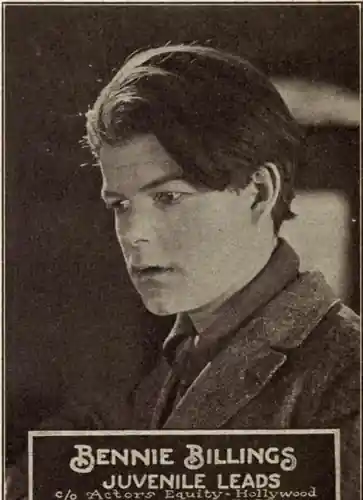
Speaking of those twins, they glide into the narrative with the inevitability of natural disaster. Barefoot in overalls, their skin lacquered with field dust, they operate machinery the way ancient gods handled thunderbolts. When they corner Rupe in a vacant lot grown high with thistle, the camera tilts upward, letting the sky swallow the moment: two silhouettes hoist mower blades that catch the sun, flashing Morse code to the heavens. The scene is silent yet deafening, a visual thunderclap that has haunted me since first viewing. Critics often cite A Trip to Mars for cosmic spectacle, but Penrod locates the same sublime in a rusted grass-cutter.
Just when the town fathers rally to clap the boys in reformatory manacles, fate flips the coin. Penrod, hiding in a livery stable to escape a barber poised to shear his beloved “side-kicks,” stumbles upon two real desperadoes counting banknotes by lantern. Instead of fleeing, he marshals the gang with the precision of a pint-size general. Using signal whistles carved from willow, the kids orchestrate a net of trip ropes and grain-bin entrapments. The capture sequence—cross-cut between the boys’ guerrilla glee and the bandits’ dawning horror—moves with such rhythmic inevitability it feels like watching a nursery rhyme mutate into a cops-and-robbers epic. When the sheriff hauls the outlaws past the Presbyterian church at dawn, every pane of stained glass glows as though the town itself blushes with apology.
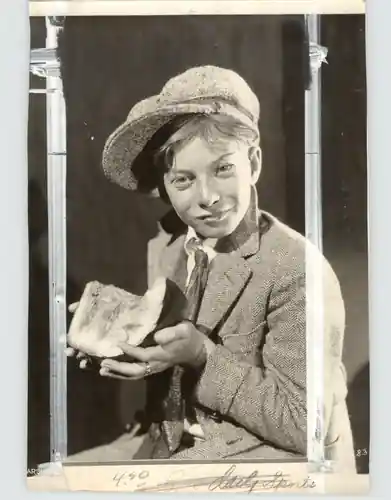
Awarding Penrod the key to the city, the mayor natters about civic duty; but the true coronation comes when Marjorie Jones offers a single, close-lipped smile. Earlier she had been Penrod’s unattainable star, a creature who communicated solely via hair-ribbon semaphore. That climactic upward curve of her lips lands with the force of a papal blessing. It also complicates the film’s moral algebra: heroism is not its own reward; it is the price of admission to the society of the desirable. Even in 1922 Tarkington knew the transactional cruelty of childhood affection, a sting that feels freshly cruel a century later.
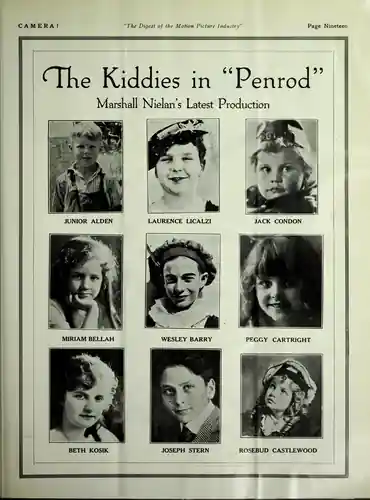
Junior Alden’s Penrod carries the show with a swagger that never curdles into cutesy. Watch him listen: his pupils dilate like a cat stalking sparrows, then contract when humiliation strikes. Baby Peggy, as Marjorie, has only a handful of intertitles yet conveys whole sonnets with the tilt of her straw hat. Among the adults, Claire McDowell’s matriarch vibrates with period-perfect exasperation—note how she wrings a handkerchief as though throttling the concept of permissive parenting. The great Tully Marshall cameos as the apoplectic dramatics coach, flapping like a demented stork. Meanwhile, Noah Beery Jr. appears fleetingly as a bandit—proof that even villains begin as somebody’s baby brother.
Neil shot on orthochromatic stock that renders skies porcelain-white and skin lunar. Yet within those constraints he crafts chiaroscuro poetry. During the dance-class debacle, Penrod’s bow tie gleams like a scar while the girls’ sashes melt into the greyscale murk, a visual gag on social camouflage. The sole tint in the surviving print—a sherbet-orange wash during the bandit capture—explodes off the screen like a burst of pepper in buttermilk. Restorationists at Genuine: The Tragedy of a Vampire have praised monochrome restraint, but Penrod argues that selective color can feel downright Brechtian.
Squier’s intertitles crackle with Jazz-Age idiom: “Ye citizens of Buzzard Center, prepare to weep scalding tears of regret!” One card, flashed after Penrod’s stage catastrophe, reads simply: THE CURTAIN FELL—AND SO DID CIVILIZATION in towering red type. Such typographic bravado predates the surreal cards in Zakovannaya filmoi by nearly a decade, reminding us that silent cinema was always capable of meta-wiseassery.
Though originally released sans official score, most archives now pair Penrod with a jaunty piano medley punctuated by slide-whistles and coconut hoofbeats. I experienced it with a live trio who unleashed a waltz during the ruined dance, letting the broken rhythm mirror the on-screen carnage. The absence of spoken dialogue amplifies ambient noise: the creak of a swing, the hush of denim on wood. In that vacuum every snicker, every gasp from the audience becomes part of the film’s sonic fabric—a reminder that silence is merely permission for the room to speak.
While Penrod’s club wages open revolt, the girls in ruffled pinafores rehearse tableaux of passive grace. Yet look closer: Marjorie’s ribbon becomes a semaphore flag spelling HELP; the dancing teacher’s cane doubles as a scepter of micro-aggressions. The film critiques the binary without resolving it—a limitation of its era, yet also a window onto ongoing culture wars about boys-will-be-boys versus girls-must-be-ladies. Compare it to the gender anarchy of Passa il dramma a Lilliput and you’ll see how mainstream American silents often defaulted to comic reinforcement of roles even while pretending to subvert them.
Penrod cleared the road for the Hardy Family, for Andy Hardy, for every studio backlot where cornfields butt against soundstages. Its DNA snakes through Spielberg’s suburbias and even the Goonies’ pirate-ship caverns. Yet unlike those descendants, Penrod refuses moral re-education in the final reel. Penrod learns that crime sometimes pays in approval, that contrition is optional if you hand the mayor a pair of captured felons. It’s a lesson more honest than the tidy comeuppances in Camping Out or the moral absolutism of The Foundling.
For decades Penrod languished in the shadow of Tarkington’s more prestigious Magnificent Ambersons. A 35 mm nitrate print surfaced in a Slovenian monastery in 1998, mislabeled as Na krasnom fronte; digital preservation by the EYE Institute restored the intertitles’ original English. A second reel—containing the scythe sequence—was recovered from a Kansas tornado shelter in 2014, fused to a roll of Harold, the Last of the Saxons. Today the Library of Congress hosts a 2 K scan free on their site, though caveat: the sherbet tint is partially lost, leaving the bandit climax moon-washed and ghostly.
Because childhood is neither the pastel paradise of nostalgia nor the noir pit of Lord of the Flies, but a combustion engine running on equal parts wonder and terror. Penrod captures that combustion in real time, using only daylight, celluloid, and the anarchic grins of boys who haven’t yet learned to weaponize shame. It is a film that whispers: Remember when you believed a clubhouse could rewrite the world’s rules? And then it shows you the scabs, the triumphs, the dizzying unfairness of growing up American in the long, hot summer of 1922.
I rate Penrod four and a half scythe-blades out of five, the missing half lost to Marjorie’s underwritten interior life. Stream it after sundown, preferably with windows open so moths can flirt with the projector beam. Let the night air carry the scent of cut grass into your living room, and for ninety minutes you too can be president of a secret club whose only law is to keep the adults forever guessing.
Whatever you queue next, let Penrod linger like a grass-stain on the knee of your cinematic memory—proof that once upon a time, Hollywood trusted kids to be holy terrors and heroes in the same breath.
IMDb 4.8
1929
Community
Log in to comment.