DbcultAccessing Vault...
Cult Review
Senior Film Conservator
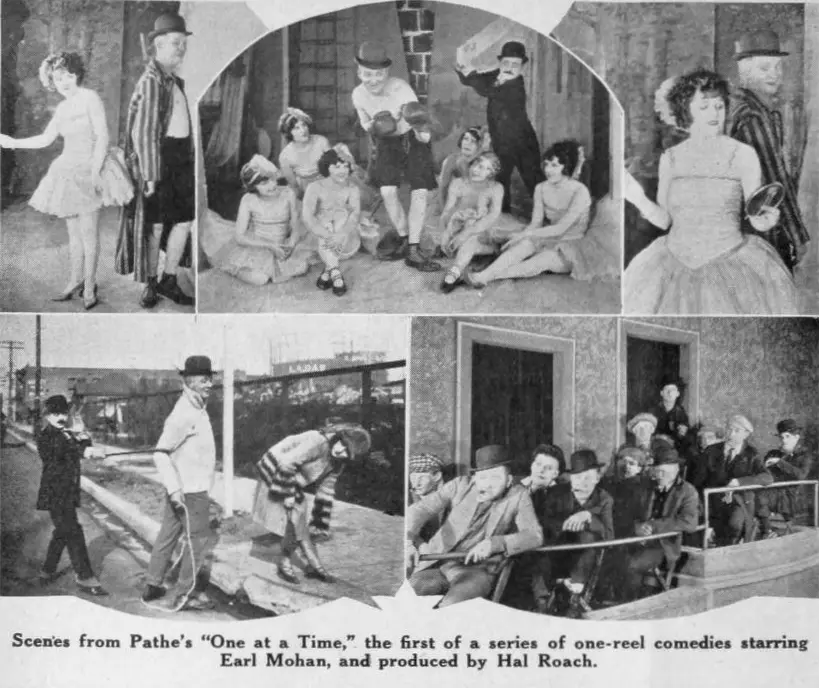
The silent era of cinema was frequently a laboratory for the 'four-flusher'—that specific brand of American charlatan who possessed an abundance of confidence and a catastrophic deficit of actual talent. In One at a Time, we witness a visceral manifestation of this archetype through the lens of Earl Mohan. Unlike the brooding psychological depths found in The Devil's Garden, this film opts for a horizontal exploration of ego, where the stakes are measured in bruises rather than existential damnation.
Earl Mohan’s performance is a masterclass in the semiotics of the fake. His character, Earl, doesn't just enter a room; he colonizes it with a gait that suggests a man who has conquered every heavyweight from New York to London. When he agrees to meet 'all comers,' the film shifts from a character study into a rhythmic, almost balletic sequence of slapstick encounters. The sheer audacity of the character is what drives the engine of the plot. While a film like The Man Who Played God deals with the hubris of the divine, One at a Time grounds its hubris in the sweat-stained canvas of the boxing ring.
The choreography of these fights is where the film finds its heartbeat. Each 'comer' represents a different facet of the physical comedy spectrum. Dick Gilbert, often the unsung hero of these short-form comedies, provides a grounding presence that highlights Mohan’s frantic instability. The way Gilbert moves in contrast to Mohan creates a visual dissonance that is inherently humorous—a technique we see mirrored in other contemporary works like Toonerville's Fire Brigade, where the chaos is meticulously organized for maximum impact.
One cannot discuss this film without acknowledging the kinetic vocabulary of Billy Engle. Engle possesses a physical elasticity that serves as the perfect foil to Mohan’s rigid bravado. In the silent medium, where dialogue is relegated to the occasional intertitle, the body must speak with a volubility that rivals the most loquacious of scripts. The interaction between these three men—Mohan, Gilbert, and Engle—creates a comedic friction that is far more sophisticated than simple pratfalls. It is an exploration of space and timing that feels remarkably modern, even when compared to the dramatic weight of Paradise Lost.
The setting of the boxing ring serves as a microcosm for the social mobility—and social deception—of the early 20th century. To be a 'four-flusher' was to be a man of the times, a person attempting to leapfrog over the traditional hurdles of meritocracy through sheer force of personality. This thematic undercurrent provides a layer of substance that elevates the film above its slapstick origins. It shares a certain DNA with The Twinkler, which also navigated the murky waters of identity and social standing, albeit through a different narrative lens.
Technically, One at a Time utilizes the static camera of its era to create a 'proscenium' effect, yet the internal movement within the frame is anything but static. The director understands that the comedy arises from the relationship between the characters' bodies and the boundaries of the frame. When Earl is knocked toward the ropes, the camera captures the recoil not just as a physical reaction, but as a symbolic deflation of his ego. This visual storytelling is as potent as the mystery elements found in Lucille Love: The Girl of Mystery, where the camera is used to withhold and reveal information in equal measure.
The lighting, though primitive by today's standards, manages to highlight the grotesque and the glorious in the fighters' expressions. The sweat, the wide eyes of realization when a punch is about to land, and the smug grin of the initial challenge are all rendered with a stark clarity. This level of expressive detail is what allowed silent films to transcend language barriers, finding audiences from the bustling streets of New York to the salons of Europe, much like the cross-cultural appeal of Egyenlőség.
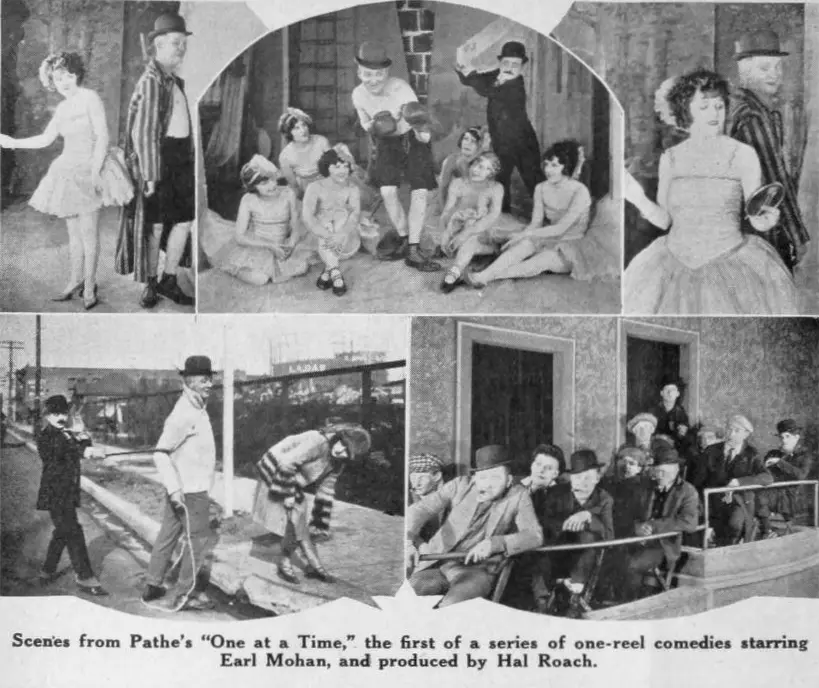
As we look back at One at a Time, it is easy to dismiss it as a mere relic of a bygone era. However, that would be a disservice to the craft involved. The film operates with a lean efficiency that modern blockbusters often lack. Every frame serves the central conceit: the dismantling of the charlatan. There is no bloat, no unnecessary exposition. It is a pure distillation of narrative intent, a quality it shares with the more focused melodramas like Lulù or the poignant character arcs in The Sin of Martha Queed.
The 'all comers' trope would go on to be a staple of sports cinema, but here it is stripped of its romanticism. There is no 'Rocky' moment here; there is only the comedic inevitability of the fall. This cynicism is refreshing. It acknowledges that sometimes, the underdog is just a loudmouth who hasn't been hit yet. This grounding in reality, despite the exaggerated physics, makes the film feel more authentic than the exoticized landscapes of Sands of the Desert or the treacherous peaks of La montagne infidèle.
When placed alongside The Bashful Lover, Mohan’s character represents the polar opposite of romantic timidity. He is the aggressive, unearned confidence of a post-war society. Yet, both films deal with the performance of identity. Whether one is hiding behind bashfulness or behind a pair of boxing gloves, the mask eventually slips. The brilliance of One at a Time is how it uses the 'one-at-a-time' structure to slowly peel away Earl’s layers of bravado until nothing is left but the comedic core.
We see similar explorations of military or professional posturing in Back from the Front, but Mohan’s pugilist is uniquely vulnerable because his failure is so public and so physical. There is no hiding in the ring. The 'all comers' are not just opponents; they are the reality check that the four-flusher desperately tries to avoid. Even in the more sentimental narratives like Lena Rivers, the revelation of truth is a central pillar, though it lacks the percussive impact of a Gilbert hook to the jaw.
To watch One at a Time today is to engage with the roots of physical comedy that would eventually influence everything from Looney Tunes to the works of Jackie Chan. It is a reminder that cinema, at its most basic level, is about movement and the subversion of expectations. While it may not have the historical gravitas of Play Ball with Babe Ruth in terms of celebrity wattage, it possesses a structural integrity and a comedic purity that makes it a vital piece of the silent era puzzle.
Earl Mohan, Dick Gilbert, and Billy Engle may not be household names in the 21st century, but in the twenty minutes of this film, they demonstrate a mastery of their craft that is undeniable. They understood the mechanics of the laugh, the physics of the fall, and the psychology of the bluff. In the end, One at a Time is more than a boxing comedy; it is a timeless satire on the dangers of believing your own press—a lesson that remains as relevant today as it was when the first hand-cranked cameras began to roll.
Reviewer's Note: This film represents a crucial intersection of sports culture and vaudevillian slapstick, showcasing the transition of stage archetypes into the permanent record of celluloid.
IMDb —
1931
Community
Log in to comment.