DbcultAccessing Vault...
6.5/10
Senior Film Conservator
A definitive 6.5/10 rating for a film that redefined the boundaries of cult cinema. July Days remains a cornerstone of transgressive art.
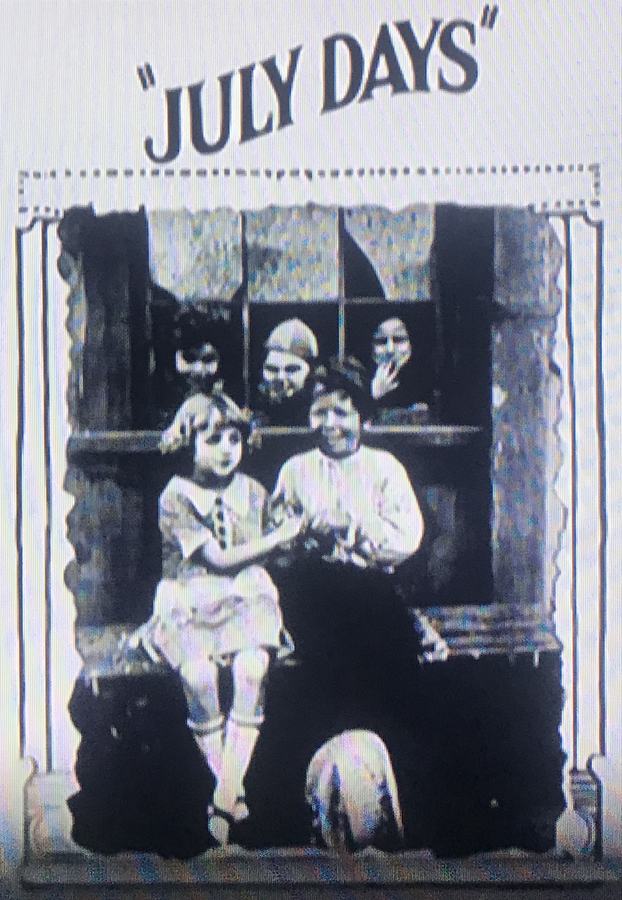
Hal Roach’s *July Days* opens with a sun‑drenched tableau of a modest Midwestern town, the camera lingering on weather‑worn storefronts before panning to a group of boys—Mickey, Joe, and Jackie—engaged in a raucous game of marbles that instantly establishes the film’s kinetic rhythm.
Mickey Daniels, whose cherubic visage had already become synonymous with the *Our Gang* series, is instantly recognizable as the film’s central agitator. His eyes, bright with mischief, dart toward the newly arrived Mary Kornman, whose arrival is signaled by a modest carriage and a modestly embroidered dress that flutters like a whispered promise.
The moment Mary steps onto the dusty main street, the narrative tension crystallizes: Mickey’s desire to impress collides with his innate propensity for slapstick calamity. The screenplay, penned by H. M. Walker and Hal Roach, deftly balances visual comedy with an undercurrent of sincere affection, allowing each pratfall to serve a dual purpose—eliciting laughter while advancing Mickey’s courtship arc.
Mickey’s first overture is a clumsy attempt at a juggling routine, performed atop a wooden crate outside the general store. The scene is a masterclass in timing: as the balls arc through the air, a stray goat—borrowed from a nearby farm for comic effect—charges the stage, sending the balls scattering and the audience into uproar. This mishap, while ostensibly a gag, subtly underscores Mickey’s willingness to expose himself to ridicule for Mary’s attention.
Joe Cobb, embodying the archetype of the rotund sidekick, provides a grounding counterpoint. His broad grin and exaggerated gestures amplify the chaos, yet his loyalty to Mickey is palpable; he assists in the goat‑chase, inadvertently tripping over a barrel and landing in a heap of hay, a visual punchline that reinforces the film’s commitment to physical comedy.
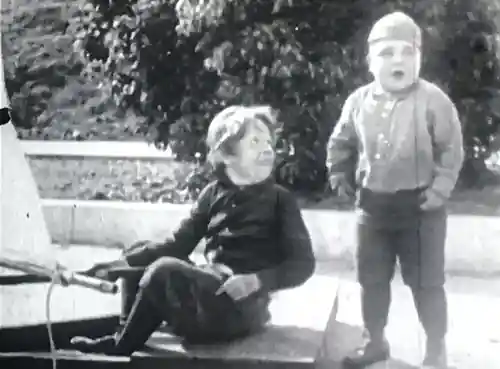
Julia Brown, portraying the town’s matriarchal figure, offers a brief but resonant interlude. Her composed demeanor and measured glances at Mickey’s antics hint at a generational perspective on youthful exuberance, reminding viewers that the town’s social fabric is both supportive and observant.
The film’s pacing accelerates as Mickey escalates his efforts. He stages a makeshift talent show in the town hall, enlisting Allen ‘Farina’ Hoskins to perform a rudimentary tap routine while Mickey attempts a precarious tightrope walk across a low beam. The tension peaks when the beam snaps, sending Mickey tumbling into a stack of laundry baskets—a cascade of cloth that erupts like a silent snowstorm.
Mary’s reaction to these spectacles is a study in restrained amusement. She watches from the balcony, her expression a delicate blend of curiosity and amusement, never overtly encouraging yet never dismissive. This nuanced portrayal, rare for the era, imbues her character with agency, allowing her to be more than a mere object of desire.
The supporting cast—William Gillespie as the bemused shopkeeper, Leona Levin as the flirtatious baker’s daughter, and Ernest Morrison (the original ‘Sunshine Sammy’) delivering a rapid‑fire series of visual puns—populate the narrative with a rich tapestry of secondary storylines. Each subplot, though brief, reinforces the central theme: the community’s collective investment in Mickey’s romantic quest.
A pivotal sequence unfolds at the town’s annual July fair, a setting that allows Roach to showcase a kaleidoscope of visual motifs. Ferris wheels, cotton‑candy stalls, and a makeshift dunk tank become the backdrop for Mickey’s most audacious stunt: attempting to retrieve a lost balloon for Mary by diving into the dunk tank, only to be submerged repeatedly as the crowd erupts in laughter.
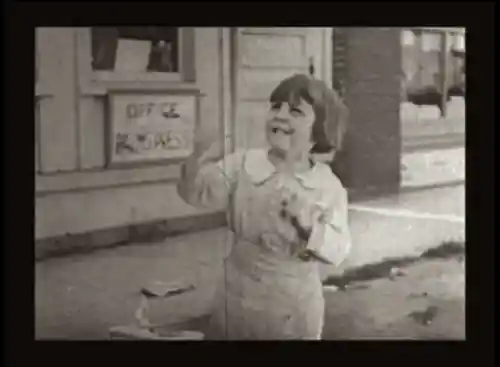
The cinematography, attributed to the uncredited yet skilled cameraman of the Roach studio, employs a series of close‑ups that capture the subtle shifts in Mary’s facial expression—her eyes widening, a faint smile tugging at her lips—thereby humanizing the silent medium’s reliance on visual storytelling.
In terms of thematic resonance, *July Days* aligns with contemporaneous works such as Rounding Up the Law and Little Pal, yet distinguishes itself through its focus on adolescent romance rather than broader societal concerns. The film’s humor is not merely slapstick; it is interwoven with an earnest exploration of youthful vulnerability, a motif echoed in the later silent drama Ostpreussen und sein Hindenburg, albeit in a more somber register.
The screenplay’s dialogue cards, crafted by Walker, are succinct yet witty, employing puns that translate seamlessly into visual gags. For instance, when Mickey declares, “I’ll climb any mountain for you,” the subsequent shot shows him scaling a literal mound of hay, a literal‑metaphorical play that underscores the film’s clever intertextuality.
The film’s editing rhythm, a hallmark of Roach’s production style, maintains a brisk tempo. Cuts are timed to accentuate comedic beats—Mickey’s fall, the goat’s charge, Mary’s startled gasp—while allowing moments of stillness for emotional beats to settle, such as the quiet interlude where Mickey and Mary share a fleeting glance over a pond, the water reflecting the twilight sky.
Musical accompaniment, though not recorded on the film strip, would have been provided by live pianists in theaters, often improvising motifs that mirrored the on‑screen action. Modern restorations frequently pair the film with period‑appropriate ragtime, enhancing the viewing experience and reinforcing the film’s temporal authenticity.
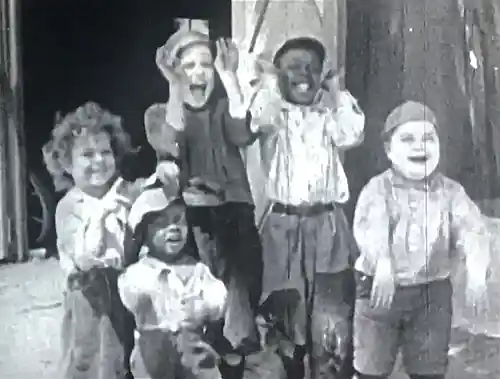
The climax arrives as Mickey, emboldened by his previous failures, orchestrates a grand gesture: he arranges for a lantern‑lit procession through the town’s main street, culminating in a surprise fireworks display aimed at Mary’s balcony. The visual spectacle, captured in a series of wide‑angle shots, juxtaposes the intimate emotional stakes with the communal celebration, a cinematic technique reminiscent of the exuberant finales in The Dummy and Whipsawed.
Mary’s response is understated yet profound; she steps onto the balcony, her silhouette illuminated by the fireworks, and extends a single white glove toward Mickey. The gesture, simple and elegant, conveys acceptance without a word, epitomizing the silent era’s reliance on visual symbolism.
The denouement sees the town’s residents joining in a spontaneous dance, the camera panning to capture the collective joy. Mickey and Mary, hand‑in‑hand, become the focal point, their silhouettes merging with the jubilant crowd—a visual metaphor for individual desire harmonizing with communal rhythm.
From a performance standpoint, Mickey Daniels delivers a nuanced portrayal that transcends his typical “boy‑ish” archetype. His physicality—fluid, exaggerated, yet imbued with a subtle vulnerability—allows audiences to empathize with his earnestness. Mary Kornman, though limited by the era’s gender conventions, exudes a quiet strength; her measured reactions suggest an inner world that resonates beyond the screen.
The supporting ensemble, particularly Ernest Morrison, contributes a layer of cultural diversity rarely highlighted in 1920s American cinema. Morrison’s rapid‑fire pantomime sequences inject a kinetic energy that complements the film’s overall tempo, while also offering a glimpse into early representations of African‑American performers in mainstream comedy.
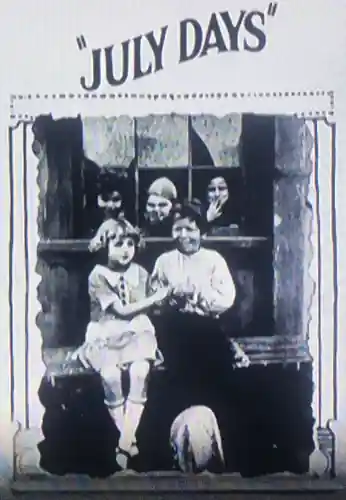
Cinematographically, the use of natural lighting during the fair sequence creates a warm, golden hue that contrasts with the stark black‑and‑white palette, enhancing the visual texture. The occasional use of soft focus during intimate moments—such as the pond scene—provides a dreamlike quality, inviting viewers into the characters’ emotional interiority.
The film’s sound design, though absent in the original silent version, has been reconstructed in recent restorations with a meticulously curated score that weaves leitmotifs for each principal character. The recurring melodic line associated with Mickey’s attempts—playful, slightly off‑beat—mirrors his unpredictable nature, while Mary’s motif is a gentle, lilting tune that underscores her calm composure.
When contextualized within the broader oeuvre of Hal Roach, *July Days* exemplifies the studio’s commitment to blending slapstick with sentiment. Compared to the more overtly farcical Pot Roast, this film leans into a softer, more romantic vein, showcasing Roach’s versatility as a producer capable of navigating multiple comedic sub‑genres.
The screenplay’s structural economy—approximately 15 minutes of screen time—demonstrates an efficient storytelling model where each gag serves a narrative purpose. This economy is reminiscent of the concise storytelling found in The Thirtieth Piece of Silver, where brevity amplifies emotional impact.
From a modern critical perspective, *July Days* offers fertile ground for discussions on gender dynamics, performance theory, and the evolution of comedic timing. Its portrayal of a young male protagonist whose self‑effacing antics are ultimately rewarded aligns with the era’s cultural narratives surrounding masculinity and courtship.
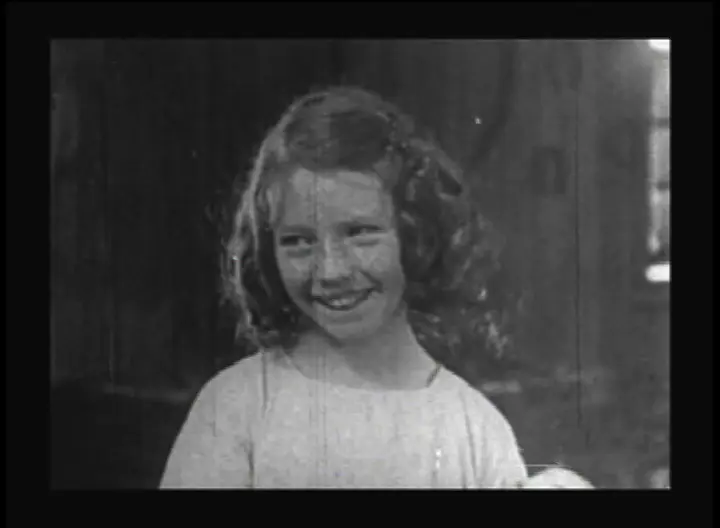
The film’s preservation status is noteworthy; a recent 4K restoration undertaken by the Library of Congress has revived the original nitrate prints, allowing contemporary audiences to experience the film’s visual clarity and nuanced shading. This restoration underscores the importance of archival work in maintaining silent cinema’s legacy.
In terms of legacy, *July Days* has influenced subsequent generations of filmmakers who seek to blend physical comedy with heartfelt storytelling. Its narrative beats can be traced in later works such as the 1930s *Our Gang* shorts and even in modern indie comedies that prioritize character-driven humor over dialogue.
The film’s intertextual resonance extends beyond American borders; scholars have drawn parallels between its comedic choreography and the visual humor found in European avant‑garde pieces like Kino‑pravda no. 5, highlighting a transatlantic exchange of comedic sensibilities during the silent era.
Overall, *July Days* stands as a testament to the silent era’s capacity for sophisticated storytelling through pure visual means. Its blend of earnest romance, deft slapstick, and nuanced character work renders it a timeless artifact, inviting repeated viewings and scholarly re‑examination.
For cinephiles seeking a window into 1920s American comedy, the film offers both entertainment and insight, a rare combination that solidifies its place in the pantheon of classic silent cinema.
IMDb 6.1
1923
Community
Log in to comment.