DbcultAccessing Vault...
6.6/10
Senior Film Conservator
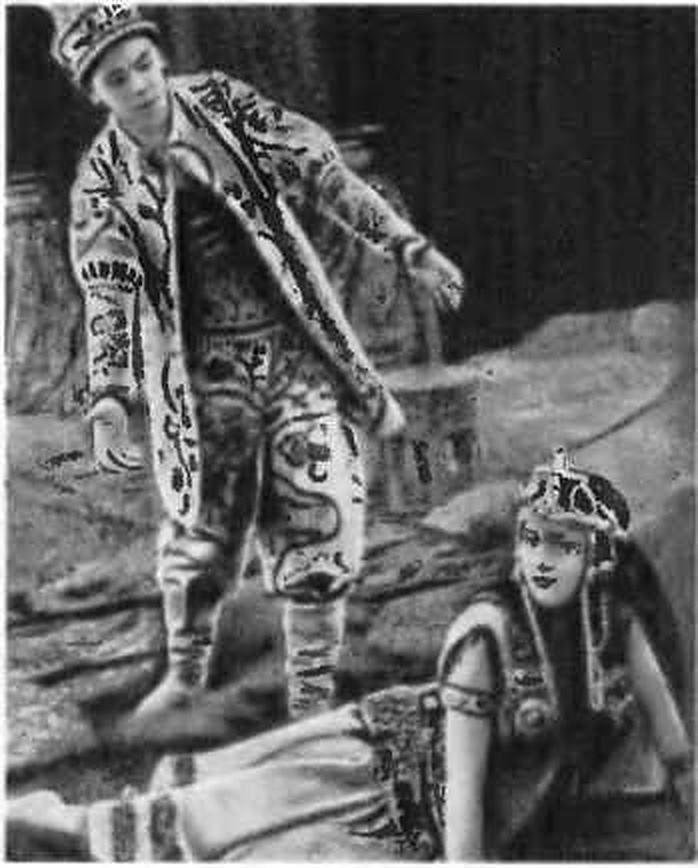
A definitive 6.6/10 rating for a film that redefined the boundaries of cult cinema. Pesn torzhestvuyushchey lyubvi remains a cornerstone of transgressive art.
In the grand tapestry of silent cinema, where emotions were writ large across flickering frames and narratives often borrowed their dramatic heft from literary giants, 'Pesn torzhestvuyushchey lyubvi' (The Song of Triumphant Love) stands as a testament to the era's ambition and artistry. This adaptation of Ivan Turgenev's novella, a work steeped in exoticism, psychological torment, and the supernatural, translates its complex themes into a visual spectacle that, even today, resonates with a haunting power. It's a film that dares to explore the darker currents of human desire, pitting conventional love against an almost demonic, possessive passion, all set against a backdrop of opulent melodrama and shadowy mysticism. For those accustomed to the more straightforward romantic narratives of the period, this film offers a fascinating, unsettling departure, demonstrating how early filmmakers grappled with profound philosophical and emotional quandaries.
Ivan Turgenev, a titan of Russian literature, penned 'The Song of Triumphant Love' in 1881, a novella that, while brief, is dense with symbolism and psychological depth. It's a story that strays from his more celebrated realist narratives, venturing into the realm of the fantastic and the esoteric. The film adaptation, therefore, faced the formidable challenge of capturing this ethereal quality without succumbing to mere theatricality. The core narrative, involving a love triangle between two friends, Georges and Muzio, and the object of their affection, Elena, is deceptively simple. Yet, Turgenev imbues it with layers of spiritual and emotional conflict, particularly through Muzio's journey to the East and his return imbued with a sinister, almost supernatural influence. The silent film medium, with its reliance on visual storytelling and the expressive power of its actors, proved surprisingly adept at conveying the novella's dreamlike atmosphere and the insidious nature of Muzio's spell. It’s a remarkable example of how early cinema could interpret complex literary works, often distilling their essence into potent visual metaphors that transcended the need for spoken dialogue.
At the heart of 'Pesn torzhestvuyushchey lyubvi' lies the magnetic presence of its lead performers, each contributing significantly to the film's enduring allure. Vera Kholodnaya, the undisputed queen of Russian silent cinema, delivers a performance as Elena that is nothing short of breathtaking. Her ethereal beauty is matched only by her profound ability to convey a spectrum of emotions – from innocent joy to bewildered terror, and finally, to a state of almost trance-like subjugation. Kholodnaya's eyes, famously expressive, become windows into Elena's soul, mirroring the internal struggle between her love for Georges and the hypnotic pull of Muzio. She navigates the character's descent into a mystical thrall with a delicate intensity that is utterly captivating. It's a testament to her skill that, even without dialogue, the audience feels every tremor of Elena's fragmented psyche.
Opposite her, Vitold Polonsky portrays Georges, the devoted husband, with a blend of artistic sensitivity and growing desperation. Polonsky, a frequent collaborator with Kholodnaya, brought a refined elegance to his roles, and here, he embodies the agony of a man watching his beloved slip away, not to a rival in the conventional sense, but to an unseen, insidious force. His performance underscores the tragedy of a love that, though pure and true, finds itself powerless against the supernatural. His despair is palpable, a stark contrast to the otherworldly calm that Muzio exudes.
Osip Runich as Muzio is the film's dark star, a figure of enigmatic power and chilling charisma. His return from the East is marked by a subtle but profound shift in his demeanor; his eyes hold a distant, knowing quality, and his every movement suggests a man possessed of secrets beyond mortal comprehension. Runich masterfully conveys Muzio's transformation from a rejected suitor into a sorcerer of passion, his violin becoming an instrument not just of music, but of enchantment. His performance is key to the film's success, making the audience believe in the mystical forces at play, and in the terrifying power of an obsession that transcends earthly bounds. The dynamic between these three actors creates a potent emotional crucible, elevating the film beyond mere melodrama into a study of human vulnerability and the seductive power of the unknown.
'Pesn torzhestvuyushchey lyubvi' is a rich tapestry woven with themes that resonate deeply. At its core is the destructive nature of obsession. Muzio's love for Elena, once a conventional affection, transforms into a possessive, almost vampiric desire after his mystical journey. This isn't a love that seeks reciprocation through tenderness or shared experience, but one that seeks to dominate and consume. The film explores how such an obsession, fueled by arcane knowledge, can erode the boundaries of free will and marital fidelity, turning a human being into a mere vessel for another's desire. This theme finds parallels in other intense silent melodramas, such as F.W. Murnau's The Folly of Desire, where unchecked passion leads to ruin, though 'Pesn torzhestvuyushchey lyubvi' adds a supernatural dimension that amplifies the horror.
The mystical element is perhaps the most distinctive aspect of the film. Muzio's journey to Ceylon is not merely a geographical one but a spiritual and magical transformation. He returns with powers that defy rational explanation, using a potent blend of music, hypnosis, and possibly darker arts to ensnare Elena. This exploration of the occult and its influence on human relationships was a popular trope in early 20th-century literature and cinema, reflecting a societal fascination with spiritualism and the unknown. The film's visual language, with its shadowy interiors and Kholodnaya's increasingly vacant gaze, masterfully conveys this supernatural encroachment, creating an atmosphere of pervasive dread and enchantment. This mysticism sets it apart from more grounded dramas like Assunta Spina, which, while deeply passionate, remains firmly rooted in human drama and social realism.
Furthermore, the film poignantly examines the fragility of love, particularly when confronted by external, inexplicable forces. Georges and Elena's love is portrayed as pure and artistic, yet it proves vulnerable to Muzio's insidious influence. It raises questions about the strength of human bonds in the face of the truly inexplicable, suggesting that even the most profound affections can be twisted and broken by malevolent wills. The struggle to reclaim Elena's soul becomes a powerful allegory for the battle between light and shadow, between genuine connection and manipulative enchantment. This theme of enduring, yet challenged, love finds a spiritual cousin in films like Love Everlasting, though the supernatural stakes in 'Pesn torzhestvuyushchey lyubvi' are uniquely high.
While specific directorial credits for many early Russian silent films can be complex, the visual style and narrative pacing of 'Pesn torzhestvuyushchey lyubvi' speak volumes about the period's cinematic sophistication. The film employs a rich, often expressionistic visual language to convey its themes. Shadows are not just absences of light but active participants in the drama, obscuring faces, hinting at hidden malevolence, and creating a sense of psychological unease. The use of close-ups, particularly on Kholodnaya's face, allows the audience to intimately connect with her internal turmoil, amplifying the emotional impact of her slow, agonizing enthrallment. The sets, while perhaps not as grand as those seen in epic productions like Quo Vadis?, are meticulously designed to evoke an atmosphere of decadent beauty and impending doom, especially in Muzio's exotic, almost claustrophobic chambers.
The pacing of the film is deliberate, allowing the psychological tension to build slowly, mirroring Elena's gradual surrender. This measured approach ensures that when the supernatural elements fully manifest, they feel earned and genuinely disturbing, rather than gratuitous. The film's visual metaphors, such as the peculiar violin that Muzio plays, or the symbolic imagery associated with his Eastern mysticism, are deployed effectively, enhancing the narrative without needing extensive intertitles. This reliance on visual storytelling is a hallmark of the silent era at its best, transforming the screen into a canvas for mood and meaning. Even comparing it to other Russian films of the period, like The Spy, which focused on espionage, 'Pesn torzhestvuyushchey lyubvi' demonstrates a distinct artistic ambition in its commitment to a more abstract, psychological narrative.
'Pesn torzhestvuyushchey lyubvi' holds a significant place in the annals of Russian and silent cinema. It showcases the peak of Vera Kholodnaya's powers, cementing her status as an icon whose tragic early death only amplified her legend. The film itself is a rare surviving example of Russian pre-revolutionary cinema, offering invaluable insight into the artistic trends and popular tastes of the era. Its willingness to delve into themes of the supernatural and psychological manipulation foreshadows later developments in horror and psychological thrillers, demonstrating that early cinema was far from simplistic in its thematic explorations. The film's blend of high melodrama, literary adaptation, and mystical elements creates a unique viewing experience that continues to fascinate film historians and enthusiasts alike.
Moreover, the film serves as a powerful reminder of Turgenev's versatility as a writer, and how his less-known works offered fertile ground for cinematic interpretation. It's a film that demands to be seen not just as a historical curiosity, but as a compelling piece of storytelling that uses the unique capabilities of silent film to evoke a world where passion and the paranormal intertwine. While other films of the era, such as Vampyrdanserinden, explored similar themes of dark allure and supernatural influence, 'Pesn torzhestvuyushchey lyubvi' distinguishes itself through its literary pedigree and the nuanced performances of its lead actors. It remains a haunting masterpiece, a 'song' that, once heard, resonates long after the final frame has faded.
IMDb 5.2
1935
Community
Log in to comment.