DbcultAccessing Vault...
Cult Review
Senior Film Conservator
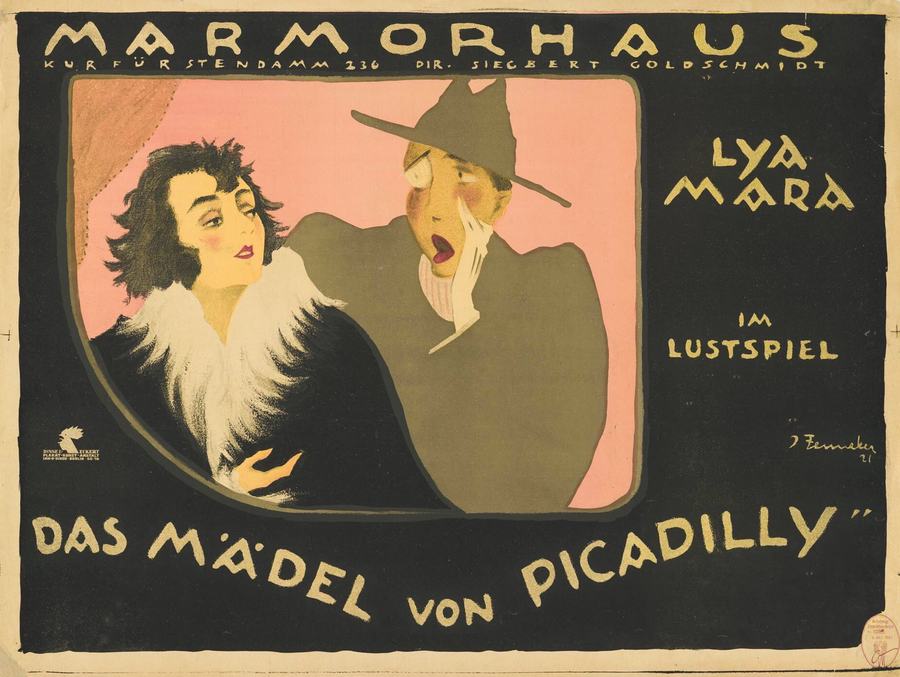
Das Mädel von Picadilly, 2. Teil (1930)
Directed by Wilhelm Diegelmann and written by Fanny Carlsen, *Das Mädel von Picadilly, 2. Teil* is a film that defies easy categorization. It waltzes between the glittering artifice of pre-war Berlin and the shadowy recesses of the human psyche, offering a feast for cinephiles who relish the interplay of form and content. The narrative, anchored by Ida Perry’s magnetic performance, is less a linear story and more an incantation of emotional states, each scene a brushstroke in a larger canvas of existential inquiry.
The film opens with a hypnotic sequence of a fairground, its carousel spinning in slow motion against a backdrop of industrial smokestacks. This juxtaposition of whimsy and decay sets the tone for the film’s central tension: the clash between romantic idealism and the gritty realities of urban life. Ida Perry’s character, a trapeze artist named Lotte, becomes a cipher for this duality. Her aerial stunts, captured in Diegelmann’s dynamic tracking shots, symbolize a yearning for transcendence, while her grounded interactions reveal a woman shackled by societal expectations.
Paul Passarge’s portrayal of Dr. Kurt Weiss, a neurologist with a penchant for Jungian analysis, adds a layer of intellectual heft. His character’s obsession with unraveling Lotte’s subconscious mirrors the film’s own deconstructive impulses. The dialogue, laced with Carlsen’s signature wit, crackles with Freudian subtext. In one standout scene, Weiss dissects a dream sequence where Lotte is pursued by a shadowy figure, a metaphor for repressed guilt that resonates with the unresolved tensions of *The Sawdust Trail*’s frontier anxieties.
A Symphony of Shadows: Visual and Narrative Architecture
Diegelmann’s visual strategy is a masterstroke of expressionist minimalism. The use of negative space in the rehearsal rooms and the claustrophobic close-ups of Lotte’s face during moments of crisis create a dialectic between freedom and constraint. One particularly striking sequence involves a mirrored ball at a cabaret venue, its reflections multiplying Lotte’s image into a chorus of selves, each iteration gesturing toward a potential future. This technique evokes the fragmented identities in *The Footlights of Fate*, yet here, the multiplicity serves a more existential purpose.
The score, composed by Harry Berber, is a character in its own right. The haunting interplay of theremin and cello underscores the film’s surreal undertones, particularly during the séance scene where Lotte’s doppelgänger emerges. This sequence, with its chiaroscuro lighting and distorted sound design, is a direct descendant of the psychological experiments in *The Havoc*, yet Diegelmann infuses it with a distinctly Germanic melancholy.
Performances: The Human Element in a Machine Age
If Diegelmann’s direction is the skeleton, the cast is the sinew that brings *Das Mädel von Picadilly, 2. Teil* to life. Ida Perry’s performance is a tour de force of restrained intensity. Her eyes, often the sole focus in close-up, convey a storm of conflicting emotions—yearning, fear, and a glimmer of defiant hope. In contrast, Lya Mara’s role as the aging courtesan is a study in decline, her every gesture a calculated performance of dignity. The chemistry between Perry and Fritz Schulz, who plays a conflicted stage manager, is electric, their unspoken tension driving much of the film’s emotional weight.
The ensemble cast, including the enigmatic Ida Arnold and the stoic Ressel Orla, adds texture to the film’s social tapestry. Their interactions, though often brief, are laden with subtext. A particularly memorable subplot involves a subplot about a fraudulent fortune-teller, played by Max Ruhbeck, whose moral ambiguity serves as a foil to Lotte’s journey. This narrative thread, while initially jarring, coalesces thematically in the final act, where the lines between authenticity and artifice collapse.
Legacy and Relevance: A Film Ahead of Its Time
Over nine decades after its release, *Das Mädel von Picadilly, 2. Teil* remains a provocative exploration of identity in a rapidly modernizing world. Its themes of self-creation and the performative nature of identity echo in contemporary cinema, from the existential dread of *The Secret Formula* to the gender politics of *Das Glück der Frau Beate*. Yet it is the film’s visual language that feels most prescient. Diegelmann’s use of spatial disorientation and fragmented narrative anticipates the non-linear storytelling of modern directors like Alejandro González Iñárritu, though filtered through the lens of 1930s German modernism.
In an era where the boundaries between reality and virtuality are increasingly porous, this film’s interrogation of authenticity feels both urgent and elegiac. For scholars of film history, it is a crucial artifact of the Weimar era’s cultural ferment. For general audiences, it is a challenging yet rewarding experience, one that demands active engagement with its layered metaphors and unresolved questions.
IMDb —
1919
Community
Log in to comment.