DbcultAccessing Vault...
6/10
Senior Film Conservator
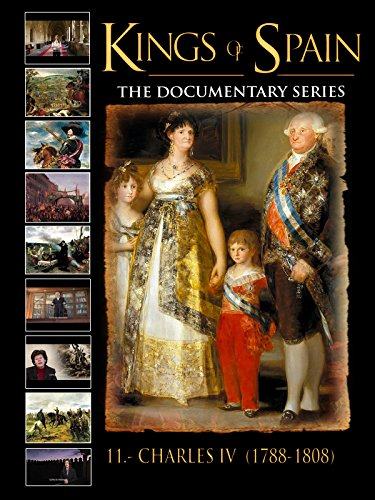
A definitive 6/10 rating for a film that redefined the boundaries of cult cinema. Charles IV remains a cornerstone of transgressive art.
The sheer audacity of the Kings of Spain project—a seventeen-part odyssey through the marrow of Iberian sovereignty—finds its most complex and perhaps most misunderstood subject in the figure of Charles IV. While other monarchs in this series might boast the martial fervor seen in Karadjordje or the nascent national pride of The Independence of Romania, Carlos IV offers a study in ossification. This documentary does not shy away from the monarch's perceived inadequacies; instead, it leans into them, crafting a narrative that is as much about the silence of the hunt as it is about the roar of revolution.
The film’s greatest strength lies in its refusal to simplify the geopolitical quagmire of the late 18th century. We are introduced to a king who inherited a global empire but lacked the temperament to steer it through the gale-force winds of the Enlightenment. The documentary utilizes a visual language that mirrors the Goya portraits of the era—rich, textured, and occasionally grotesque in its honesty. There is a haunting quality to the way the camera lingers on the empty halls of Aranjuez, suggesting a vacuum of leadership that was rapidly being filled by more ambitious, and perhaps more ruthless, actors.
Theo Frenkel’s involvement brings a certain gravitas to the production. Much like the early cinematic explorations of power found in Pyotr Velikiy, there is an emphasis on the physical weight of the crown. The documentary posits that Charles IV was a man trapped by his own lineage, a sentiment that resonates with the tragic inevitability explored in The Life and Death of King Richard III. However, unlike the Shakespearean villain, Carlos IV’s tragedy is one of omission rather than commission.
Central to the film’s thesis is the triumvirate of power: the King, Queen Maria Luisa, and the 'Prince of the Peace,' Manuel de Godoy. The documentary navigates the scandalous rumors of the time with a scholarly detachment, focusing instead on the administrative paralysis that resulted from this arrangement. The rise of Godoy is framed not just as a courtly intrigue, but as a symptom of a monarchy in retreat. The film draws subtle parallels to the domestic tensions found in Anna Karenina, where personal desires collide disastrously with social expectations.
The cinematography during these segments uses a palette of dark orange and deep shadows, evoking the candlelit conspiracies of the Bourbon court. It’s a stark contrast to the bright, open vistas seen in Glacier National Park; here, the landscape is interior, psychological, and claustrophobic. The film masterfully illustrates how the King’s obsession with clockmaking and hunting was not merely a hobby, but a desperate psychological sanctuary from a world that was becoming increasingly unrecognizable.
As the narrative progresses into the 19th century, the pacing accelerates, reflecting the encroachment of Napoleon Bonaparte. The documentary handles the Treaty of Fontainebleau and the subsequent Mutiny of Aranjuez with a visceral intensity. We see the Spanish Empire, once the hegemon of the world, reduced to a pawn in a larger European game. The sense of impending doom is as palpable here as it is in 1812, yet the focus remains tightly locked on the personal disintegration of the Bourbon family.
The abdications at Bayonne are presented as the ultimate humiliation—a king surrendering his birthright to an upstart emperor. The film uses this moment to reflect on the nature of legitimacy. Is a king still a king without a kingdom? This philosophical inquiry elevates the documentary beyond a mere chronological retelling, touching upon themes of identity and loss that are universally resonant, much like the spiritual journey in Pilgrim's Progress.
Technically, Charles IV is a triumph. The sound design incorporates the ticking of clocks—a motif for the King’s mechanical interests and the metaphorical 'ticking' of the empire’s time. The use of sea blue filters during scenes discussing the Battle of Trafalgar (a pivotal moment of naval decline) creates a somber, elegiac mood. This attention to detail reminds one of the artistic ambition found in Dante's Inferno, where every visual choice serves a deeper thematic purpose.
The documentary also succeeds in placing Carlos IV within the broader context of the Kings of Spain series. It bridges the gap between the enlightened absolutism of his father, Charles III, and the reactionary chaos of his son, Ferdinand VII. By doing so, it provides a crucial link in the chain of Spanish history, showing how the seeds of the Spanish Civil War were sown over a century before the conflict began. It’s a historical continuity that rivals the scope of Les misérables in its depiction of societal upheaval.
What lingers longest after the credits roll is the humanization of a man who was, by most historical accounts, out of his depth. The film doesn't ask us to forgive his failures, but it demands that we understand them. There is a poignant scene near the end, depicting the King in exile in Rome, surrounded by his clocks, still hunting in his mind. It is a moment of profound loneliness that echoes the isolation seen in Hamlet.
In conclusion, Charles IV is a vital entry in the Kings of Spain series. It eschews the easy path of caricature, opting instead for a multifaceted portrait of a monarch caught in the gears of history. For those who appreciate the intersection of biography and grand-scale political drama, this film is indispensable. It is a reminder that history is not just made by the bold and the victorious, but also by those who simply stood still while the world moved beneath their feet. Much like the intricate mechanisms of the clocks Carlos IV so loved, this film is a finely tuned instrument of historical storytelling, ticking away with a precision that is both beautiful and devastating.
Reviewer's Note: For a broader perspective on historical epics, consider comparing this to the stylistic choices in Cleopatra or the early documentary techniques in Westinghouse Works.
IMDb —
1931
Community
Log in to comment.