DbcultAccessing Vault...
Cult Review
Senior Film Conservator
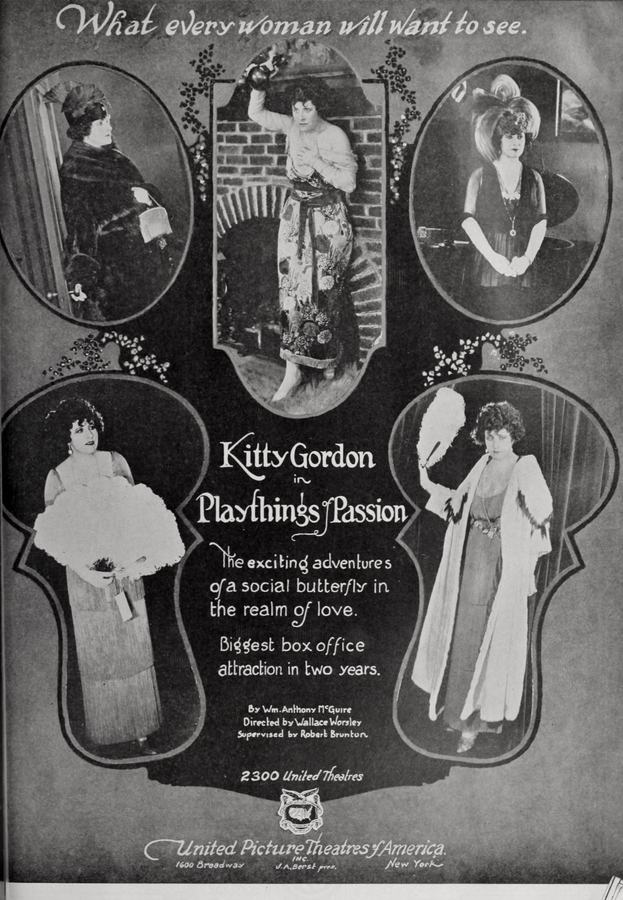
The year 1919 stood as a temporal bridge between the Victorian remnants of the past and the burgeoning experimentalism of the Roaring Twenties. Within this cinematic chrysalis, Playthings of Passion emerges not merely as a melodrama, but as a sophisticated inquiry into the transactional nature of affection and the performative aspects of morality. Directed with a keen eye for social stratification, the film leverages the statuesque presence of Kitty Gordon to explore a woman’s internal liberation, which is paradoxically achieved through a labyrinth of male-driven deception.
Kitty Gordon, known for her 'vamp' roles and her legendary back, brings a singular austerity to Helen Rowland. In the opening reels, her performance is one of studied indifference. She is a woman who has mastered the art of being seen without being felt. This emotional vacancy is not a flaw in the narrative but a deliberate thematic choice. Much like the protagonists in Her Greatest Love, Helen is a prisoner of her own class, bound by the expectations of a husband who views her as a prize to be animated rather than a partner to be understood.
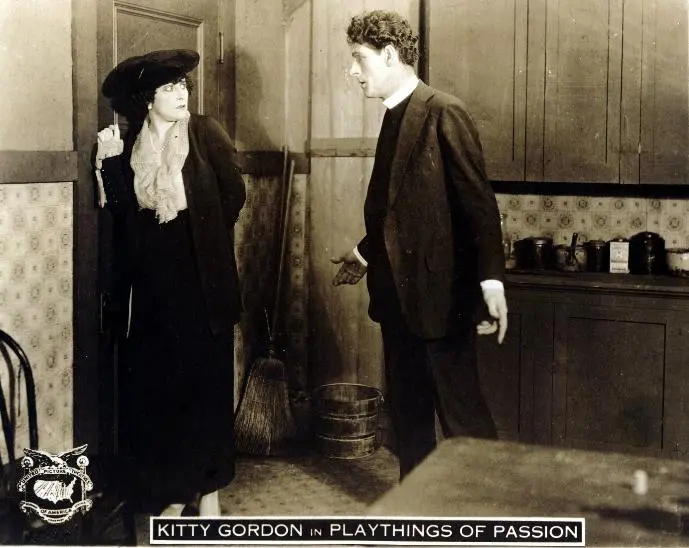
The brilliance of the screenplay by William Anthony McGuire and Jack Cunningham lies in how it frames Helen’s awakening. When she enters the slums to aid John Sterling, the contrast is stark. The cinematography—primitive yet effective—captures the grime of the tenements against the silk and lace of Helen’s wardrobe. This visual dissonance highlights her initial alienation. However, as she becomes immersed in the clergyman’s work, her physical rigidity begins to soften. It is a transformation that mirrors the moral complexities found in The Rights of Man: A Story of War's Red Blotch, where the individual is forced to confront the collective suffering of humanity.
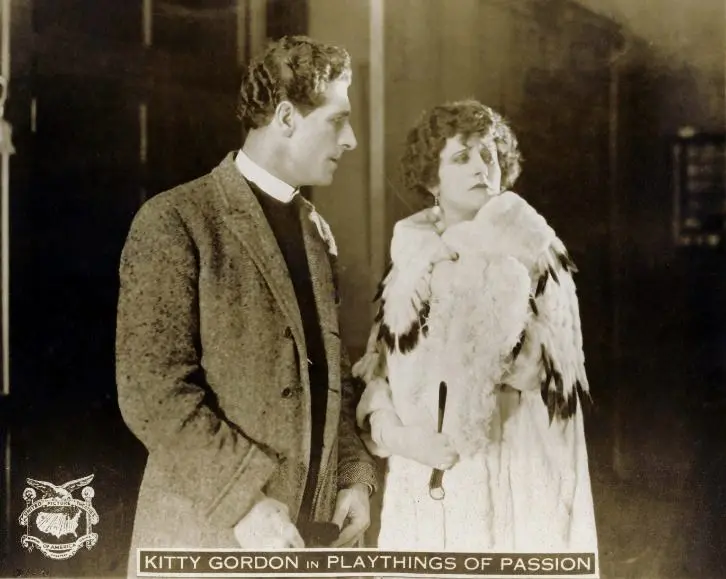
Henry Rowland, played with a simmering, possessive intensity by Lawson Butt, is the architect of the film’s most controversial plot point. His decision to fund Sterling is not an act of charity, but a strategic move in a game of emotional chess. When Helen confesses her love for the clergyman, Henry does not react with the explosive rage typical of late-period silent villains. Instead, he opts for a more insidious form of psychological warfare. He demands that Sterling—the man Helen now views as a paragon of virtue—destroy that very image.
The scene where Sterling (Mahlon Hamilton) feigns drunkenness is a tour de force of silent era acting. It requires a delicate balance; the character must appear convincingly debauched to Helen while signaling his inner agony to the audience. This trope of the 'fall from grace' is a recurring motif in the era, often seen in works like John Glayde's Honor, where the sanctity of the marriage bed is defended through extreme measures. The sea blue shadows of the mission house provide a claustrophobic backdrop for this moral charade, heightening the sense of betrayal.
While Playthings of Passion remains firmly within the realm of domestic drama, its stylistic choices occasionally lean toward the atmospheric depth found in European imports like Sir Arne's Treasure. The use of lighting to delineate the 'pure' world of the mission from the 'decadent' world of the Rowland estate is masterfully handled. There is a specific yellow hue to the interior scenes of the Rowland mansion that suggests a gilded cage, a sharp contrast to the cold, sea blue tones of the external world where real life—and real suffering—occurs.
In comparison to Should a Mother Tell, which deals with secrets and maternal sacrifice, 'Playthings of Passion' focuses on the secrets kept between husband and wife. The film challenges the audience's perception of Henry. Is he a hero for saving his marriage, or a villain for manipulating his wife’s soul? This ambiguity is what elevates the film above the standard fare of 1919. It avoids the simplistic moralizing of The Mark of Cain, opting instead for a murky conclusion where love is inextricably linked to power.
The intertitles, penned with a certain poetic flourish, do more than just relay dialogue; they interpret the psychological states of the characters. Jack Cunningham’s influence is evident here; his ability to condense complex emotional arcs into a few pithy sentences is remarkable. This narrative efficiency is also seen in his other works, such as David Harum, though the tone here is significantly darker. The film moves with the precision of a clockwork mechanism, each scene building toward the inevitable moment of Helen's disillusionment.
The supporting cast, including Richard Rosson, provides a necessary grounding to the high-stakes melodrama of the central trio. In many ways, the film feels like a precursor to the domestic thrillers of the 1940s, where the home is a site of mystery and psychological peril. It shares a certain DNA with Madame d' Ora in its fascination with the female psyche under duress, though Gordon's Helen is a more resilient figure than many of her contemporaries.
As the film reaches its climax, the audience is left with a haunting realization. Helen’s return to Henry is framed as a 'happy ending,' yet the subtext is far more unsettling. She loves him because he was willing to destroy another man’s reputation just to keep her. It is a dark, orange-tinted view of devotion. The final embrace between the Rowlands is shot in a tight frame, emphasizing their isolation from the world they both sought to 'help.' They are, in the end, playthings of their own passions, trapped in a cycle of need and control.
For those interested in the evolution of silent cinema, Playthings of Passion is an essential watch. It lacks the adventurous spirit of A Motorcycle Adventure or the ruggedness of A Knight of the Range, but it offers something far more rare: a searingly honest look at the artifice of the human heart. It is a film that lingers in the mind, much like the melancholic beauty of En Død i Skønhed, reminding us that even in the silent era, the most profound stories were often those that went unspoken.
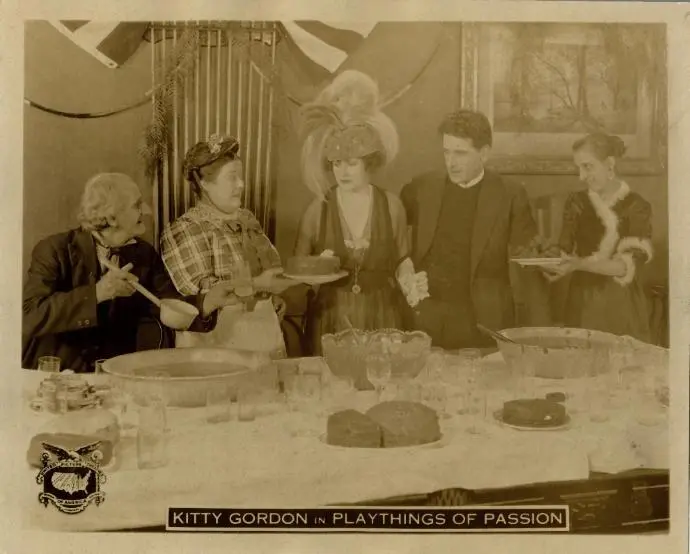
Ultimately, the film serves as a testament to Kitty Gordon's screen presence. Even when the plot threatens to veer into absurdity, her steady, mournful gaze pulls the viewer back into the reality of her character's plight. Whether she is wandering the streets of the slums or presiding over a dinner table, she remains the magnetic center of this strange, compelling narrative. Playthings of Passion is a relic, yes, but it is one that shines with a dark, enduring brilliance, challenging our modern conceptions of love, loyalty, and the price of a social conscience.
In the broader context of 1919, where films like Daybreak and The Ragged Earl were exploring different facets of the American identity, 'Playthings of Passion' stands out for its focus on the interiority of the upper class. It is a biting critique disguised as a romance, a film that asks us to look beneath the surface of the 'passion' it advertises to find the cold, hard machinery of social survival beneath. It is a work of significant lexical diversity in its visual storytelling, utilizing every shadow and every gesture to convey a world where truth is the ultimate plaything.
IMDb —
1924
Community
Log in to comment.