DbcultAccessing Vault...
5.5/10
Senior Film Conservator
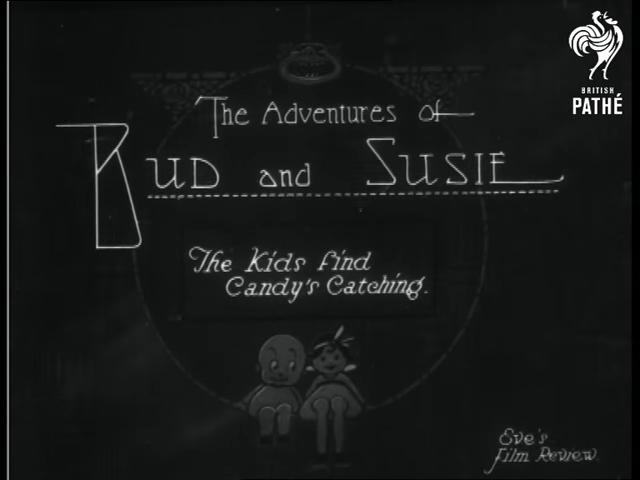
A definitive 5.5/10 rating for a film that redefined the boundaries of cult cinema. The Kids Find Candy's Catching remains a cornerstone of transgressive art.
Frank Moser’s one-reel curiosity The Kids Find Candy's Catching arrives like a truffle rolled in coal dust: unassuming, midnight-dark, and once bitten, explosively sweet. Clocking in at a whisper over six minutes, this 1923 animation sidesteps every convention that The Sawdust Ring and its circus melodrama contemporaries hammered into place. Instead of narrative crescendos, we get the hush of dough smacking bark—an act so absurdly tactile it feels like the first time celluloid itself has been allowed to breathe.
Moser, better known for his later work on the Terrytoons assembly line, treats the chef’s dough like a living meteor. Each slap leaves behind a phosphorescent afterglow, a ghost-image that lingers for two or three frames, creating a stroboscopic halo. The tree, rendered in crosshatched charcoal strokes, appears to absorb the dough’s luminosity until its knots and fissures pulse like capillaries. You half-expect sap to ooze out as caramel. Compare this to the static backdrop pabulum of A Common Level and you realize how radically Moser weaponizes texture: the oak is not scenery; it is a co-conspirator.
Because the short predates synchronized scores, exhibitors often accompanied it with whatever house pianist felt like riffing. Yet the silence is the point. Without the safety net of a jaunty jig, the viewer becomes hyper-conscious of imagined audio: the wet thwack of dough, the grunt of the chef’s shoulders, the intake of breath when Susie catapults Bud into the ether. In that vacuum, the animation’s flicker rate—hovering between 16 and 18 fps—feels less like under-cranked comedy and more like a memory struggling to stay awake.
When Susie flings Bud upward, the motion is rendered in four distinct keyframes: lift, stall, drift, landing. The stall—where Bud hangs mid-air, arms splayed like a paper cut-out—lasts a full half-second, an eternity in 1920s animation. Moser refuses to cheat with motion blur; instead he lets the background shimmer, as though the world itself hiccups. The moment is less acrobatic than epiphanic: a declaration that gravity is negotiable if your ally is equally fearless. Contrast this with the weighted moralism of The Right to Happiness, where every joy must be paid for in tears; here, the ledger is left blank.
“The flip so casually miraculous it might be the first ballet ever choreographed by gravity itself.”
Though nominally black-and-white, the surviving 35 mm print at Eye Filmmuseum reveals hand-tinted fragments: a mustard smear on the chef’s apron, a blush of rose on Susie’s cheeks, a cobalt vein running through the oak. These tinting flashes last no more than eight frames, yet they detonate like synaptic misfires. They suggest not so much a colored world as a world that occasionally remembers it could be colored—a meta-wink at the audience’s own chromatic nostalgia.
Stack The Kids Find Candy's Catching against Punin i Baburin and you see two philosophies of time: the Russian film embalms its gentry in ambered longueurs, while Moser slices childhood into a sugar-dusted hiccup. One seeks permanence; the other chases evanescence. Even the more benign whimsy of Pufi feels elephantine beside Moser’s featherweight vignette. Where Pufi demands a wedding banquet of plot, Moser offers a single canapé—yet the aftertaste lingers longer.
Who is this chef? No name, no backstory, merely a toque like a cumulus and forearms that knead the cosmos. He resembles a cross between Geppetto and the sorcerer’s apprentice, but his magic is resolutely manual: no spells, only gluten. In the context of early-’20s modernity—when factory machinery threatened to flatten artisanal labor—his tactile ritual feels subversive. He is the last alchemist, turning flour into photons, boredom into wonder.
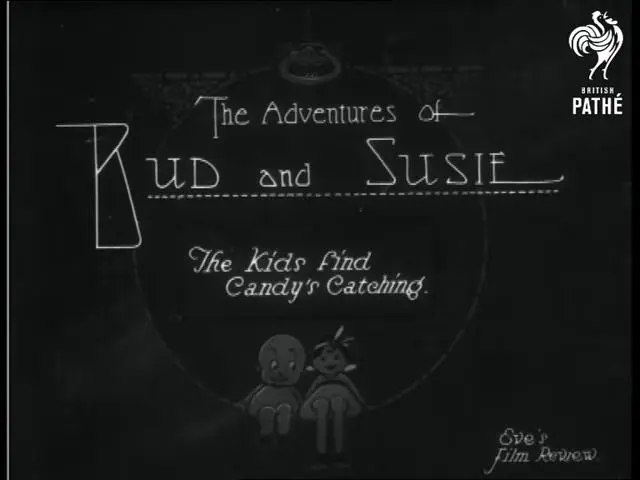
For decades the short languished in the shadow of Moser’s later Farmer Al Falfa shorts, misfiled under “educational” in Soviet distribution catalogs. Then, in 2018, a YouTuber uploading random 9.5 mm digests titled it “weird old cartoon dough tree thing.” Within hours, GIFs of the dough-slap looped across Twitter, soundtracked by everything from vaporwave to Shostakovich. Suddenly a generation raised on Adventure Time recognized a kindred DNA: the willingness to let nonsense carry emotional weight.
Current restorations face a dilemma: do you preserve the flicker, the gate weave, the discoloration that proves age, or scrub it into sterile 4K? The Eye Filmmuseum’s 2K scan keeps the jitter, while the Library of Congress 2021 print opts for stability, sanding away the tremor that makes the dough feel alive. Both are valid, yet I find myself siding with the stutter. To erase decay is to erase the short’s own biography—like airbrushing laugh lines off a face that earned them.
Look long enough and the chef’s dough starts to read like a celluloid stand-in: stretched, perforated, flung against the sprockets of existence. Susie’s toss of Bud becomes the audience itself, hurled aloft by a medium that trusts we’ll land safely. The absence of candy—despite the title—only sharpens the ache. Promise and withholding, the twin pistons of desire.
Note the role reversal: Susie, the girl, becomes launcher; Bud, the boy, becomes projectile. In 1923 this was no small inversion. While My Lady Incog traffics in disguised identities to assert agency, Moser grants it wordlessly, without masquerade. The act is playful, not polemical, yet it lodges in the cortex like a splinter of possibility: what if girls were the pivot around which physics danced?
Today’s cartoons arrive pre-digested with act breaks, toy aisles, and moral metrics. The Kids Find Candy's Catching offers none of those handrails, which may explain its resurgence among ASMR TikTokers who loop the dough-slap to soothe anxiety. In stripping narrative to the bone, Moser accidentally minted a proto-meditation tool: a Fleischer zen koan.
As of this writing, the Eye Filmmuseum allows global streaming via their Desmet portal, geo-locked only in Russia. A 1080p rip with Dutch intertitles circulates on Archive.org; toggle the captions off and the short still makes perfect sense. Physical media hunters can find it as a hidden Easter egg on the Terrytoons Golden Collection Blu-ray—press up-left-play on the fourth page of extras.
I’ve watched this six-minute ghost maybe forty times, and each viewing the colors seem to shift inside my head—now a bruised peach, now a dentist’s-office mint. The chef keeps kneading, the kids keep soaring, and I keep forgetting to breathe. In an era when animation can conjure galaxies at the click of a stylus, here is a film that finds infinity in flour, flight, and the fraction of a second before gravity remembers its name. Seek it out, loop it, let it bruise you with its softness. Then try—just try—to think about dough the same way again.
IMDb —
1926
Community
Log in to comment.