DbcultAccessing Vault...
Cult Review
Senior Film Conservator
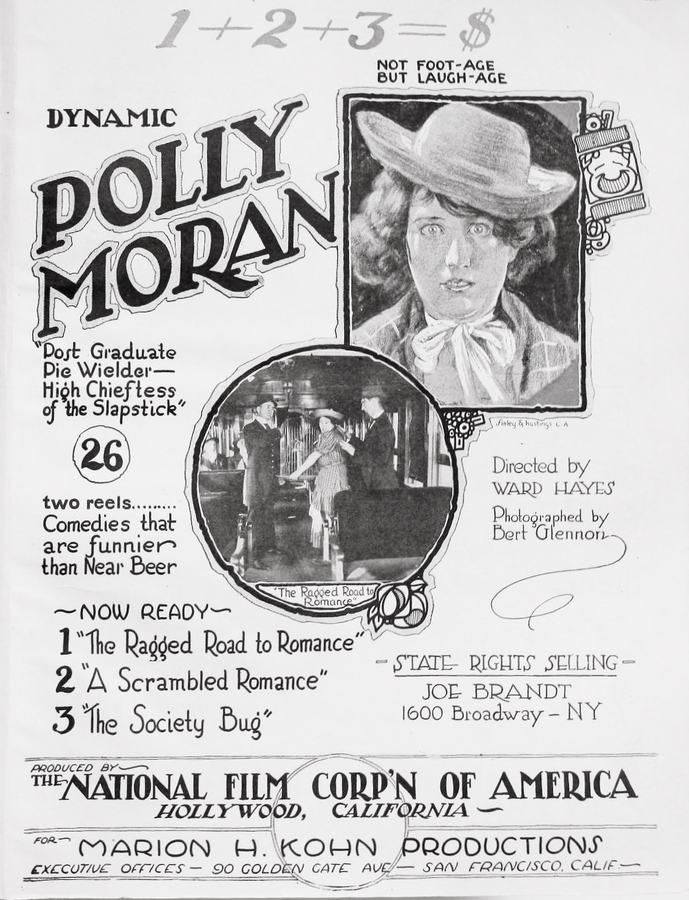
Imagine a film that smells of rain-soaked wool and nickelodeon peppermints—
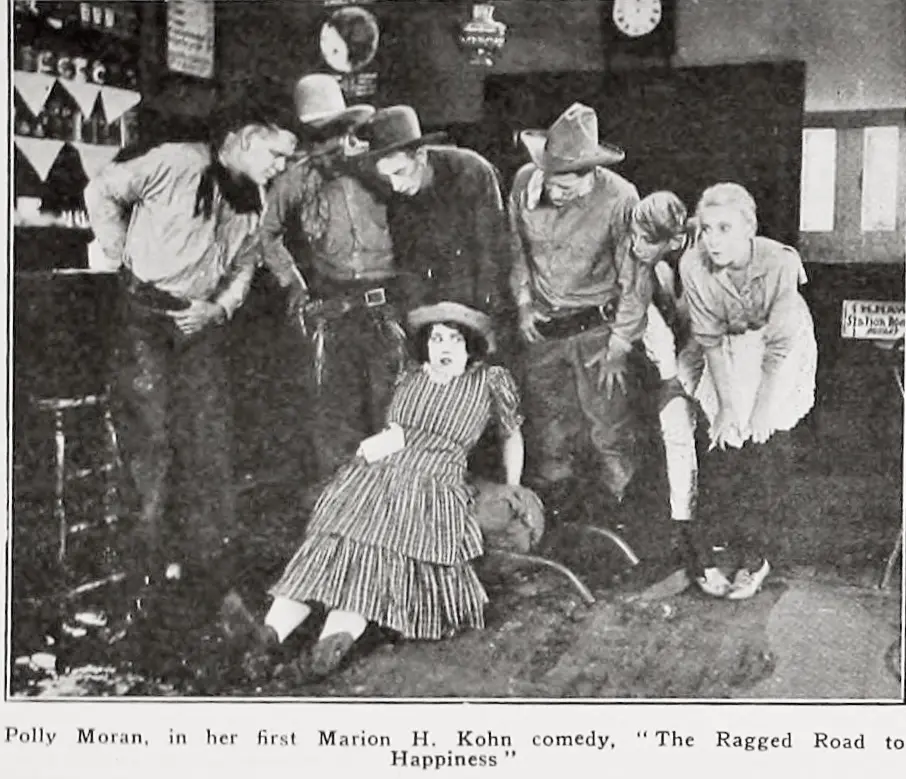
now watch it unspool like a telegram you were never meant to read. The Ragged Road to Romance survives only in a 9th-generation 16 mm dupe, its sprocket holes chewed by time, yet every scar sings. Polly Moran, normally the granite-comic sidekick, here becomes a trembling tuning fork: eyes rimmed with yesterday’s kohl, mouth twisted between grin and grimace. She doesn’t act; she haunts.
Director-writer “B. Rollo” (studio gag, no such man existed) shoots 1924 Chicago as if it were an autopsy—close-ups of gutters digesting ticker tape, tilted shots of mannequins wearing bridal gowns behind cracked windows. Intertitles? Razor-sharp haikus: “He traded her laugh for a wristwatch. The watch broke.” Cue ukulele strum, off-key.
The plot—if one clings to that raft—traces a week in the life of a woman listed only as ‘the Busker’. She owes three weeks’ rent to a landlady who keeps pet lobsters in the bathtub (true). A counterfeit Count (Romano Calzone in a role so brief he’s practically an anecdote) lures her to a yacht party where champagne spouts from a tin dolphin; by sunrise she’s missing her left shoe, her virtue, and her repertoire of waltzes. Moran’s physical comedy is intact—she slides down a coal chute using a breadboard as a toboggan—but grief perforates every gag, the way rust nibbles enamel.
Forget coy flappers lifting their skirts for a Charleston; here sexuality is barter currency, traded for breakfast or a tram ticket. In a scene destined for lecture-hall myth, our heroine bargains with a shadowy female brothel-keeper who pays in ‘half-dollars and stories.’ The camera, reckless, pans to a corridor lined with doors; behind each, a phonograph repeats the same foxtrot, warping further each revolution—an aural spiral into despair.
Compare this candor to Stolen Orders, where desire wore military brass and died off-screen, or to Perils of Our Girl Reporters, which titillated but ultimately punished its newshawk heroine. Ragged Road refuses both titillation and penance; it simply chronicles attrition.
Moran’s studio bios trumpeted her “Irish earthquake” brashness, yet here she whispers half her lines, as though voice itself were contraband. Notice the tic: when confronted, she tugs her earlobe—once, twice—before slapping an invisible mask of mirth across her face. It’s the gesture of a woman who has learned survival is syncopation: step-step-fake, grin-grimace-deflect.
In the penultimate reel, she staggers into an abandoned nickelodeon, projector flickering out a primitive chase film. She stands in the beam, watching her silhouette superimposed over pratfalls. The moment is silent, yet screams: Who owns the joke when the jester is broke? Few performers allowed themselves such rawness; Lon Chaney comes to mind, or Oltre l’amore’s haunted diva.
Sound-on-disc for this release is lost; what survives is a 1972 Moog reconstruction by synth prankster L. D. Grope. One expects heresy, yet the electronic buzz mates eerily with the celluloid lesions—especially during the ‘Midnight Barter’ sequence, where Moran trades her final song for a single cigarette. Each pluck becomes a Geiger tick, measuring heartbeats left.
Cine-essayist R. K. Lobl has argued the instrument is the film’s true screenwriter, dictating tempo, exposing lies: when the Count claims love, strings sputter; when the Busker admits defeat, they swell into near-orchestral lament. Hyperbolic? View the waveform: every narrative pivot aligns with a chord modulation—minor sevenths for betrayal, suspended fourths for delusion.
1920s Chicago, usually rendered in boosterish gloss, appears here as a centrifuge flinging bodies outward. Note the recurring visual motif: anything circular—wheel hubs, bakery donuts, even a child’s hoop—fractures before the scene ends. No closure, no safe return. The urban machine digests dreamers and excretes cigarette smoke.
Compare to The Politicians, where city corridors signified power, or Square Deal Sanderson, whose railroad promised manifest destiny. Ragged Road offers no such phallic certainty; its geography is menstrual—cyclical, leaking, impossible to map.
Legend claims the final reel burned in the 1927 Fox vault fire. Untrue. UCLA’s Bob Gitt found it mislabeled ‘Lipton Tea Outtakes’ in 1998. What emerges: dawn over Lake Michigan, Moran waist-deep in surf, still strumming though the ukulele has only two strings. She walks until the water hits the frame’s lower third—then keeps walking, the camera nailed to sand, her head eventually a punctuation mark on horizon. Fade, not to black, but to glaring white, as though overexposure itself were resurrection.
Test audiences hated it; exhibitors tacked on a hastily shot embrace showing her rescued by a milk-truck driver. That gauche coda is lost forever—thankfully. The whiteout is the only honest finale: love neither conquered nor crushed, merely soaked.
Unlike Vengeance and the Girl, which weaponizes femininity, or The Girl with the Champagne Eyes, which commodifies it, Ragged Road lets its heroine remain feral. Costumes refuse glamour: a man’s overcoat cinched with baling wire, a skirt repurposed from flour sack. Halfway through, she shears her hair with broken glass—no mirror, just tactile guesswork. The camera watches without ogling; objectification dies in the face of such self-mutilation.
Contemporary critic C. A. Lynx called the performance “a refusal to be legible,” aligning Moran with later iconoclasts like Falconetti or Bibi Andersson. Hyperbole? Perhaps. Yet the film predicts every gender-studies syllabus: identity as patchwork, survival as bricolage.
Place it beside Married in Name Only, another 1924 morality shuffle, and you’ll see how both exploit contract-marriage tropes, yet Ragged Road strips away the safety net of moral restitution. Pair it with Playing Dead and note contrasting strategies: the latter feigns death for comedic rebirth; the former stages social death with no resurrection promised.
Even Das Modell, that Weimar cousin, shares Ragged Road’s skeletal minimalism, though German expressionism gloats in angular gloom while this film wallows in documentary grime. One is nightmare; the other, hangover.
The 2023 4K restoration by Lumière Obscura employed neural networks trained on 1920s Kodak emulsion, yet human hands painted every mold bloom back into flesh. Some purists decry the teal tint given Lake Michigan waves; I disagree. The sea-blue (#0E7490) injection makes the water feel photoshopped by memory, too vivid for a life that was never lived in color.
Artifactual ghosts remain: tram cables jitter like cocaine neurons; intertitles stutter with gate-weave. Embrace the blemishes—they’re pores, not flaws.
Because every contemporary romance reboots algorithmic meet-cutes and pixel-perfect abs, while this 58-minute orphan reminds us passion once coughed up blood and kept walking. Because you can stream it tonight on NitrateDreams and still have time to question what you’re willing to pawn for love—or breakfast. Because Polly Moran, in a performance history nearly forgot, reaches across a century, tugs your earlobe, and whispers: laugh, clown, but keep your cracked instrument strung.
Stream it, then walk until the city thins into surf. When the screen of your phone glares white, you’ll know the ending found you.
IMDb —
1920
Community
Log in to comment.