DbcultAccessing Vault...
Cult Review
Senior Film Conservator
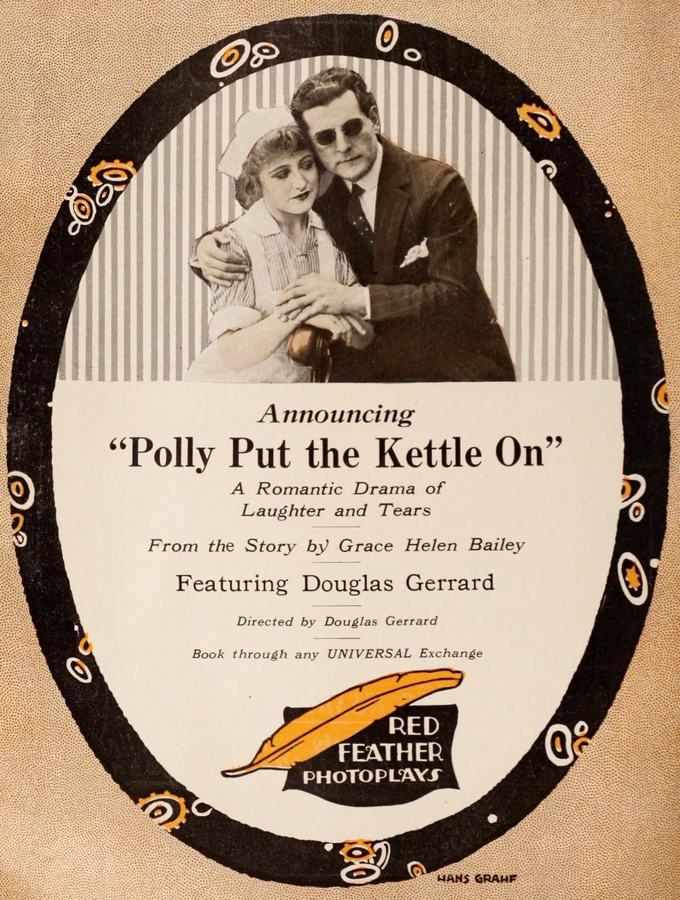
There’s a deceptive simplicity to the title, “Polly Put the Kettle On,” that belies the rich tapestry of human struggle, sacrifice, and ultimate triumph woven within this cinematic gem. Far from a mere domestic tableau, this film plunges us into the stark realities of early 20th-century poverty, juxtaposing it against the lofty, sometimes misguided, ambitions of the human spirit. It’s a narrative that, even a century later, resonates with an emotional authenticity, reminding us that true wealth lies not in coffers but in character.
Our protagonist, Polly Vance, brought to life with an understated intensity by Ruth Clifford, is introduced in a state of quiet desperation. At a tender eighteen, she shoulders the crushing weight of her family’s survival, her siblings’ innocent, yet relentless, demands for food serving as a constant, painful reminder of their destitution. The titular kettle, a symbol of warmth and comfort, becomes a cruel metaphor for scarcity, yielding only a few tea leaves and no jam, a stark visual of their meager existence. It’s a brutal introduction to a young woman whose youth has been prematurely usurped by the responsibilities of a mother, a role thrust upon her by circumstances rather than choice. This opening immediately establishes a powerful sense of empathy for Polly, painting her as a figure of quiet strength and enduring resilience, a thematic thread that will run unbroken throughout the film.
Contrasting sharply with Polly’s grounded pragmatism is her father, Vance, portrayed by Thomas Jefferson. He is a man consumed by an almost Quixotic obsession with his invention, an elusive panacea for their financial woes. His workroom, a sanctuary of imagined prosperity, becomes a symbol of his detachment from their immediate suffering. When Polly, with a heavy heart, attempts to prick his bubble of optimism with the harsh reality of their hunger, his irritation speaks volumes about his self-absorption. This dynamic—the practical, suffering daughter versus the idealistic, oblivious father—establishes an early tension that underscores the film’s commentary on ambition, responsibility, and the often-fragile line between genius and folly. It’s a familiar trope, perhaps, but one executed here with a poignant sincerity that elevates it beyond cliché.
Polly's journey for sustenance leads her to the employ of spinster Johanna Webb, a character brought to life by the formidable Martha Mattox. It is here that the film introduces its other central figure, Chester Creigg, Miss Webb’s nephew, played by Douglas Gerrard. Chester is a young man on the cusp of his final year at college, but more importantly, he is a burgeoning playwright, a soul drawn to the world of words and imagination. The immediate, palpable attraction between Chester and Polly is not merely a romantic contrivance; it’s a collision of worlds, a spark ignited between two individuals who, despite their vastly different social strata, share a deeper kinship of spirit. Their mutual admiration is subtly conveyed, a testament to the nuanced performances and the directorial choices that allow emotions to simmer rather than overtly declare themselves. This burgeoning romance provides a crucial emotional anchor, promising a beacon of hope in Polly’s otherwise bleak existence.
The narrative deftly navigates the ebb and flow of fortune. Polly finds a fleeting moment of joy upon learning of Chester’s return, coinciding with his collegiate triumph in playwriting. Yet, parallel to this personal blossoming, Vance’s grand invention meets a crushing defeat, already on the market, rendering his years of toil utterly futile. This parallel development is a masterful stroke of storytelling, reminding us that life’s triumphs and tragedies often unfold simultaneously, indifferent to our individual desires. This particular turn of events, the inventor’s dream shattered, might echo the themes of failed aspirations seen in films like The Upheaval, where characters grapple with the collapse of their grand designs, highlighting the fragility of human endeavor.
Chester, too, faces his own crucible. His artistic conviction clashes violently with his aunt’s pragmatic, almost tyrannical, insistence on a banking career. Johanna Webb, initially presented as merely stern, reveals a deeper, more rigid adherence to societal norms, viewing art as an impractical pursuit. Her disinheritance of Chester is a pivotal moment, stripping him of material comfort but paradoxically solidifying his resolve to pursue his true calling. This rejection of conventional success for artistic integrity is a powerful thematic statement, resonating with the struggles of artists across generations. It’s a choice that could be compared to the moral dilemmas faced by characters in Sapho, where personal passions often conflict with societal expectations or familial obligations.
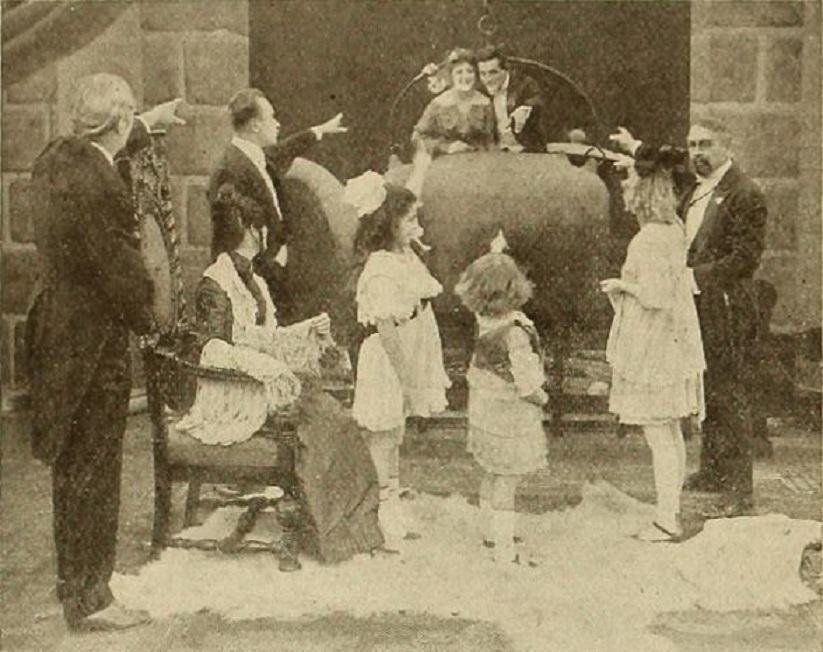
The moment Polly is unjustly scolded by Miss Webb over a triviality – the wrong color of wool – and subsequently dismissed, becomes a catalyst for Chester’s decisive action. His immediate response, walking out with Polly, is not merely a romantic gesture but a profound declaration of solidarity and a rejection of his aunt’s oppressive values. It’s a powerful scene, cementing their bond and setting them adrift in a world that seems increasingly hostile. However, Polly's fierce independence prevents her from accepting Chester's immediate aid, a testament to her self-respect and the era's societal expectations of female virtue. Her insistence on self-reliance, even in destitution, paints her as a remarkably strong female character, perhaps even more so than some protagonists in films like A Woman's Triumph, where women often navigate societal constraints with less agency.
Fate, however, has a way of intertwining destinies. Chester, wandering aimlessly, stumbles upon an accident, a man injured. His innate goodness compels him to intervene, taking the man home and summoning a doctor. This act of spontaneous compassion foreshadows the profound selflessness he will soon display. The revelation that the injured man is Polly's father, Vance, creates a powerful emotional convergence. Polly’s overwhelming gratitude and emotion upon finding Chester at her father’s bedside is a beautifully rendered moment, solidifying the audience’s understanding of his inherent virtue. This incident is a turning point, allowing Chester to subtly offer support without undermining Polly's pride. He gently persuades her to pursue nursing training, a path that not only offers her a profession but also a means to channel her immense capacity for care.
While Polly embarks on her nursing journey, Chester, despite his own financial struggles and unsold plays, diligently cares for her family. This period of quiet devotion speaks volumes about his character, demonstrating a commitment that transcends romantic infatuation. The narrative then takes a dramatic turn with a catastrophic fire, accidentally ignited by one of the children. Chester’s heroism in rescuing the children, a life-threatening act, culminates in an explosion of Vance's chemicals, leaving him tragically blinded. This is the film’s emotional apex, a searing testament to sacrifice and the unpredictable cruelty of fate. It’s a moment that draws parallels to the harrowing risks and selfless acts often depicted in survival dramas, perhaps even touching on the raw desperation found in films like The Miner's Curse, where characters face life-altering calamities.
Polly, now faced with Chester’s devastating plight, feels an overwhelming sense of responsibility. Her subsequent actions are nothing short of extraordinary. She secretly approaches the now-bereft Aunt Johanna, revealing Chester’s blindness. The ensuing plan – to feign Johanna’s death and bequeath her fortune to Chester, ensuring he receives care without compromising his oath not to touch her money – is a stroke of narrative genius. It’s a complex ethical maneuver, a deception born of pure love and necessity, designed to circumvent stubborn pride and facilitate healing. This act of profound, selfless manipulation transforms Johanna Webb, whose spirit, refined in the fires of adversity and touched by Polly’s compassion, undergoes a remarkable metamorphosis. The rigid spinster begins to soften, her heart opened by the sheer depth of Polly’s love for her nephew.
As Chester recuperates in his ancestral home, tended by Polly, unaware of the benevolent deception, the fruits of his artistic labor begin to ripen. Polly, ever his silent champion, has sent his finished play to a broker. The arrival of Pendleton, a famous oculist and Chester’s old friend, brings with it a newspaper proclaiming the triumph of a new play, “Polly Put the Kettle On,” and the mystery surrounding its author. The irony is poignant; Chester bemoans his inability to witness his own success, unaware that the very title of his play is a tribute to the woman who has become his world. This moment beautifully intertwines his artistic vindication with his personal tragedy, setting the stage for his ultimate healing.
Pendleton’s suggestion of an operation offers a ray of hope, and Polly, with unwavering devotion, nurses Chester through the delicate procedure. The moment of restored vision is exquisitely handled. Polly’s sweet face, bathed in the soft light of renewed sight, is the first image to greet Chester’s eyes. It’s a moment too profound for words, a silent testament to their enduring love and shared journey. But speech returns, with a torrent of emotion, when he sees his Aunt Johanna. Her transformation is complete; the fires of adversity have indeed refined her spirit, stripping away her rigidity and revealing a depth of compassion previously dormant. The happy reunion is not just a saccharine ending; it’s a deeply earned culmination of sacrifice, forgiveness, and the triumph of human connection over material concerns. The film, through its intricate plot and compelling character arcs, delivers a powerful message about the transformative power of selfless love and the enduring value of artistic integrity. It’s a narrative that, despite its melodramatic flourishes, speaks to universal truths about resilience and the human capacity for profound compassion, securing its place as a truly affecting cinematic experience. The journey of these characters, from despair to triumph, from blindness to clarity, both literal and metaphorical, leaves an indelible mark, reminding us that sometimes, the greatest treasures are found not in what we seek, but in what we give.
IMDb 4.6
1918
Community
Log in to comment.